Marlins Need a September Run to Stay in the Wild Card Race
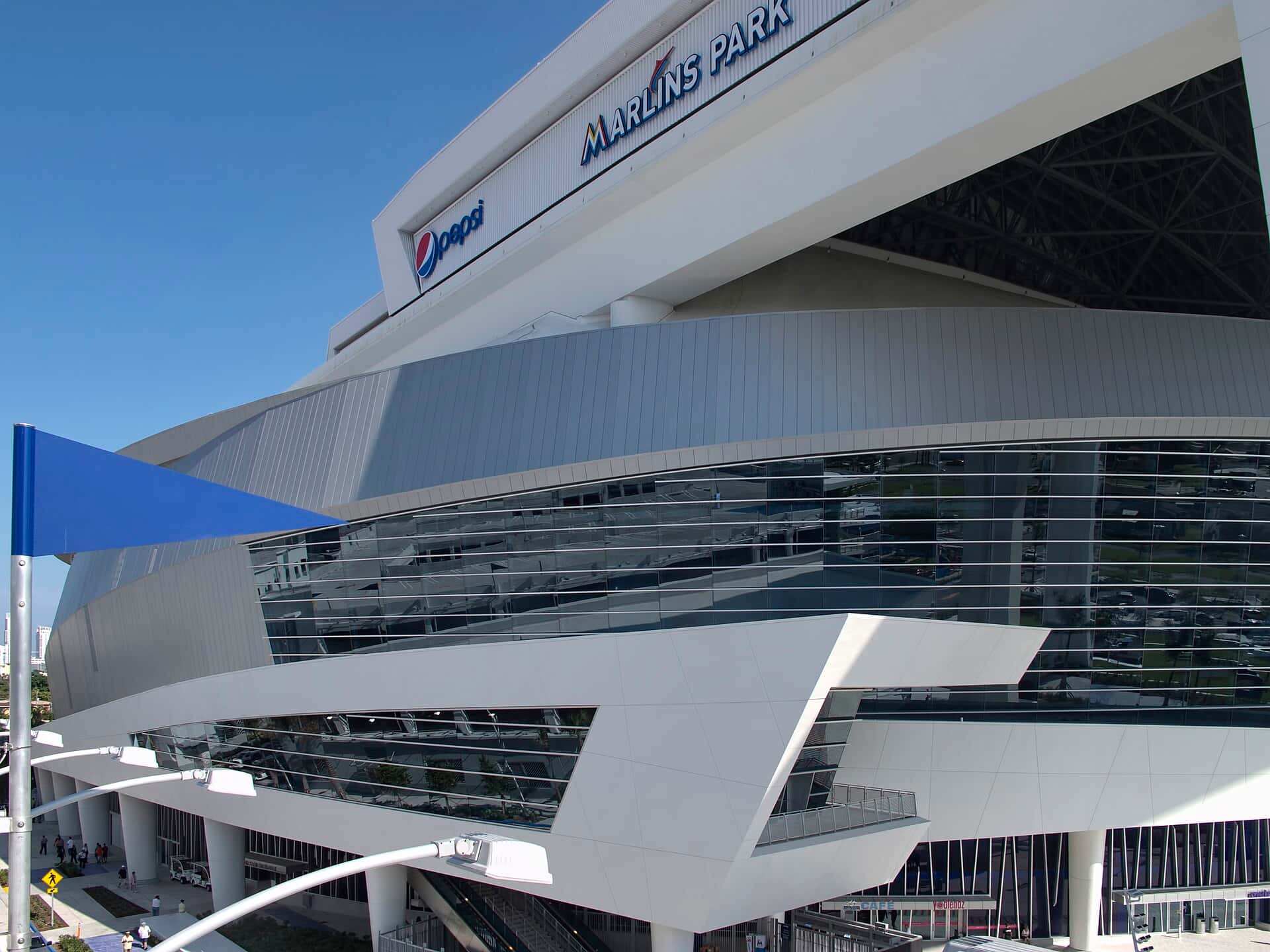
The Miami Marlins remain in the National League wild card hunt entering September, sitting four games back of the San Diego Padres and Arizona Diamondbacks for the final berth, with a schedule that hands them their own fate in the middle of the month. Miami travels to Arizona for a three-game set against the Diamondbacks and then continues to San Diego for a series against the Padres, meaning the team's two closest competitors for the last playoff spot are also its opponents in consecutive series. Four games back with those matchups ahead is a live position, and it is not a comfortable one.
Where the race stands
San Diego and Arizona separated themselves in August as the most likely contenders for the final National League wild card spot, and both entered September with the four-game cushion over Miami. Four games in early September translates to needing to make up roughly one game per week over the final month while playing well enough not to lose ground to anyone else.
The structural difficulty is that Miami has to pass two teams, not one. Gaining four games on Arizona does not help if San Diego pulls further ahead in the meantime, and a three-team race for one spot means the Marlins need results to break their way in games they are not playing.
What makes the position genuinely live rather than theoretical is the head-to-head schedule. Games against the teams directly ahead of you count twice, adding to your total while subtracting from theirs. Six games against Arizona and San Diego in a single stretch is the single most efficient path a team four games back could ask for.
The mid-September gauntlet
The Arizona series comes first, and it is being widely described as Miami's best chance to gain ground in the wild card chase. Three games against a direct competitor offers a maximum swing of three games in the standings, which would erase most of the deficit in a single series.
The San Diego series follows immediately. Playing two direct competitors back to back is unusual and it compresses the entire race into roughly a week of baseball. A strong stretch puts Miami in position. A poor one likely ends the season's competitive phase before the calendar turns to the final ten days.
The travel matters too. A road trip to Arizona and then San Diego is a West Coast swing for an East Coast team, with the time zone adjustment and late finishes that come with it. Those effects are marginal individually and can compound across a stretch when every game carries playoff weight.
How Miami got into the race
The Marlins have spent recent seasons in a rebuilding posture, trading veteran players for controllable young talent and operating near the bottom of the league in payroll. Being in a wild card race in September is ahead of the schedule that approach implies.
Miami's organizational strength has consistently been pitching. The franchise has developed and acquired arms effectively even during its leanest competitive stretches, and a pitching-forward roster is well suited to the low-margin baseball that a wild card race produces, where one-run games decide seeding.
The offense has been the harder problem, as it has for most of the franchise's history. loanDepot park plays as a pitcher-friendly environment, which suppresses offensive numbers and makes run production a persistent challenge for the home team.
What a playoff berth would mean
The Marlins have reached the postseason sparingly in franchise history, and the organization's two World Series titles both came from wild card berths, in 1997 and 2003. That history is the reason South Florida baseball fans treat a wild card spot as more than a consolation prize.
Under the current format, the final wild card team opens with a three-game series on the road against a division winner or higher wild card seed. Three-game series are volatile, which is precisely why they are valuable to a team like Miami: a hot pitching staff over three games can beat a team that won 15 more regular season games.
For the franchise, October baseball would also validate the rebuild's timeline and provide a foundation for the next offseason. Attendance and local interest respond to relevance, and Miami has had limited opportunity to build either in recent years.
What it means for South Florida fans
The practical answer is that the season stays interesting into mid-September, which has not always been the case. The Arizona and San Diego series are the games that matter, and they arrive in a compressed window that gives fans a clear focal point rather than a month of standings-watching.
Expectations should be calibrated honestly. Four games back with two teams to pass is a real deficit, and the most likely outcome remains that Miami falls short. That does not make the chase meaningless, because the games themselves are the point and because young players getting meaningful September at-bats in a race develop faster than young players playing out a schedule.
Florida baseball this fall has two distinct storylines. The Rays are playing for a division title with an 82 and 55 record and a four and a half game lead in the American League East. The Marlins are playing for the last spot in the National League field. Those are different positions and both are worth following.
The final stretch calculus
Beyond the head-to-head games, Miami needs to handle the rest of its schedule cleanly. Losses to non-contenders are the most damaging outcome in a race like this, because they surrender ground without the compensating benefit of hurting a rival.
Run differential is worth watching as a signal. A team hanging in a race with a negative run differential is generally outperforming its underlying performance, which tends not to persist. A team with a positive differential in the same position has a stronger case that the results are sustainable.
Pitching depth becomes the limiting factor in September, particularly for a team without an established postseason-caliber rotation ordering. Roster expansion helps, and how Miami manages bullpen usage across a compressed stretch of high-leverage games will shape whether the arms hold up through the final weeks.
The franchise's wild card history
Miami's relationship with the wild card is unusual in baseball. The franchise has never won a division title, and it has won two World Series championships. Both titles, in 1997 and 2003, came from wild card berths, and in both cases the team beat higher-seeded opponents on the way through.
That history is why South Florida fans treat a wild card chase differently than fans of franchises for whom it represents a lesser achievement. For the Marlins, the wild card is not a consolation route. It is the only route the organization has ever taken to a championship.
The current postseason structure, with six teams per league and short opening series, is more forgiving to a hot lower seed than the format that existed during either title run. That does not make a deep run likely. It makes it possible in a way that a longer opening series would not.
The stadium and the market
loanDepot park opened in 2012 and remains one of the more distinctive venues in baseball, with a retractable roof that makes summer baseball viable in a climate where outdoor afternoon games would be close to unplayable. The roof is not a luxury in Miami, it is a precondition.
Attendance has nonetheless been a persistent challenge, driven by a combination of factors including the team's competitive history, the stadium's Little Havana location and parking constraints, and a metropolitan area with an unusually large share of transplants whose baseball loyalties formed elsewhere.
Winning changes some of that and not all of it. A September playoff race generates local interest that a rebuilding season cannot, and it gives the organization something to sell into the offseason. For a franchise that has spent several years asking its fan base for patience while trading recognizable players, arriving in September with games that matter is the first installment of the return on that patience, whether or not the chase succeeds.
What's next
The wild card series begin Sept. 29, which sets the deadline. Miami has roughly four weeks to close a four-game gap on two teams, with six of those games coming directly against them.
The Arizona series is the first real checkpoint. Winning two of three there would cut the deficit meaningfully and set up the San Diego series as a genuine elimination-stakes stretch. Losing two of three would make the remainder of the schedule close to academic.
Either way, Miami arrives at mid-September with its season in its own hands, playing the two teams it needs to pass, in consecutive series, with everything on the line. For a franchise that has spent several years selling patience to its fan base, that is a reasonable place to end up.
Fans planning to watch the decisive stretch should note that the games that matter most are on the road and in the Pacific and Mountain time zones, which means late starts on the East Coast. The Arizona and San Diego series will be decided well after most of South Florida has gone to bed, which is an ordinary inconvenience of September baseball and a small price for having games that count.
The Marlins have also given their young position players something the past few Septembers did not: at-bats that carry consequences. Development in professional baseball happens partly through repetition and partly through pressure, and pressure is not something an organization can simulate in a meaningless game.
Whatever the standings say on the final weekend, that experience stays with the roster into next spring, which is the argument for taking this chase seriously even from a distance.
Spotted an issue with this article?
Have something to say about this story?
Write us a letterComments
No comments yet. Be the first to weigh in.
Related Coverage

Paolo Banchero Scores 24 as Magic Beat Heat 136-115 in Preseason Finale at Kia Center
5h ago

Jaguars Face Texans at Wembley Stadium With Walker Little Replacing Injured Anton Harrison
7h ago

ESPN Handshake Deal Moves College Football Closer to 24-Team Playoff as Miami, Florida Programs Watch
11h ago

Victor Hedman Scores in Overtime as Lightning Beat Kraken 4-3 for Fifth Win in Six Games
1d ago