Google DeepMind Nailed Hurricane Isaias' Landfall Days Out, New Analyses Show, as Older Models Missed by a Full Day
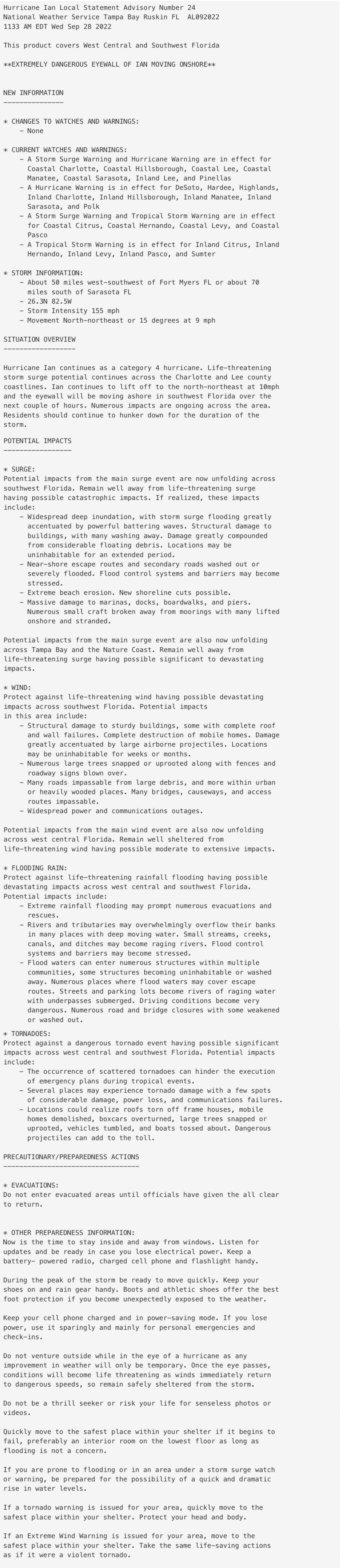
Google DeepMind's artificial intelligence hurricane model outperformed every other forecast system on Hurricane Isaias, pinpointing the storm's landfall near Destin to within a few hours three days in advance, according to new post-storm analyses highlighted Friday by Local 10 hurricane specialist Michael Lowry. The same analyses show that not all AI models are equal, and that the older, physics-based models that forecasters have relied on for decades badly missed the timing and location of the Florida Panhandle landfall.
The findings matter for Floridians because the gap between models translated into very different pictures of where and when Isaias would strike. The physics-based guidance favored a slower storm hitting farther west, toward Louisiana or coastal Mississippi. The AI models leaned east, toward coastal Alabama and the Florida Panhandle, and called for a stronger, faster storm. Isaias came ashore near Destin as a Category 2 hurricane on Oct. 9.
Three camps of models
The preliminary verification was conducted by HurriLab, a North Carolina based weather technology company. It ranked ensemble forecast systems using a probability-based measure called the fair energy score, which weighs both track error and how closely an ensemble's members agree, while adjusting for the advantage larger ensembles would otherwise have. Lower scores are better.
By that measure, the models sorted into three distinct groups, as described in Lowry's analysis:
| Model group | Type | Isaias track performance |
|---|---|---|
| Google DeepMind (all current versions) | AI | Best; very low scores at every forecast time |
| European AI ensemble | AI, launched last July | Solid; well ahead of its physics-based counterpart |
| GFS AI ensemble | AI, debuted last December | Solid; well ahead of its physics-based counterpart |
| European IFS ENS and American GEFS | Physics-based | Distant third; track errors more than double the five-year average |
All current versions of DeepMind were bunched in what Lowry described as a virtual dead heat at the top, a sign of how consistently confident and accurate the Google suite was throughout Isaias' time in the Gulf. The GFS AI ensemble is in its first hurricane season.
Landfall timing: a 24-hour miss for the old models
The starkest difference came on landfall. According to the HurriLab plots, Google DeepMind nailed the timing of Isaias' landfall to within a few hours more than three days out, and its forecasts were also closest to where the center actually crossed the coast at Destin.
The physics-based European and GFS ensembles were not only too far west but too late, by a full 24 hours or more. Lowry noted that missing landfall timing can put lives at risk for people preparing or evacuating. For coastal residents from Pensacola Beach to Panama City Beach, a forecast that is a day slow can compress the window to put up shutters, move boats and leave evacuation zones, which Okaloosa and other Panhandle counties ordered ahead of Isaias.
Who ran the analysis
HurriLab's founder and chief executive, Dr. Wallace Hogsett, launched the company in June after years as the National Hurricane Center's top science officer, where he led the integration of AI forecast models into the center's operations. He pointed to how accurate and consistent the AI models were during Isaias.
"No weather model will ever be perfect in my lifetime," Hogsett said, "but it seems to me like we are seeing a big jump in skill compared to the past few decades."
The HurriLab results are preliminary. The Hurricane Center's own post-storm review of Isaias, will eventually provide the official verification.
A season-long edge, not a one-storm fluke
Isaias fits a broader pattern. Season-to-date verification data compiled by former National Hurricane Center branch chief James Franklin show Google DeepMind continuing to outpace the official NHC track forecast across all storms in both the Atlantic and the eastern and central Pacific basins.
NHC forecasters are aware of DeepMind's record and fold it into blended consensus guidance, known by names such as TVCN and HCCA. HCCA weights the strongest-performing models and corrects for each model's biases. Consensus guidance has traditionally been what the Hurricane Center looks to first, because over long periods it usually beats any single model.
Franklin's numbers suggest that has not held over the past two hurricane seasons. According to his data, Google DeepMind has produced the most accurate track forecast two to three times more often than the consensus aids or NHC's official forecast, which generally follows the consensus approach.
How DeepMind got here
Google DeepMind introduced its experimental tropical cyclone model on June 12, 2025, through a public site called Weather Lab, and announced a partnership with the National Hurricane Center for that season. Google described the model as able to predict a cyclone's formation, track, intensity, size and shape, producing 50 possible scenarios up to 15 days ahead, and said NHC forecasters would see its live predictions alongside physics-based models and observations while the center worked to validate the approach.
That 2025 season was the model's inaugural run. Local 10 has tracked its performance since, and Lowry wrote Friday that AI hurricane models have now hit the mainstream, with national outlets covering them this week.
Intensity is still the weak spot
The analyses also carry a caution. AI models have shown they can beat traditional models on track, and they run faster and more cheaply than physics-based systems, but they do not yet hold the answer key on intensity, the forecast that determines whether a storm arrives as a tropical storm or a major hurricane.
Lowry wrote that the European AI model has effectively negative skill at forecasting hurricane intensity because of a known issue with the low-fidelity data it is trained on. Developers at the European Centre have identified a possible fix, but as of his writing it had not been applied to the AI ensemble, and he advised disregarding that model's intensity forecasts, which systematically run too weak.
Google DeepMind is the only AI model so far to show skill on intensity, and Lowry called it among the best tools available. Even so, consensus aids such as HCCA still show superior skill overall. During Isaias, the best intensity predictions at longer lead times came from older, high-resolution, physics-heavy hurricane models, HWRF and HMON, which have otherwise been superseded by NOAA's newer HAFS model.
AI models also cannot yet show the structural details inside a hurricane that forecasters use to diagnose changes in track and strength, which is why, in Lowry's assessment, the physics-based models are not going anywhere soon.
What it means for Florida
For Florida residents, the practical takeaway is that the official NHC forecast cone remains the forecast to follow, and that forecast already draws on DeepMind through the consensus guidance. The Isaias results add to a growing body of evidence that AI is sharpening track forecasts, especially for the timing of landfall, while intensity forecasts still lean on traditional physics.
That distinction is familiar on Florida's Gulf Coast, where storms such as Michael in 2018 strengthened rapidly before landfall. A better track forecast narrows where to evacuate. A better intensity forecast tells people how seriously to take the warning.
What's next
The Atlantic hurricane season runs through Nov. 30. Lowry wrote that models are watching an area of low pressure expected to form along a stalled front off the Carolinas by the middle of next week. It could loiter near or east of the Carolinas and attempt tropical or subtropical development. Regardless of development, a tightening pressure gradient with strong high pressure over eastern Canada is expected to drive persistent onshore winds along the Carolina coast, with the potential for prolonged coastal flooding, overwash and beach erosion into late next week.
HurriLab's and Franklin's season-long comparisons will continue to update as the season winds down, offering another test of whether the AI edge on track holds and whether the European Centre's intensity fix arrives before next June.
Spotted an issue with this article?
Have something to say about this story?
Write us a letterComments
No comments yet. Be the first to weigh in.
Related Coverage
Florida Will Mail Letters to Drivers Exposed in DAVID Database Breach, Offering a Year of Free Credit Monitoring
2h ago

Waymo opens driverless robotaxi rides to anyone in Tampa
1d ago
UCF-Led Team Wins $19.2 Million Army Award to Correct Light Distorted by Air and Tissue
2d ago

St. Pete-Launched Ocean Drones Sailed Into Hurricane Isaias, Logging a 104 MPH Gust Near the Eyewall
6d ago