Measles and Dengue Put Florida Health Departments on Alert This Summer
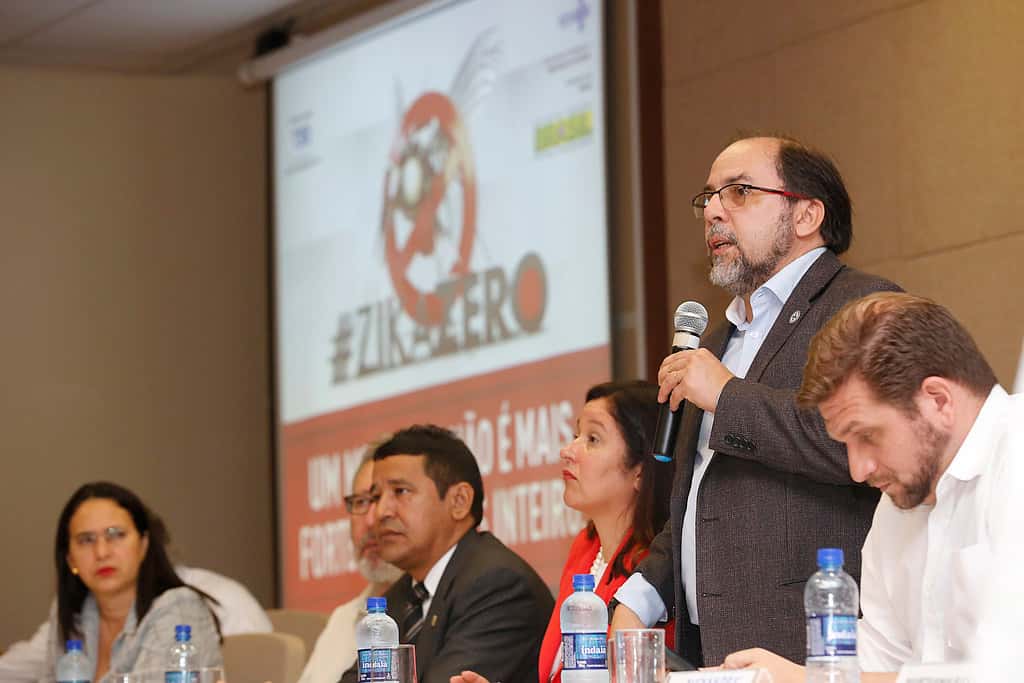
Florida public health officials are managing two separate infectious disease concerns as the summer progresses: a measles caseload that places the state fourth nationally for 2026 infections, and elevated dengue activity that has kept Miami-Dade County under a mosquito-borne illness alert.
Nationally, 2,318 confirmed measles cases had been reported in the United States for 2026 as of July 23. Florida trails only South Carolina, Utah, and Texas in case counts. The Florida Department of Health has issued guidance to health care providers emphasizing rapid identification of suspected cases and the steps needed to limit transmission.
On the mosquito side, the Centers for Disease Control and Prevention has reported a 359 percent rise in U.S. dengue activity, with Miami-Dade County remaining under alert. The two situations are unrelated in cause but share a common feature: both are more manageable when identified early.
Understanding the measles picture
Measles is among the most contagious infectious diseases known. The virus spreads through the air and can remain infectious in a room for up to two hours after an infected person has left. A person with measles is contagious for roughly four days before the characteristic rash appears, which is why containment is difficult once a case enters a community.
The illness typically begins with fever, cough, runny nose, and conjunctivitis, followed several days later by a rash that starts at the hairline and spreads downward. Small white spots inside the mouth, known as Koplik spots, sometimes appear before the rash and are considered characteristic of the disease.
Complications are the reason public health agencies treat measles seriously rather than as a routine childhood illness. Pneumonia is the most common serious complication. Encephalitis, an inflammation of the brain, occurs less frequently but can cause lasting neurological damage. Young children, pregnant people, and immunocompromised individuals face the highest risk.
The measles, mumps, and rubella vaccine is the primary preventive tool. Two doses provide approximately 97 percent protection against measles according to CDC data. Community protection depends on high vaccination coverage, because a small number of unvaccinated individuals in a highly vaccinated population face far lower exposure risk than the same individuals in a community with lower coverage.
Why Florida is in the top tier of case counts
Several factors contribute to Florida's ranking. The state's population size means it will generally appear high in absolute case counts for any widespread condition. Florida is the third most populous state, and raw case numbers reflect that.
International travel is a second factor. Florida's airports and seaports handle enormous volumes of international arrivals, and measles outbreaks in other countries introduce cases into communities through returning travelers and visitors. The Pan American Health Organization has warned of increased measles activity in the Americas.
Vaccination coverage is the third. Kindergarten vaccination rates have declined nationally from the levels of a decade ago, and coverage varies substantially between counties and between individual schools within counties. Where coverage falls below the threshold needed for community protection, an introduced case is more likely to become an outbreak.
The Florida Department of Health's provider notice reflects the practical reality that many clinicians practicing today have never seen a measles case, since the disease was declared eliminated from the United States in 2000 and cases were rare for years afterward. Recognition delays allow additional exposures.
The dengue situation
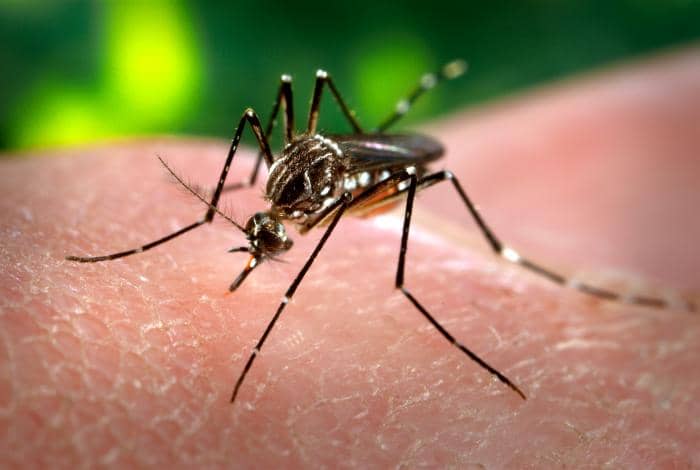
Dengue is a viral illness transmitted by Aedes mosquitoes, principally Aedes aegypti, which is well established across South Florida. Unlike many mosquito species, Aedes aegypti breeds in small containers of standing water around homes rather than in marshes or ditches, and it bites primarily during daylight hours.
Miami-Dade County's subtropical climate sustains Aedes aegypti populations year-round, which means the window for local transmission is not confined to summer as it is in more temperate parts of the country. That distinguishes South Florida's dengue risk from that of most of the United States.
Dengue symptoms include high fever, severe headache, pain behind the eyes, joint and muscle pain, and rash. Most cases resolve, but a subset progress to severe dengue, which involves plasma leakage, bleeding, and organ impairment and requires hospital care. Severe dengue is more likely in a second infection with a different viral serotype than in a first infection.
Public health guidance distinguishes between travel-associated cases, in which a person acquires the infection abroad, and locally acquired cases, in which transmission occurs within Florida. Locally acquired cases prompt more intensive mosquito control response because they indicate local transmission is occurring.
What residents can do
For measles, the recommendation is verifying vaccination status ahead of the school year, when children congregate and transmission opportunities increase. Florida school entry requirements include MMR vaccination, with exemptions available under state law. Adults uncertain of their status can consult their health care provider, and those born after 1957 without documented immunity are generally advised to receive vaccination.
Anyone who develops fever with rash, particularly after international travel or known exposure, should call ahead before visiting a clinic or emergency department. Advance notice allows the facility to take precautions that prevent exposing other patients in waiting areas.
For dengue, prevention centers on eliminating mosquito breeding sites around the home. Aedes aegypti requires very little water, meaning plant saucers, bottle caps, tarps, gutters, bromeliads, and pet bowls can all support larvae. Emptying and scrubbing containers weekly is the standard recommendation, since scrubbing removes eggs adhering to container walls.
Personal protection includes repellents registered with the Environmental Protection Agency, long sleeves during daylight hours in areas with high mosquito activity, and intact window screens. Travelers returning from dengue-endemic areas should continue using repellent for two weeks after return to prevent local mosquitoes from acquiring the virus.
The mosquito control dimension
Florida operates one of the most developed mosquito control infrastructures in the country, with independent mosquito control districts in many counties funded through dedicated property tax levies. These districts conduct surveillance trapping, larval habitat treatment, and adult mosquito control operations.
Surveillance is central to the response. Districts trap mosquitoes and test them for viruses, and health departments track human cases. When locally acquired cases appear, control operations intensify in the surrounding area, typically combining door-to-door inspection for breeding sites with treatment.
Beyond dengue, Florida mosquito control programs monitor for West Nile virus, eastern equine encephalitis, St. Louis encephalitis, chikungunya, and Zika. Health departments periodically issue mosquito-borne illness advisories and alerts, with an alert indicating heightened risk of transmission to humans.
What this means for the school year
The August return to school is a relevant date for both concerns. Schools bring large numbers of children into shared indoor spaces, which increases measles transmission opportunity if a case is introduced into a population with gaps in coverage.
School immunization requirements are enforced at registration, and families whose records are incomplete may face delays in enrollment. Checking records before the start of the year avoids that.
For mosquito-borne illness, the after-school hours matter more than the classroom. Late afternoon outdoor activity coincides with one of the periods when Aedes aegypti is active, and school athletic programs conducted outdoors in South Florida during August fall within that window.
How Florida tracks reportable diseases
Both measles and dengue are reportable conditions in Florida, meaning clinicians and laboratories are legally required to notify public health authorities when they identify a case. That reporting infrastructure is what allows outbreak detection.
Measles carries an immediate reporting requirement, which places it in the most urgent category alongside conditions where hours matter. The reason is contact tracing: because the virus remains airborne for up to two hours after an infected person leaves a space, identifying exposures requires reconstructing that person's movements quickly.
Contact tracing for measles involves identifying everyone who shared airspace during the infectious period, determining their immunity status, and offering post-exposure prophylaxis where appropriate. Vaccination given within 72 hours of exposure can prevent or moderate illness, and immune globulin has a longer window for certain high-risk individuals.
For arboviral diseases including dengue, reporting triggers a different response. Health departments notify mosquito control districts, which conduct surveillance and treatment in the area surrounding a locally acquired case to interrupt transmission.
The vaccination coverage picture
Community protection against measles requires very high vaccination coverage, higher than for most other vaccine-preventable diseases, because the virus is so transmissible. Epidemiologists generally cite a threshold in the range of 95 percent for two-dose coverage.
That threshold is what makes measles a sensitive indicator of vaccination coverage generally. Diseases requiring lower coverage thresholds tolerate more variation before outbreaks occur; measles does not.
Coverage is not uniform within a state or even within a county. Aggregate statewide figures can conceal individual schools or communities where coverage falls well below the threshold, and those are where introduced cases become outbreaks.
Florida requires specified immunizations for school entry, with exemptions available under state law for medical reasons and for religious objection. Exemption rates have risen nationally over the past decade, contributing to the coverage decline that public health officials have tracked.
Families can obtain immunization records through the state's Florida SHOTS registry, which maintains records for children and, in many cases, adults vaccinated in Florida.
Why dengue is different in South Florida
Dengue transmission requires three elements to coincide: the virus, a competent mosquito vector, and a susceptible human population. South Florida has the second and third year-round, which makes the first the limiting factor.
Aedes aegypti is what epidemiologists call a container breeder and a domestic mosquito. It lives around human dwellings, breeds in artificial containers, and feeds preferentially on people. That behavior makes it both an efficient disease vector and difficult to control through the area-wide spraying used against marsh-breeding species.
Because the mosquito lives in and around homes, control depends substantially on resident action. A mosquito control district can treat public spaces, but the breeding sites that matter most are in backyards.
The virus circulates in four distinct serotypes, and infection with one confers lasting immunity only to that serotype. Subsequent infection with a different serotype carries elevated risk of severe disease, a phenomenon that complicates both clinical management and vaccine development.
Travel-associated cases seed local transmission. A resident infected abroad returns during the viremic period, is bitten by a local Aedes aegypti, and that mosquito can then transmit to others. This is why guidance advises continued repellent use after returning from endemic areas.
What's next
The Florida Department of Health publishes surveillance data on reportable diseases, including arboviral illnesses, on a recurring schedule, and county health departments issue local advisories when conditions warrant.
Measles case counts nationally have continued climbing through 2026, and public health agencies expect that trajectory to depend heavily on vaccination coverage in the communities where cases are introduced. Florida's position in the national ranking will shift with case activity in other states as much as with its own.
Residents seeking current local guidance should consult their county health department, which issues alerts specific to their area and maintains information on vaccination clinics and mosquito control operations.
Spotted an issue with this article?
Have something to say about this story?
Write us a letterComments
No comments yet. Be the first to weigh in.
Related Coverage
Cape Coral Approves Up to $31 Million in Incentives for HCA Florida Hospital on Pine Island Road, Opening Targeted for 2029
16h ago
Florida Dengue Outbreak Reaches 425 Local Cases as Virus Spreads to 11 Counties
1d ago

Florida ABA Therapy Providers Say Molina Has Not Paid Them Since Taking Over Children's Medical Services Plan
2d ago

Moffitt Opens 250,000-Square-Foot Cancer Research Center at Speros Campus in Pasco County
3d ago