Miami Beach Votes to Close Ocean Drive to Cars From Thanksgiving Through March
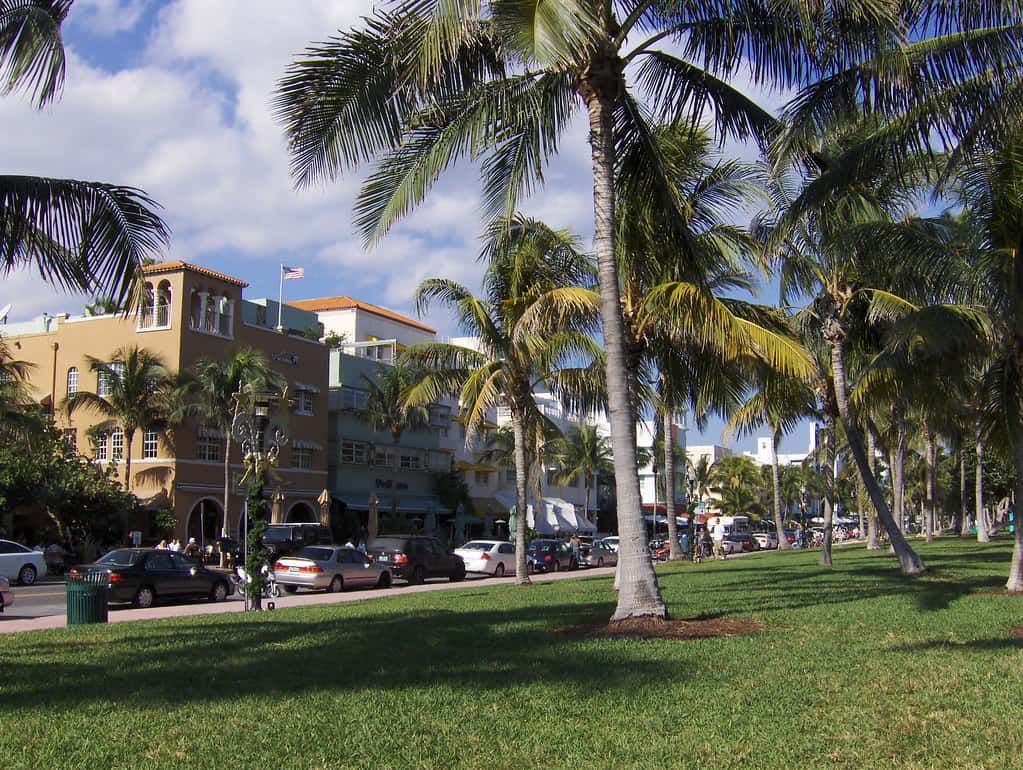
Miami Beach commissioners voted unanimously to close Ocean Drive to vehicle traffic from Thanksgiving through March every year, advancing a change the city has been circling since the pandemic first emptied the street of cars. The 7-0 vote urges Miami-Dade County to authorize the closure between Fifth and 15th streets, the stretch that contains the Art Deco hotel facades most closely identified with South Beach.
The measure originally proposed reopening the drive to cars after Valentine's Day. Commissioners amended it on the floor to extend the closure through the end of March, which captures the full winter tourist season, spring break, and the events calendar that runs through the first quarter. Commissioner Laura Dominguez, who sponsored the action, pointed to feedback from businesses along the corridor reporting that their business increases when the street is pedestrianized.
For South Florida, the vote matters beyond one street. Ocean Drive is among the most photographed blocks in the state and a central asset in Florida's tourism economy. How it functions shapes visitor experience, hotel and restaurant revenue, and the city's long-running effort to change the character of an area that has struggled with late-night disorder.
What the vote actually does
The commission resolution is a request rather than a final authorization. Ocean Drive's status involves Miami-Dade County, and the city's vote urges the county to authorize the seasonal closure. That procedural step is why the measure is framed as the city moving toward a change rather than implementing one outright.
The geographic scope is specific. Fifth Street to 15th Street covers roughly ten blocks fronting Lummus Park and the beach, and it is the segment where sidewalk cafes, hotels, and pedestrian volume concentrate. The blocks north of 15th have a different character and are not part of the proposal.
The seasonal structure is the notable design choice. Rather than a permanent closure or a series of ad hoc event closures, the measure establishes a recurring annual window from Thanksgiving through March. That gives businesses a predictable calendar to plan around and gives the city an annual opportunity to evaluate results.
The amendment extending the window past Valentine's Day into March is substantive rather than cosmetic. March includes spring break, the period that generates both the highest visitor volume and the most difficult crowd management problems Miami Beach faces. Choosing to keep the street closed through that period rather than reopening it beforehand is a deliberate decision about how the city wants to manage those weeks.
How Ocean Drive got here
The street's pedestrian history began as an emergency measure. During the coronavirus pandemic, Miami Beach closed Ocean Drive to cars to allow restaurants to expand seating into the roadway when indoor dining was restricted. What started as a public health accommodation became a preview of an alternative configuration.
The years since have produced a sequence of partial steps and reversals. The city reopened lanes, closed them again for events and holiday periods, ran trial closures, and debated permanent pedestrianization repeatedly. In early 2025 the city decided to keep the drive limited to pedestrians rather than proceeding with a plan to reopen it to cars, and in March 2026 commissioners voted to banish cars from the street, a decision that preceded the current seasonal framework.
That pattern of repeated votes reflects genuine division rather than indecision. Businesses along the corridor have not spoken with one voice. Some operators credit pedestrianization with increasing foot traffic and dwell time. Others have raised concerns about loading and delivery access, valet operations, and guests arriving by car at hotels that front the drive.
Residents in adjacent neighborhoods have their own concerns, principally about traffic diverted onto Collins Avenue and Washington Avenue and about noise. Closing a street does not eliminate the vehicles that used it; it relocates them.
The business case for closing the street
The argument Dominguez cited, that businesses report higher revenue when the street is pedestrianized, matches what has been observed in comparable projects elsewhere. Pedestrianized commercial corridors typically generate longer visitor dwell times, and dwell time correlates with spending.
The mechanism is straightforward. A visitor walking a car-free street moves at a different pace than one navigating a sidewalk beside traffic. Sidewalk cafes gain usable area. Ambient noise falls, which makes outdoor dining more pleasant. Families with young children move through the space more comfortably. Each of those factors independently increases the likelihood that a visitor stops rather than passes through.
Ocean Drive has a specific advantage that not every pedestrianization candidate shares. Its economic value is substantially visual and experiential rather than functional. Visitors come to see the Art Deco facades, walk beside the beach, and photograph the street. Almost none of that requires a car, and vehicle traffic actively interferes with it.
There is also a documented pattern of cruising and vehicle-based disorder on the corridor that pedestrianization addresses directly. Amplified sound systems, aggressive driving, and traffic that turns the drive into a display route have been persistent complaints. Removing cars removes that category of problem entirely rather than trying to police it.
The objections
The logistical case against closure centers on access. Hotels fronting Ocean Drive need guest arrival and departure, luggage handling, and valet operations. Restaurants need deliveries, and deliveries in a dense urban corridor typically happen in the morning when the street would still be closed under a full-time seasonal arrangement. Waste collection has the same problem.
Emergency access is a design requirement rather than an objection, and pedestrianized streets are built to accommodate it. Fire apparatus and ambulances need clear routes, which constrains how furniture, planters, and barriers can be arranged.
Traffic displacement is the concern residents raise most consistently. Collins Avenue and Washington Avenue absorb the vehicles that would otherwise use Ocean Drive, and both already carry substantial volume during the winter season. Parking is the corollary: visitors who drive to South Beach still need somewhere to put the car.
Accessibility deserves explicit attention. A person with a mobility impairment who relies on a vehicle needs a drop-off point within a reasonable distance of a destination. Well-designed pedestrian streets include accessible drop-off provisions, and the details of those provisions determine whether a closure is genuinely inclusive.
Miami Beach's longer strategy
The Ocean Drive decision fits into a broader effort the city has pursued for several years to change what South Beach is known for. Miami Beach has restricted late-night alcohol sales in parts of the entertainment district, increased enforcement during high-volume periods, pursued code enforcement against problem operators, and marketed the city toward a different visitor profile.
That effort has been contentious. Operators whose business depends on late-night volume have opposed restrictions, and litigation has accompanied several of the city's moves. The underlying tension is that the entertainment economy the city built is the same economy generating the problems it now wants to solve.
Pedestrianization fits the strategy because it changes the physical environment rather than relying on enforcement. A street designed for walking, dining, and looking at buildings attracts a different mix of visitors than a street designed for driving through slowly with the windows down.
Historic preservation supports the same direction. The Art Deco Historic District is the reason the corridor has international recognition, and a pedestrian street displays that architecture far better than a traffic corridor does. Preservation advocates have generally supported closure for that reason.
What visitors and residents should expect
If the county authorizes the change, the practical experience for a visitor arriving in late November would be a walkable ten-block corridor with expanded outdoor dining and no through traffic. Arriving by car would mean parking in a garage or lot and walking in, or using a rideshare drop-off at a designated point.
For residents, the winter months would bring more traffic on parallel avenues. Trips that currently use Ocean Drive would shift, and the effect would be most noticeable during peak evening hours and event weekends.
For businesses, the seasonal window provides planning certainty that the previous pattern of intermittent closures did not. An operator can staff, order, and configure outdoor seating around a known calendar, which is a meaningful operational improvement over closures announced event by event.
How this compares elsewhere
Pedestrianized commercial streets are common internationally and increasingly common in the United States. Cities that have converted signature corridors have generally reported increased foot traffic and stable or improved retail performance, though results vary with design quality and with whether the street had a genuine pedestrian draw to begin with.
Design quality is what separates successful conversions from failures. A closed street with nothing but barricades reads as a construction zone. A successful pedestrian street has shade, seating, lighting, programming, and clear circulation, and it handles service access in a way that does not visibly disrupt the space.
Ocean Drive starts with advantages most projects lack: a world-recognized architectural backdrop, a beach and park on one side, an established concentration of restaurants and hotels, and year-round visitor volume. The seasonal approach also lets the city test rather than commit permanently, which is a reasonable posture for a street this economically significant.
The tourism economics behind the decision
Tourism is Florida's largest private industry, and Miami Beach is one of a handful of destinations that carries international recognition on its own. Ocean Drive functions as the visual shorthand for that recognition, appearing in marketing, film, and photography in a way no other Florida street does.
The winter window the commission chose is the highest-value period in the local calendar. Northern and international visitors arrive from late November through March, hotel occupancy and average daily rates peak, and the events calendar is dense. Closing the street during exactly those months rather than during the slower summer is a decision to apply the change when it affects the largest number of visitors.
Restaurant economics on the corridor depend heavily on outdoor seating, and the pandemic-era closure demonstrated how much capacity a closed roadway adds. A restaurant that can seat into the street rather than only on a sidewalk gains covers without adding square footage, which flows directly to revenue in a business with thin margins.
There is a countervailing consideration that Miami Beach has weighed before. A street that draws very large pedestrian crowds creates its own management problems, including crowd control, sanitation, and the concentration of alcohol service in an open environment. The city's experience with spring break has made those problems concrete rather than hypothetical, which is part of why the extension through March drew attention.
What's next
The immediate step belongs to Miami-Dade County, which the city has asked to authorize the closure. Until that happens, the resolution expresses the city's intent rather than establishing a rule, and the timeline depends on the county's own process.
Implementation details will determine how well the first season goes. Barrier design, delivery windows, rideshare and accessible drop-off locations, parking guidance, and signage all have to be settled before Thanksgiving if the first closure is to run smoothly.
The winter season itself will serve as the evaluation. Business revenue, visitor counts, traffic on parallel corridors, and incident data through March will inform whether Miami Beach extends the arrangement, expands it, or revisits it again, as it has several times before.
Spotted an issue with this article?
Have something to say about this story?
Write a letter to the editor