Darian Mensah Opens 24-for-24 as No. 5 Miami Survives Wake Forest 33-20 in Its ACC Opener
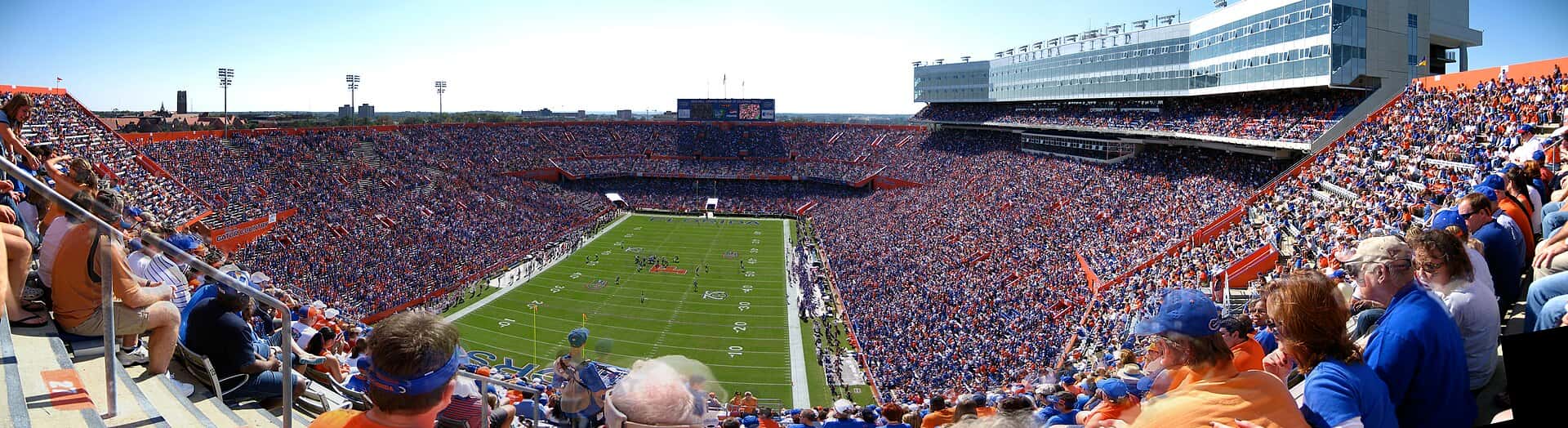
No. 5 Miami opened Atlantic Coast Conference play with a 33-20 win at Wake Forest on Friday night in Winston-Salem, and the story of the game was a quarterback who did not miss. Darian Mensah completed his first 24 passes before throwing an incompletion late in the third quarter, finishing 30 of 34 for 220 yards and three touchdowns.
The streak set a Miami program record for consecutive completions, breaking a mark of 24 set last season by Carson Beck, and it ranked among the longest single-game completion streaks recorded in major college football. It was also, by the numbers, one of the most efficient passing performances a Miami quarterback has produced in a conference game.
The win was less comfortable than the passing line suggests. Miami built a two-score cushion, Wake Forest rallied in the second half, and the Hurricanes needed their defense to hold in the fourth quarter to close it out. For a team carrying a top-five ranking into September, surviving a road opener is worth more than the style points it cost.
What Mensah did
Thirty completions on 34 attempts is an 88 percent completion rate, a figure that would lead the country over a full season by a wide margin. The distribution tells the rest of the story: 220 yards on 30 completions works out to roughly 7.3 yards per completion, which describes an offense taking what the defense allowed rather than pushing the ball down the field.
That is a specific offensive choice, not an accident. An offense built on high-percentage throws, quick reads, and getting the ball to receivers with room to run trades explosive plays for drive continuity. On the road, in a conference opener, against a defense trying to create the turnover that changes a game, it is a defensible way to play.
The streak itself has a practical dimension beyond the record. Twenty-four consecutive completions means twenty-four consecutive snaps that did not end a drive, and drives that do not end produce points and keep a defense off the field. Miami's three passing touchdowns came inside that framework.
Mensah's first incompletion came with 3:18 remaining in the third quarter, which means he was perfect through nearly three full quarters of a road conference game. Quarterback play of that kind is the difference between a top-five team that survives a difficult road trip and one that does not.
How Miami built the lead
The Hurricanes established control in the first half, and Mark Fletcher capped a scoring drive with a rushing touchdown that pushed Miami to a 21-7 lead. That combination, an efficient passing game that moves the ball and a back who finishes drives, is the formula Miami has been building toward.
A 21-7 margin in a road environment changes how both teams play. It allows the leading offense to stay balanced and forces the trailing team into a more aggressive and more predictable approach, which generally favors the defense.
Fletcher's role matters to Miami's larger profile. A team that can run for short-yardage and goal-line scores does not have to convert every red zone trip through the air, and it protects a quarterback from taking on the full burden of finishing drives. In a conference where November games are frequently played in worse conditions than September games, that balance has value.
The Wake Forest rally
Wake Forest did not fold. The Demon Deacons cut into the margin in the second half and made the fourth quarter competitive, and the final 33-20 score reflects a game Miami controlled without ever putting away.
That pattern is worth Miami's attention. Top-ranked teams that repeatedly allow trailing opponents back into games eventually meet one that completes the comeback, and the schedule ahead offers more capable opponents than this one. The Hurricanes will want to look at what changed after halftime.
The defense deserves credit for the part that mattered. Holding a rallying home team without allowing the score that would have made it a one-possession game in the final minutes is a specific accomplishment, and it is the reason Miami is 3-0 in the win column rather than answering different questions.
Wake Forest, for its part, remains a program that plays disciplined football at home and has historically made life difficult for favored ACC visitors. A 13-point loss to a top-five team is not an embarrassing result.
What it means for Miami's season
Miami entered the game ranked fifth nationally, which puts the program in College Football Playoff position if it holds. The expanded playoff format rewards conference champions and strong at-large resumes, and for an ACC team the clearest path runs through winning the conference.
That makes conference games the ones that matter most, and this was the first of them. Road wins in league play are the hardest to get and the most valuable in a resume that a selection committee will eventually evaluate. Winning this one without a signature performance is a better outcome than an impressive loss.
Quarterback stability is the larger development. Miami has cycled through quarterbacks in recent seasons, and a passer completing 88 percent of his throws in a conference road game is the kind of foundation the program has lacked. Mensah replacing Beck and immediately breaking Beck's record is a clean transition in a place where transitions have often been messy.
The schedule provides the real test. A top-five ranking in September is a statement about expectation rather than achievement, and Miami's ranking will be settled by how it handles the ACC opponents capable of beating it and by whether the second-half lapses continue.
The Friday night slot
Playing on Friday rather than Saturday put Miami alone on the national television schedule, which has competitive and recruiting implications. A top-five program with a full national audience and no competing games is valuable exposure in a recruiting environment where visibility matters.
It also creates a different rhythm. A Friday game shortens the practice week and gives a team an extra day of recovery before the next one, which matters more as a season accumulates.
For fans in South Florida, a Friday night road game competes directly with high school football, which in Florida is a genuine conflict rather than a theoretical one. Week 5 of the Florida high school season included marquee matchups across the state, including a Jacksonville meeting between Mandarin and Raines that drew statewide attention.
Florida's college football weekend
Miami's win opened a significant Saturday for the state's programs. Florida State, at 1-1 after an ACC loss, travels to Tuscaloosa to face No. 10 Alabama at 3:30 p.m. on ABC, a rematch of the Seminoles' upset win over the Crimson Tide last season.
The Gators opened their season at home against Florida Atlantic and Campbell before moving into the meat of an SEC schedule, and UCF continues its Big 12 slate. Florida sends more teams into power conference play than nearly any other state, which means most September weekends carry consequences somewhere in the state.
That density is why in-state recruiting matters so much. Florida high school football produces enough talent to stock several power conference rosters, and the performance of Miami, Florida State, Florida, and UCF in September shapes which programs get the benefit of it.
The completion streak in context
Consecutive completion streaks are a quirky statistic, and they are also a reasonable proxy for a specific kind of quarterback play. A passer does not string together two dozen completions by accident. It requires accurate throws, receivers catching contested and uncontested balls alike, protection holding long enough for the timing to work, and a play caller giving the quarterback throws he can make.
The streak also requires avoiding the throwaway. A quarterback under pressure with no open receiver is often coached to throw the ball out of bounds, which registers as an incompletion and is the correct football decision. Twenty-four consecutive completions implies either that pressure rarely forced that situation or that Mensah found an outlet each time it did.
That Beck held the previous Miami record of 24, set just last season, is a detail with some weight. Beck arrived at Miami as an established quarterback and produced a strong season, and a successor breaking his most notable single-game record within a year is not the usual pattern after a quarterback change.
Records of this type tend to be short-lived, because efficiency spikes in individual games and because the modern passing game produces high completion rates across the sport. What the streak establishes is that Miami has a quarterback capable of playing a clean game on the road in conference play, which is a more durable finding than any single number.
The defensive performance
Miami's defense allowed 20 points, which is a respectable figure in a road conference game, and it made the plays that mattered in the fourth quarter. Holding a team that had cut into a deficit and had the crowd behind it is a different task than holding a team that never threatened.
The unit's job was complicated by the offense's approach. An efficient short passing game produces first downs and controls the clock, but 220 passing yards on 30 completions means relatively few explosive plays and relatively little field position cushion. Miami's defense spent the game protecting a lead built on drives rather than on quick strikes.
Wake Forest's second-half production is the item worth reviewing. Adjustments at halftime are a normal part of football, and a home team trailing by two scores will change what it is doing. Whether Miami's defense was slow to respond or simply gave up yardage while protecting the margin is the distinction that determines how concerning the stretch is.
For a team with playoff aspirations, the defense's identity will be tested against offenses more capable than this one. Twenty points allowed in an ACC road opener is a reasonable baseline, and the schedule will reveal whether it holds.
What's next
Miami moves forward at 3-0 with a conference win in hand and a quarterback playing at a level that will draw attention. The Hurricanes' remaining ACC schedule will determine whether the top-five ranking survives October.
The specific thing to watch is second-half performance. Miami has now built a comfortable lead and then allowed an opponent to make the fourth quarter interesting, and against better teams that sequence produces losses rather than survived road games.
Mensah's efficiency is the other storyline worth tracking. Completion percentage at that level is difficult to sustain, and the question is whether the offense can add explosive plays without sacrificing the efficiency that has defined it. A team averaging 7.3 yards per completion will eventually need more against a defense that takes away the short game.
Spotted an issue with this article?
Have something to say about this story?
Write us a letterComments
No comments yet. Be the first to weigh in.
Related Coverage

Heat Open Season vs. Timberwolves as Giannis Antetokounmpo Makes Miami Debut and LaMelo Ball Starts in Minnesota
1h ago
Nikita Kucherov Scores Twice as Lightning Rally From Two Goals Down to Beat Canucks 4-2
1d ago

Lionel Messi Scores Twice, Inter Miami Beats Atlanta United 3-1 to Hold Second in the East
1d ago

Carter Verhaeghe, Sam Bennett Hat Tricks Power Panthers Past Kraken 8-3 in Record Night
2d ago