NASA's Roman Space Telescope Begins a Million Mile Journey After Launching From Kennedy
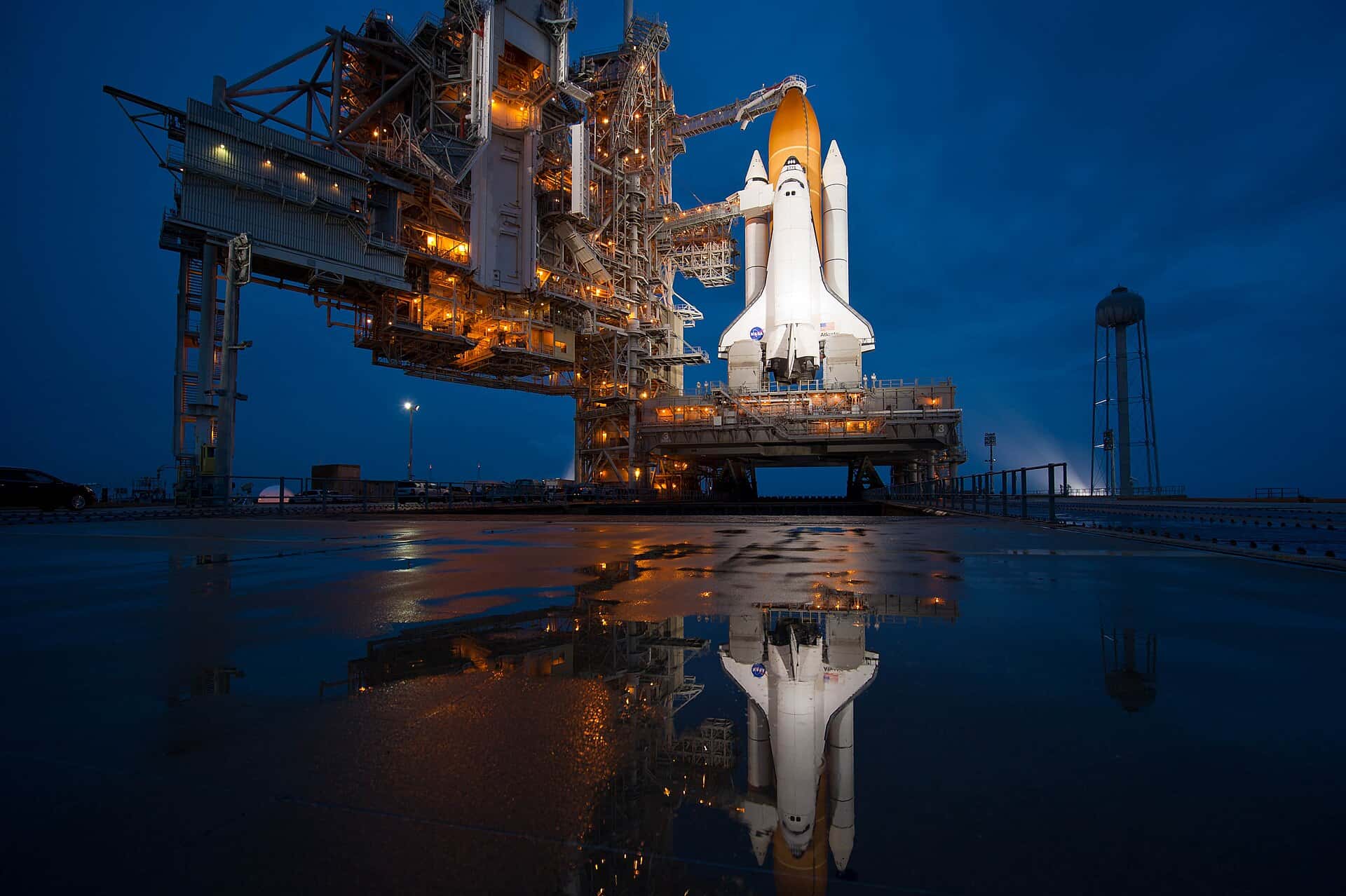
NASA's Nancy Grace Roman Space Telescope lifted off at 7:26 a.m. Eastern on August 30 aboard a SpaceX Falcon Heavy from Launch Complex 39A at Kennedy Space Center, beginning a three-month, million-mile journey to the orbit where it will spend its operating life. The observatory reached orbit roughly ten minutes after liftoff, and NASA anticipates releasing its first images by early 2027.
The launch was the latest in a run that has made Florida's Space Coast the busiest launch site on the planet. The region hosted a record 109 orbital launches in 2025, a figure that would have been implausible a decade ago and that reflects a fundamental restructuring of how the United States reaches orbit.
Roman is a flagship NASA observatory, the same category as Hubble and the James Webb Space Telescope, and it is designed to address questions those instruments cannot. Its distinguishing feature is field of view: Roman carries a wide-field instrument capable of imaging an area of sky roughly 100 times larger than Hubble's at comparable resolution.
What Roman is built to do
The observatory's primary science targets are dark energy, exoplanets and infrared astrophysics. Dark energy, the term for whatever is driving the accelerating expansion of the universe, is the largest unresolved question in cosmology, and answering it requires surveying enormous numbers of galaxies across cosmic time.
Roman's wide field is what makes that survey possible. Measuring the expansion history of the universe requires statistics across millions of objects, and an instrument that images a small patch of sky at a time cannot accumulate that sample within a mission lifetime.
The exoplanet work uses a different technique than the transit method that produced most known planets. Roman will conduct a microlensing survey, watching for the brief brightening that occurs when a foreground star and its planets pass in front of a background star and bend its light. Microlensing is uniquely sensitive to planets in wide orbits and to free-floating planets that are not bound to any star.
Roman also carries a coronagraph instrument, a technology demonstration designed to block starlight and directly image planets around nearby stars. Direct imaging is the technique that will eventually allow atmospheric analysis of potentially habitable worlds, and the coronagraph is a proving ground for the instruments that will follow.
Why Falcon Heavy and why 39A
Launch Complex 39A is the pad that sent Apollo missions to the moon and launched the majority of space shuttle flights. SpaceX leases it from NASA and has rebuilt it for Falcon 9, Falcon Heavy and eventually Starship operations, which makes it one of the more visible symbols of the transition in American spaceflight.
Falcon Heavy is the vehicle NASA has increasingly turned to for heavy science payloads. It has flown planetary missions and large observatories, and its cost structure compares favorably to the alternatives for missions in its performance class.
The commercial launch procurement model is now standard for NASA science missions. Rather than operating its own launch vehicles, the agency buys launch services competitively, which has reduced costs and shifted vehicle development risk to contractors.
For Florida, that model has meant volume. The Space Coast's launch cadence is driven overwhelmingly by commercial activity, primarily Starlink deployments, with government and science missions layered on top. The infrastructure supporting that cadence, from range operations to recovery vessels, is a Brevard County industry.
What this means for Florida's economy
Space is now one of the more significant sectors of Florida's economy, and its geography is concentrated. Brevard County hosts Kennedy Space Center and Cape Canaveral Space Force Station, along with the manufacturing, processing and support operations that cluster around them.
Employment in the sector spans NASA civil servants, Space Force personnel, contractor engineers and technicians, and a supply chain that reaches across the state. The growth has been sufficient to reshape Brevard County's housing market and its school enrollment patterns.
Tourism is a secondary but real contributor. Launch viewing has become a draw in its own right, and the Kennedy Space Center Visitor Complex is among Florida's more visited attractions. A high-profile launch fills hotels along the Space Coast.
Space Florida, the state's aerospace development authority, has worked to expand the sector beyond launch into manufacturing and research, with the argument that a state hosting the world's busiest spaceport should capture more of the value chain than the launch itself.
The observatory's long road
Roman's development history illustrates how flagship missions actually get built. The concept emerged from a decadal survey process in which the astronomy community ranked priorities, and it was originally known by a technical acronym before being renamed for Nancy Grace Roman, NASA's first chief astronomer and a figure central to the case for Hubble.
The mission faced budget pressure repeatedly during development, including proposed cancellations in multiple budget cycles. It survived through congressional appropriations that restored funding, a pattern common to large science missions whose costs and timelines extend across administrations.
Cost discipline was a stated priority for the project, in part as a response to the overruns that characterized the James Webb Space Telescope's development. Roman benefited from inheriting hardware, including a primary mirror transferred from another program, which reduced both cost and schedule.
The result is an observatory that reached the pad closer to its planned schedule and budget than flagship missions typically do, which matters for the political sustainability of the ones that follow.
Where it is going and what happens next
Roman is traveling to the second Lagrange point, a location roughly a million miles from Earth on the side opposite the sun, where the gravitational balance between Earth and the sun allows a spacecraft to maintain a stable position with minimal fuel.
That location is where James Webb operates, and it is preferred for infrared observatories because it allows the spacecraft to keep the sun, Earth and moon on one side, behind a shield, so the instruments can be kept extremely cold. Infrared detection requires cold optics, since a warm instrument sees its own heat.
The three-month cruise is followed by a commissioning period during which instruments are cooled, calibrated and tested before science operations begin. NASA's estimate of first images by early 2027 accounts for that sequence.
Roman's survey data will be released to the scientific community, and the volume is expected to be substantial enough that a significant portion of its science output will come from researchers who had no role in building it. Wide-field surveys generate archives that produce discoveries for decades.
What wide-field surveys have historically produced
The history of astronomy suggests that the most consequential results from survey instruments are frequently the ones nobody planned for. The Sloan Digital Sky Survey, which mapped a large fraction of the northern sky beginning in 2000, produced discoveries across fields its designers had not targeted, from the structure of the Milky Way to the demographics of quasars.
That pattern arises because a survey generates a catalog rather than an answer. Researchers with entirely different questions query the same data, and the instrument's value compounds as the archive grows and as analytical techniques improve.
Roman's data volume will be substantial enough to require significant computational infrastructure to work with, and NASA has been building the processing and archive systems in parallel with the spacecraft. Machine learning approaches to survey data have advanced considerably since the last generation of instruments launched.
The combination with other observatories is where the science gets strongest. Roman surveying wide fields and James Webb following up on individual targets in detail is a division of labor that neither instrument achieves alone, and coordinating the two is an explicit part of NASA's science planning.
The Space Coast calendar ahead
Launch activity from Florida continues at a rate that has made individual missions unremarkable to residents who once stopped what they were doing to watch. Falcon 9 missions from both Cape Canaveral Space Force Station and Kennedy Space Center recur on a schedule closer to a transportation system than to an event.
Artemis II, the first crewed mission of NASA's lunar program, launched from Kennedy Space Center in April 2026, carrying four astronauts on a lunar flyby. That mission returned human spaceflight beyond low Earth orbit for the first time since Apollo, and it was launched from Florida.
Additional providers have expanded the Space Coast's activity beyond SpaceX, with United Launch Alliance and Blue Origin operating from Cape Canaveral. Multiple active providers is what distinguishes the current era from the shuttle period, when the coast's fortunes rose and fell with a single program.
Watching a launch from Florida
For residents and visitors, the practical information around a Space Coast launch has become routine. Viewing sites along the Indian River in Titusville, Playalinda Beach, Jetty Park in Port Canaveral and the beaches of Cocoa Beach and Cape Canaveral all offer sightlines, with visibility depending on the launch azimuth and time of day.
Falcon Heavy launches are the most visually dramatic of the routine Florida missions, because the vehicle's side boosters return to land at Cape Canaveral, producing simultaneous sonic booms audible across Brevard County and often well beyond. Residents unfamiliar with the pattern regularly report them as explosions.
Launch times shift frequently, sometimes by days, for weather, range conflicts and technical issues. Anyone planning travel around a launch is advised to treat the published time as provisional, a reality that Space Coast tourism operators have learned to build into their offerings.
Night launches are visible across much of central Florida and, under the right conditions, from as far as South Florida and the Gulf coast. The plume illuminated by high-altitude sunlight after a pre-dawn or post-sunset launch produces the effect that generates the most photographs.
What's next
Roman completes its cruise to the second Lagrange point over the next three months, followed by commissioning. NASA has said to expect first images by early 2027, which is the next public milestone.
For Florida, the more immediate story is the launch manifest, which continues to fill. Whether the Space Coast exceeds its 2025 record is a question that will be answered in December, and the trend line has pointed steadily upward for a decade.
Spotted an issue with this article?
Have something to say about this story?
Write us a letterComments
No comments yet. Be the first to weigh in.
Related Coverage
Another Fed Rate Hike May Be Coming as Mortgage Rates Top 7% and Florida Gas Hits $4.08
26m ago
DHS Says Ukrainian and Sudanese TPS Holders Keep Protection Past Oct. 19, but No Formal Notice Leaves Florida Families Waiting
16h ago

Rubio Defends Trump's Waiver of New Russia Sanctions as Rick Scott Voices Doubts
18h ago

Miami's Cuban exiles sour on Trump and Rubio as Cuba action stalls nine months after Maduro's capture
20h ago