NTSB Investigates Deadly Amazon Cargo Jet Crash at Miami International
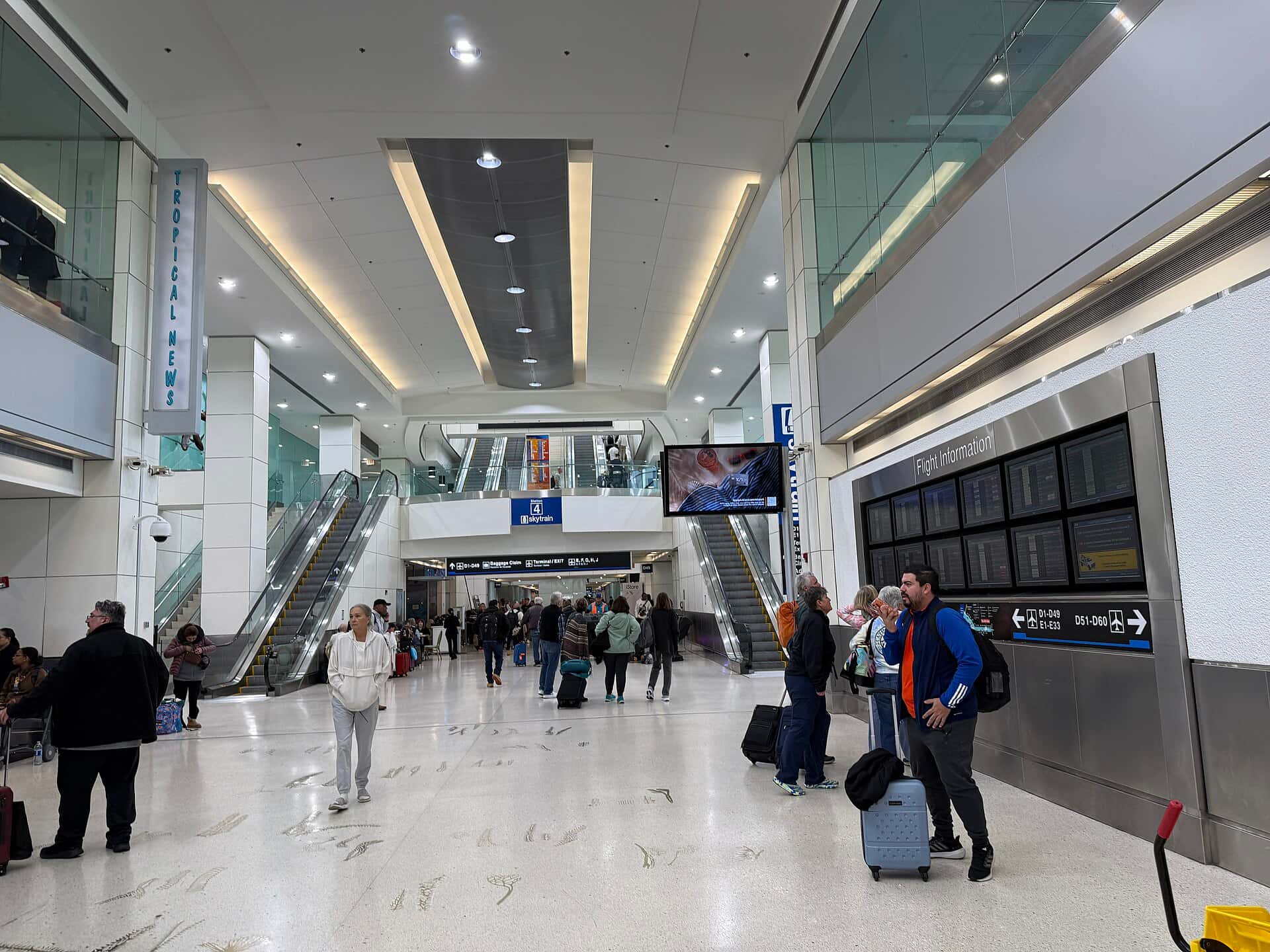
National Transportation Safety Board investigators arrived at Miami International Airport on Monday to begin examining why an Amazon Air cargo jet overran a runway on Sunday afternoon, struck two vehicles and caught fire, leaving five people dead and five injured. The aircraft, a Boeing 767 operating as Flight 7598 for Amazon Air under carrier 21 Air LLC, had flown from Luis Munoz Marin International Airport in San Juan, Puerto Rico, and was landing at Miami shortly before 2 p.m. when it failed to stop within the runway surface. The crash forced a ground stop of roughly three hours, closed all four runways at one of the busiest cargo airports in the Western Hemisphere and disrupted more than 450 flights.
What happened Sunday
According to accounts from federal aviation authorities and airport officials, the aircraft was landing on runway 30 when it continued past the end of the pavement. It struck a van carrying seven people that was inside the airport perimeter and then an SUV outside the perimeter before coming to rest and igniting.
Airport rescue and firefighting crews responded within minutes. Five people were confirmed dead and five others were injured, with the casualties including occupants of the vehicles struck by the aircraft. Officials have described the scene in stark terms, with one calling it utter devastation.
The 767 involved is a widebody twin-engine jet widely used in cargo service. It was operated by 21 Air LLC, a Miami-based carrier that flies on behalf of Amazon Air, the retailer's freight network. Amazon Air does not hold its own operating certificate for most of its fleet and instead contracts with certificated carriers.
Airport operations were suspended and then restored in stages Sunday evening. By Monday, most runways had reopened, though a portion of the airfield remained closed to preserve the accident site for investigators.
How the investigation will work
The NTSB is the independent federal agency responsible for determining probable cause in civil aviation accidents. Its go-team typically arrives within 24 hours of a major accident and organizes the investigation into working groups covering operations, human performance, structures, powerplants, systems, air traffic control, weather, survival factors and recorders.
The two recorders aboard, commonly called the black boxes, are central to the early work. The cockpit voice recorder captures audio from the flight deck and the flight data recorder captures hundreds of parameters including airspeed, altitude, thrust settings, brake and spoiler deployment and control inputs. Both are typically shipped to the NTSB laboratory in Washington for readout.
Investigators will also examine the runway surface, the aircraft's braking and thrust reverser systems, the weather at the time of landing, the crew's duty history and the carrier's maintenance records. Runway overrun investigations frequently focus on approach speed, touchdown point, surface conditions and deceleration performance.
The NTSB does not assign blame or liability. It issues findings of probable cause and safety recommendations. A preliminary report generally appears within a few weeks, while a final report with probable cause typically takes 12 to 24 months.
Why Miami matters to the cargo system
Miami International Airport is the largest cargo gateway in the United States for trade with Latin America and the Caribbean. It handles more international freight than any other American airport and is the primary conduit for perishables including cut flowers, seafood and produce moving north, as well as electronics, pharmaceuticals and e-commerce parcels moving south.
That role makes a multi-hour closure at Miami a regional supply chain event rather than a purely local one. Perishable freight is time-sensitive by definition, and a ground stop at the peak of a Sunday afternoon arrivals bank cascades into missed connections, cold chain risk and rebooking across dozens of carriers.
The airport is also a significant employer. Aviation and related activity at Miami International supports hundreds of thousands of jobs across Miami-Dade County, and cargo handling is a substantial share of that base.
Airport officials moved quickly to restore operations, and normal schedules were largely reestablished within a day. The financial cost of the disruption, spread across airlines, freight forwarders and shippers, will take longer to tally.
The runway safety question
Runway overruns are among the most studied categories of aviation accident. Federal regulators and international bodies have devoted years to reducing them through improved approach guidance, standardized stabilized approach criteria and engineered materials arresting systems, known as EMAS, installed beyond runway ends at many airports.
EMAS beds are made of crushable material designed to absorb the energy of an aircraft that leaves the paved surface, decelerating it without catastrophic damage. They have been credited with stopping numerous overruns at American airports. Whether such a system was present at the end of the runway involved, and if so how it performed, is the kind of question the NTSB will address directly.
Airport perimeter geometry will also draw scrutiny. Miami International is hemmed in by dense urban development, with roadways running close to airfield boundaries. The presence of vehicles in the path of the overrun, both inside and outside the fence, is a survival factors issue that investigators examine specifically.
Any recommendations that emerge could apply well beyond Miami. NTSB findings on runway safety have historically driven changes at airports nationwide, and Florida operates several constrained urban airfields with similar characteristics.
Cargo aviation under the microscope
The accident renews attention on the contract cargo sector, in which large shippers rely on smaller certificated carriers to operate aircraft on their behalf. The model is longstanding and legal, and the carriers involved are subject to the same Federal Aviation Administration oversight as passenger airlines operating under the same rules.
Critics of the model have argued over the years that the layered structure can blur accountability between the brand on the fuselage and the operator holding the certificate. Industry representatives counter that certification and oversight attach to the operator regardless of who sells the freight capacity, and that safety records in the sector are comparable to the broader industry.
Aging widebody freighters are another recurring topic. Many cargo 767s are converted former passenger aircraft with substantial airframe hours. Conversion and continued airworthiness are regulated, but the fleet profile differs meaningfully from passenger operations.
None of these general considerations establishes anything about this specific accident. They describe the terrain investigators will cover, not conclusions.
What it means for Floridians
For travelers, the immediate disruption has passed. Passengers whose Sunday or Monday itineraries through Miami were canceled should work through their carriers, and standard rebooking and refund rules apply to cancellations driven by an airport closure.
For South Florida residents living near the airport, the accident is a reminder of how close the airfield sits to surrounding roads and neighborhoods. Miami-Dade officials have historically balanced airport growth against encroachment, and the outcome of this investigation may inform that conversation.
For Florida's trade economy, the exposure is structural. The state's position as the gateway to Latin America depends on the reliability of a small number of facilities. Redundancy exists at Orlando, Tampa and Fort Lauderdale, but none of them can absorb Miami's international cargo volume on short notice.
Families of the victims face a longer road. Identification, notification and the civil litigation that typically follows an accident of this kind will unfold over months, on a separate track from the federal safety investigation.
How the airport recovered operations
Closing all four runways at Miami International is an extraordinary step, and restoring them in stages requires coordination between the airport authority, the FAA and the investigating agency. Runways adjacent to an accident site frequently remain closed longer than the rest of the airfield.
The immediate effect on Sunday was a ground stop, an FAA order that holds departing aircraft bound for the affected airport at their origin. Ground stops prevent aircraft from launching into a situation where they cannot land, which is safer than holding them in the air.
More than 450 flights were delayed or canceled as of Sunday night. Recovery from a disruption of that size typically takes 24 to 48 hours, because crews and aircraft end up out of position and duty-time limits constrain how quickly airlines can restore schedules.
By Monday, most runway capacity had been restored while a portion of the airfield remained closed for the investigation. That is the standard sequence, and it reflects the balance between preserving evidence and restoring a facility that the region depends on.
What investigators will not say yet
One of the most consistent features of NTSB practice is restraint about cause. The agency releases factual information as it is verified and declines to speculate about why an accident happened until analysis is complete.
That discipline exists for good reason. Early theories in aviation accidents have been wrong often enough that the agency treats premature conclusions as a hazard in themselves, both because they mislead the public and because they can bias the investigation.
Investigators will publish a preliminary report that states what is known: aircraft, crew, flight history, weather, wreckage distribution and the sequence of events as far as it can be established. It will not assign cause.
Members of the public and news organizations frequently fill that gap with speculation drawn from flight tracking data and radio recordings. Those sources are real but incomplete, and they do not include the flight data recorder parameters that ultimately determine what the aircraft was doing.
What's next
The NTSB will remain on scene for several days documenting wreckage, interviewing witnesses and coordinating with the FAA, the carrier, the manufacturer and Miami-Dade Aviation Department. Once the on-scene phase ends, the work moves to laboratory analysis and records review.
Expect a preliminary report within roughly 30 days. It will describe factual circumstances without analysis or probable cause. The full report, with findings and any safety recommendations, will follow much later.
The FAA separately may issue directives if the investigation surfaces an urgent airworthiness or operational concern. Such actions can come quickly when warranted and apply fleet-wide.
Until then, official information will come from the NTSB and Miami-Dade Aviation Department rather than from speculation about cause. Investigators have cautioned repeatedly across many accidents that early theories are frequently wrong, and there is no reason to expect this case to be different.
Spotted an issue with this article?
Have something to say about this story?
Write us a letterComments
No comments yet. Be the first to weigh in.
Related Coverage

South Florida Federal Judge Enters $668,390 Penalty Against Honduran Woman Who Ignored Deportation Order
2h ago
RFK Jr. and Dr. Oz Unveil Rewritten Federal Alzheimer's Plan at Broward Health as Florida Cases Near 580,000
2h ago

Mortgage Rates Ease to 7.32% in First Weekly Dip Since August as Florida Home Sales Slow
4h ago

FEMA Sends Florida $94 Million for Hurricane Repairs and Storm Hardening as Panhandle Awaits Isaias Decision
7h ago