Florida dengue cases slow in Hillsborough as emergency nears end, but November rains raise risk in Central Florida
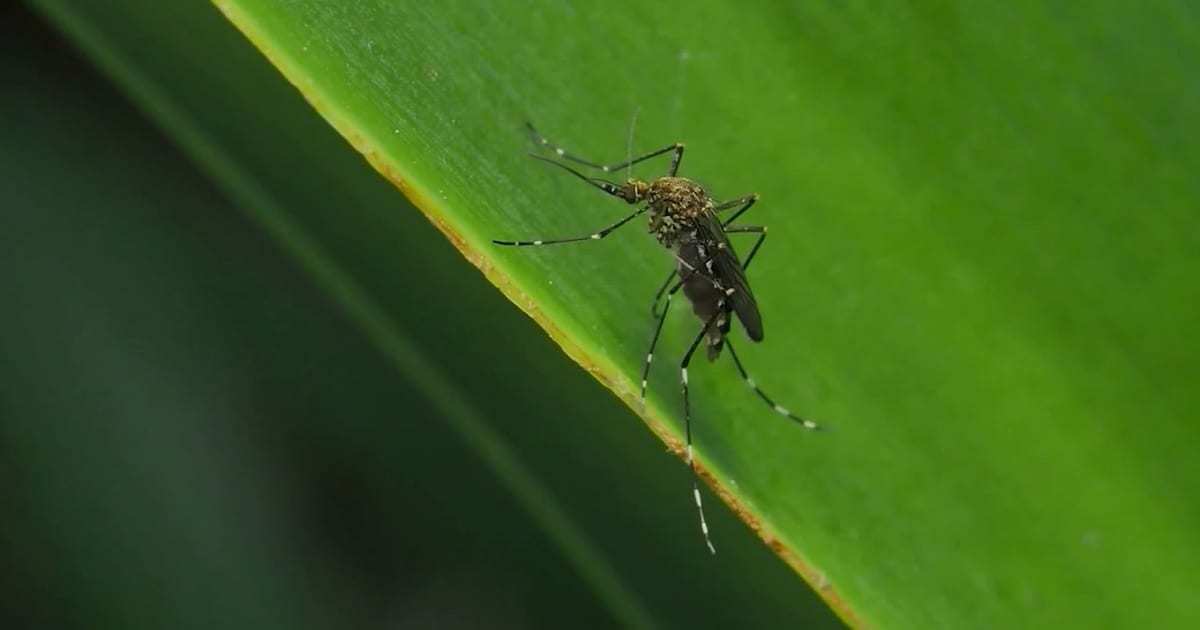
Florida's record dengue outbreak is showing signs of slowing in its Tampa Bay epicenter just as a soaking week of November rain gives mosquitoes new places to breed across Central Florida. Hillsborough County added seven locally acquired dengue cases in the Florida Department of Health's latest weekly report, down from 19 the week before, and the county's local state of emergency is set to expire on Thanksgiving Day unless it is extended again, FOX 13 reported Wednesday.
Statewide, the health department has now confirmed 669 cases of dengue acquired in Florida this year, according to its arbovirus surveillance report for Nov. 15 to 21. Eighteen new local cases were reported that week. The state has also logged 476 dengue cases in people infected while traveling abroad, which means locally acquired cases now outnumber travel cases, something Central Florida Public Media reported is a first for the state.
Where the cases are
Locally acquired dengue has been reported in 12 Florida counties this year, but the outbreak is overwhelmingly concentrated in the Tampa Bay area. Hillsborough and Pinellas counties together account for 620 of the 669 cases. The health department's latest county counts, by place of exposure, are below.
| County | Local cases, 2026 | Change from prior week |
|---|---|---|
| Hillsborough | 494 | Up 7 |
| Pinellas | 126 | Up 10 |
| Miami-Dade | 16 | No change |
| Orange | 16 | Up 1 |
| Pasco | 6 | No change |
| Citrus | 3 | No change |
| Manatee | 2 | No change |
| Seminole | 2 | No change |
| Brevard, Broward, Palm Beach, Polk | 1 each | No change |
| Statewide | 669 | Up 18 |
Nearly all of the cases that have been typed in a lab involve one strain of the virus, DENV-2, which accounts for 607 of the 669 local cases. Four Miami-Dade cases were DENV-3. The state has also found dengue virus in 22 mosquito pools this year.
Hillsborough's emergency nears its end
Hillsborough County Administrator Bonnie Wise first declared a local state of emergency over dengue on Sept. 24. Under Florida law, a local emergency lasts up to seven days unless it is extended or rescinded, so the county has renewed it every week since. Wise signed the most recent extension on Nov. 19, keeping the emergency in effect through Nov. 26, according to FOX 13. As of Wednesday morning, the county's emergency orders page still listed that extension as the latest.
The emergency has backed an intensive mosquito control campaign. County crews increased air and ground treatments after surveillance found dengue virus in mosquitoes in multiple neighborhoods, FOX 13 reported. Pasco County issued its own local emergency the same day as Hillsborough in September.
The health department's report suggests the pace of new cases is easing as the season cools. By date of illness onset, September was the peak month, and only three cases so far have an onset date in November, though the department cautions that there is often a lag between when someone gets sick and when the case is confirmed and reported.
| Month of onset | Local cases |
|---|---|
| July | 21 |
| August | 173 |
| September | 298 |
| October | 174 |
| November (so far) | 3 |
The outbreak has been deadly in at least one case. In September, the health department confirmed that locally acquired dengue caused the death of an 80-year-old Tampa woman, WUSF reported, the first dengue death in the Tampa Bay area in nearly a century, according to a University of South Florida expert.
Rain raises the risk in Central Florida
Mosquito control officials in Central Florida say the week of heavy rain that hit the region before Thanksgiving could undo some of the progress. East Orange County received 12 inches of rain from Nov. 17 to 20, and Apopka received just over 5 inches, according to the National Weather Service, Central Florida Public Media reported. Orange County has recorded 6.59 inches of rain so far this November, compared with 0.07 inches last November.
Steve Harrison, director of Orange County Mosquito Control, said mosquito trap counts are running four to six times higher than last year. He told the station that this year's El Niño was probably the biggest factor: a dry spring and early summer let mosquitoes stockpile eggs in containers, and later rains hatched them into a large population.
"We want you to continue to be thinking about mosquito prevention," Harrison told Central Florida Public Media. The station reported 10 locally acquired cases in Orange County, the most ever there, all in the Apopka and Pine Hills communities. The state's weekly report, which counts cases by where people were exposed, attributes 16 to Orange County.
FOX 13 noted that rain can create breeding opportunities but does not by itself establish that dengue cases will rise. The U.S. Centers for Disease Control and Prevention says Aedes mosquito eggs can survive dry conditions and that development from egg to adult generally takes seven to 10 days, which is why officials stress checking yards regularly after storms.
How dengue spreads
Dengue is spread by Aedes mosquitoes, chiefly Aedes aegypti, a species that lives close to people and lays eggs in containers that hold even small amounts of water. A mosquito picks up the virus by biting an infected person and then passes it on when it bites someone else. The virus does not spread directly from person to person.
Many infections cause no symptoms, so experts believe the true number of infections is higher than the reported count, Central Florida Public Media reported. When symptoms occur, they can include fever, body aches, bone pain, pain behind the eyes, nausea and vomiting. A second infection with a different strain can raise the risk of severe dengue, which can be life threatening.
How to protect yourself
The Florida Department of Health urges residents to drain and cover:
- Drain standing water from garbage cans, buckets, pool covers, flowerpot saucers, coolers, toys and anything else that collects water, at least once or twice a week. Mosquitoes can breed in as little water as a bottle cap holds.
- Cover skin with loose, long-sleeved shirts and long pants when outdoors.
- Use an EPA-registered insect repellent and follow the directions on the label.
- Cover doors and windows with screens and repair broken ones.
Orange County mosquito control asks residents to tip, toss and cover containers and to empty standing water at least every five days. Orange County residents can request mosquito control service by calling 311. In Hillsborough County, residents can reach Mosquito Management Services at 813-635-5400.
Anyone who develops a sudden fever with body aches, eye pain or a rash should see a doctor and mention possible mosquito exposure, health officials advise.
What's next
Unless County Administrator Bonnie Wise signs another extension, Hillsborough's local emergency will lapse on Thanksgiving Day. With trap counts in Orange County running well above last year after the late-November rains, Central Florida mosquito control officials are urging continued prevention, and residents heading into the long holiday weekend can cut the risk at home by emptying anything that collected rainwater last week.
The Department of Health publishes its arbovirus surveillance report weekly. The next report, covering Nov. 22 to 28, will show whether the slowdown in Hillsborough holds and whether the rain has started to show up in new Central Florida cases.
Spotted an issue with this article?
Have something to say about this story?
Write us a letterComments
No comments yet. Be the first to weigh in.
Related Coverage

Sarasota Memorial Deal Highlights Lee Health's Looming Jan. 1 Split With UnitedHealthcare
1d ago
Florida AG James Uthmeier Sues Leapfrog Group, Alleging Hospital Safety Grades Misled Patients Into Refusing Care
3d ago
Federal Orders Keeping OUC's Stanton Coal Unit Running Have Cost Ratepayers $25.6 Million, as Health Experts Warn of Pollution Risks
4d ago

43 Florida Hospitals Earn Leapfrog Straight-A Safety Honors as State Slips to Ninth
5d ago