Orange County Fire Chief Anthony Rios Resigns After County Vehicle Questions

Orange County Fire Rescue Chief Anthony Rios has resigned, ending his tenure atop one of the largest fire departments in Florida after questions arose about his answer to a county commissioner regarding a newly purchased county vehicle assigned to him. Rios submitted his resignation letter to Orange County Mayor Jerry Demings on Tuesday, July 28, with the departure effective Friday, July 31. Deputy Chief John Westmoreland has been named acting fire chief.
The resignation follows an exchange at a county budget workshop on July 15, during which Rios was asked directly whether he had received a new vehicle. According to reporting on the meeting and on subsequent public records requests, Rios answered that he had not, while county procurement records showed that a 2026 Ford Expedition costing roughly 61,000 dollars had been purchased and assigned to the fire chief's position.
In his resignation letter, Rios acknowledged that his response at the workshop was insufficient. He stated that although the purchase complied with all county procurement policies and procedures, his answer did not fully communicate the complete context and, as a result, could only be perceived as inaccurate. He did not dispute that the vehicle purchase itself was properly authorized.
How the dispute unfolded
Orange County's budget process runs through a series of public workshops in July, during which department heads present spending requests to the Board of County Commissioners and answer questions in open session. Fire rescue is among the largest single line items in the county's general fund, covering personnel, apparatus, stations, and emergency medical services across a jurisdiction that includes unincorporated Orange County and several municipalities under contract.
The vehicle question arose during a broader commission discussion about capital spending and fleet costs at a moment when commissioners were pressing departments to justify discretionary purchases. Commissioners have been weighing service demands against a budget environment in which growth in property values has not fully kept pace with rising personnel and equipment costs.
After the workshop, public records obtained by local news organizations showed the Expedition had been ordered and assigned to the chief's position. The gap between the chief's on-the-record answer and the procurement documentation became the focus of coverage in the days that followed, and the resignation came less than two weeks after the workshop exchange.
County officials have said the purchase followed established procurement rules. The issue that ended Rios's tenure was not the legality of the transaction but the accuracy and completeness of what an appointed department head told elected commissioners in a public meeting.
Who Anthony Rios is
Rios took over Orange County Fire Rescue just over a year ago, stepping into a department that responds to hundreds of thousands of calls annually across a rapidly growing metropolitan county. The agency covers a service area that includes major tourism corridors, convention facilities, residential subdivisions expanding into former agricultural land, and a substantial commercial and industrial base.
The chief's role in Orange County carries responsibility for emergency medical services in addition to fire suppression, and the department has faced the same recruitment and retention pressures that have affected fire agencies across Florida. Rising call volume, aging apparatus, and competition with neighboring departments for certified paramedics have been recurring themes in recent budget cycles.
Rios's short tenure means his departure interrupts several initiatives mid-stream, including staffing plans tied to new station construction in growth areas of the county. Deputy Chief Westmoreland now assumes those responsibilities in an acting capacity while the county determines how to proceed with a permanent appointment.
The accountability question
The episode has drawn attention in Central Florida because it turns on a narrow but consequential principle: what an appointed official says on the record to elected officials during a public budget hearing. Florida's public records and open meetings laws are among the broadest in the country, which means procurement documents, fleet assignments, and meeting transcripts are all routinely available to residents and journalists.
That transparency architecture is what allowed the discrepancy to surface within days. County purchase orders, vehicle assignment records, and the video record of the workshop are all public documents, and the comparison between them required no investigation beyond a records request.
For county commissioners, the incident lands during the most scrutinized phase of the annual budget cycle, when departments are asking for money and commissioners are asking whether existing spending has been justified. Public confidence in the answers given during those hearings is the mechanism by which the process functions at all.
What it means for Orange County residents
In the near term, residents should see no change in fire and emergency medical response. Operational command of Orange County Fire Rescue sits with a deep bench of deputy and district chiefs, and station-level staffing, dispatch, and mutual aid agreements with neighboring jurisdictions are unaffected by a change at the top.
The larger consequence is budgetary and administrative. The county is in the middle of setting its spending plan for the coming fiscal year, and a leadership vacancy at a major department during that process complicates the negotiation over staffing levels, apparatus replacement schedules, and station construction timelines.
Residents in fast-growing parts of the county, including the Horizon West area and the eastern corridor toward the Econlockhatchee River, have been pressing for improved response times as new subdivisions come online. Those conversations now continue with an acting chief rather than a permanent one.
Local impact across Central Florida
Orange County Fire Rescue does not operate in isolation. Automatic and mutual aid agreements link it to Orlando Fire Department, Seminole County Fire Department, Osceola County Fire Rescue, and other agencies across the metropolitan region, meaning that staffing and equipment decisions in one jurisdiction ripple outward.
Regional emergency management also depends on the county's fire rescue leadership. Orange County plays a central role in hurricane response planning for Central Florida, including shelter support, post-storm search operations, and coordination with the Florida Division of Emergency Management. With the Atlantic hurricane season now past its midpoint, continuity in that role matters.
Other Florida counties have faced similar transitions, and the usual pattern is an acting chief serving through a national search that can take several months. Whether Orange County follows that path or promotes from within has not been announced.
How Florida counties handle fleet and take-home vehicles
Take-home vehicles for senior public safety officials are common across Florida local government, and they are usually justified on operational grounds. A fire chief, an emergency manager, or a law enforcement commander is expected to respond directly to incidents at any hour, and a marked or equipped vehicle stationed at their residence shortens that response.
Because the justification is operational, the vehicles are typically equipped with radios, emergency lighting, and command equipment rather than being ordinary passenger cars. Full-size sport utility vehicles are the common choice for that reason, and their purchase prices reflect the equipment package as well as the base vehicle.
Counties buy those vehicles through competitive procurement, frequently using state or cooperative purchasing contracts that establish pricing in advance. That process is what county officials referred to when they said the Orange County purchase complied with procurement policy.
The recurring friction is not usually about legality. It is about visibility. Fleet purchases appear in budget documents that few residents read until a specific vehicle becomes the subject of a public exchange, at which point the cost becomes a proxy for broader questions about spending discipline.
What the county budget calendar looks like
Florida counties operate on a fiscal year beginning October 1, and state law sets a detailed timetable for adopting budgets and property tax rates. Property appraisers certify taxable values in July, which is why budget workshops cluster in that month.
After certification, counties adopt a proposed maximum millage rate, which is disclosed to property owners through the notice of proposed property taxes mailed in August. Two public hearings follow in September, after which the board adopts a final budget and millage.
That structure gives residents defined opportunities to comment before adoption, and it means the July workshops are where departments make their case internally before the numbers become public in the August notices. Department head credibility during those workshops shapes what commissioners approve.
Orange County will complete that cycle with an acting fire chief presenting on behalf of the department. Whether the transition affects the department's funding outcome will be visible in the adopted budget in September.
Fire service staffing pressures statewide
Whoever leads Orange County Fire Rescue next inherits a workforce problem shared across Florida. Fire departments statewide have competed for certified firefighter-paramedics for years, and the competition has intensified as call volume has grown faster than population.
The driver is emergency medical service. In most Florida jurisdictions, medical calls now account for the large majority of fire department responses, which means the certification that matters most is paramedic rather than firefighter. Paramedic training is lengthy, and the pipeline through state colleges has not expanded at the pace departments need.
Departments compete on pay, benefits, shift structure, and pension terms, and neighboring jurisdictions routinely recruit from each other. For a county the size of Orange, losing experienced personnel to a smaller neighbor offering better terms is a recurring budget argument.
That is the context in which the department's funding request will be evaluated in September. Staffing decisions made in this budget cycle determine response capacity for years, because hiring and training lag authorization by many months.
What's next
Mayor Demings and the Board of County Commissioners will determine the process for selecting a permanent fire chief. Under the county's charter structure, the mayor holds administrative authority over department leadership, with the board exercising oversight through the budget.
The county's budget hearings continue through the late summer, with final adoption of millage rates and the spending plan required before the start of the new fiscal year on October 1. Fire rescue's request will be presented under acting leadership.
Residents can review Orange County budget workshop materials, procurement records, and meeting video through the county's public records portal. The Florida Press will report on the selection process for a permanent chief as it develops.
Spotted an issue with this article?
Have something to say about this story?
Write us a letterComments
No comments yet. Be the first to weigh in.
Related Coverage

Miami Fire Rescue Leaders Push $450 Million Safe and Ready Bond to Cut Response Times as Critics Warn of Debt
9h ago
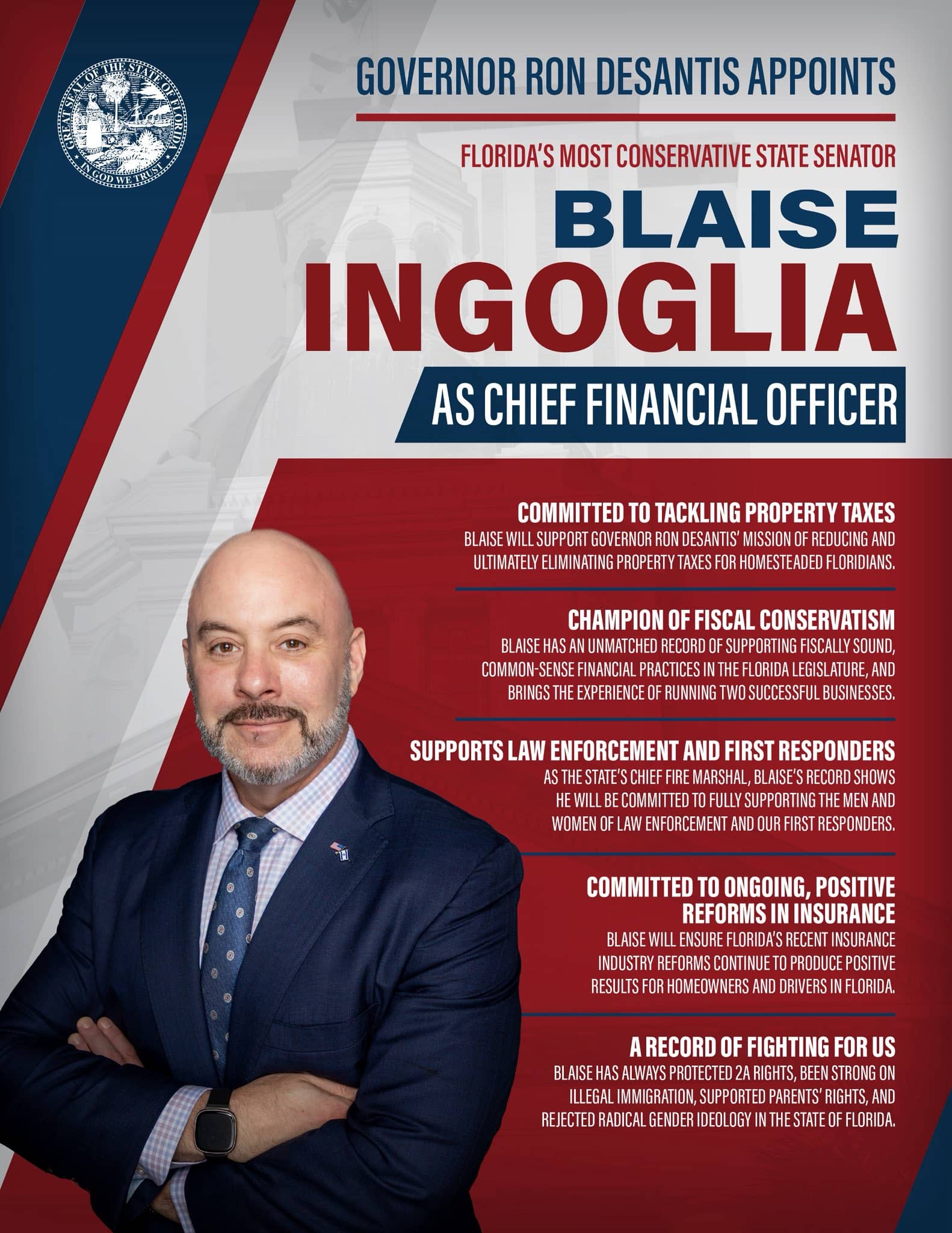
Florida Cabinet Races 2026: Uthmeier, Ingoglia and Simpson Face Democratic Challengers on Nov. 3
11h ago

Florida AG James Uthmeier Says He Wants to Go Beyond the Six-Week Ban, Presses Case Arguing Surrogacy Contracts Are Unconstitutional
1d ago

Harry Shorstein, five-term Jacksonville-area state attorney and juvenile justice reformer, dies at 86
2d ago