Orlando Removes All 42 Swans From Lake Eola After Avian Flu Outbreak
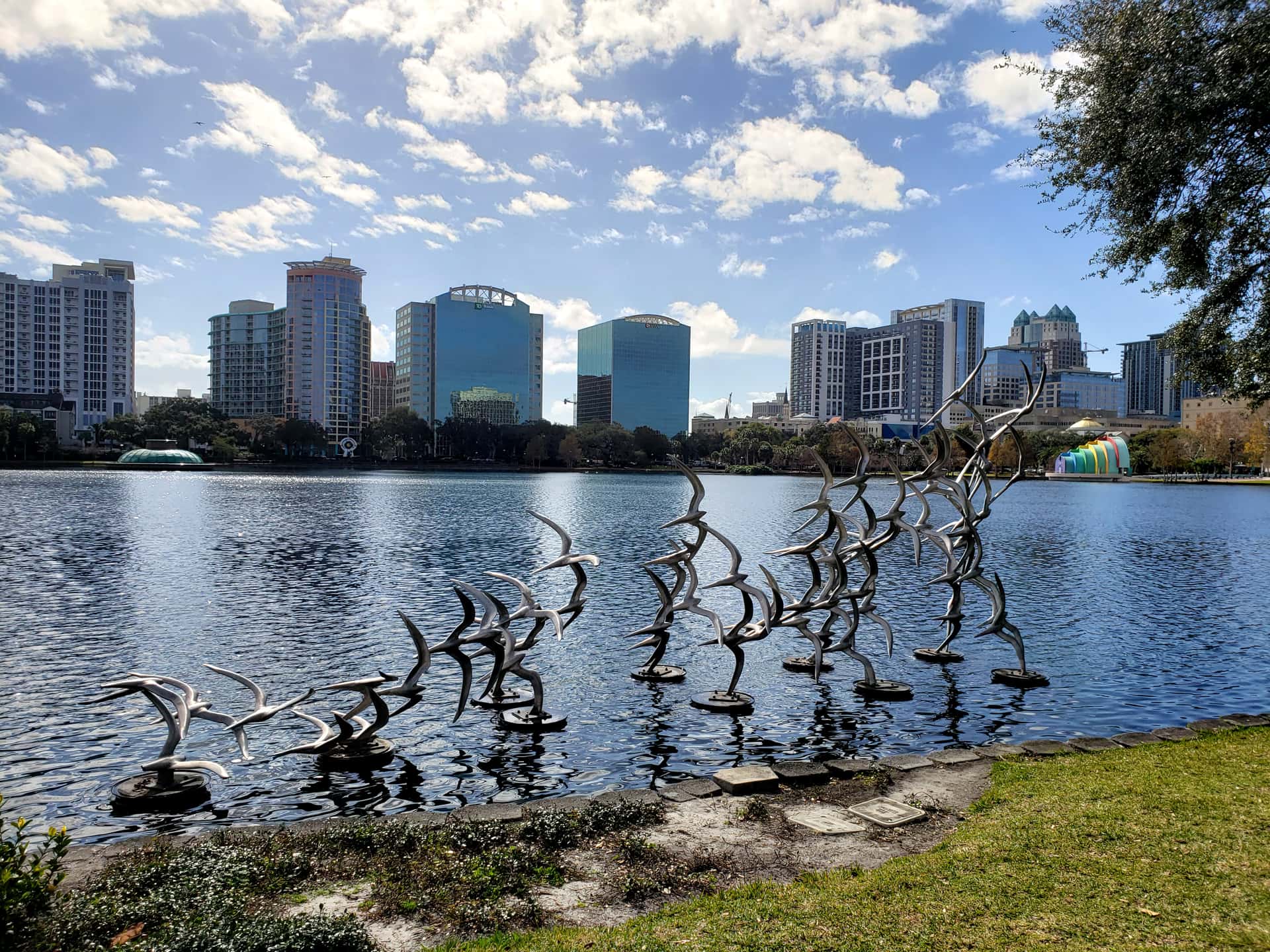
For the first time in decades, Lake Eola is without its swans. The City of Orlando removed all 42 captive swans from the downtown lake early Saturday morning and relocated them to a sanctuary, closing out a program that has defined the park's identity, and much of Orlando's civic imagery, for generations.
The city cited two converging pressures: a deadly avian influenza outbreak that killed nearly 30 of the birds earlier this year, and the difficulty of protecting a captive flock during the park's planned $60 million renovation. Park rangers, animal handlers and wildlife experts carried out the transfer, and the city said the swans will continue to receive care at the sanctuary.
The decision has been building since spring. Orlando announced in May that it intended to rehome the flock following a review involving state wildlife regulators, and the removal Saturday executed that plan. What remains unsettled is whether the swans come back at all.
What happened Saturday morning
The relocation took place in the early morning, before the park filled with the joggers, dog walkers and farmers market crowds that use Lake Eola on summer weekends. The city said park rangers worked alongside animal handlers and wildlife experts to capture and transport the birds safely to a sanctuary, where they will remain while officials address the impacts of avian flu and move forward with construction.
All 42 captive birds were removed. The lake's wild waterfowl population, which includes ducks and other species that come and go on their own, is not part of the managed flock and was not subject to the transfer.
Orlando has not published a timeline for the swans' potential return. City officials have described the program as paused rather than permanently ended, but no date has been attached to that pause, and the renovation timeline alone suggests the lake will be swan-free for an extended period.
The avian flu outbreak that started it
The proximate cause was disease. Highly pathogenic avian influenza moved through the Lake Eola flock earlier this year and killed nearly 30 swans, a loss that represented a substantial share of the managed population and forced the city into an active management posture rather than routine care.
Highly pathogenic avian influenza has circulated widely in North American wild bird populations in recent years, carried along migratory flyways and spilling into domestic poultry, backyard flocks and managed collections. Florida sits at the terminus of the Atlantic Flyway, which makes the state a regular destination for waterfowl that may be carrying the virus. Waterfowl are among the species most commonly implicated in transmission.
A managed flock on an urban lake is a particularly difficult setting to control an outbreak. The birds are confined to a defined body of water, they congregate, they interact with wild birds that cannot be excluded, and they are handled by staff and approached by the public. Once the virus is established in that setting, options narrow quickly.
The city said in May that it was pausing the swan program after the outbreak, and that decision was made in coordination with a state wildlife review. Saturday's removal completed it.
A $60 million renovation with no room for a flock
The second driver is construction. Lake Eola Park is scheduled for a renovation projected to cost roughly $60 million, a project substantial enough to reshape how the park functions.
Planned elements include expanded amphitheater seating, new restrooms with connecting concession stands, and relocation of the swan boat marina. The amphitheater at Lake Eola, the Walt Disney Amphitheater, hosts concerts and civic events, and expanded seating points toward heavier programmed use of the park. Moving the swan boat marina, meanwhile, touches the exact shoreline infrastructure the flock depends on.
Construction of that scale brings heavy equipment, noise, altered shorelines, staging areas and months or years of disruption to the lake edge. Protecting a captive flock through it would require either substantial temporary enclosures or moving the birds anyway. The city concluded that moving them was the more defensible option.
The renovation is a significant public investment in downtown Orlando's central green space, and it reflects a broader municipal bet that Lake Eola should function as a high-capacity event venue as well as a neighborhood park. The swans, in that framing, became a constraint on the site rather than a fixed feature of it.
What Lake Eola's swans have meant to Orlando
It is difficult to overstate how thoroughly the swans are woven into Orlando's self-image. The birds appear on city materials, in tourism photography, on merchandise and in the swan-shaped paddle boats that generations of visitors have rented on the lake. The swan is, functionally, Orlando's civic mascot.
The flock's history stretches back more than a century in the popular account, with the city maintaining and periodically replenishing the birds over the decades. Annual roundups to check the swans' health became a local ritual covered by area media. The birds are a fixture in the way that the Bok Tower carillon is a fixture in Lake Wales or the manatees are a fixture at Blue Spring.
Removing them is therefore not a routine parks decision. It reads to many residents as the loss of something civic rather than the relocation of livestock, which is why the announcement generated substantial public reaction when it was first floated in May and again this weekend.
It also carries an economic footnote. Downtown Orlando's residential density has grown substantially over the past two decades, and Lake Eola is the amenity that anchors that district. Businesses along the park's edge trade on the setting.
The wider Florida picture on avian flu
Orlando's swans are one visible expression of a problem Florida has been managing more quietly elsewhere. Avian influenza has affected wild birds, backyard flocks and commercial operations across the country, and Florida's wildlife agencies routinely field reports of sick or dead wild birds during periods of elevated activity.
State guidance in these situations is consistent: the public should avoid handling sick or dead wild birds, should report clusters of deaths to wildlife authorities, and should keep domestic poultry separated from wild waterfowl. Feeding wild waterfowl at parks and retention ponds, common practice across Florida, concentrates birds and can facilitate transmission.
Human infections from avian influenza remain rare, and are generally associated with close, sustained contact with infected birds rather than with casual proximity at a public park. Public health agencies have nonetheless urged caution for people who work directly with poultry or wild birds.
For Florida's many managed bird collections, including those at theme parks, zoos and wildlife attractions, the Lake Eola outbreak is a reminder that a concentrated flock in an open-air setting carries persistent exposure risk that cannot be fully engineered away.
What a sanctuary transfer involves
Moving 42 captive swans is a logistics operation with veterinary requirements attached. Swans are large, strong birds that can injure handlers and themselves during capture, and each animal has to be caught, restrained, assessed and crated individually before transport.
Birds coming out of an environment with a recent avian influenza outbreak carry additional handling requirements. Receiving facilities typically quarantine incoming animals for an observation period before integrating them with existing populations, and health screening is standard practice for transfers of this type.
Sanctuaries taking a flock this size need enclosure capacity, water features suitable for waterfowl, and veterinary support. Accepting 42 birds at once is a substantial commitment, and it explains why the city spent months arranging the transfer after announcing its intent in May rather than acting immediately.
The birds' long-term welfare at a sanctuary is, in one respect, likely better than at Lake Eola. A managed sanctuary population can be separated from wild waterfowl in ways that an open urban lake cannot, which reduces exposure to the disease that prompted the move.
The debate downtown
Reaction in Orlando has run along a familiar civic fault line. One argument holds that the swans were an artificial installation on a natural lake, that maintaining a captive flock in an open urban water body was always going to produce disease and welfare problems, and that the city made the humane call.
The other holds that the swans are a hundred-year civic institution, that removing them during a construction project looks like a permanent decision dressed as a temporary one, and that the city has not committed to bringing them back.
The absence of a return timeline is what gives the second argument its force. City officials have described the program as paused, but a pause with no stated end date and a $60 million construction project in between is difficult to distinguish from a conclusion.
Residents who want a commitment have a concrete avenue. The renovation will move through public design review and city council approval, and shoreline features that would determine whether a flock could be safely maintained are part of that process rather than separate from it.
What's next
The swans are at a sanctuary and, according to the city, will continue to receive care there. Orlando has not committed to a return date, and the practical constraints suggest any return would come after the renovation is substantially complete and after the avian influenza risk picture has changed.
Several questions remain open. The city has not detailed what conditions would have to be met for the program to resume, whether the returning flock would be smaller, or whether the redesigned park would include enclosures or shoreline features intended to reduce contact between managed and wild birds. Those decisions will likely be made alongside the renovation design rather than separately from it.
Residents who want the swans back have a straightforward avenue: the renovation will move through public meetings and city council review, and the shoreline elements that would determine whether a flock can be safely maintained are part of that design conversation.
In the meantime, Lake Eola enters an unfamiliar chapter. The fountain still runs, the paddle boats are still shaped like swans, and the park is still the center of downtown Orlando. The birds that gave it its identity are somewhere else, for a period nobody has yet defined.
Spotted an issue with this article?
Have something to say about this story?
Write us a letterComments
No comments yet. Be the first to weigh in.
Related Coverage

Deep Gulf life has collapsed since Deepwater Horizon and shows no sign of recovery, Florida-led study finds
2d ago

Residents Sue Miami-Dade to Force a Public Vote on Superyacht Marina at Former Miami Seaquarium
3d ago
Florida Panther Deaths Reach 14 in 2026 as Two Young Females Die on Collier and Hendry Roads
6d ago

71-Year-Old Man Killed by Nearly 12-Foot Alligator While Fishing at Winter Garden Park
Oct 17