Deep Gulf life has collapsed since Deepwater Horizon and shows no sign of recovery, Florida-led study finds
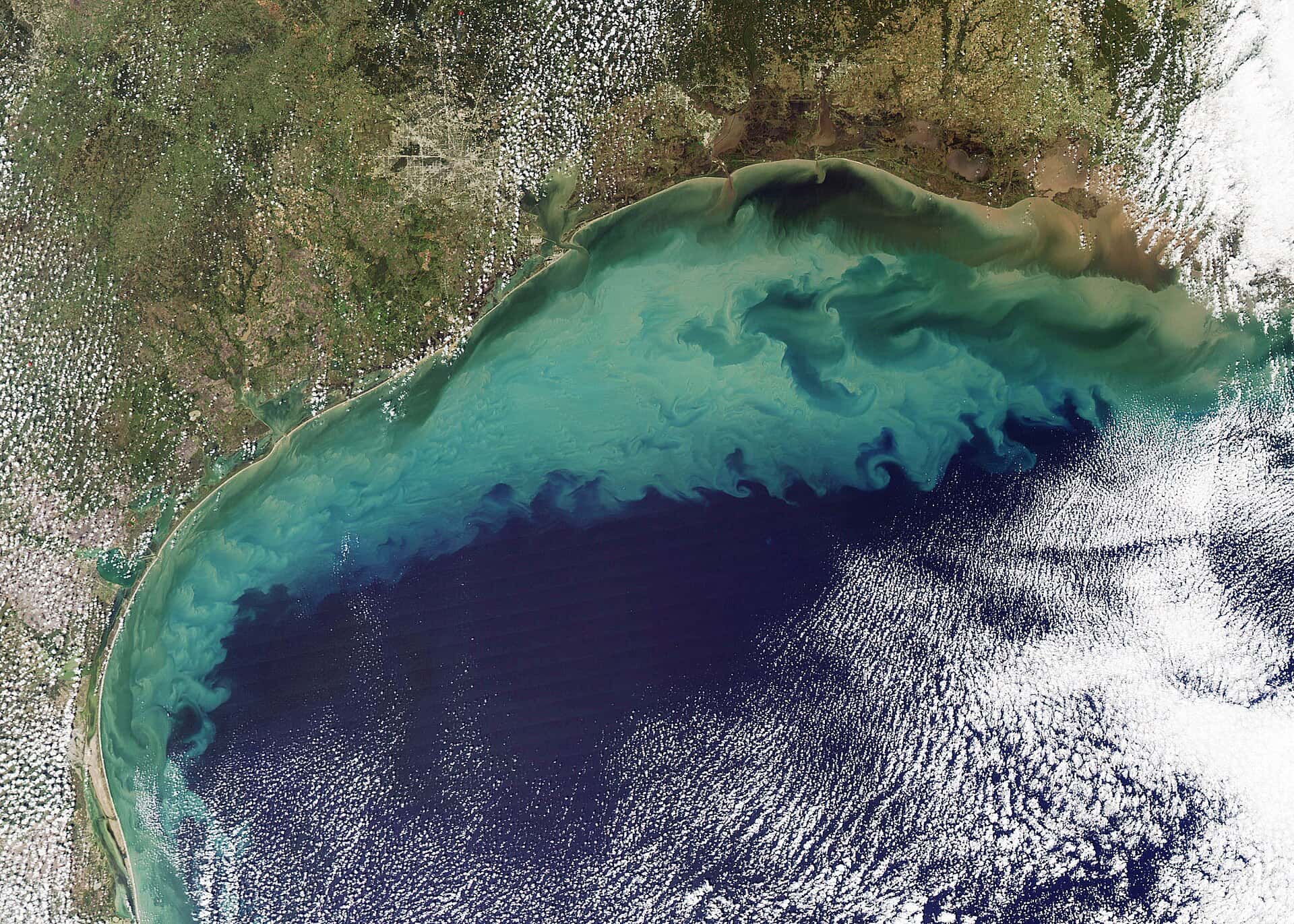
The animals that live in the deep, dark middle layers of the Gulf, the lanternfishes, krill, shrimp-like crustaceans and small squid that feed tuna, whales, dolphins and seabirds, dropped by roughly 60% to 73% in the years after the 2010 Deepwater Horizon oil spill and have shown no clear sign of recovery, according to a new study led by Florida scientists. The research, published Oct. 19 in the Proceedings of the National Academy of Sciences, describes what the authors call a sudden and sustained decline in one of the largest habitats on Earth, and it raises questions for Florida's Gulf fisheries and the Panhandle communities that bore the brunt of the spill.
The paper, titled "Immense but not immutable: A sudden and sustained decline in deep-pelagic life in a large oceanic ecosystem," was led by Tracey T. Sutton of Nova Southeastern University. It draws on more than a decade of sampling by the DEEPEND Consortium, a group of nearly 50 scientists from 11 institutions, including the University of South Florida and Florida International University.
What the scientists found
Between 2011 and 2023, the team collected more than 2,000 net samples and paired them with acoustic surveys and genetic analyses of three lanternfish species, according to FIU. The work focused on the water column from the surface down to about 1,500 meters, with the affected zone running roughly 600 to 5,000 feet deep, a layer FIU says makes up more than 90% of the Gulf's volume.
The declines varied by group, but all were steep.
| Animal group | Decline |
|---|---|
| Krill | Nearly 73% |
| Bristlemouth fishes | 69% |
| Fishes overall | 64% |
| Lanternfishes | 63% |
| Large crustaceans | 62% |
| Small squid and other cephalopods | 60% |
The paper's summary says animal abundances fell by 60% to 85% over a 3.5-year period, depending on the group, and that ecologically foundational animals such as krill and lanternfishes were especially hard hit. The authors report that the drop was steeper than any change recorded over 60 years in the California Current, the only comparable long-term deep-ocean dataset, and that both net sampling and acoustic sensing detected it independently. They conclude the decline meets the criteria for an ecological regime shift, a lasting change to a new, depleted state.
WUSF and WFSU, reporting on the study this week, described the findings as an ecological collapse that has been unfolding since the spill.
Why the deep layer matters
The deep-pelagic zone is not the coral reefs or seagrass beds most Floridians picture when they think of the Gulf. It is the open water far offshore and far below the surface, home to small, often bioluminescent animals that rise toward the surface at night to feed and sink back down by day. Those animals form a critical link in the food web.
Dense patches of prey that were common in 2011 have nearly disappeared, according to FIU, affecting the whales, dolphins, tuna, sharks and seabirds that rely on them. USF invertebrate zoologist Heather Judkins, a co-author, told WUSF that predators may be forced to change how and where they feed. "Think about our tuna and our other big commercial fishes," she said.
The animals also help move carbon from surface waters into the deep ocean as they migrate and feed, so their loss could reduce how much carbon the Gulf stores, the FIU release said.
The habitat is difficult to study, which is part of why the findings took so long to emerge. "We recognize it's a very rare habitat, and it's not an easy ecosystem to study," Judkins said. FIU marine evolutionary biologist Heather Bracken-Grissom told WUSF the declines were "quite alarming and surprising over a short time period."
Linking the decline to the spill
The Deepwater Horizon rig exploded in April 2010, and the damaged well released an estimated 4 million to 4.9 million barrels of oil into the deep Gulf. Responders also injected about 770,000 gallons of chemical dispersant near the wellhead, a step meant to break up the oil before it reached the surface.
The study does not prove the spill directly caused the decline. But the researchers say they ruled out changes in deep-water temperature, oxygen and food availability, as well as inconsistencies in sampling, and conclude that the spill and the response to it are the most plausible explanation for the timing and scale of the drop. Supporting that link, oil-related compounds have been detected in deep-water fish eggs and in cephalopod tissue during the study period, contamination that can cause death, developmental damage and reduced fitness, and may impair the sense of smell some animals use to find mates.
The authors also warn that once populations fall low enough, they can struggle to rebound because individuals have trouble finding mates and reproducing, a phenomenon known as an Allee effect, which could make the shift long-lasting or even irreversible.
Genetic diversity also declined in the lanternfish species the team studied, though the amount varied by species. "Genetic diversity is nature's insurance policy," Bracken-Grissom said in the FIU release. FIU's Kevin Boswell, who led the acoustic surveys, told WUSF the overall picture "probably surprised us all."
A Florida research effort
The work has deep Florida roots. Sutton's lab at Nova Southeastern, based in Fort Lauderdale, leads DEEPEND, and FIU in Miami contributed four co-authors: Boswell, Bracken-Grissom, Marta D'Elia and Pedro A. Peres. USF contributed Judkins' work on squid and other cephalopods.
The consortium grew out of a federal sampling program launched in 2010 to support the government's damage assessment after the spill. DEEPEND was formed in 2015 with funding from the Gulf of Mexico Research Initiative, the BP-funded science program created after the disaster, and has since been supported by NOAA's RESTORE Science Program. Over roughly 12 research cruises of two to three weeks each, scientists used a six-net system that samples six depths of the water column at once, and they have preserved specimens at their institutions for future study.
"Our findings are particularly concerning because these are species that are abundant, widespread," Peres said in the FIU release.
What it means for the Panhandle
Oil from the spill reached Florida's Panhandle beaches in 2010, and the economic damage fell hardest on the eight Gulf counties from Escambia to Wakulla. In 2015, Florida's share of BP's $18.5 billion settlement with the Gulf states was reported at about $3.25 billion, including $2 billion in economic damages, WJCT reported at the time. Most of that economic damages money is managed by Triumph Gulf Coast, a nonprofit created by the Legislature to fund recovery projects in Bay, Escambia, Franklin, Gulf, Okaloosa, Santa Rosa, Wakulla and Walton counties.
The new study suggests that the spill's most lasting damage may be playing out far offshore, in a habitat that supports the predators prized by Florida's commercial and charter fleets. The study does not include fisheries catch data, and the researchers have not tied the decline to specific changes in Florida landings.
What's next
The DEEPEND scientists plan their next research cruise for June 2027 and are seeking funding to continue monitoring the deep Gulf, according to WUSF. With no clear recovery timeline, the researchers say long-term sampling is the only way to know whether the ecosystem is rebounding or settling into a lasting, depleted state.
Spotted an issue with this article?
Have something to say about this story?
Write us a letterComments
No comments yet. Be the first to weigh in.
Related Coverage

Residents Sue Miami-Dade to Force a Public Vote on Superyacht Marina at Former Miami Seaquarium
21h ago
Florida Panther Deaths Reach 14 in 2026 as Two Young Females Die on Collier and Hendry Roads
4d ago

71-Year-Old Man Killed by Nearly 12-Foot Alligator While Fishing at Winter Garden Park
6d ago

Extreme Drought Vanishes From Florida Map After a Week of Rain
6d ago