Panthers and Lightning Open NHL Training Camps as Florida's Hockey Season Resets
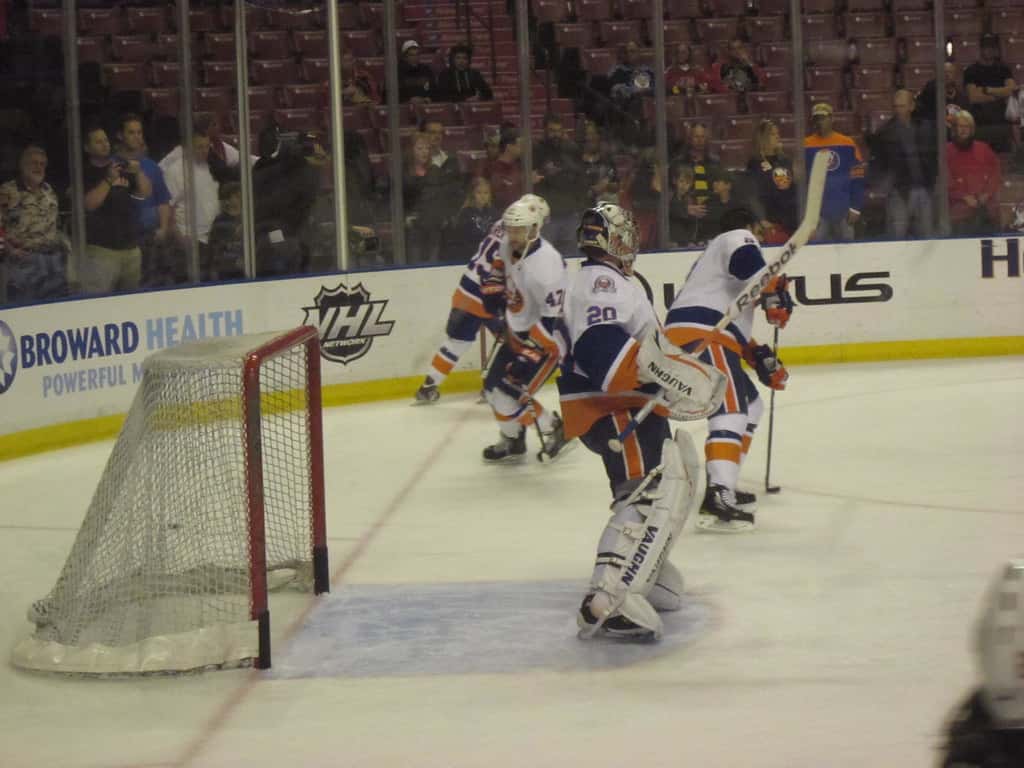
Florida's two NHL franchises opened training camp on the same day this week, with the Panthers taking the ice in Fort Lauderdale and the Lightning beginning on ice sessions at TGH Ice Plex in Tampa, starting a season that both organizations enter with something to prove.
The Panthers announced a training camp roster of 51 players, including one attending on a professional tryout agreement, and opened the 2026-27 season under head coach Paul Maurice after a year that ended without a playoff berth. The Lightning brought 67 players to camp, comprising 37 forwards, 23 defensemen and seven goaltenders, with practices at the Ice Plex free and open to the public.
The simultaneous start underscores how unusual Florida's position in professional hockey has become. A state with no natural hockey tradition now hosts two franchises that have between them dominated the sport's recent history, and both enter this season needing to reestablish something they had.
Where the Panthers stand
The Panthers arrive at camp after a season that broke a long run of postseason appearances. Florida failed to reach the playoffs for the first time since 2019, an outcome made more striking because it followed back to back Stanley Cup championships.
Injuries defined that season. A roster that had been built for deep playoff runs spent the year absorbing absences, and by the time the schedule reached its decisive stretch the team did not have the group it had planned around. Organizations rarely recover from that kind of attrition within a single season.
The roster that reported to camp this week is described as healthy, which is the single most important variable for a team in Florida's position. A core that has won at the highest level does not typically lose the ability to do so in one year, provided the players are available.
The goaltending situation has changed, with longtime netminder Sergei Bobrovsky having departed in free agency, and the defensive group was reworked as well. Those changes mean camp carries more evaluation weight than it would for a team returning intact.
Maurice and the coaching continuity
Paul Maurice leads the Panthers into the season with the credibility that two championships confer. Coaching stability is a genuine competitive advantage in the NHL, where systems take time to install and where players who understand expectations execute faster in game situations.
The challenge for a coach in Maurice's position is different from the one he faced building toward the first championship. A team that has won expects to win, and complacency is the risk. A team that has just missed the playoffs has the opposite problem, having absorbed a season that damaged confidence.
Florida sits in the unusual position of having both at once: a core that knows how to win championships and a most recent season that ended in March rather than June. Reconciling those is the central coaching task of camp.
The Lightning's camp
Tampa Bay's 67 player camp roster reflects the standard NHL approach, bringing a large group that includes prospects, minor league players and tryout candidates alongside the established roster. Most will be assigned before the season begins.
The seven goaltenders in camp is a normal figure and reflects the position's specialized practice requirements rather than an unusual competition. Teams carry extra goaltenders in camp simply to run drills at the volume training requires.
The Lightning's decision to keep practices free and open to the public is consistent with how the organization has built its market presence. Tampa Bay has developed one of the more engaged hockey fan bases in the southern United States, a process that took decades and sustained winning.
For a franchise that reached the Stanley Cup Final three consecutive times earlier in the decade, the current period involves managing an aging core against the salary cap while remaining competitive. That balance is the defining challenge of sustained NHL success.
The Florida rivalry
The Panthers and Lightning have developed into a genuine rivalry, which for two franchises in a state without hockey history is a notable achievement. The teams have met in the playoffs, they compete for the same regional attention, and they have both won championships within the same window.
That competitive proximity has had measurable effects. Youth hockey participation in Florida has grown substantially, ice facilities have been built across both metropolitan areas, and the state now produces NHL prospects rather than merely consuming the sport as entertainment.
The rivalry also creates a scheduling dynamic that benefits both organizations commercially. Games between the two draw better than most regular season matchups for either team, and the proximity makes travel for fans practical in a way it is not for most NHL rivalries.
New rules and the season ahead
Both teams opened camp under the NHL's current rule framework, and rule adjustments entering a season require practice time to absorb. Officiating emphases change how games are called in the early weeks, and teams that adapt quickly gain an advantage over those that accumulate penalties learning the new standard.
Training camp is where those adjustments get installed alongside systems work, special teams structure and line combinations. The exhibition schedule that follows provides the first opportunity to test them against opposition.
For fans, camp is also the first look at prospects who may not make the roster this year but who represent the organization's future. Both Florida franchises have invested in player development infrastructure, and the pipeline is what sustains contention past any individual championship window.
What it means for Florida hockey fans
The practical calendar matters for anyone planning around the season. Training camp runs into exhibition play, and the regular season follows in October, extending through April with the playoffs beyond that for teams that qualify.
Ticket markets for both teams have changed substantially since their championship runs, with demand and pricing considerably higher than during the franchises' earlier years. Public practices, which the Lightning have made freely available, offer access that does not require a ticket purchase.
For the Panthers specifically, the season carries a clear narrative: whether a healthy roster returns the team to contention or whether last season reflected a decline that injuries merely accelerated. That question gets answered over 82 games, not in camp.
Roster questions to watch
Florida's goaltending is the most consequential open question, given the departure of a netminder who had been central to two championships. Goaltending variance drives NHL results more than any other single position, and a team that gets average performance there needs everything else to be exceptional.
The Panthers' reworked defensive group is the second. Defensive structure takes time to develop, and pairings that look reasonable on paper sometimes do not function together in game conditions.
For Tampa Bay, the salary cap constraints that come with a long contending window continue to shape roster construction. Teams in that position rely increasingly on entry level contracts to fill depth roles, which makes prospect development in camp more consequential than it is for teams with cap flexibility.
How training camp actually works
An NHL training camp is less about conditioning than it once was. Modern players report in playing shape, having trained through the summer with personal staffs, which means camp time goes toward systems, chemistry and roster evaluation rather than getting into condition.
Days typically begin with on ice sessions split across multiple groups, allowing coaching staffs to run drills at a pace that would be impossible with the full roster on one sheet. Video review, strength work and medical evaluation fill the remainder.
The roster math drives everything. NHL teams carry a maximum of 23 players on the active roster during the season, which means the majority of the players in camp will be assigned to minor league affiliates or released. For players on the bubble, every shift in camp and every exhibition game is evaluation.
Professional tryout agreements, like the one the Panthers extended to a player in camp, are the mechanism by which veterans without contracts audition for roster spots. They carry no guarantee, and a player on a tryout who does not earn a contract leaves with nothing.
The economics behind the rosters
Every roster decision in the NHL runs through the salary cap, a hard ceiling that no team may exceed. That constraint shapes which veterans get retained, which prospects get promoted and which trades are possible, and it is the reason successful teams eventually have to let contributors leave.
Both Florida franchises have operated near the cap ceiling during their contending windows, which is the normal condition for teams trying to win championships. The consequence is that depth positions get filled with players on entry level or minimum contracts, and development becomes a competitive necessity rather than a luxury.
Goaltending is where that math becomes most visible. Elite goaltenders command substantial cap space, and a team paying market rate for one has correspondingly less available for skaters. Organizations regularly choose between paying for certainty in net and distributing the money across the lineup.
The Panthers' offseason changes in goal and on the back end reflect those tradeoffs. Whether they were the right ones is a question the standings answer over 82 games.
Hockey's Florida footprint
The growth of hockey in Florida over the past decade is measurable beyond attendance. Youth programs have expanded across both metropolitan areas, ice facilities have been built to meet demand, and Florida high school and junior programs now produce players who move into college and professional pipelines.
That development follows a pattern seen in other non traditional markets: sustained winning creates fan interest, fan interest creates youth participation, and youth participation eventually produces local players. The timeline runs roughly a generation, and Florida is now far enough into it to see results.
The two franchises' championships accelerated the process considerably. A state that hosted hockey as a novelty in the 1990s now hosts it as an established part of the sports landscape, with the local player pipeline that implies.
What's next
Both teams will work through camp toward the exhibition schedule, where roster decisions get made and where the last spots on the opening night lineup are determined. Assignments to minor league affiliates typically follow in waves as camp progresses.
The regular season begins in October, and the first weeks will provide the initial evidence on the questions each team carries into the year. For the Panthers, that is whether health restores the level that produced consecutive championships. For the Lightning, it is whether the roster as constructed can compete with the league's top teams over a full season.
Florida has spent the past several years as the center of gravity in the NHL's southern expansion, and both franchises enter this season needing results to keep it there.
Spotted an issue with this article?
Have something to say about this story?
Write us a letterComments
No comments yet. Be the first to weigh in.
Related Coverage
Avalanche Beat Lightning 6-3 as Nikita Kucherov Stays Tied With Steven Stamkos for Franchise Points Record
45m ago

Penguins Blank Panthers 4-0, Spoiling Cooper Black's Record-Setting NHL Debut
18h ago
No. 1 Miami Hosts Pitt in First Game Atop the AP Poll Since 2002
19h ago

Baker Mayfield Set to Return as 1-5 Buccaneers Visit NFC South-Leading Panthers
1d ago