SMU Edges Florida State 27-24 in a Game Delayed by a Stadium Outage
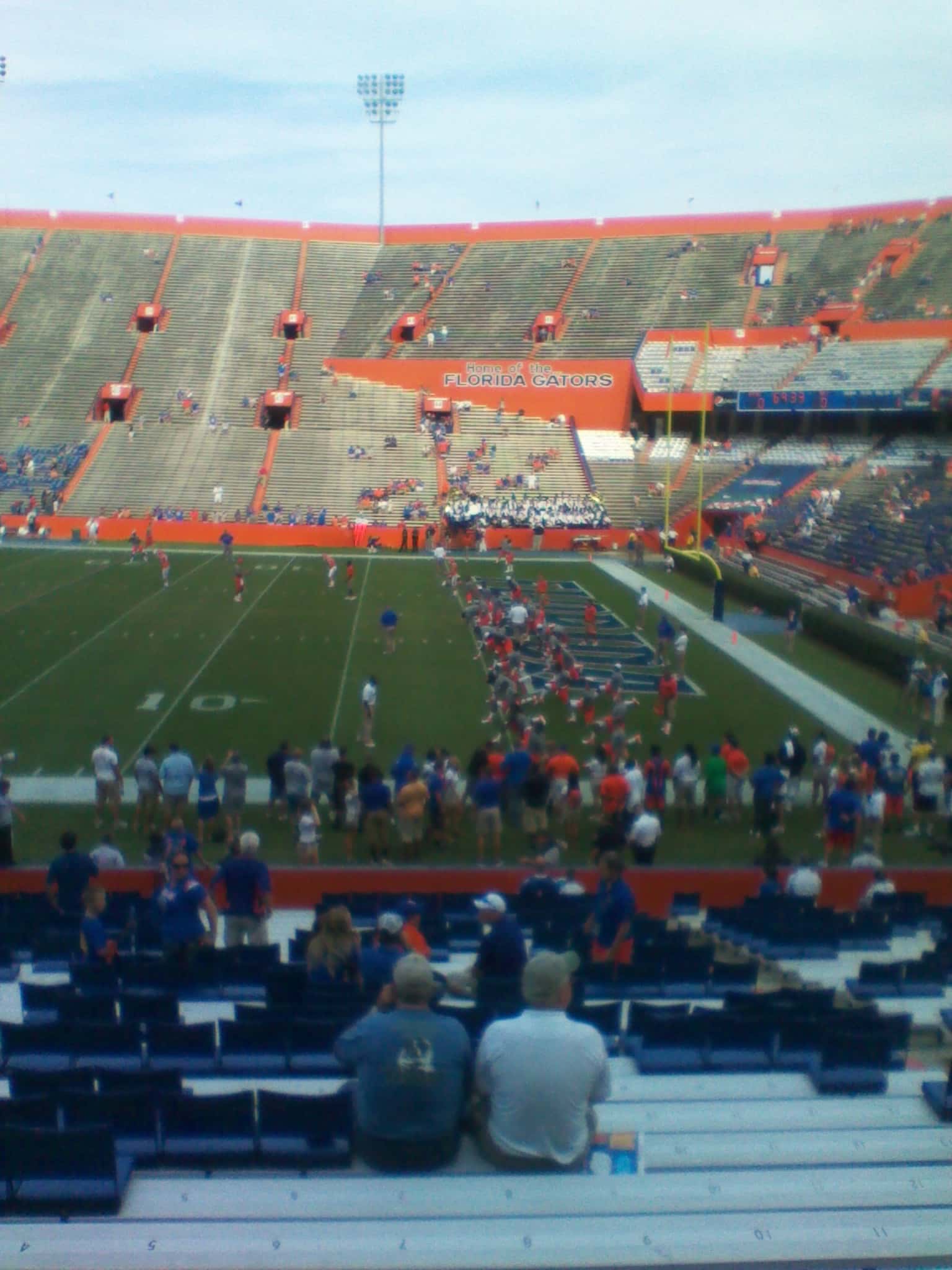
Florida State forced four turnovers, played a game interrupted by a power outage that pushed the schedule back by nearly two hours, and still walked off Doak Campbell Stadium on the wrong end of a 27-24 result. SMU won it on a 20-yard field goal by Nick Reed with 21 seconds remaining.
The scoreline flattered the Seminoles considerably. SMU outgained Florida State 585 yards to 324, a margin that would normally produce a comfortable win rather than a three-point escape. Florida State stayed in the game almost entirely on takeaways and field position, and the arithmetic of what it did with those takeaways is the story of the night.
Head coach Mike Norvell said afterward that the Seminoles came up short, and pointed directly at the failure to convert turnovers into points. Florida State generated four takeaways and produced only seven points from them, a conversion rate that is difficult to overcome against an opponent moving the ball as effectively as SMU was.
What decided it
Third down was the structural problem. Florida State finished 2-for-15 on third down, which is a number that determines everything downstream: possession time, defensive fatigue, field position, and the number of opportunities an offense gets to find rhythm.
When an offense converts two of fifteen third downs, its defense is on the field for long stretches against an opponent that has time to work. SMU's 585 yards reflects both the Mustangs' execution and the cumulative effect of a defense being asked to make stops without rest.
Norvell addressed the passing game specifically, saying the Seminoles had to make plays when opportunities presented themselves and that protection had been inconsistent through the night. Both are correctable in theory. Whether they get corrected inside a season already underway is a different question.
The takeaways that did not convert
Ashlynd Barker and Nehemiah Chandler each recorded second-half interceptions for Florida State, and the Seminoles also recovered a muffed punt that set up a third-quarter touchdown. That touchdown was the seven points off takeaways Norvell referenced.
Turnover margin is one of the most reliable predictors of college football outcomes, and a plus-four night ordinarily produces a win. The exception is when the offense receiving those extra possessions cannot do anything with them, which converts a structural advantage into nothing more than clock.
Defensively, forcing four turnovers against an opponent gaining 585 yards suggests a unit creating chaos without controlling the line of scrimmage. That combination is unstable. It produces occasional big plays and a great deal of yardage allowed between them.
The power outage
The game was delayed roughly two hours by a power outage at Doak Campbell Stadium, an interruption that affected both teams equally in principle and neither team predictably in practice.
Long weather or facility delays are genuinely difficult for players. Warmups have to be repeated, bodies cool, and the emotional peak that a team builds toward kickoff cannot be summoned twice in the same evening. Coaches generally describe the challenge as managing energy rather than strategy.
For fans in the stadium and watching on television, a Monday night game already running late became one that finished deep into the night. For the athletic department, a facility failure during a nationally televised home game is the kind of operational problem that gets reviewed carefully afterward.
Where Florida State stands
The loss puts Florida State in the position of needing to respond early in a season that carries substantial expectations, both from a fan base that has been vocal and from a program that has invested heavily in returning to national relevance.
Norvell said all things would be evaluated when asked whether a change at quarterback was under consideration. That is standard coaching language after a loss, and it commits to nothing, but it does indicate that the staff is not treating the offensive performance as an aberration to be waited out.
The schedule ahead does not offer much cushion. Florida State's remaining slate includes a road test at Alabama and, later in the fall, the rivalry games against Miami and Florida that define how the season is remembered in Tallahassee regardless of the record.
What SMU showed
SMU's 585 yards of offense against a Power Four defense on the road is a legitimate result, and the Mustangs earned the win even if the final margin came down to a field goal. The program has continued its climb since moving into the ACC, and this was a road win of the kind that establishes credibility.
The four turnovers are the concerning note for SMU. A team that gives the ball away four times and still wins by three has an obvious path to improvement, and also an obvious warning about what happens against an opponent that converts.
Nick Reed's game-winning kick from 20 yards was routine in distance and anything but routine in circumstance, coming at the end of a long night in a hostile stadium after a lengthy delay.
What it means for the ACC
Conference races are shaped early by results like this one. A road win for SMU and a home loss for Florida State move both programs in the standings and, more importantly, in the perception that drives postseason positioning.
The expanded College Football Playoff format has made September losses more survivable than they once were, but it has also raised the value of quality wins. Florida State now needs to accumulate those against a schedule where they will be difficult to come by.
For Florida's other programs, the result is context. Miami opened the season with a decisive win at Stanford and has held a high national ranking. Florida opened with a lopsided win over Florida Atlantic. The state's three Power Four programs have started the year on markedly different trajectories.
The yardage gap and what it says
A 261-yard deficit in total offense is not a statistical curiosity. It describes a game in which one team controlled the line of scrimmage and the other did not, and it usually predicts a result far more lopsided than three points.
Florida State survived it because turnovers reset field position four times, and because SMU could not convert its own advantages into separation on the scoreboard. Games decided this way are unstable in both directions: the losing team can point to how close it came, and the winning team can point to how much it left on the field.
For a coaching staff, the yardage number is the more honest diagnostic. Turnover margin fluctuates game to game and is only partly within a team's control. Yards per play and third-down conversion rate are closer to measures of whether a team is actually better than its opponent.
By those measures, Florida State was not. That is the finding the staff has to work from, and it points at personnel and execution rather than at bad luck.
What Tallahassee expects
Florida State occupies a particular position in college football, with three national championships and a fan base whose expectations were set during a period of sustained dominance that ended two decades ago.
The program's recent history has been volatile. It has produced an undefeated regular season and a conference championship within recent memory, and it has produced seasons that ranked among the worst in modern program history. That variance has made evaluating the current trajectory unusually difficult.
Reporting after the SMU loss noted substantial fan frustration directed at the coaching staff, which is a familiar dynamic at a program with this history. Whether that frustration is a passing reaction to one September night or a durable shift depends almost entirely on what the next several weeks produce.
The financial and competitive stakes have grown with conference realignment and revenue distribution changes across college athletics. Programs that establish themselves in the current environment consolidate advantages, and programs that do not fall behind in ways that compound.
Florida's college football landscape
The state supports three Power Four programs plus a substantial group of others, and the competition among them for recruits, attention, and revenue is as intense as anywhere in the country.
Florida produces more high school football talent per capita than nearly any state, which means the in-state programs are recruiting against each other for players who grew up within driving distance of all three campuses. A recruit choosing Miami over Florida State is a transfer of resources between rivals, not merely a signing.
Out-of-state programs recruit Florida heavily for the same reason, which means the in-state programs are also defending against national competition on their own ground. Losing a top in-state recruit to a program in another conference is a compounding loss.
The transfer portal and name, image, and likeness arrangements have intensified all of it. Rosters turn over faster than they once did, and a program that fails to retain its own players faces annual rebuilding regardless of recruiting success.
For Florida State, the immediate consequence of an early loss is recruiting perception. Prospects and their families watch results, and a program whose season starts poorly has a harder conversation than one whose season starts well.
What's next
Florida State returns to work with a short list of clear problems: third down conversion, pass protection, and finishing drives after takeaways. None of those require scheme reinvention. All of them require execution that has not been there.
The coaching staff's evaluation of the quarterback position will be the most closely watched decision of the week in Tallahassee, and the answer may not be announced publicly before game day.
For a program that has cycled between contention and rebuilding for a decade, a September loss at home is not fatal. It is, however, the second consecutive season in which early results have raised questions the program hoped it had answered.
Spotted an issue with this article?
Have something to say about this story?
Write us a letterComments
No comments yet. Be the first to weigh in.
Related Coverage
Avalanche Beat Lightning 6-3 as Nikita Kucherov Stays Tied With Steven Stamkos for Franchise Points Record
3h ago

Penguins Blank Panthers 4-0, Spoiling Cooper Black's Record-Setting NHL Debut
20h ago
No. 1 Miami Hosts Pitt in First Game Atop the AP Poll Since 2002
21h ago

Baker Mayfield Set to Return as 1-5 Buccaneers Visit NFC South-Leading Panthers
1d ago