SpaceX catches a Starship upper stage with its launch tower for the first time, bringing Florida launches closer
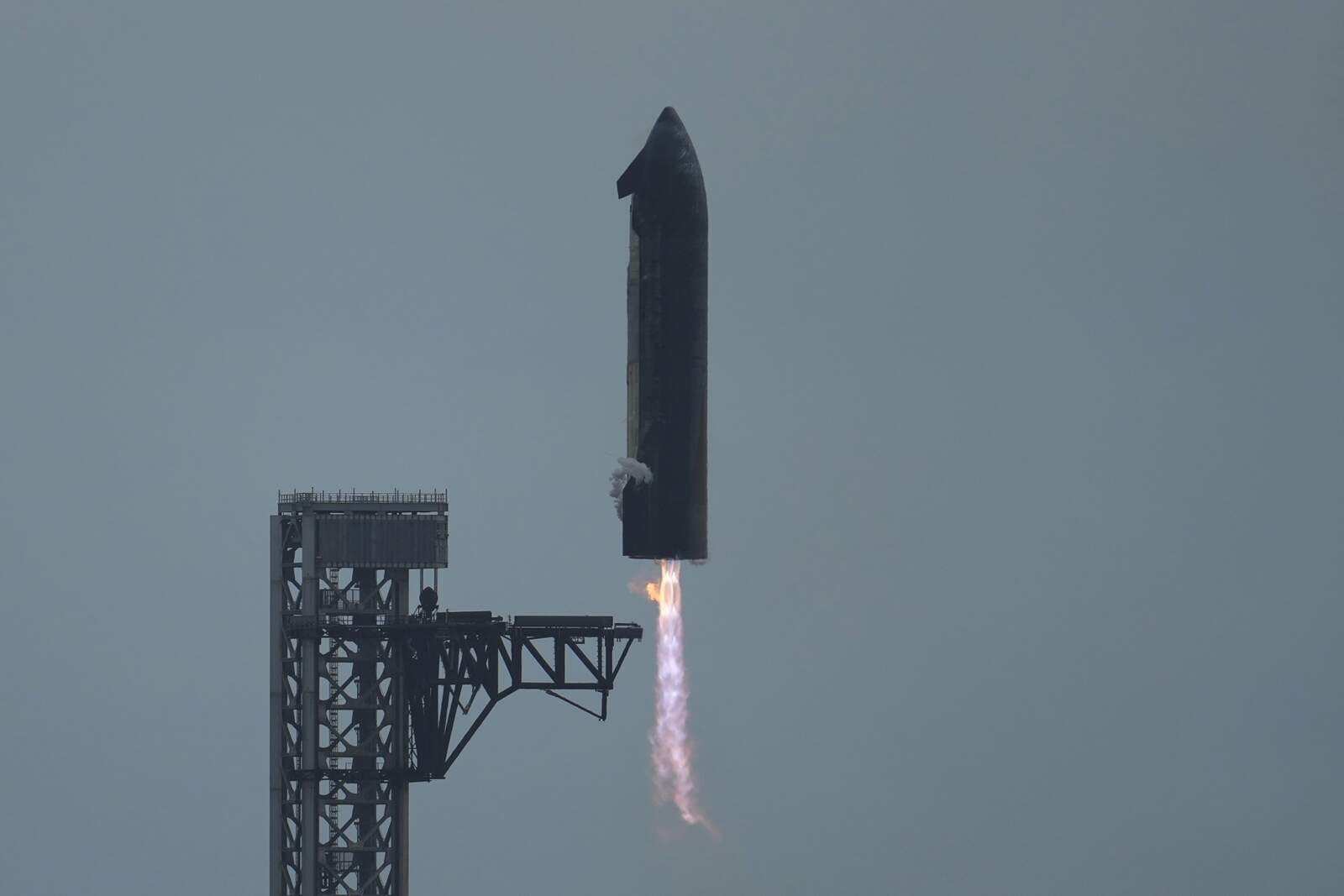
SpaceX caught a Starship upper stage with its launch tower's mechanical arms for the first time on Saturday, Nov. 14, closing out a roughly 22-hour orbital test flight that began in South Texas and pushing the company a step closer to flying the giant rocket from Florida's Space Coast. The spacecraft, which lifted off from Starbase on Friday, Nov. 13, circled Earth 14 times and deployed 26 Starlink satellites before flying back to its launch site, where the tower's arms grabbed it out of the air.
The flight was not a clean sweep. The Super Heavy booster, which SpaceX had hoped to catch at the tower as well, was lost in the Gulf of Mexico. Still, the ship catch is a milestone that matters for Brevard County, where SpaceX has spent years building Starship launch sites at Kennedy Space Center and Cape Canaveral Space Force Station, and where the company says the first Florida Starship launches could come within months.
What happened on Flight 15
Flight 15 was the 15th full-scale Starship test since 2023 and the vehicle's second trip to orbit. The launch window opened at 4:45 p.m. Central time on Friday, FOX 35 reported. The full stack stands 407 feet tall, making it the largest and most powerful rocket ever flown.
After separating from the booster, the Starship upper stage climbed to an orbit about 165 miles above Earth and completed 14 laps, compared with one or two on earlier missions, according to the Associated Press. It released 26 Starlink V3 satellites, the larger version of the broadband satellites SpaceX launches from Florida almost every week on Falcon 9 rockets.
On Saturday afternoon, the ship reentered the atmosphere, flew back toward Starbase near the U.S.-Mexico border and was caught by the tower's arms. SpaceX had planned an ocean splashdown as a backup, but it was not needed. The company reported that everything on the spacecraft, including its heat shield, appeared to work well.
SpaceX founder Elon Musk called it an "epic day," climbed the tower and hugged the spacecraft, the AP reported. NASA Administrator Jared Isaacman called the catch "almost magic."
Why catching the ship matters
SpaceX had already caught the Super Heavy booster with the tower arms three times before this flight. Catching the upper stage, which must survive the heat of reentry from orbit, is the harder half of the company's goal of a rocket that can be fully reused, refueled and flown again quickly. SpaceX says the catch demonstrates that full reusability, which it sees as the key to cutting the cost of each flight.
The last flight before this one showed how much remained to be done. Flight 14 in September reached orbit and deployed Starlink satellites, but the mission ended early with a splashdown in the Pacific about three hours after launch, FOX 35 reported. Flight 15 came less than two months later and stayed up nearly a full day.
The booster that got away
SpaceX's goal for Flight 15 was a double catch, with both stages returning to the launch site. The Super Heavy booster never made it back. SpaceX's Kate Tice said its engines stopped firing too soon on the way back down, the AP reported. The booster's guidance system sensed that it was out of position and triggered its self-destruct system, and its wreckage came down in the Gulf of Mexico, where the area was cordoned off with buoys.
SpaceX said recovery teams had located the spent rocket and were monitoring Texas beaches for debris, according to FOX 35. Engineers are still investigating what caused the engines to shut down early.
The Florida pads
For the Space Coast, the bigger question is when Starship will start flying from Florida. SpaceX expects to begin launching Starships from Kennedy Space Center within the next few months, according to the AP. The first Florida launch is planned from Launch Complex 39A, the historic pad that hosted Apollo and space shuttle missions and that SpaceX now leases from NASA.
The federal approvals are largely in place. The FAA issued a Record of Decision in late January 2026 covering up to 44 Starship launches and 88 landings a year from Pad 39A. Down the coast at Cape Canaveral Space Force Station, the Department of the Air Force approved SpaceX's plan to redevelop Space Launch Complex 37 in a Record of Decision signed Nov. 20, 2025, authorizing up to 76 launches and 152 landings a year once a separate FAA analysis is finalized, News 6 reported. SpaceX said construction at SLC-37 began in December 2025, and the company has said it will eventually have three Florida launch pads supporting Starship.
The timeline has slipped before. When the SLC-37 decision was signed, Space Force Col. Brian Chatman said he expected the first Florida Starship launch in early to mid-2026. That window has passed without a launch, and no firm date for the first Florida flight has been announced.
The approvals summarized below show the scale SpaceX is planning for in Brevard County.
| Site | Approving agency | Decision signed | Annual limit |
|---|---|---|---|
| Kennedy Space Center LC-39A | FAA | January 2026 | 44 launches, 88 landings |
| Cape Canaveral SLC-37 | Department of the Air Force | Nov. 20, 2025 | 76 launches, 152 landings |
Not everyone on the Space Coast welcomes the expansion. During the SLC-37 review, some residents raised concerns about environmental costs and the risk of explosions near populated areas, and one told News 6 simply, "Keep it in Texas."
The Artemis connection
Starship is also central to NASA's return to the moon, a program run largely out of Kennedy Space Center. NASA is paying SpaceX billions of dollars to develop a version of Starship that will land Artemis astronauts on the lunar surface and help build a moon base, the AP reported. That lander depends on SpaceX proving it can reuse vehicles and refill them with propellant in orbit, which would require many launches in quick succession, the kind of cadence the Florida pads are designed to support.
Under NASA's current plan, Artemis III, slated for 2027, will stay in Earth orbit and test docking between NASA's Orion capsule and commercial lunar landers from SpaceX and Jeff Bezos' Blue Origin. NASA is targeting Artemis IV, as soon as 2028, for the first crewed moon landing since Apollo.
What's next
SpaceX has not announced a date for Flight 16 or for its first Starship launch from Florida. Before the next Texas flight, engineers will need to explain the booster's early engine shutdown, and the FAA typically reviews mishaps like the booster loss before clearing another launch. On the Space Coast, the next milestone to watch is the arrival of the first Starship vehicles at Pad 39A, which would signal that the long-promised Florida debut is close.
Spotted an issue with this article?
Have something to say about this story?
Write us a letterComments
No comments yet. Be the first to weigh in.
Related Coverage

NASA chief Jared Isaacman tells UCF students they could help build America's first moon base
1h ago
Miami Man Sentenced to 2 Years in Federal Prison for X Posts Threatening to Execute Marco Rubio and Kristi Noem
2h ago
Florida hemp shops race to clear THC inventory as federal ban takes full effect Dec. 11
5h ago

A Third of U.S. Abortions in 2025 Were Provided by Nurse Practitioners, Physician Associates and Midwives, Guttmacher Says. Florida Law Allows Only Physicians
9h ago