NASA chief Jared Isaacman tells UCF students they could help build America's first moon base
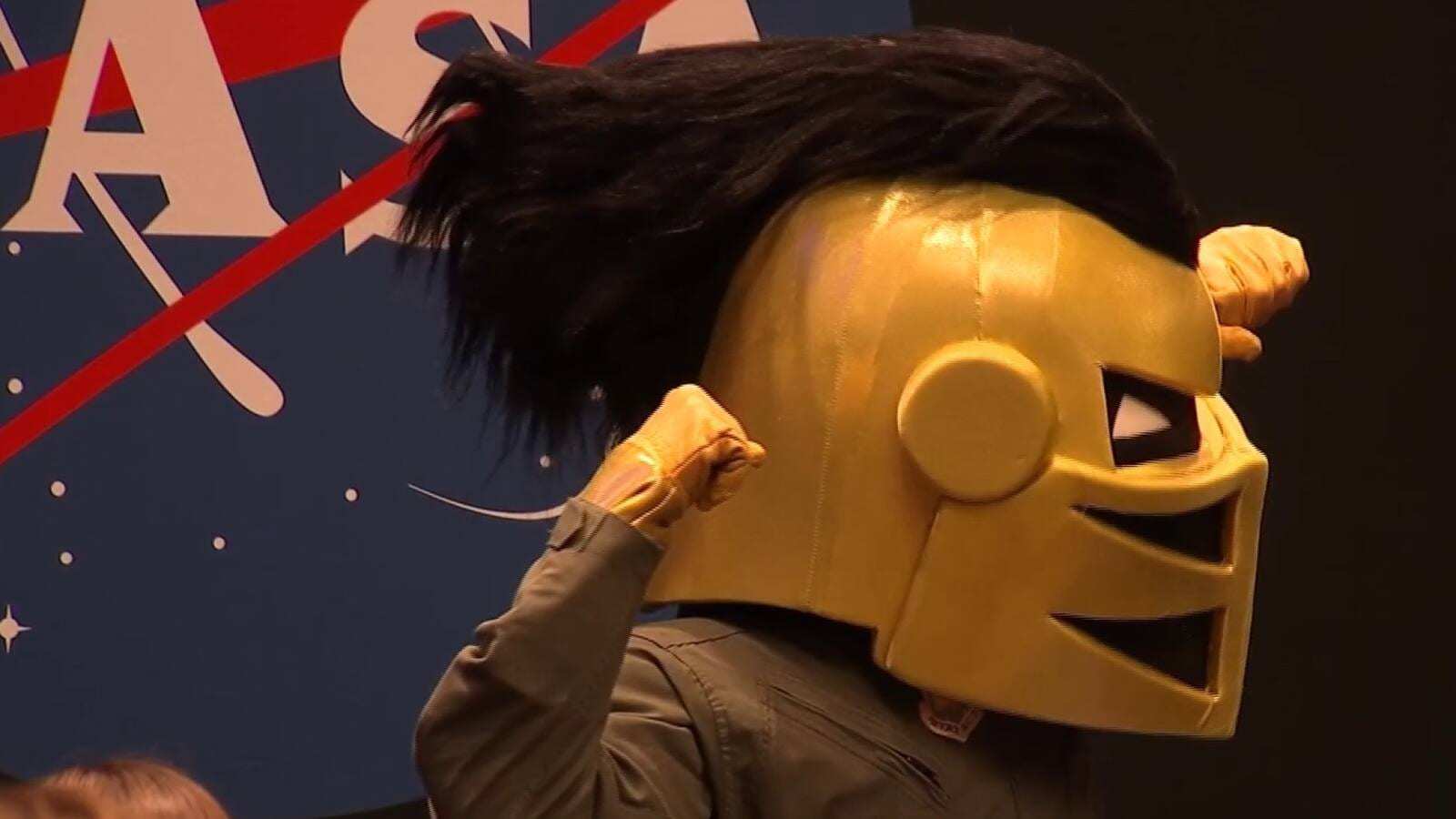
NASA Administrator Jared Isaacman told University of Central Florida students on Friday, Nov. 13, that they could be the engineers, scientists and technicians who build America's first base on the moon, pitching the agency's lunar plans to a university whose graduates make up nearly a third of Kennedy Space Center's workforce. Speaking at UCF's FAIRWINDS Alumni Center in Orlando, Isaacman said NASA's goal is no longer a short visit to the lunar surface but a lasting presence there.
"We are going back to the moon," Isaacman said, according to News 6. "We aren't just going for the flags and footprints."
A recruiting pitch at UCF
The hourlong event, billed by UCF as "Space Starts Here: A Conversation With NASA Administrator Jared Isaacman," was scheduled from 3 to 4 p.m. and was open to students, who could submit questions in advance, according to the university's event listing. Students, Space Force cadets and Knightro, the UCF mascot, were in the audience, News 6 reported.
Isaacman framed the moon base as a jobs program as much as an exploration program. "We need the engineers. We need the scientists," he said, and he went on to list technicians, operators and astronauts among the people the effort will need. He urged students to apply for NASA internships and to look at jobs in the commercial space industry building hardware bound for the moon, saying there is "so much opportunity right now for students interested in this field."
The audience was a natural one for that message. UCF says its graduates make up 29 percent of the workforce at Kennedy Space Center, the Brevard County spaceport about an hour east of the Orlando campus where NASA, SpaceX, Blue Origin and other companies assemble and launch rockets.
How NASA plans to build the base
Isaacman described a step-by-step approach. NASA plans to build toward a lunar base through repeated robotic missions that test landers, rovers and other equipment before astronauts begin staying on the surface for longer periods, News 6 reported. He said the first mission in that campaign, carrying an uncrewed lander and the FLIP rover, is expected in January, and that the pace should eventually reach roughly one mission a month.
He said the plan draws on 26 years of continuous operations aboard the International Space Station and would move from short surface stays to visits lasting weeks, and eventually to rotating crews supported by a base. He compared it to the way NASA built up to the first moon landing through the Mercury, Gemini and Apollo programs. "We didn't just jump to Apollo 11," he said.
Isaacman's description matches the Moon Base program NASA laid out in May. At the time, the agency described three phases, according to FOX 35 Orlando, summarized in the table below.
| Phase | Years | Launches | Landings | Payload to surface |
|---|---|---|---|---|
| 1: Build, test, learn | Now through 2029 | 25 | 21 | 4,000 kg |
| 2: Early infrastructure | 2029 to 2032 | 27 | 24 | 60,000 kg |
| 3: Sustained human presence | 2032 and beyond | 29 | 26 | 150,000 kg |
The first three missions announced in May were Blue Origin's Mark One Endurance lander, headed for a ridge near the lunar south pole; Astrobotic's Griffin lander, carrying Astrolab's FLIP rover; and a mission carrying the first payload under a NASA science initiative to study lunar swirls. NASA said at the time it would rely heavily on commercial partners to build and deliver rovers, landers, communications satellites and drones. "Our moon base will be home base for our Artemis crews," NASA's Lori Glaze said then.
Some of that schedule has slipped. The Blue Origin lander had been targeted for fall 2026, but its New Glenn rocket, which launches from Launch Complex 36 at Cape Canaveral, has been grounded since an explosion in May during preparations for a launch, according to NASASpaceFlight. The lander's launch now depends on New Glenn's return to flight.
Where Artemis fits
The astronaut side of the plan runs through Kennedy Space Center. Under NASA's public schedule, as cited by News 6, Artemis III in 2027 will be a test flight in low Earth orbit in which astronauts practice docking with commercial lunar landers, and Artemis IV in 2028 is planned as the first crewed lunar landing of the program.
Isaacman's visit came the same day SpaceX launched its Starship Flight 15 from Texas, the test that ended Saturday with the first catch of a Starship upper stage by its launch tower. A version of Starship is one of the two commercial landers NASA plans to use for Artemis crews, along with Blue Origin's lander.
Beyond the moon
Isaacman also walked students through other NASA projects, according to News 6, including the Roman Space Telescope, which will search for planets around other stars; NEO Surveyor, which will hunt for potentially hazardous asteroids; Dragonfly, a planned rotorcraft mission to Saturn's moon Titan; and a nuclear-powered spacecraft intended to deliver three helicopters to Mars.
On the question of life elsewhere in the universe, he said, "Surely life has to be out there somewhere."
A student challenge with prize money
Students who want to start before graduation have another option. Five days before the UCF visit, on Nov. 8, Isaacman announced a $1 million Moon Base Student Challenge at the Kennedy Space Center Visitor Complex. The competition is open to teams from U.S. high schools and colleges and asks them to tackle problems in six areas: power generation and storage, construction, life support, surface mobility, communications networks and astronaut safety, according to NASA.
Teams must register through NASA's STEM Gateway by Jan. 25, 2027, and will produce trade studies, concept proposals and briefings. No prior specialized engineering experience is required. "You do not have to wait until graduation to contribute," Isaacman said in the NASA announcement.
What's next
NASA's next marker for the moon base is the robotic mission Isaacman said is expected in January, carrying an uncrewed lander and the FLIP rover. For Central Florida, the larger question is how many of the jobs he described will land at Kennedy Space Center and the companies around it as the launch pace picks up. Registration for the student challenge closes Jan. 25, and NASA's internship programs continue to recruit students for the coming year.
Spotted an issue with this article?
Have something to say about this story?
Write us a letterComments
No comments yet. Be the first to weigh in.
Related Coverage
Florida hemp shops race to clear THC inventory as federal ban takes full effect Dec. 11
3h ago
A Third of U.S. Abortions in 2025 Were Provided by Nurse Practitioners, Physician Associates and Midwives, Guttmacher Says. Florida Law Allows Only Physicians
7h ago
US terrorist list for Latin American gangs and cartels grows to 22 with Guatemalan clan, with ripple effects in South Florida
22h ago
ULA Delays Vulcan Launch of 40 Amazon Leo Satellites at Cape Canaveral After Power Interruption
23h ago