St. Johns County DUI Manslaughter Case Follows an FHP Crash Investigation
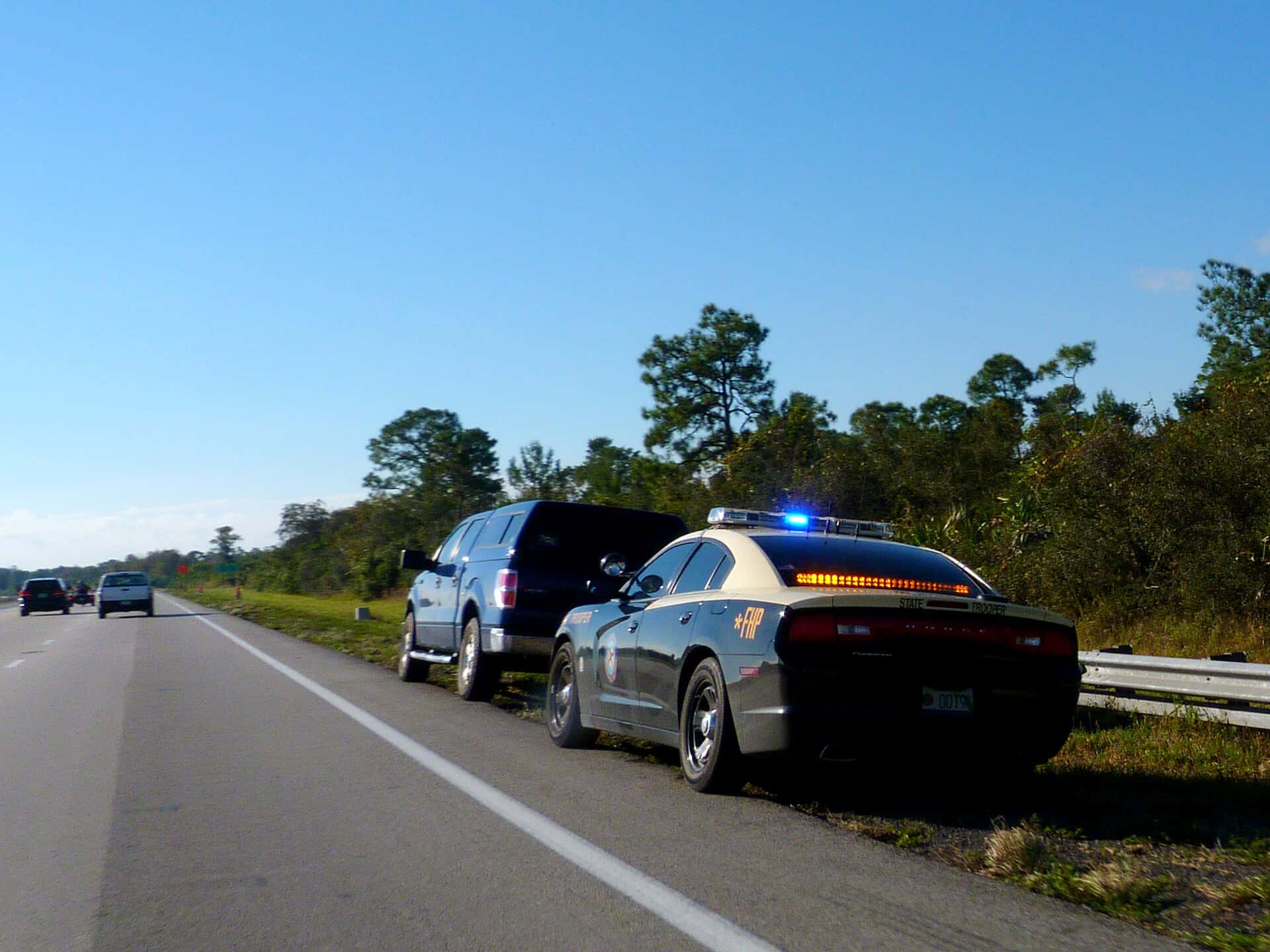
The Florida Highway Patrol announced an arrest on DUI manslaughter charges in connection with a fatal crash on State Road 16 in St. Johns County that killed a woman riding a scooter, according to information released by the agency on August 5. The case illustrates the traffic homicide investigation process that follows Florida's most serious crashes.
Investigators alleged the driver, identified as Kevin Hoffman, was traveling approximately 90 mph in a posted 45 mph zone when the vehicle struck the rear of a scooter in the right lane. The scooter's rider, Delinda Heinrich of St. Augustine, died as a result of the crash. Investigators determined the driver's blood alcohol concentration was more than twice Florida's legal limit.
The defendant is presumed innocent unless and until convicted. The allegations described by investigators are accusations the state must prove in court.
How Florida charges impaired driving deaths
Florida law treats a death caused by an impaired driver as DUI manslaughter, a second-degree felony that carries a maximum sentence of 15 years in prison and a mandatory minimum of four years. The offense requires proof that the driver was under the influence to the extent normal faculties were impaired, or had a blood or breath alcohol level of 0.08 or higher, and that the impaired operation caused or contributed to the death.
If a driver knew or should have known the crash occurred and failed to give information or render aid, the charge elevates to a first-degree felony carrying a maximum of 30 years and a mandatory minimum of four years.
Vehicular homicide is a separate offense that does not require impairment, applying instead when reckless driving likely to cause death or great bodily harm results in a death. Prosecutors sometimes charge both in the alternative.
The distinction between charges matters, because they carry different elements, different penalties and different proof requirements. An arrest on one charge does not determine what the State Attorney ultimately files.
How traffic homicide investigations work
The Florida Highway Patrol maintains traffic homicide investigators who specialize in reconstructing serious crashes. Their work goes well beyond an ordinary crash report and can take weeks or months to complete before an arrest is made.
Reconstruction typically involves scene measurement and documentation, analysis of vehicle damage patterns, evaluation of roadway evidence including skid and yaw marks, and increasingly the retrieval of data from vehicle event data recorders, which capture speed, braking and throttle inputs in the seconds before a collision.
Speed determinations of the kind alleged in this case generally rest on a combination of those sources rather than on a single measurement. Blood alcohol evidence requires either a lawful blood draw or breath testing conducted according to protocol, and the admissibility of that evidence is frequently litigated.
The timeline between crash and arrest in traffic homicide cases reflects that investigative process. Toxicology results from the state laboratory typically take weeks, and investigators generally wait for confirmed results before presenting a case for charging.
Florida's traffic safety picture
Florida consistently records among the highest traffic fatality totals in the country, a function of population size, vehicle miles traveled, year-round driving conditions and a substantial tourist driving population unfamiliar with local roads.
Impaired driving accounts for a significant share of those deaths. Speed is a separate and equally significant factor, and cases combining both, as alleged here, are among the most severe the Highway Patrol investigates.
Vulnerable road users face disproportionate risk in Florida. Pedestrians, cyclists and riders of scooters and motorcycles lack the protective structure a vehicle occupant has, meaning crashes that would produce injuries in a car-to-car collision produce fatalities instead. Florida metropolitan areas have appeared repeatedly near the top of national pedestrian danger rankings.
Road design contributes. Many Florida arterial roads carry high speed limits through areas with pedestrian activity, wide lane configurations that encourage speeding, and long distances between marked crossings.
What it means for Floridians
The Highway Patrol conducts DUI enforcement year-round with additional saturation patrols around holidays and major events. Florida's implied consent law means that operating a vehicle in the state constitutes consent to breath, blood or urine testing when lawfully requested, and refusal carries a license suspension separate from any criminal charge.
Penalties escalate sharply with each element added to a case. A first DUI without injury carries fines, license suspension and possible jail. A DUI causing serious bodily injury is a third-degree felony. A DUI causing death carries the mandatory minimum described above.
For scooter and motorcycle riders, Florida law requires helmets for riders under 21, while riders 21 and older may operate without one if carrying at least $10,000 in medical benefits coverage. Motorized scooter rules vary by classification and by local ordinance, and riders should confirm the requirements that apply to their specific vehicle.
Local impact across Northeast Florida
State Road 16 runs through St. Johns County connecting the St. Augustine area westward toward Interstate 95 and beyond, carrying a mix of local traffic, commuters and visitors traveling to the historic district and area beaches.
St. Johns County has been among Florida's fastest-growing counties, and traffic volume on its arterial roads has increased alongside residential development. Growth of that kind places pressure on roadways designed for lower volumes.
Cases in St. Johns County are prosecuted by the State Attorney for the Seventh Judicial Circuit, which also covers Flagler, Putnam and Volusia counties. The Florida Highway Patrol operates from troop districts covering the region.
What the evidence in these cases consists of
DUI manslaughter prosecutions rest on two distinct evidentiary showings, and both are frequently contested.
The impairment element requires proof either of blood or breath alcohol at or above 0.08 or of impairment of normal faculties. Chemical evidence requires a lawful basis for the test, proper collection procedure, documented chain of custody and analysis by a qualified laboratory following established protocol. Defense challenges commonly target one of those links.
The causation element requires proof that the impaired operation caused or contributed to the death. That is where reconstruction evidence becomes central, establishing speed, positioning, braking and the sequence of events. Event data recorders in modern vehicles capture parameters in the seconds before impact, providing objective data that supplements physical evidence at the scene.
Prosecutors must connect both elements. A driver who was impaired but whose impairment did not cause the crash faces different exposure than one whose impaired operation was the proximate cause, and defense strategy in these cases frequently focuses on causation rather than disputing impairment.
Because the evidence is technical, both sides typically retain expert witnesses, and pretrial litigation over the admissibility and reliability of expert analysis can extend a case timeline substantially.
Florida's approach to traffic homicide
The Florida Highway Patrol maintains dedicated traffic homicide investigators precisely because these cases require expertise that general patrol duties do not develop.
Investigators receive specialized training in crash reconstruction, including physics of vehicle dynamics, evidence documentation methods and the interpretation of vehicle data. Scene work includes total station surveying to record precise measurements, photography and increasingly drone imaging to document the scene from above.
The investigation timeline reflects that thoroughness. Weeks or months between a fatal crash and an arrest is normal, not a sign of delay. Toxicology results from the state laboratory take time, reconstruction analysis takes time, and investigators generally present a completed case rather than making an early arrest that a prosecutor cannot support.
Families of victims often find that timeline difficult, and victim advocates within law enforcement agencies and State Attorney offices serve as the point of contact explaining the process and providing case updates.
Florida has emphasized enforcement against impaired driving through sobriety checkpoints where legally permitted, saturation patrols during high-risk periods, and public awareness campaigns tied to holidays when impaired driving incidents historically increase.
What the numbers say about Florida roads
The individual case sits within a statewide picture that Florida transportation and safety agencies track closely.
Florida records thousands of traffic fatalities annually, a total among the highest in the nation. Population size and vehicle miles traveled account for much of that ranking, though Florida's fatality rate per mile traveled has also exceeded the national average in various years.
Impaired driving, speed and distraction are the behavioral factors most commonly identified in serious crashes. Those categories overlap, and a single crash frequently involves more than one.
Vulnerable road user deaths, covering pedestrians, cyclists, motorcyclists and scooter riders, represent a disproportionate share of Florida's total relative to other states. Contributing factors include road designs that combine high speeds with pedestrian activity, limited crossing infrastructure on arterial roads and year-round conditions that keep people walking and riding.
The Florida Department of Transportation maintains a target zero framework aimed at eliminating traffic deaths, coordinating engineering, enforcement and education efforts. Progress has been uneven, and Florida metropolitan areas have continued to appear near the top of national pedestrian danger rankings.
What victims' families can expect
Florida provides a defined set of rights and services for the families of crash victims, and knowing them matters during a process that can extend for a year or more.
Victim advocates within law enforcement agencies and State Attorney offices serve as the point of contact for case information, explaining procedural steps and providing notification of hearings. Families can request notification of court proceedings and of any change in a defendant's custody status.
Florida's constitution includes provisions establishing victims' rights, including the right to be heard at sentencing and at proceedings involving release decisions. Victim impact statements are considered by the court at sentencing.
The Florida Crimes Compensation Trust Fund provides financial assistance for certain expenses including funeral costs and counseling, administered through the Attorney General's office.
Civil remedies exist independently of the criminal case, and families frequently pursue them on a separate track with different standards of proof and different timelines.
What's next
The case proceeds through the standard Florida criminal process. The State Attorney's office reviews the investigative file and makes the formal charging decision, which may match, modify or expand the charges listed at arrest.
DUI manslaughter cases frequently involve substantial pretrial litigation over the admissibility of blood alcohol evidence, the lawfulness of the blood draw and the reliability of reconstruction analysis. Those motions can extend a case timeline considerably.
Court records for the case are available through the St. Johns County Clerk of the Circuit Court, which maintains public docket information.
Spotted an issue with this article?
Have something to say about this story?
Write a letter to the editorComments
No comments yet. Be the first to weigh in.
Related Coverage

Pompano Beach Man Charged With Two Counts of First-Degree Murder in Deerfield Beach Shootings
5h ago
Pinellas Judge Convicts Plastic Surgeon of First-Degree Murder in Attorney's Killing as Death Penalty Phase Nears
5h ago
Sanford Police Seize Two Cars but Report No Arrests a Week After Mass Shooting at a Street Memorial
1d ago

Pinellas Judge Finds Plastic Surgeon Tomasz Kosowski Guilty of First-Degree Murder in Attorney's 2023 Killing
1d ago