Pinellas Judge Finds Plastic Surgeon Tomasz Kosowski Guilty of First-Degree Murder in Attorney's 2023 Killing
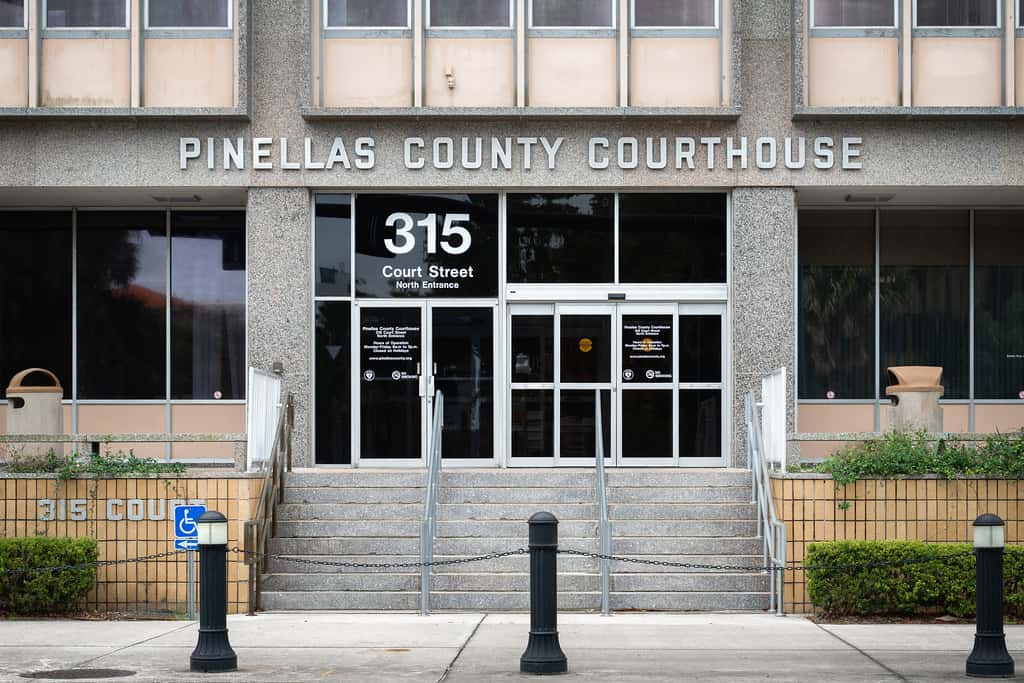
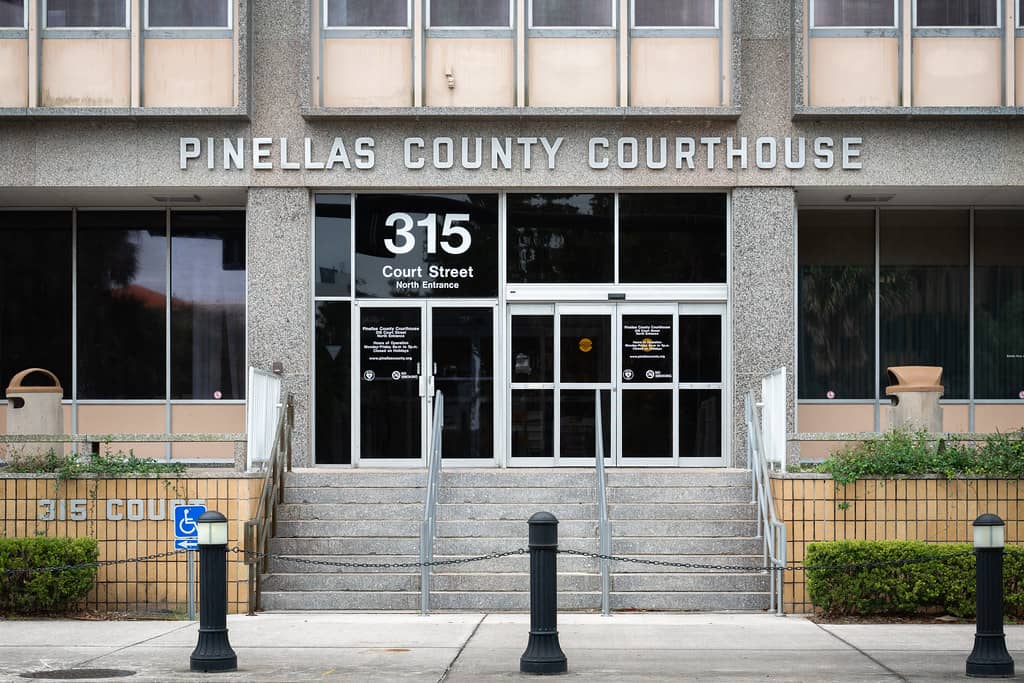
A Pinellas County judge has found plastic surgeon Tomasz Kosowski guilty of first-degree murder in the 2023 killing of attorney Steven Cozzi, delivering the verdict on September 23 at the conclusion of a bench trial. Kosowski had represented himself and had requested that a judge rather than a jury decide the case.
The conviction on first-degree murder makes Kosowski eligible for either a death sentence or life in prison without the possibility of parole. A separate sentencing phase will determine which, and a hearing has been scheduled for October 8 at which final arguments are expected before the sentence is imposed.
The case had been pending for roughly three years following Cozzi's disappearance and death in 2023. Cozzi was a local attorney, and the killing drew sustained attention across Tampa Bay both because of the professions of the people involved and because of the unusual course the prosecution took.
What the verdict means
First-degree murder in Florida requires proof of a premeditated killing, or a killing committed during the course of certain enumerated felonies. It is the only offense in Florida for which the death penalty is available, which is why the conviction triggers a separate penalty proceeding rather than an ordinary sentencing hearing.
A conviction resolves guilt but not punishment. Florida law requires a distinct phase in which aggravating and mitigating circumstances are presented before a capital sentence can be imposed, and the October 8 hearing is part of that process.
Florida changed its capital sentencing framework in 2023, reducing the number of jurors required to recommend a death sentence from a unanimous verdict to eight of twelve. How that framework applies in a case tried before a judge rather than a jury is a procedural question specific to bench trials in capital cases.
The defendant retains appellate rights. A first-degree murder conviction in Florida is subject to appeal, and a death sentence receives automatic review by the Florida Supreme Court. Appeals in capital cases routinely extend for years after sentencing.
The decision to self-represent
Kosowski's choice to represent himself and to waive a jury are the two decisions that most distinguish this case procedurally. Both are constitutional rights, and both are available to a defendant facing capital charges, but both are exercised rarely and for good reason.
The right to self-representation comes from the Supreme Court's 1975 decision in Faretta v. California, which held that a competent defendant may waive counsel and conduct their own defense. Before permitting it, a trial court must conduct an inquiry to establish that the defendant understands the charges, the potential penalties and the disadvantages of proceeding without a lawyer.
Defense attorneys generally regard self-representation in a capital case as extraordinarily risky. A defendant conducting their own defense must handle jury selection or its waiver, evidentiary objections, cross-examination of forensic witnesses and, if convicted, the presentation of mitigating evidence in a penalty phase, all while being the person whose life is at stake.
Waiving a jury is a separate calculation. Some defendants conclude that a judge will apply the law more dispassionately than jurors would in a case with emotionally powerful facts. The tradeoff is that a bench trial removes the possibility that a single juror's doubt produces a hung jury.
What comes at the October 8 hearing
The penalty phase in a Florida capital case is a structured proceeding. The state presents aggravating circumstances defined by statute, which include factors such as whether the murder was committed in a cold, calculated and premeditated manner, whether it was especially heinous, and whether the defendant had prior violent felony convictions.
The defense presents mitigating circumstances, a category that is not statutorily limited. Mitigation can include mental health history, background, absence of prior criminal record, and any other factor bearing on whether a death sentence is appropriate. Developing and presenting mitigation is generally regarded as the most specialized work in capital defense.
The October 8 hearing is described as the point at which final arguments are expected ahead of the sentence. Sentencing in capital cases frequently involves a written order explaining the weighing of aggravating and mitigating factors, which becomes the basis for appellate review.
Victim impact evidence is admissible in Florida capital sentencing, which means members of Cozzi's family may have an opportunity to address the court.
The Pinellas County context
The case was prosecuted in the Sixth Judicial Circuit, which covers Pinellas and Pasco counties and is served by the State Attorney's Office for that circuit. Pinellas County, which includes St. Petersburg, Clearwater and Largo, is among Florida's most densely populated counties.
Capital prosecutions are rare even in populous Florida circuits. Most first-degree murder cases resolve through plea agreements to life sentences or lesser charges, and the decision to seek death is made by the elected state attorney based on statutory criteria and case-specific factors.
Florida has one of the largest death row populations in the country and has carried out executions in recent years after a period of relative inactivity. The state's capital punishment framework has been amended multiple times over the past decade in response to court rulings and legislative changes.
The case also unfolded within a legal community that knew the victim. Cozzi practiced in the area, and an attorney's killing draws particular attention among local judges, prosecutors and defense lawyers who work in the same courthouse.
Why cases take three years
The gap between a 2023 killing and a 2026 verdict is ordinary for a Florida capital case rather than unusual. The sequence involves investigation, arrest, indictment by a grand jury, discovery, forensic analysis, pretrial motions and, in many cases, competency evaluations.
Capital cases carry additional procedural requirements that extend timelines. Discovery obligations are broader, defense investigation into mitigation begins long before trial, and courts schedule capital trials with more lead time than other felony matters.
A defendant's decision to proceed without counsel can itself affect scheduling. Courts typically conduct inquiries to confirm the waiver remains knowing and voluntary, and may appoint standby counsel, and a self-represented defendant in custody faces practical limitations in preparing a defense that courts must accommodate.
Forensic analysis is frequently the longest single element. Laboratory backlogs for DNA, digital forensics and other specialized testing are a persistent constraint in Florida and nationally, and results are often prerequisites to charging decisions and trial scheduling.
What it means for the courts
For the Pinellas County court system, the conviction moves the case from a trial posture to a sentencing and appellate one. Capital cases occupy substantial judicial resources, and a verdict in a long-pending matter frees calendar capacity.
For the state attorney's office, the conviction validates the decision to pursue first-degree murder charges. Whether the office seeks a death sentence at the October hearing, and what the court imposes, will determine the case's ultimate posture.
For Florida's appellate courts, a capital conviction obtained in a bench trial with a self-represented defendant presents a distinctive record. Appellate review will examine whether the waivers of counsel and jury were properly obtained, which is among the most frequently litigated issues in cases with this structure.
For the broader public, the case is a reminder that Florida's criminal justice system handles capital matters through a two-stage process in which conviction and punishment are decided separately, under different standards and with different evidence.
Bench trials in Florida felony cases
Trial by jury is a right belonging to the defendant, which means a defendant can waive it if the waiver is knowing, voluntary and intelligent. In Florida, the waiver must generally be made in writing or in open court on the record, and the trial court must be satisfied the defendant understands what is being given up.
When a judge sits as the finder of fact, the judge decides both guilt and the legal questions that a jury would never hear. That eliminates the risk that emotionally powerful evidence sways a lay jury, but it also means the person deciding guilt has heard every motion, every argument about admissibility and every piece of evidence the court ultimately excluded.
Bench trials are rare in serious felony cases and rarer still in capital ones. Florida courts try the overwhelming majority of first-degree murder cases to juries, which makes the procedural record in this case unusual regardless of the outcome.
The appellate consequence is that the record will be examined closely on the adequacy of both waivers. Appellate courts scrutinize waiver colloquies carefully in capital cases, and a deficiency in the inquiry is among the grounds that can produce a reversal independent of the evidence.
What is next
The October 8 hearing is the next scheduled proceeding, at which final arguments are expected ahead of the sentence. The court will then impose either death or life without the possibility of parole.
If a death sentence is imposed, automatic review by the Florida Supreme Court follows, a process that examines both the conviction and the proportionality of the sentence. That review takes place regardless of whether the defendant seeks it.
If a life sentence is imposed, the case proceeds through ordinary appellate channels, beginning with the Second District Court of Appeal or, for a first-degree murder conviction, direct appeal to the Florida Supreme Court depending on the sentence.
For Cozzi's family, the verdict resolves the question of responsibility after three years. The sentencing phase determines what follows, and the appellate process that comes afterward means the case is unlikely to be fully concluded for some time.
Court records in the case are maintained by the Pinellas County Clerk of the Circuit Court and are generally available to the public, subject to the exemptions Florida law provides for certain categories of information. Members of the public seeking the docket, filings or the eventual sentencing order can obtain them through the clerk's office.
Spotted an issue with this article?
Have something to say about this story?
Write a letter to the editor