St. Pete Beach Weighs a Ferry From Pass-a-Grille as Amendment 3 Cuts End the Beach Trolley
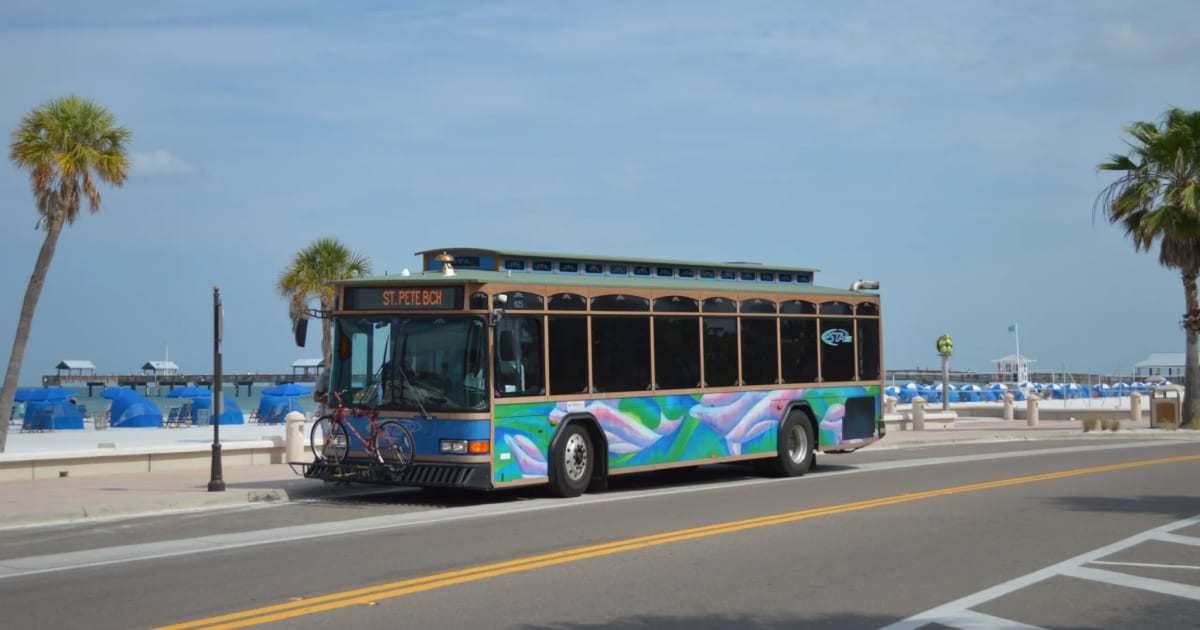
St. Pete Beach is losing its beach trolley, and the city may look to the water instead. Forward Pinellas, the county's transportation planning agency, has floated a ferry route linking three points inside the city, starting at Merry Pier in Pass-a-Grille. The idea comes days after city commissioners voted to stop paying for the Suncoast Beach Trolley. The city is bracing for property tax losses under Amendment 3, which Florida voters approved on Nov. 3.
The ferry is far from a done deal. Forward Pinellas Executive Director Whit Blanton called the concept "purely notional," the St. Pete Catalyst reported in a story republished by WUSF on Nov. 27. He said it "remains in its infancy" and will go nowhere unless the city commission shows interest and asks for a study.
What is being proposed
Blanton's first sketch would connect Merry Pier in Pass-a-Grille, the Corey Avenue business district, and a stop farther north that has not been chosen. A later phase could reach John's Pass in Madeira Beach and other beach towns. Forward Pinellas's long-range plans already include possible water links between downtown St. Petersburg, Gulfport and the barrier islands.
According to Blanton, the idea grew out of talks on water transportation led by the St. Petersburg Chamber of Commerce, which city officials joined. He said that "because of that participation, the idea was broached with the City." He said a ferry could connect barrier island communities and serve residents, visitors and the hospitality workers who keep the beach hotels running.
Asked whether a ferry could be reliable and affordable, Blanton said, "I think it can," adding that "the key is where it would originate and travel to." There is no cost estimate. Blanton said the price would depend on how often boats run, how many days a week, and what work docks and piers would need. All of that is still unknown. He listed government grants, fares and docking fees as possible ways to pay for it. No operator, schedule or launch date has been discussed.
Why the trolley is going away
On Nov. 17, St. Pete Beach commissioners voted 5-0 to let the city's contract with the Pinellas Suncoast Transit Authority (PSTA) expire Dec. 31. The deal cost the city about $242,000 a year: roughly $190,000 for the trolley and about $52,000 for paratransit service for people with disabilities. Commissioners kept citywide paratransit under a new agreement based on how much it is used.
The trolley has run since 2001. It travels Gulf Boulevard between Clearwater Beach and St. Pete Beach for a $2.25 fare, Spectrum Bay News 9 reported. It ends at 75th Avenue and Gulf Boulevard and runs every 30 minutes. City staff counted more than 138,000 trips that began or ended in St. Pete Beach from Oct. 1, 2025, through July 31, but could not say how many riders were residents.
The city's reason is money. Amendment 3 raises the homestead exemption from non-school property taxes from about $51,000 to $150,000 in 2027 and $250,000 in 2028. It also cuts the yearly cap on assessment increases for non-homestead property from 10% to 5% for non-school levies. St. Pete Beach staff project a loss of about $1 million in property tax revenue in fiscal year 2028, rising to more than $2.4 million the year after, WUSF reported. City Manager Frances Robustelli said those estimates could grow as the county makes its own cuts.
PSTA said the trolley will likely stop serving St. Pete Beach in February, pending a vote by its board. It called the decision one of the first public transportation cuts in Pinellas County caused by Amendment 3.
A shrinking set of options on the beach
The trolley is the third cut to beach transit this year. In August, the city ended its Freebee on-demand rides, which handled about 4,000 trips a month. On Oct. 4, PSTA eliminated Route 90, which linked south St. Petersburg to St. Pete Beach and carried workers to the Don CeSar and TradeWinds resorts. Riders were told to transfer from the SunRunner rapid bus to the trolley, the same trolley that is now being cut.
The SunRunner, which runs from downtown St. Petersburg to St. Pete Beach, will keep operating. But workers who use it to reach jobs farther north in Treasure Island will lose their connection when the trolley stops, Vice Mayor Lisa Robinson warned.
Commissioner Karen Marriott, who represents the beach communities on PSTA's board, said most trolley riders are tourists or people who work in tourism. Without a bus, she said, those riders are "still going to have to get somewhere," which could put more cars on the road. She still voted to end the contract. Marriott suggested asking county commissioners and the Tourist Development Council to use bed tax money for beach transportation. Commissioner Jon Maldonado urged PSTA to go directly to the large resorts. Redevelopment plans for TradeWinds and Sirata call for a combined $225,000 a year for transportation for five years if those projects move forward. The commission took no action on any of those ideas.
PSTA's own budget squeeze
PSTA expects to lose about $15 million in the first year under Amendment 3 and $22 million in the second, FOX 13 reported. The agency is considering cutting 25 of its 40 bus routes, including 12 core routes. On Nov. 18, its planning board backed raising the fare from $4.50 to $12 for certain disabled riders who live more than three-quarters of a mile outside regular routes. Administrators had proposed $30. "This is a reality that we live in with Amendment 3 passing," PSTA's Bonnie Sato said.
PSTA is also moving ahead with its own ferry. It has bought two boats, the Bay Breeze and the Clipper, for a new Tampa Bay Ferry between downtown St. Petersburg and downtown Tampa. Hubbard's Marina will operate the service, which officials have aimed to launch by the end of 2026. No start date has been announced. Blanton did not tie that service to the St. Pete Beach idea.
What's next
For now, the beach ferry exists only as a concept. The next step would be for St. Pete Beach commissioners to ask Forward Pinellas for an analysis of routes, costs and dock improvements. The city's trolley funding ends Dec. 31, and PSTA's board still has to vote on when service ends. Unless the county, the tourist tax or the resorts step in, beach workers and visitors will soon have fewer ways to get up and down Gulf Boulevard than they have had in 25 years.
Spotted an issue with this article?
Have something to say about this story?
Write us a letterComments
No comments yet. Be the first to weigh in.
Related Coverage
Pinellas mosque rebuild near Tarpon Springs faces legal challenges and a $100,000 lien after 4-3 vote
2d ago
Miami-Dade School Board Member Roberto Alonso Resigns Days Into New Term to Run for Florida House District 111
2d ago

Florida's SNAP error rate keeps climbing, and the state's $1 billion federal bill now hinges on it
2d ago

DeSantis appoints 17 judges to Florida circuit and county courts weeks before leaving office
3d ago