St. Petersburg Startup Seagate Space Is Building a Floating Rocket Launch Pad in Tampa
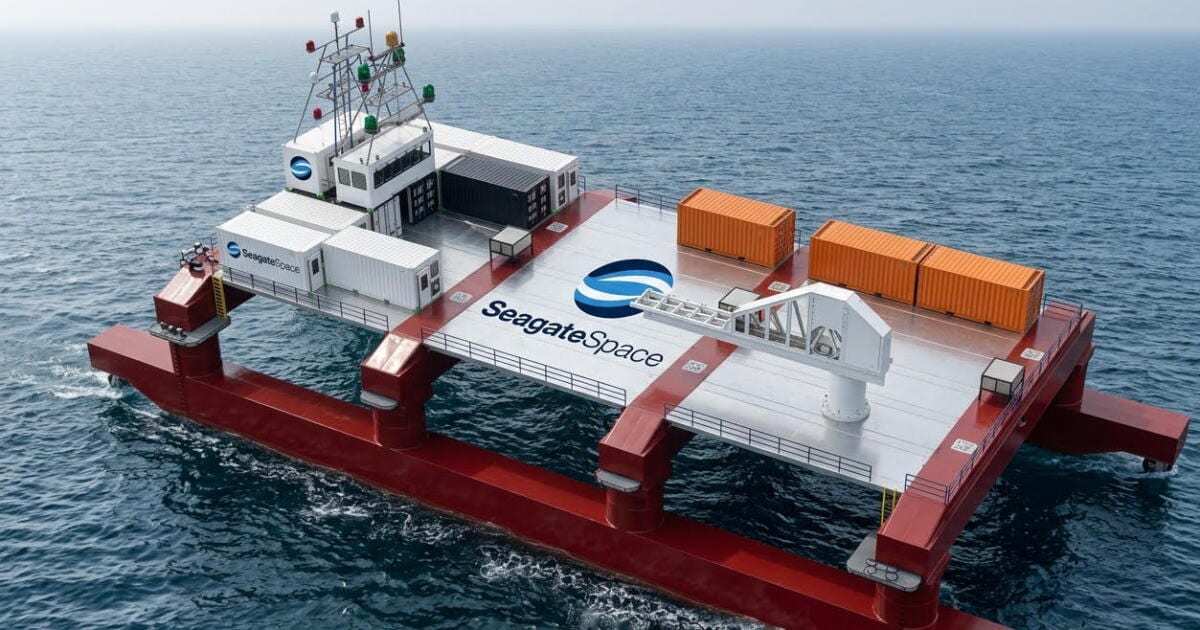
A St. Petersburg startup is building a floating, remotely controlled rocket launch platform at a Tampa shipyard, betting that Florida's crowded spaceport can expand offshore. Seagate Space says its first commercial platform, called Gateway, is planned to host its first mission in 2027, and defense contractor Kratos Defense and Security Solutions has signed on as its first customer.
The project, reported Wednesday by St. Pete Catalyst and WUSF, would give Tampa Bay a direct role in the launch business that has long been concentrated on the Space Coast at Cape Canaveral.
What Seagate Space is building
Gateway is a semi-submersible platform about 188 feet long and 85 feet wide, designed to support launches in open U.S. waters. Co-founder Sean Fortener, the company's president and chief operating officer, compared the design to a small offshore oil rig: a partially submerged structure is meant to keep it stable at sea. The platform is uncrewed and operated remotely, and it is also designed to support recovery operations.
The design is modular, built from components that can be tested and refined individually. Seagate plans to own its platforms and charter them to customers, and it expects each vessel to have a commercial lifespan of about 30 years.
Tampa Ship is building the vessel at a Tampa shipyard. Fortener estimated the project could involve more than 300 shipyard workers. Seagate has already built a single-module, full-scale prototype with Tampa Ship at Port Tampa Bay, where a steel-plate cutting ceremony was held in June. At the time, the company estimated the full-scale module would take about 45 days to structure plus roughly 30 days of outfitting.
The people and the money
Fortener and co-founder and CEO Michael Anderson started the company in early 2025. Fortener spent about 25 years at Crowley Maritime before turning to space. "We wanted to bring the marine side of it in," he told St. Pete Catalyst, adding that "that maritime angle really fit in St. Pete."
Seagate works out of spARK Labs at the ARK Innovation Center on Fourth Street South in St. Petersburg and took part in Tampa Bay Wave's 2025 BlueTech|X accelerator. It has 12 full-time employees in the St. Petersburg area and expects to reach nearly 30 by the end of 2027, mostly local hires.
The company closed a pre-seed funding round of more than $1.5 million in February 2026, with investors including New World Angels of Boca Raton and Phase Shift Ventures of Orlando. In June, Space Florida, the state's aerospace finance and development authority, put $270,000 into the full-scale prototype under a partnership the two called Project Manta, according to WFTV. Space Florida President and CEO Rob Long said at the time that as the industry grows and matures, looking at other launch options makes sense, and he called Seagate "the kind of Florida grown company Space Florida exists to support." Anderson said then that Project Manta solidifies the company's position in the Florida ecosystem.
Seagate has not disclosed the cost of its first commercial platform.
Kratos, Firefly and Lockheed Martin
Kratos, a California defense contractor, announced a long-term agreement with Seagate on Nov. 10. It plans to use the first Gateway vessel for defense-related launch and target missions, starting in 2027, with more launches in later years. Kratos declined to disclose the financial terms or the length of the agreement.
Seagate has also partnered with Aurex, an Alabama aerospace company, to provide engineering, communications and safety services. Aurex CEO Warren Kohm said he expects some of that engineering work to happen in Tampa Bay, though he did not give job numbers, and Aurex's role in the 2027 launch has not been set. Contracts will be negotiated mission by mission.
In April, Seagate signed a memorandum with Firefly Aerospace to develop an offshore platform for Firefly's Alpha rocket, a small launcher that can carry roughly 1,000 kilograms to low Earth orbit and currently flies only from Vandenberg Space Force Base in California, and in May Lockheed Martin joined Seagate and Firefly to pursue sea-based launch concepts and flight demonstrations aimed at national security missions.
Where it stands with regulators
Gateway must complete assembly, testing and certification before its first launch. The American Bureau of Shipping, a maritime classification society, granted the platform design an approval in principle in December 2025, a designation given to assets in an early conceptual design phase.
Commercial launches from U.S. territory and by U.S. companies generally require a launch license from the Federal Aviation Administration. The available reporting does not describe any FAA license for Gateway missions, and the company has not publicly said when it expects one.
Why it matters beyond Cape Canaveral
Florida's launch pace has exploded. Rocket launches from the state rose from 31 in 2021 to 93 in 2024, according to the Florida Department of Transportation, and Florida recorded a record 109 launches in 2025. A NASA analysis found Kennedy Space Center operations supported nearly 27,000 jobs and about $9.36 billion in economic output across the state in 2023.
That growth has its limits. Fortener said geographic constraints, nearby population centers and competition for launch windows at existing spaceports inspired the offshore design, which could give customers more options without building new facilities on land. The founders have said platforms like Gateway could support launches off the East Coast, the West Coast and potentially the Caribbean.
For Tampa Bay, the project builds on an existing aerospace base. Pinellas County leads the region in aerospace employment with more than 4,300 workers and has its largest manufacturing workforce, with more than 34,000 employees. Honeywell, Lockheed Martin, General Dynamics and Leonardo DRS all have operations in the county. Fortener pointed to industries such as pharmaceutical development and manufacturing that could benefit from easier access to orbit. "We're in the early innings of the commercialization of space," he said.
What's next
Tampa Ship's work on the first Gateway vessel continues, followed by testing and certification ahead of the planned 2027 mission for Kratos. Seagate says it is also in talks with area ports about expanding to build more platforms, which would bring more shipyard work to the Tampa Bay waterfront if the first vessel proves the concept.
Spotted an issue with this article?
Have something to say about this story?
Write us a letterComments
No comments yet. Be the first to weigh in.
Related Coverage
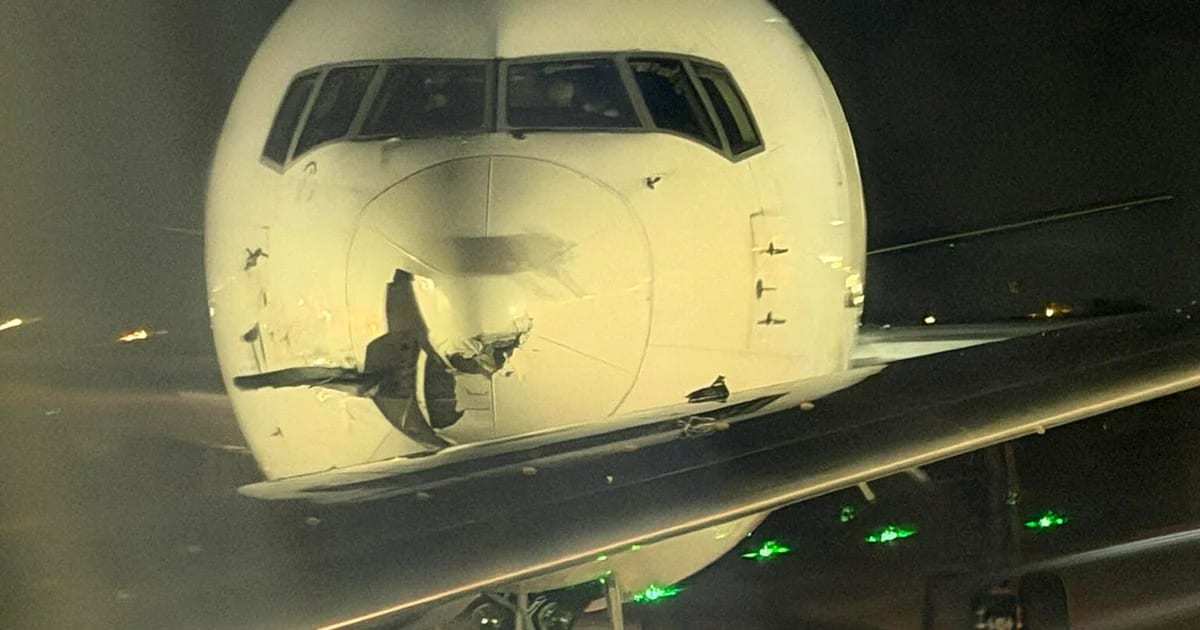
Copa Jet and UPS Cargo Plane Collide on Miami International Taxiway; NTSB Says UPS Did Not Yield
2d ago

Small Plane Makes Emergency Landing on Bayshore Road in North Fort Myers, Strikes Pickup; No Injuries Reported
Nov 8
Florida Backs Off Plan to Spend $197 Million in EV Charger Money on Flying Car Pads
Nov 1

Electric Aircraft Retrace World's First Airline Route in Florida's First Advanced Air Mobility Flight
Oct 31