Stock Market Correction Hits Florida Retirees as S&P 500 and Dow Close More Than 10% Below Records
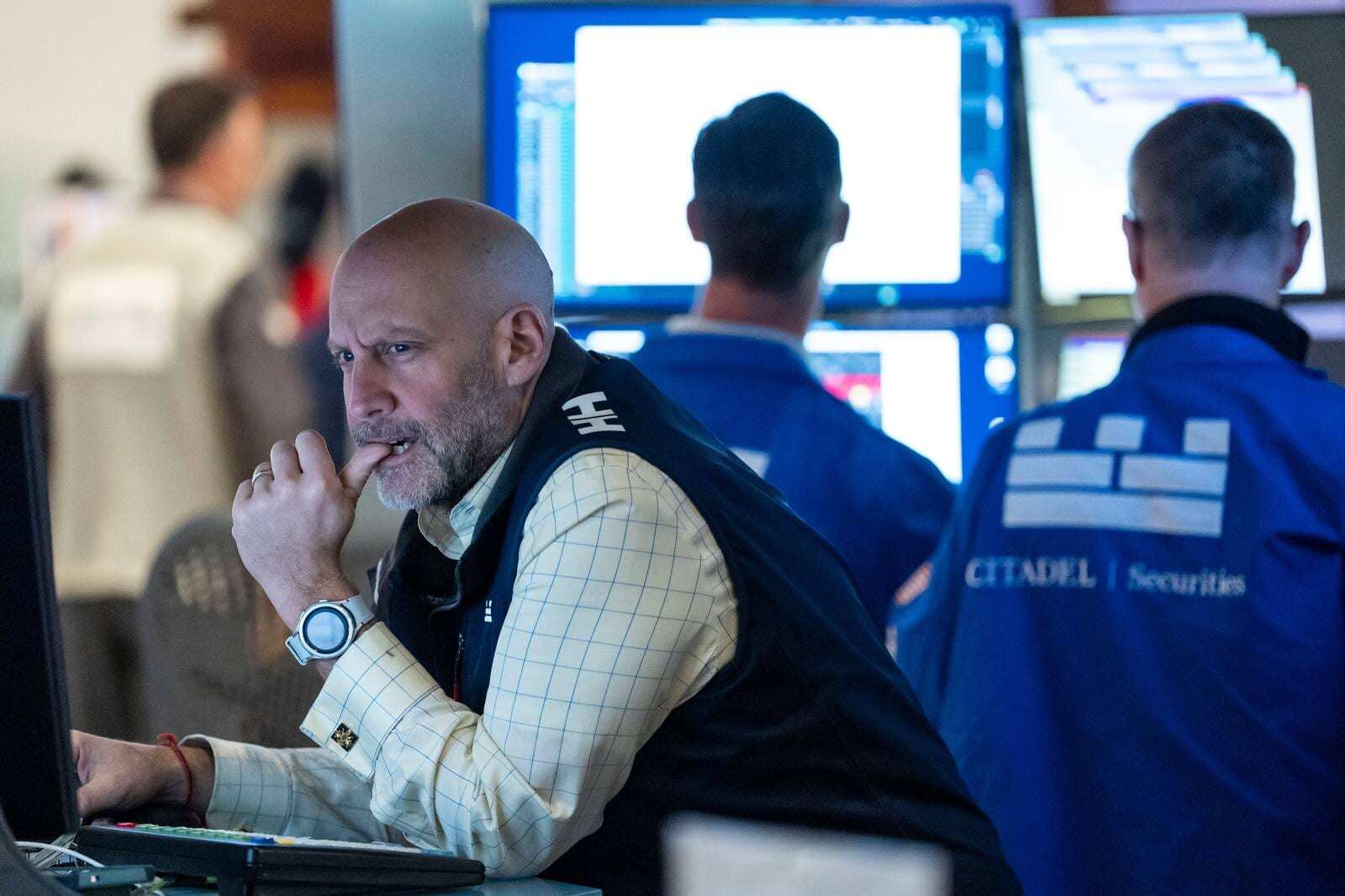
Florida retirees, pension savers and anyone with a 401(k) ended the week poorer on paper after the S&P 500 and the Dow Jones Industrial Average closed in correction territory on Friday, Nov. 20, 2026, as a sell-off in artificial intelligence stocks spread across Wall Street. The S&P 500 fell 3.7%, or 265.44 points, to 6,910.39, according to the Associated Press, leaving it roughly 11.6% below its record close of 7,818.93 set on Oct. 6. In a state where more than one in five residents is 65 or older, according to Census Bureau estimates, and where the state pension plan holds more than $200 billion, the slide reaches deep into household and public balance sheets.
What happened on Wall Street
A correction is commonly defined as a drop of at least 10% from a recent high; a bear market is a drop of 20% or more. Friday's losses pushed both the S&P 500 and the Dow past the first threshold, and the Nasdaq composite's 5.3% plunge wiped out its gains for 2026. The closing figures, as reported by the AP, were:
| Index | Friday close | Point change | Percent change |
|---|---|---|---|
| S&P 500 | 6,910.39 | -265.44 | -3.7% |
| Dow Jones Industrial Average | 48,147.33 | -949.73 | -1.9% |
| Nasdaq composite | 22,617.73 | -1,261.47 | -5.3% |
It was the S&P 500's seventh straight daily loss, its longest losing streak since the COVID-19 pandemic began in 2020, and its worst week since April 2025, the AP reported. The Nasdaq's weekly loss was just shy of its worst since March 2020.
Chipmakers led the way down. Nvidia closed 13.8% lower, its ninth decline in 10 sessions, and the PHLX Semiconductor Index fell 10.7%. Advanced Micro Devices dropped 13.3%, Micron Technology 13.9% and Broadcom 12.1%. The selling was global: Japan's Nikkei and South Korea's Kospi each fell more than 5% overnight, and European indexes also dropped sharply.
Why investors are selling
Several forces converged. The biggest is growing doubt about the artificial intelligence boom that powered stocks to records this fall. Investors have begun to question whether AI companies' huge spending on chips and data centers will pay off, and whether demand for memory, processors and data center components could fade if the technology proves less profitable than promised, according to AP reporting published by News4JAX. Heavy borrowing by AI companies, which increasingly sell bonds to fund their buildouts, has added to the unease.
Nvidia, a bellwether for the AI trade, has been hit hardest. Its shares have fallen more than 25% since a scandal involving co-founder Jensen Huang erupted earlier this month and ended with his sudden departure as chief executive, the AP reported.
Interest rates are another weight. The Federal Reserve is expected to raise short-term rates next month, according to the AP, and CNBC listed inflation and shifting expectations for Fed policy among the main forces behind the sell-off. Higher borrowing costs make it more expensive for AI companies to keep financing their expansion.
Politics is playing a role too. Democrats who won control of Congress in the midterms have signaled plans to crack down on the tech industry, and the governors of Texas and Georgia have vowed to stop new data center construction, the AP reported. Even the record-setting stock market debut of Anthropic on Thursday, the biggest public stock offering ever, did not stem the selling; its shares fell 8.5% on Friday to $88.91, still above the $83 offering price.
What it means for Florida retirees
Florida's older population makes the state unusually sensitive to swings in stock prices. Many retirees live partly on withdrawals from 401(k) plans, IRAs and brokerage accounts, and a 10% drop in the broad market translates directly into smaller balances for anyone heavily invested in index funds. Retirees who must sell shares to cover living expenses, or to meet required minimum distributions from tax-deferred accounts, can end up locking in losses if they sell near a low.
History offers some perspective. Corrections have occurred regularly for more than a century, roughly every couple of years on average, and the last one ended in March 2025, according to the AP. Data from CFRA cited by the AP shows that in the 25 corrections since 1946 that did not turn into bear markets, the S&P 500 lost an average of nearly 14.1%, took an average of 130 days to hit bottom and needed about 112 days to recover. The 14 declines that did become bear markets were far more painful, with an average loss of 32%. The most recent bear market came in 2022, when the S&P 500 fell 25.4% from Jan. 3 to Oct. 12.
Wall Street analysts are split on which path this sell-off will take. David Trainer of New Constructs told the AP he believes the AI bubble is bursting and has much further to fall, while Dan Ives of Yorkville Ives & Co. compared the decline to the panic-driven corrections of March 2020 and April 2025 rather than a warning of worse times ahead.
The Florida Retirement System
The largest pool of retirement money in the state is the Florida Retirement System, which covers state workers, teachers, county and city employees, and many others. The FRS Pension Plan reported total assets of about $232 billion, unaudited, as of Oct. 30, 2026, according to figures posted on the state's MyFRS retirement website. The money is invested by the State Board of Administration, whose three trustees are the governor, the chief financial officer and the attorney general. The system has more than 1.2 million active, retired and terminated vested members, according to the Florida Department of Management Services.
That October figure predates the November sell-off, and the SBA had not published an updated valuation as of Sunday. Retirees in the traditional pension plan receive a defined monthly benefit, so their checks do not shrink when markets fall. But investment losses affect the plan's funded status over time, which feeds into the employer contribution rates the Legislature sets each year for state agencies, school districts and local governments. Members of the FRS Investment Plan, the system's 401(k)-style option, see market moves reflected directly in their account balances.
Florida companies and the housing market
Not every Florida-linked stock fell. Miami-based homebuilder Lennar gained 1% on Friday, according to the AP. The 10-year Treasury yield, which strongly influences mortgage rates, eased to 4.93% from 5.04% late Thursday, a modest relief for a Florida housing market that has struggled with high borrowing costs.
St. Petersburg-based Jabil, an electronics manufacturer that has built a large AI hardware business, had already been under pressure this month amid a broader sell-off in AI infrastructure stocks, according to market analysts at Weiss Ratings.
What's next
Investors will be watching the Fed's next rate decision in December, any further fallout at Nvidia, and whether AI companies scale back spending plans. A further 10% drop would push the S&P 500 into a bear market.
Some strategists see room for a rebound. Mark Hackett, chief market strategist at Nationwide, suggested the AI-led washout could reset sentiment and positioning and set up a more sustainable rally by year's end, according to the AP. Michael Antonelli, a market strategist at Baird, said the sell-off reflects doubts about the AI industry's spending. "But I don't think that means that the overall bull market that started in October 2022 is over," he told the AP.
For Florida savers, the practical takeaway from past corrections is that the losses are real but have usually proved temporary. Those nearing retirement or drawing down savings may want to review how much of their portfolio sits in stocks and how much cash they have set aside to avoid selling at a low.
Spotted an issue with this article?
Have something to say about this story?
Write us a letterComments
No comments yet. Be the first to weigh in.
Related Coverage

Coast Guard Sends 10 Chinese Nationals Back to Bahamas After Miami Interdiction as Florida Straits Cases Continue
5h ago

Appeals Court Keeps Venezuelan TPS Frozen at Trump's Request, Leaving South Florida Families in Limbo
7h ago
Trump Presses Congress for $50 Billion FAA Overhaul After Ground Stop as Florida Airports Brace for Thanksgiving Rush
23h ago
Rubio and Vance Flank Trump at White House Briefing as the President 'Auditions' Potential 2028 Successors
1d ago