Appeals Court Keeps Venezuelan TPS Frozen at Trump's Request, Leaving South Florida Families in Limbo
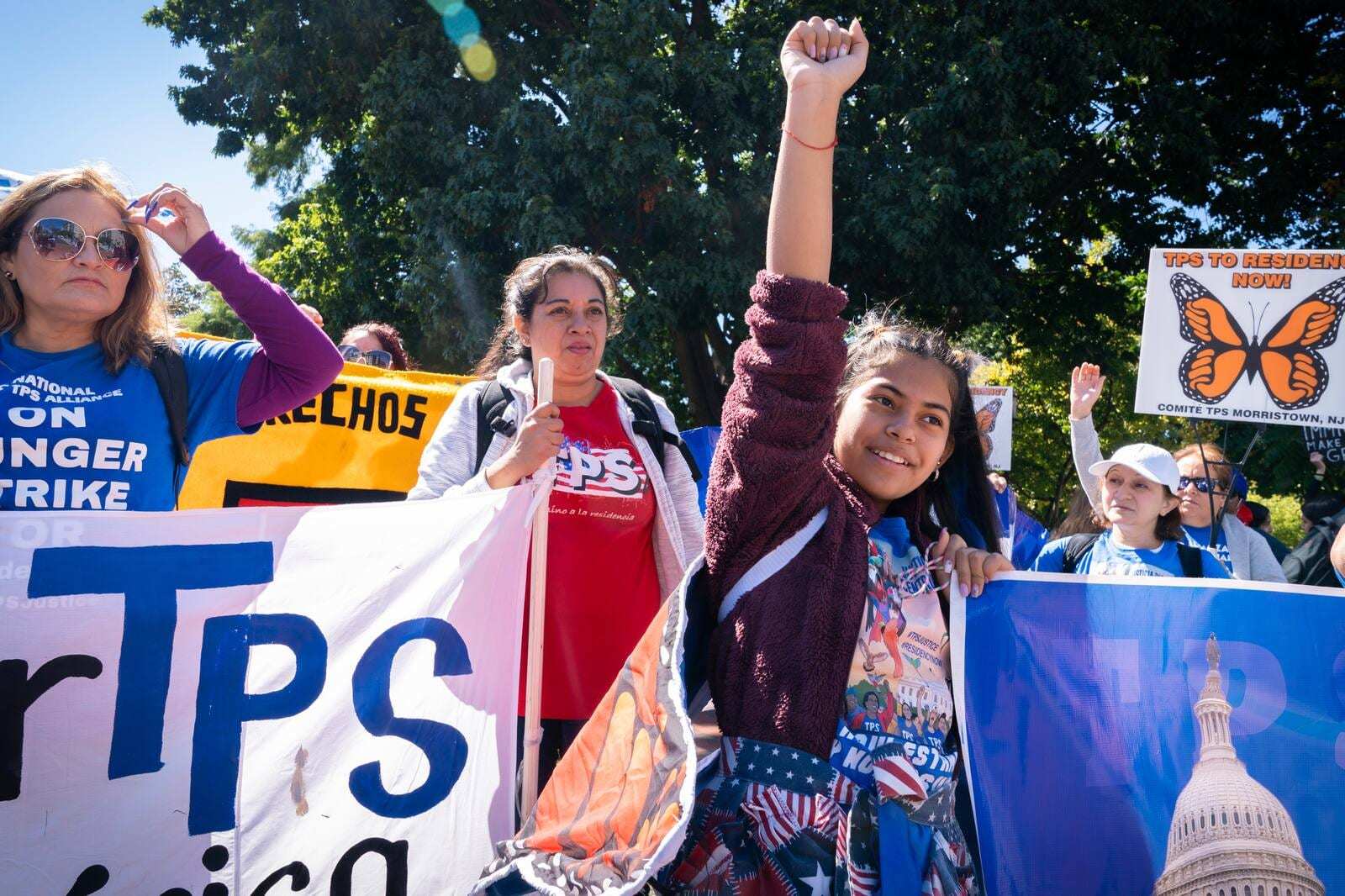
Venezuelans in South Florida who lost Temporary Protected Status will stay without deportation protections for now after a federal appeals court granted the Trump administration's request to keep halting a lower-court order that would have restored the program. The 9th U.S. Circuit Court of Appeals late Wednesday, Nov. 18, extended its freeze on the order until seven days after it issues a full ruling, and the Justice Department withdrew its emergency application to the Supreme Court on Thursday, Nov. 19, though federal attorneys could return to the high court later, according to the Associated Press. The decision matters more in Florida than anywhere else: the state is home to the largest Venezuelan community in the United States, centered in Doral, Weston and the rest of South Florida.
What the appeals court did
The ruling favors the administration. A federal judge in California had ruled the end of Venezuelan TPS unlawful, but the 9th Circuit had temporarily paused that decision. As that pause neared its expiration, the administration returned to the Supreme Court on Wednesday seeking to block the lower-court order. Hours later, the appeals court extended its freeze, removing the need for the justices to act.
The practical effect is that the administration remains free to detain and deport Venezuelans who previously held TPS, and work permits that became invalid when the program was terminated remain invalid while the case continues, the AP reported. Federal attorneys said about 1,800 Venezuelans are in detention and about 330 are in deportation proceedings. It remains unclear how many former TPS holders still live in the United States; many left voluntarily after losing their status.
The 9th Circuit has not said when it will issue its full ruling.
How the case got here
Congress created TPS in 1990 to shield people from deportation to countries suffering natural disasters, armed conflict or civil unrest, in designations lasting up to 18 months. The Venezuelan program grew quickly under President Joe Biden and has been in court since early 2025. Key moments in the case, known as National TPS Alliance v. Noem, include:
| Date | Development |
|---|---|
| March 2021 | Biden administration first grants TPS to Venezuelans |
| September 2023 | Designation expanded to about 472,000 more Venezuelans |
| January 2025 | Final Biden extension covers roughly 600,000 Venezuelans |
| February 2025 | Homeland Security Secretary Kristi Noem moves to terminate the program; TPS holders sue |
| 2025 | U.S. District Judge Edward Chen in San Francisco rules against the termination; the Supreme Court twice issues emergency orders letting it proceed |
| June 25, 2026 | Supreme Court, in Mullin v. Doe, allows the end of TPS for Haitians and Syrians |
| Oct. 5, 2026 | Supreme Court sends the Venezuelan case back to the 9th Circuit to reconsider |
| Nov. 18 and 19, 2026 | 9th Circuit extends its freeze; Justice Department withdraws its Supreme Court application |
In Mullin v. Doe, a 6-3 decision written by Justice Samuel Alito, the court held that the TPS statute bars courts from reviewing most challenges to the government's decisions to designate or terminate a country, a ruling that undercut the legal basis for many TPS lawsuits. The administration argues that TPS is meant to be temporary and that conditions in Venezuela no longer meet the requirements for renewal.
Why Florida has the most at stake
About 40% of Venezuelan immigrants in the United States live in Florida, according to 2024 American Community Survey data cited by Florida State University sociologists Matt Brooks and Karin Brewster in an analysis published by WLRN. Texas is a distant second at 18%. The same analysis found that more than 200,000 of the more than 600,000 Venezuelans granted TPS by the end of 2025 lived in Florida.
Those numbers are concentrated in Miami-Dade and Broward counties. Doral, often nicknamed "Doralzuela," has one of the highest shares of Venezuelan-born residents of any U.S. city, and Weston is another long-established center of the community. The Miami-Fort Lauderdale metro area alone had about 174,000 Venezuelan immigrants in pooled 2019 to 2023 census survey data, according to the Migration Policy Institute. For employers in South Florida, the loss of TPS work permits has meant losing workers or verifying status for employees who once had legal authorization to work. For families, it has meant the risk that a parent or spouse could be detained, even when other relatives are U.S. citizens or hold different immigration status.
The legal back-and-forth has kept many in limbo since early 2025, with protections switched on and off by successive court orders.
The politics in Miami
The issue cuts across party lines in South Florida, where Venezuelan Americans and Venezuelan exiles are a politically engaged constituency. In May 2025, after an earlier Supreme Court order in the case, Miami Republican Reps. Mario Díaz-Balart, Carlos Giménez and María Elvira Salazar said in a joint statement that they "have consistently supported and will continue to support Temporary Protected Status for Venezuelans," while calling for case-by-case review of people with legitimate persecution claims. No new statements from South Florida's congressional delegation on this week's appeals court order had appeared in national coverage as of Sunday.
The ruling comes during a period of rapid change in U.S.-Venezuela relations following the capture of Nicolás Maduro in January, including a new military cooperation agreement between the two countries announced this week.
The Haitian connection
South Florida's Haitian community, the largest in the country, has been through a parallel fight. The Supreme Court's June ruling in Mullin v. Doe allowed the administration to end TPS for Haiti and Syria, affecting roughly 330,000 to 350,000 people, most of them Haitian. During Trump's second term, the Homeland Security Department has terminated TPS for more than 1 million people from 13 countries, including Venezuela, Haiti, Honduras, Nicaragua, Afghanistan and Syria, while keeping protections for nearly 200,000 Salvadorans and more than 100,000 people from Ukraine and Sudan, according to the AP.
What's next
The next decision point is the 9th Circuit's full ruling. Its freeze stays in place until seven days after that ruling, giving the losing side time to seek emergency relief. The administration has signaled it will go back to the Supreme Court if it loses, and lawyers for the TPS holders have indicated they would do the same. The Supreme Court's reasoning in Mullin v. Doe, which sharply limited court review of TPS terminations, looms over that next round.
For now, former Venezuelan TPS holders in Florida have no restored protection from deportation and no restored work authorization. Any change will come only with the appeals court's full ruling, and even then not for at least seven days.
Spotted an issue with this article?
Have something to say about this story?
Write us a letterComments
No comments yet. Be the first to weigh in.
Related Coverage
Trump Presses Congress for $50 Billion FAA Overhaul After Ground Stop as Florida Airports Brace for Thanksgiving Rush
16h ago
Rubio and Vance Flank Trump at White House Briefing as the President 'Auditions' Potential 2028 Successors
18h ago
Judge Approves Bayer's $7.25 Billion Roundup Cancer Settlement: What It Means for Florida Landscapers, Farmworkers and Homeowners
19h ago
10 More States Join FTC Lawsuit Accusing Dollar General of Overcharging, Bringing Total to 30 as Florida Shoppers' Complaints Anchor the Case
1d ago