Sumter Sheriff Suspends Flock Cameras After Detective's Arrest
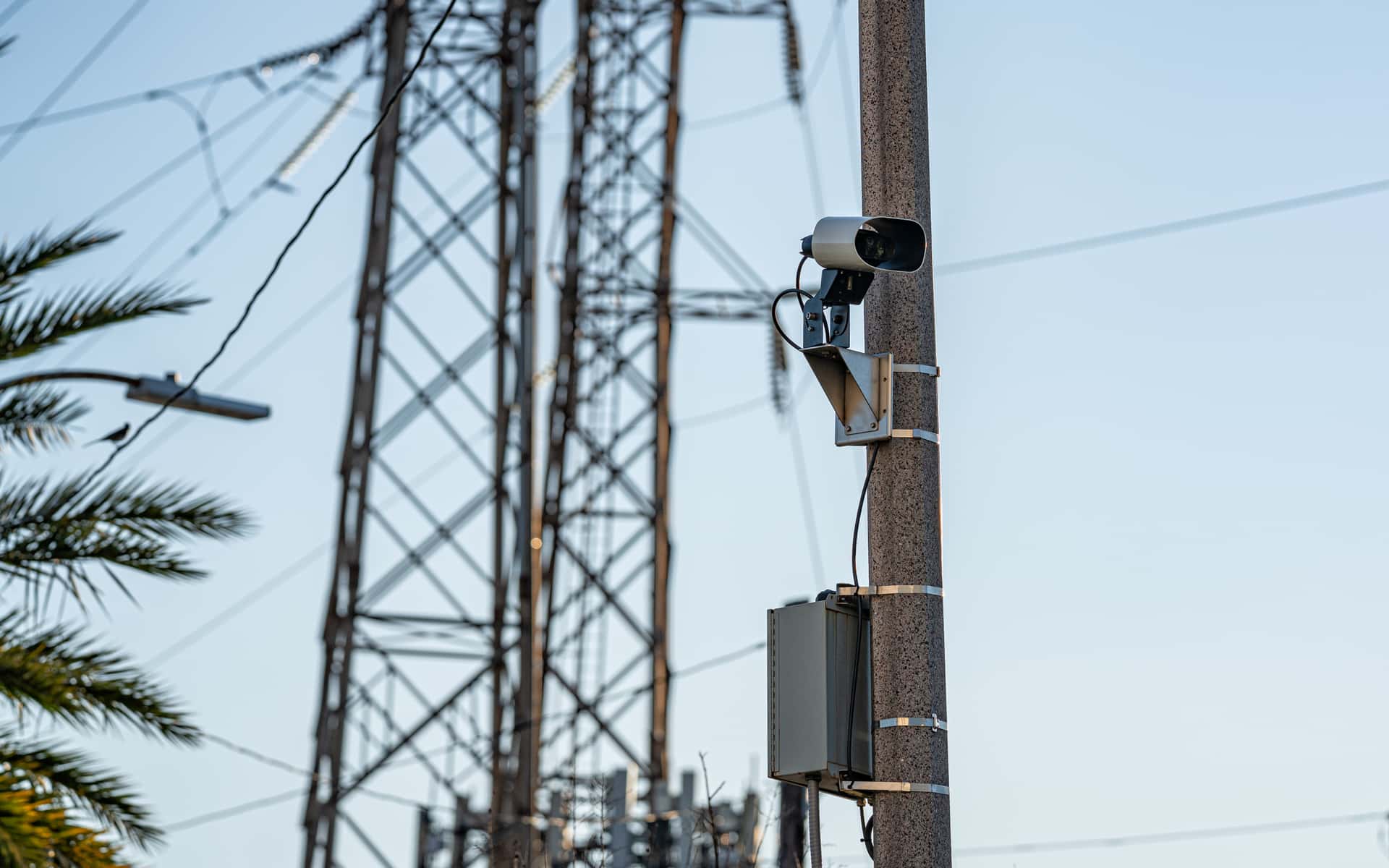
The Sumter County Sheriff's Office has suspended its use of Flock automated license plate reader cameras after a detective was arrested and fired over allegations she used the system and other restricted law enforcement databases to track her husband's ex-wife. Sheriff Patrick Breeden announced the suspension after the arrest, halting agency use of the technology while the internal review continues.
Detective Brandy Almany was arrested on July 23 and charged with official misconduct and multiple counts of offenses against computer users, according to the sheriff's office. She was terminated upon arrest. Almany had been employed with the agency since 2019.
Almany is accused, not convicted. The charges reflect what investigators allege, and she is presumed innocent unless the state proves the case beyond a reasonable doubt. The sheriff's office said it is awaiting additional audit results from the databases involved, which could produce further charges.
What investigators allege
According to the sheriff's office, an internal audit identified irregular activity tied to Almany's credentials across several restricted systems: the Flock automated license plate recognition network, the Florida Driver and Vehicle Information Database known as DAVID, and the Comprehensive Case Information System, or CCIS, which provides access to court records across Florida circuits.
Investigators allege Almany created fake electronic records by attaching unrelated case numbers to her searches, making personal queries appear to be legitimate investigative activity. That allegation is the element that elevates the case from a policy violation to a criminal charge, since it describes an effort to defeat the audit controls rather than simply misuse access.
An arrest warrant was issued in the case, and Almany was booked following its execution. The sheriff's office has not released the full audit findings, and the number of queries at issue has not been made public.
The systems involved
DAVID is maintained by the Florida Department of Highway Safety and Motor Vehicles and gives law enforcement access to driver license records, including photographs, addresses and vehicle registrations. Access is logged, audited and restricted to legitimate law enforcement purposes, and misuse has produced criminal charges against Florida officers in past cases.
The Comprehensive Case Information System aggregates court records from Florida's clerks of court, providing law enforcement with case histories across counties. Like DAVID, its access is credentialed and logged.
Flock operates differently. The system reads and stores license plate images captured by fixed cameras, allowing agencies to search for a specific plate's movement history across the network. Because Flock networks are frequently shared among participating agencies, a single user's search can reach data collected far beyond their own jurisdiction.
Why the sheriff suspended the system
Suspending an entire surveillance network over one employee's alleged conduct is an unusually broad response. Sheriff Breeden's decision removes a tool the agency uses in stolen vehicle recovery, missing person cases and criminal investigations while the review continues.
The rationale appears to be trust in the audit controls rather than the technology itself. If a user could disguise personal searches as case-related activity by entering an unrelated case number, the audit mechanism that is supposed to prevent misuse did not function as designed until a separate review caught the pattern.
The suspension also has a public-facing dimension. License plate reader networks have drawn scrutiny from civil liberties organizations and from local governments in Florida and elsewhere, and an agency that suspends use after discovering misuse takes a different position than one that continues operating while an investigation proceeds.
The wider debate over plate readers
Automated license plate readers have expanded rapidly across Florida over the past several years, adopted by sheriff's offices and municipal police departments as a relatively low-cost investigative tool. They have been credited with solving vehicle thefts, locating missing persons and generating leads in violent crime cases.
The recurring criticism is that plate readers create a searchable record of vehicle movement for people who are not suspected of anything, and that safeguards against misuse depend on internal agency discipline rather than external oversight. Cases in which officers have used law enforcement databases for personal reasons, including tracking former partners, have been documented in multiple states.
Florida law makes unauthorized access to protected computer systems a criminal offense, and official misconduct is a third-degree felony when a public servant falsifies records with corrupt intent. Those statutes are the enforcement mechanism when internal policy fails.
What it means for Sumter County
Sumter County is home to a large share of The Villages, one of the country's largest retirement communities, and the sheriff's office serves a population weighted toward older residents. Public trust in the agency's handling of personal data is a live concern in a community of that composition.
Operationally, the suspension means deputies working active cases lose access to a tool they have been using. How much that affects clearance rates depends on how heavily the agency had come to rely on the system, information the sheriff's office has not detailed.
The case will also draw attention from other Florida agencies operating on the same networks. Audit procedures that failed to catch falsified case numbers in Sumter County may have the same weakness elsewhere, and agencies frequently review their own controls after a neighboring department discovers a problem.
The charges in detail
Official misconduct under Florida law is a third-degree felony committed when a public servant, with corrupt intent to obtain a benefit or cause harm, falsifies or causes another to falsify an official record or document. The allegation that case numbers were attached to unrelated searches to disguise them is what supports that charge.
Offenses against users of computers, computer systems and computer networks constitute a separate statutory category in Florida law, covering willful and unauthorized access to protected systems. The charge escalates in severity depending on intent and whether the access was in furtherance of another offense.
Both charges carry potential prison exposure, and a conviction on either would end a law enforcement career through decertification proceedings before the Florida Criminal Justice Standards and Training Commission, which is the body with authority over officer certification statewide.
How audit trails are supposed to work
Systems like DAVID and CCIS log every query, recording the user credential, the timestamp, the search terms and, in most implementations, a stated purpose or case reference. Agencies are required to conduct periodic audits of those logs, and the state agencies that own the systems conduct their own reviews.
The weakness the Sumter case exposes is that a stated purpose is only as reliable as the person entering it. If a system accepts any case number without verifying that the queried person is connected to that case, the audit trail records a plausible-looking justification for a search that had none.
Closing that gap requires cross-referencing queries against case records, a technically feasible but operationally demanding control. Agencies that implement it catch this category of misuse quickly; those that rely on stated purpose alone catch it only through pattern analysis or an outside complaint.
Where Florida oversight sits
The Florida Department of Highway Safety and Motor Vehicles administers DAVID access and requires participating agencies to sign memoranda of understanding governing use, conduct quarterly audits and report misuse. Those agreements give the state leverage to suspend an agency's access if controls fail.
License plate reader networks operate under a different framework. Florida statutes address the retention of automated license plate reader data by law enforcement agencies, but the vendor-operated network model, in which a private company hosts data that multiple agencies can search, raises questions about oversight that predate this case.
Local governments contract for these systems individually, which means the terms, retention periods and sharing arrangements vary from one Florida jurisdiction to the next. Some county commissions have required public reporting on usage as a condition of approval; others have not.
What happens to the technology now
Suspension is not the same as termination. The sheriff retains the option to resume use of the camera network with revised controls, to renegotiate the agency's participation terms, or to discontinue it entirely. Each path carries different operational and political consequences.
Resumption with stronger controls is the most likely outcome based on how comparable incidents have been handled elsewhere. Typical revisions include supervisor approval for individual searches, automated cross-referencing of case numbers against actual case records, and more frequent audits.
Discontinuation would be unusual. Agencies that have adopted these systems generally find them operationally valuable, and abandoning the technology over one employee's alleged conduct would be a significant policy statement rather than a technical decision.
Other Florida agencies participating in shared networks have an interest in the outcome, since data collected by one agency's cameras is frequently searchable by others. A misuse incident in one jurisdiction implicates the data collected in all of them.
What's next
Almany's case proceeds through the criminal process in Sumter County, beginning with first appearance and arraignment. The sheriff's office has said additional audit results are pending, and further charges remain possible depending on what those audits show.
The Flock suspension continues at the sheriff's discretion. Whether the agency resumes use, and under what revised controls, is a decision that will likely follow the completion of the internal review.
The Florida Press will report on the progress of the criminal case and on the sheriff's office decision regarding the camera network. Almany is presumed innocent unless and until convicted.
Residents with questions about how their local agency uses automated license plate readers can request records under Florida's public records law, which covers agency policies, contracts with vendors and audit procedures. Individual query logs may be exempt where they relate to active investigations.
County commissions approve the contracts that fund these systems, and those approvals happen in public meetings where residents may comment. That process is the primary point at which the public has direct input on whether and how the technology is deployed in a given jurisdiction.
Spotted an issue with this article?
Have something to say about this story?
Write us a letterComments
No comments yet. Be the first to weigh in.
Related Coverage

Self-Proclaimed Witch Shannon Ryan Sentenced to Life Without Parole for 2020 Murder of Young Mother Leila Cavett
3h ago

Retired Putnam County Teacher and Former School District Official Convicted of Sexual Battery on Child Under 12, Sentenced to Life
3h ago

Judge convicts Michigan inmate in 1985 Christmas Eve kidnapping and murder of Jacksonville teen Leslie McCray
1d ago
Houston Man Found Guilty in Mall at Millenia Tiffany Heist After Swallowing $770,000 in Earrings
1d ago