The 2026 Atlantic Hurricane Season Ends Monday: One Hurricane, a Panhandle Landfall and a Quiet Year Florida Paid For Anyway
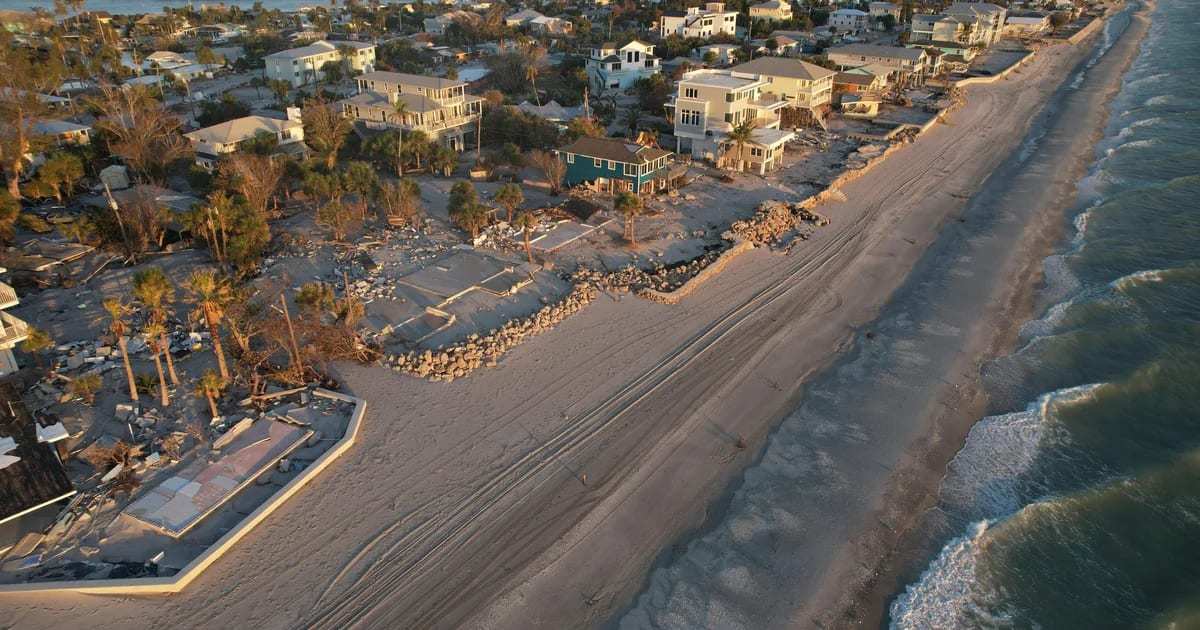
The 2026 Atlantic hurricane season officially ends Monday, Nov. 30, and for most of Florida it will be remembered as the year the storms stayed away. The basin produced 10 named storms but only one hurricane, Isaias, according to the National Hurricane Center's season summary as of Nov. 25. That single hurricane still found Florida: Isaias came ashore near Destin on the night of Oct. 9, killed six people in the state and generated more than 68,000 insurance claims. And while the tropics went quiet, Florida's worst weather of the fall arrived anyway, in the form of record November rain from non-tropical storms that flooded the east coast from Hollywood to the St. Johns River.
The season by the numbers
The hurricane center's running tally, updated Wednesday, lists 10 named storms, one hurricane and one major hurricane. Against the 1991 to 2020 averages, that is four fewer named storms, six fewer hurricanes and two fewer major hurricanes than normal. Accumulated Cyclone Energy, the index that combines how strong storms get and how long they last, stood at 20.2, about 83 percent below normal.
NOAA had seen a quiet year coming. Its May 21 outlook gave a 55 percent chance of a below-normal season and called for 8 to 14 named storms, 3 to 6 hurricanes and 1 to 3 major hurricanes, citing the developing El Nino. In August, the agency raised the odds of a below-normal season to 75 percent and trimmed its ranges to 7 to 13 named storms, 2 to 6 hurricanes and up to 2 major hurricanes. The final count landed near the low end of the named storm range and below the hurricane range.
The hurricane center's list of the season's storms shows how weak and short-lived most of them were:
| Storm | Dates (UTC) | Peak winds | Notable impact |
|---|---|---|---|
| Arthur | June 17 to 18 | 50 kt tropical storm | Landfall near Galveston, Texas |
| Bertha | July 19 to 23 | 50 kt tropical storm | Louisiana landfall |
| Cristobal | Aug. 12 to 13 | 40 kt tropical storm | Stayed at sea |
| Dolly | Aug. 27 to 28 | 35 kt tropical storm | Rain in the Antilles |
| Edouard | Aug. 31 to Sept. 2 | 50 kt tropical storm | Landfall at Johnson Bayou, Louisiana |
| Fay | Sept. 19 to 29 | 60 kt tropical storm | Stayed at sea |
| Gonzalo | Sept. 25 to 26 | 45 kt tropical storm | Near Cape Verde |
| Hanna | Sept. 28 to 30 | 40 kt tropical storm | Stayed at sea |
| Isaias | Oct. 6 to 10 | 105 kt major hurricane | Landfall near Destin, Florida |
| Josephine | Oct. 21 to 22 | 55 kt subtropical storm | Stayed offshore |
Landfall details for the storms outside Florida come from the Wikipedia season summary, which compiles hurricane center advisories. The hurricane center has finished its post-storm reports only for Arthur, Bertha, Cristobal and Dolly so far, and its final reports can revise peak winds and other figures.
Why it was so quiet
El Nino, the periodic warming of the equatorial Pacific, did most of the work. It strengthens the upper-level winds over the tropical Atlantic and Caribbean, and that wind shear tears developing storms apart. By mid-September, the Associated Press reported that 2026 had set a satellite-era record for the longest a season had gone without a hurricane, with overall Atlantic activity at a post-1950 low for that point in the year. University of Miami hurricane researcher Brian McNoldy told the AP, "I don't think anyone really foresaw it being this quiet."
When Isaias finally became a hurricane in October, it tied the 1905 season for the latest first hurricane on record, according to the Wikipedia season summary. AccuWeather later said it was the first season since 1925 with only one hurricane, and in early November its forecasters declared the season's tropical activity effectively over, three weeks before the official end date. The hurricane center's outlook Wednesday morning said tropical cyclone formation is not expected during the next seven days, which carries past Monday.
Isaias: the one that hit Florida
Isaias formed in early October and strengthened over the Gulf, peaking as a Category 3 hurricane with 120 mph winds. It weakened slightly before landfall near Destin around 8:30 p.m. CDT on Friday, Oct. 9, as a Category 2 hurricane with winds near 105 mph, according to AccuWeather and other reports. It was the first hurricane to make U.S. landfall since Milton in 2024.
The worst damage was concentrated in the western Panhandle. NBC 6, citing the Florida Office of Insurance Regulation, reported in October that the hardest-hit communities included Destin, Pensacola Beach, Navarre, Milton and Pace, and that Santa Rosa and Escambia counties accounted for most of the early claims. Six deaths in Florida were linked to the storm.
The insurance bill kept climbing for weeks. By early November, estimated insured losses reported to the Office of Insurance Regulation had passed $735.5 million on 68,071 claims, according to the Florida Phoenix, which reported that 25,211 of those claims had been closed with some payment. Industry modelers put the total private insured loss across the Southeast much higher: Karen Clark and Company estimated about $3 billion, and Moody's RMS estimated $2.5 billion to $4.5 billion across several states.
President Donald Trump approved a federal Major Disaster Declaration for Isaias on Oct. 27, covering Public Assistance in 15 Panhandle and Big Bend counties, and FEMA records show individual assistance was added for eight counties: Bay, Escambia, Gulf, Holmes, Okaloosa, Santa Rosa, Walton and Washington.
The fall flooding was not tropical
For much of the peninsula, the most damaging weather of 2026 came after the tropics shut down. A series of low pressure systems dumped record November rain on the east coast, including more than 14 inches in a few hours in the Dania Beach and Hollywood area on Nov. 17 and 18, according to WLRN, and pushed the St. Johns River to major flood stage from Brevard County north to Lake and Volusia counties. National Weather Service Miami meteorologist Alejandra Garcia told WLRN that El Nino is helping steer those low pressure systems toward the Southeast.
The same Pacific pattern that suppressed Atlantic hurricanes is now feeding a wet Florida winter. NOAA's Climate Prediction Center has an El Nino advisory in effect, and the flooding has already drawn a federal disaster declaration for seven counties, with a second request pending.
A late season reminder
November hurricanes in Florida are rare but not unheard of. WLRN noted that Hurricane Kate, which struck near Mexico Beach on Nov. 21, 1985, remains the latest hurricane landfall on record in the continental United States, and that Hurricane Nicole in 2022 was the most recent November hurricane to make landfall in Florida. With no development expected through the weekend, 2026 will not add to that list.
What's next
The hurricane center will spend the coming months completing its post-storm reports, which will set the official record for Isaias and the other nine storms. Seasonal forecasters will begin issuing early outlooks for 2027 in the months ahead. One factor they will weigh: experts quoted by the AP in September said Atlantic waters stayed warm through the El Nino year, and that warmth could favor a more active season once El Nino fades. The 2027 season begins June 1.
Spotted an issue with this article?
Have something to say about this story?
Write us a letterComments
No comments yet. Be the first to weigh in.
Related Coverage

EF-1 Tornado With 102 mph Winds Cut a 7.6-Mile Path From West Boca Raton to Boynton Beach, Weather Service Confirms
2d ago
St. Johns River Passes Ian Record at Lake Harney as Lake Monroe Floods Downtown Sanford and Seminole Warns Water Could Linger Six Weeks
4d ago

Palm Bay Residents Lash Out at City Council as Road Damage Estimate Hits Up to $10 Million and Brevard Faces Another Flood Watch
4d ago
Northeast Florida Flood Watch Extended Into Saturday as Flagler Opens Sandbag Sites, Putnam Faces Coastal Flood Warning and Weekend Events Fall
6d ago