UF Slips to No. 8 and FSU Holds at No. 21 in the New U.S. News Public University Rankings
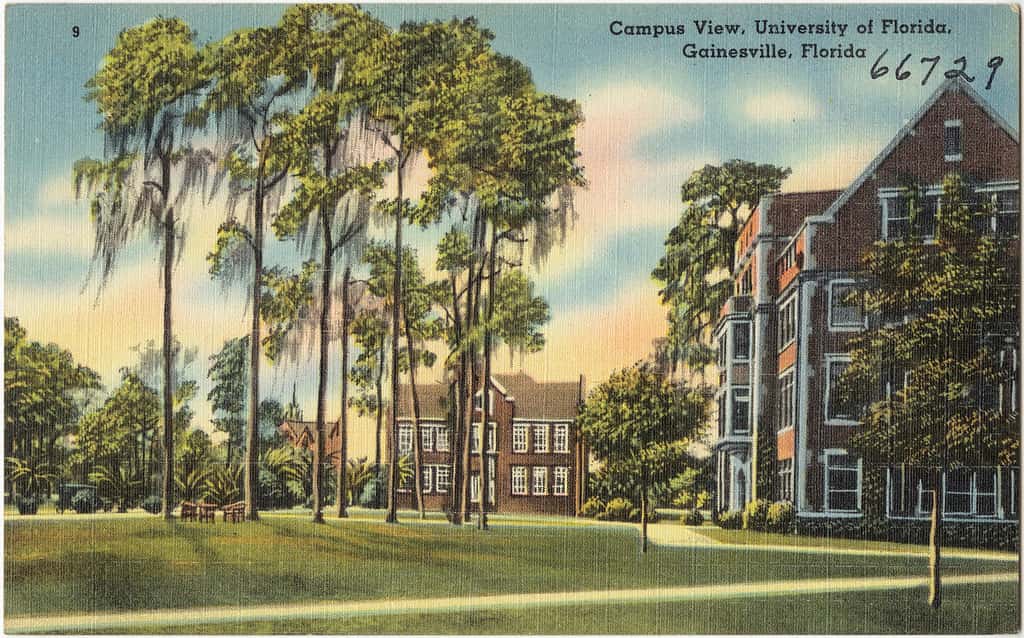
The University of Florida placed eighth among the nation's public universities in the U.S. News and World Report Best Colleges 2027 rankings released this week, slipping one position from last year while extending to ten the number of consecutive years it has finished in the top 10. Florida State University placed 21st among publics, holding a top-25 position for an eighth straight year.
UF also ranked 34th overall in the national universities category, which combines public and private institutions. Both schools announced their results on September 22 as the annual guidebook was published.
The rankings carry outsized weight in Florida because state higher education policy has explicitly targeted them. Performance in national rankings has been used as a benchmark in funding discussions, legislative priorities and gubernatorial messaging for the better part of a decade.
What the numbers say
UF's drop from seventh to eighth is small in absolute terms. Movement of one position in a ranking that evaluates dozens of institutions on overlapping metrics generally reflects methodology adjustments or marginal changes at competitor schools rather than any deterioration in the institution itself.
The more durable number is the ten-year streak. Sustaining a top-10 public ranking across a decade requires consistency in the underlying measures U.S. News weights most heavily, including graduation and retention rates, faculty resources and financial resources per student.
Florida State's 21st-place finish continues a similar pattern of stability. The university has been inside the top 25 publics for eight consecutive years, a stretch that began after a period of substantial state investment in its preeminence programs.
Neither result represents a dramatic shift. Both represent institutions holding positions that took years to reach.
How U.S. News builds the rankings
The methodology has changed repeatedly over the past several years, and those changes have driven much of the position movement that universities experience. U.S. News has progressively shifted weight toward outcomes measures and away from inputs.
Graduation rates, retention rates, graduation rate performance relative to predicted rates, and outcomes for students receiving federal Pell Grants now carry substantial weight. Measures such as class size, alumni giving and high school class standing have been reduced or eliminated.
The shift generally benefits large public universities that graduate students at high rates, including those from lower-income backgrounds. Florida's flagship institutions perform well on several of those measures.
Because the methodology moves, year-over-year comparisons are less meaningful than they appear. A school can fall while improving, or rise while standing still, depending on which factors were reweighted.
The Florida higher education context
Florida's public university system has drawn national attention for its cost structure. In-state tuition at Florida's public universities has remained among the lowest in the country, held down by a legislative freeze that has lasted years, and the state's Bright Futures scholarship program covers tuition for many high-performing Florida students.
That combination produces a distinctive result: institutions that rank highly on national measures while charging students a fraction of what comparable schools charge elsewhere. Low debt loads among Florida graduates have been a consistent feature of the state's higher education profile.
The tradeoff has been faculty compensation and facilities spending, areas where Florida institutions compete against schools with much larger tuition revenue and endowments. Recruiting and retaining faculty against private institutions and better-funded publics remains a persistent challenge.
Reports this week also indicated Florida retained the top position in U.S. News rankings of state higher education systems, a separate measure from individual institutional rankings that weighs statewide outcomes including cost and completion.
Other Florida results
The two flagships are not the only Florida institutions in the national conversation. The University of South Florida and the University of Central Florida have both climbed in national rankings over the past decade, with USF's rise among the more notable trajectories in American public higher education.
Florida International University, Florida Atlantic University and the University of North Florida each serve large regional populations and have posted improvements on retention and graduation measures.
The University of Miami, the state's most prominent private research university, is ranked in the national universities category alongside private peers rather than in the public listing.
Taken together, the state's institutions have moved up collectively rather than individually, which is the pattern that produces a high system-level ranking.
Why rankings matter in Florida
Rankings influence behavior even when their methodology is contested. Prospective students and families use them as a shorthand for quality, out-of-state applicants weigh them heavily, and donors reference them.
In Florida specifically, they have been embedded in policy. State leaders have cited top-10 status as a goal and an achievement, and performance-based funding models used by the Board of Governors incorporate metrics that overlap substantially with what U.S. News measures.
That alignment means institutional incentives and ranking incentives point in roughly the same direction, which is unusual. In many states, ranking performance and state funding formulas reward different things.
The risk of that alignment is that measures become targets. When an institution optimizes for a ranking metric, the metric can stop measuring what it was designed to measure.
What the rankings do not capture
National rankings measure a narrow set of institutional characteristics. They do not evaluate teaching quality directly, do not assess what students learn, and do not account for the differences in mission among institutions serving different populations.
A university that enrolls a large share of first-generation and transfer students faces different conditions than one that admits primarily from the top of high school classes. The outcomes measures partially adjust for this, but imperfectly.
Research output, which is central to the identity of both UF and FSU, appears only indirectly in the undergraduate rankings. Both institutions rank considerably higher on research expenditure measures than their undergraduate positions suggest.
Graduate and professional program rankings are published separately and follow different methodologies entirely.
The competitive landscape
The top of the public university ranking is stable and crowded. The institutions occupying those positions have large endowments, substantial research operations and decades of accumulated advantage in faculty recruitment.
Moving up within that group requires either sustained improvement over many years or methodology changes that happen to favor a particular institutional profile. Single-year movement in either direction is mostly noise.
For Florida State, the relevant target is the top 20, which the university has approached without consistently entering. For UF, the question is whether the top 10 position holds as competitor institutions invest.
Both universities have publicly framed this year's results as evidence of consistency rather than as cause for concern or celebration.
What students should take from it
For a prospective student choosing among Florida institutions, the difference between a school ranked eighth and one ranked 21st among publics is smaller than the numbers suggest, particularly for a specific academic program.
Program-level quality varies widely within any university, and a department ranked highly nationally may sit at an institution with a middling overall ranking. Students choosing a major should look at program-specific information rather than institutional position.
Cost, location, class availability and fit with a specific academic interest generally matter more to individual outcomes than the institution's national rank.
Florida's low in-state tuition means that for Florida residents, the financial calculation differs substantially from that facing students in most other states.
The other rankings Florida schools appear in
U.S. News is the most widely cited ranking but not the only one. In August, TIME magazine published its America's Best Colleges 2027 list, which placed the University of Florida fourth among public universities and Florida State among the nation's top 20 publics.
The wide gap between UF's fourth-place finish on one list and eighth on another illustrates how much methodology drives outcomes. TIME's approach weights different factors, and a school's position can shift several places depending on which measures a publication chooses to emphasize.
Other widely referenced rankings include the Wall Street Journal listing, which emphasizes student outcomes and salary impact, and the Washington Monthly rankings, which weight social mobility and public service contribution.
Universities typically promote whichever ranking shows them most favorably, which is why press releases from the same institution can cite very different numbers in the same year.
What drives Florida's outcomes numbers
Both UF and FSU perform strongly on the graduation and retention measures that now dominate the U.S. News formula. Florida's public universities have invested heavily in advising, degree pathway mapping and early intervention for students at risk of falling behind.
The state's performance funding model has reinforced that focus. Institutions are evaluated on graduation rates, retention, post-graduation employment and earnings, and cost to the student, and funding follows performance on those metrics.
Critics of that approach argue it creates pressure to admit students likely to graduate rather than students who would benefit most from access, and to steer students toward degrees with measurable salary outcomes.
Supporters point to the results: Florida graduates carry among the lowest student debt levels in the country and complete degrees at rates above national averages for public institutions.
Enrollment pressure ahead
Both universities face a demographic shift that will affect admissions over the coming years. The national population of college-age students is projected to decline, a consequence of birth rate changes following the 2008 financial crisis, and institutions across the country are preparing for smaller applicant pools.
Florida is better positioned than most states because its population continues to grow through in-migration, which partially offsets the national trend. Public universities in the Northeast and Midwest face considerably steeper declines.
Admission to both UF and FSU has nonetheless become substantially more selective over the past decade, driven by rising application volume from both in-state and out-of-state students attracted by cost and ranking.
What's next
The Florida Board of Governors continues to evaluate institutional performance through its own metrics, which feed into funding decisions and will be revisited in upcoming meetings.
Both universities have ongoing capital and faculty investment plans that will shape their positions over the coming years. Ranking movement, when it happens, tends to follow those investments by several years rather than immediately.
U.S. News publishes the next edition of the Best Colleges rankings in the fall of 2027, and any methodology changes will be announced alongside it.
Spotted an issue with this article?
Have something to say about this story?
Write a letter to the editorComments
No comments yet. Be the first to weigh in.
Related Coverage

Florida Launches Workforce Pell Grant Funding for Short-Term Career Training
1d ago

Florida Board of Education Adopts AI Rules for Colleges and Extends Immigration Limits to Career Training
1d ago
Florida's University Presidential Searches Keep Producing a Single Public Finalist
2d ago

Florida Names First Workforce Pell Programs, Opening Federal Aid to Short-Term Training
2d ago