U.S. Opens Four More Cuban Economic Sectors to Sanctions and Targets Chinese Military Suppliers as Rubio Tightens the Squeeze
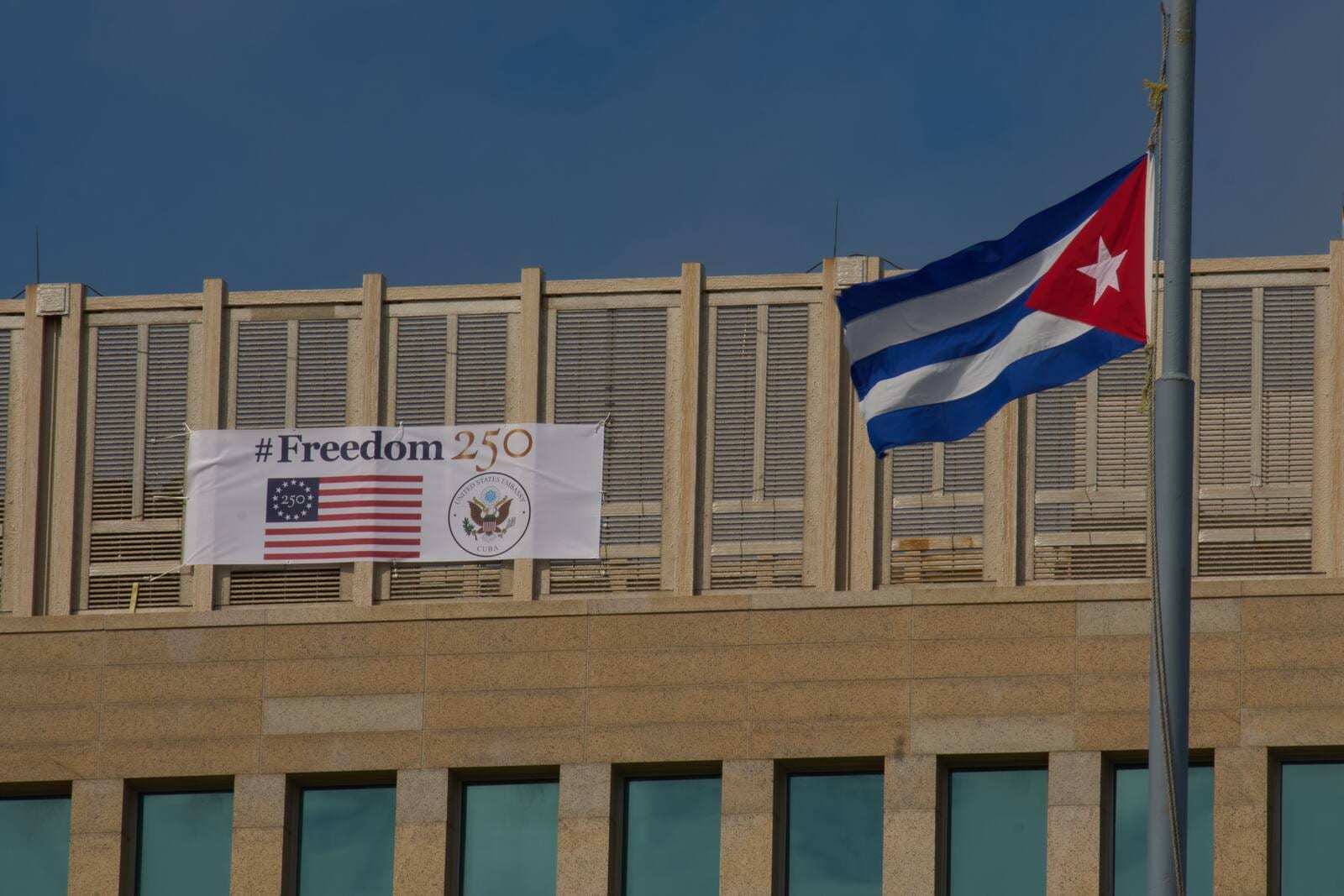
The Trump administration on Thursday widened its economic campaign against Cuba's government, clearing the way for sanctions on four more sectors of the island's economy and blacklisting two Chinese companies accused of supplying Havana's military. Secretary of State Marco Rubio, the Miami native who has driven Cuba policy in the administration, announced the designations of eight entities and two individuals, along with five vessels identified as blocked property, in an action that reaches from Beijing electronics exporters to the family of the head of the Cuban military's business empire.
For South Florida, home to the largest Cuban community outside the island, the move is the latest turn in a pressure campaign that has deepened blackouts and shortages in Cuba this year and that Miami families feel through every phone call, remittance and care package sent to relatives.
What the State Department did
The actions were taken under Executive Order 14404, which the president signed May 1 to create a new Cuba sanctions program on top of the decades-old embargo. Under that order, Treasury issued a determination on Nov. 5 that makes any foreign person operating, or who has operated, in Cuba's electronics, manufacturing, marine or technology sectors potentially subject to sanctions. Those four join the sectors named in the original order: energy, defense and related materiel, metals and mining, financial services, and security.
A sector determination does not automatically sanction everyone doing business in those industries. Law firms analyzing the order have noted that it is meant to signal sharply higher risk to foreign companies, which can then be designated individually.
Alongside the determination, the State Department named its new targets. According to the department's fact sheet and news reports, they include:
- China National Electronic Import and Export Company (CEIEC), a Chinese state-owned enterprise that exports defense electronics, security systems and construction engineering services. The State Department said it contracted this year with the Cuban firm Sociedad Mercantil Duna S.A. to export components for military equipment used by Cuba's Revolutionary Armed Forces. CEIEC was previously sanctioned by the Treasury Department in November 2020 over its work for Venezuela's government.
- Beijing H&C Technologies, a private Chinese firm the U.S. accuses of selling surveillance and security equipment to the Cuban government.
- Cubaelectronica, a Cuban state-owned importer, among several state import and technical-support companies named in the action.
- Guillermo Faustino Rodríguez López-Calleja, designated for his role in a network of maritime companies that move oil products to and from Cuba.
- Any Rodríguez Lastres, designated as the daughter of Ania Guillermina Lastres Morera, the previously sanctioned president of GAESA, the military-controlled conglomerate that runs much of Cuba's hotel, retail and shipping economy.
Rubio said in announcing the action that Cuba's ruling elite "is hoarding the island's energy, shipping, and technology resources for its own enrichment," and that the United States would not stand by while the government funneled the island's resources to its military elite.
How this builds on earlier sanctions
Thursday's round is the latest in a series of steps under the May order. On May 7, the State Department designated GAESA itself for its financial services activity. On May 18, it sanctioned 11 regime-aligned individuals and three entities. The order rests on a national emergency with respect to Cuba that the president declared in January, when he also threatened tariffs on any country that sells or supplies oil to the island.
The Associated Press reported that the oil pressure has made islandwide blackouts more common, with daily outages now running longer than 24 hours as Cuba's aging grid fails and fuel reserves dwindle. The campaign has accelerated in recent weeks: last week the United Nations General Assembly condemned the U.S. embargo for the 34th year, but U.S. lobbying led several countries to vote against the resolution or abstain for the first time, the AP reported. In late October, the CIA issued a public appeal for Cuban informants that Rubio amplified, and the president has talked publicly about possible military action against the island.
Beijing and Havana push back
China's Foreign Ministry responded on Friday. Spokesman Guo Jiakun said Beijing firmly opposes what he called U.S. interference in and sabotage of cooperation between China and Cuba, and the ministry warned it would take all necessary measures to protect Chinese companies, according to Agence France-Presse. The ministry also called the sanctions illegal and an example of American long-arm jurisdiction.
The Chinese designations are the most direct move yet by the administration against Beijing's role in Cuba, a concern Rubio and Florida's congressional Republicans have pressed since reports in 2023 of Chinese intelligence facilities on the island, roughly 90 miles from Key West.
What it means for Miami families
The new designations target state and military companies, not the people-to-people channels most Cuban Americans use. The Treasury Department's Office of Foreign Assets Control has said that its General License 1, issued May 7, authorizes any transaction barred by the new order if it is already authorized or exempt under the Cuban Assets Control Regulations, the long-standing embargo rules that govern family remittances and licensed travel. OFAC has also said the order does not affect the validity of licenses issued under those regulations.
That leaves the formal rules for sending money and visiting relatives where they were before Thursday. The practical picture is harder to separate. Because GAESA and its affiliates control much of the island's financial plumbing, hard-currency retail and shipping, each new designation can narrow the companies that Miami remittance agencies, shippers and travel providers are able to work with. An expanding marine and electronics blacklist could also add friction to the cargo routes that carry food, medicine and generators from South Florida to relatives on the island.
Political reaction in Miami-Dade has tracked the county's long support for a hard line on Havana. Miami-Dade County Tax Collector Dariel Fernandez issued a statement praising the new sanctions on what he called Cuba's communist dictatorship and its foreign military support networks. In February, Reps. Carlos Giménez, Mario Díaz-Balart and María Elvira Salazar wrote to the administration demanding a full review of U.S. licenses that allow Americans to do business with the Cuban government and immediate action to deny them.
What's next
The sector determination took effect immediately, which means foreign shipping, electronics and technology firms that deal with Cuban state companies now face a standing risk of designation. The executive order also authorizes sanctions on foreign banks that conduct significant transactions for blocked persons, a lever the administration has not yet pulled in a major way. More designations are likely as the State Department works through the newly covered sectors, and Beijing's promise of countermeasures sets up a new front in U.S.-China tensions over the island. For Cuban Americans in South Florida, the questions to watch are whether remittance and shipping companies tied to GAESA are named next, and whether Washington moves to tighten the CACR rules that so far remain unchanged.
Spotted an issue with this article?
Have something to say about this story?
Write us a letterComments
No comments yet. Be the first to weigh in.
Related Coverage
Trump Set to Speak at Kennedy Space Center During NASA's MAX POWER Expo in His First Trip Since the Midterms
4h ago

New Federal Student Loan Caps Push Florida Graduate Students and Parents Toward Private Lenders
6h ago
Latino Voters Swung Left Nationally in the Midterms. In Florida, Hispanic Voters Moved Too, but Not Far Enough to Flip the State
7h ago
Cuba Detains 14ymedio Founder Yoani Sánchez for Nine Hours, the Third Independent Journalist Held in Havana This Week
10h ago