Florida Senate Special Election Primary Arrives August 18 for Rubio's Old Seat
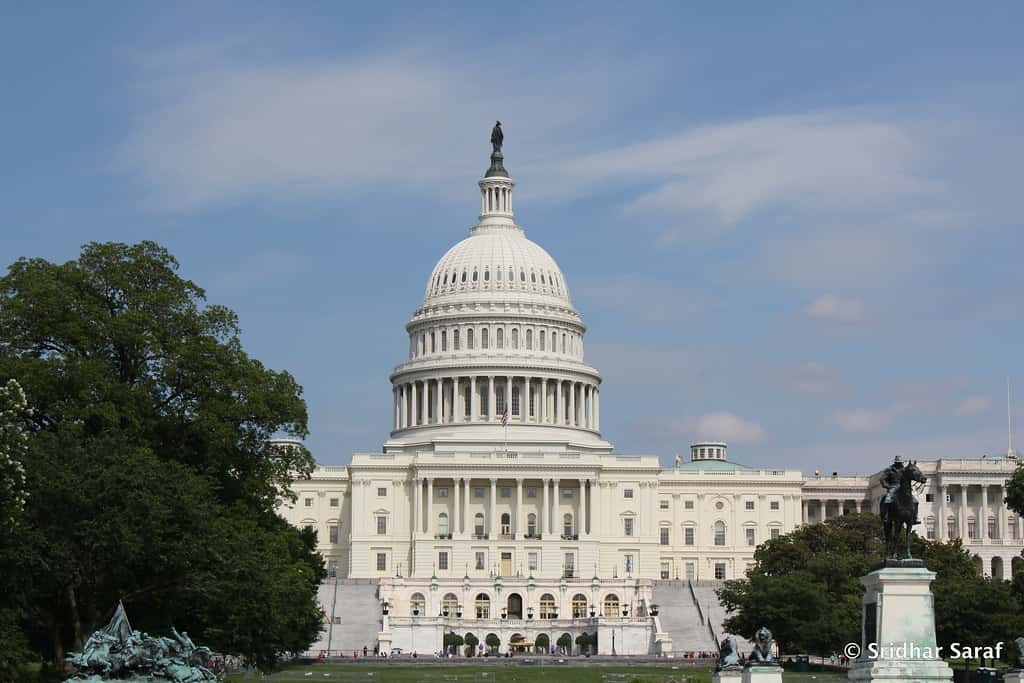
Floridians vote August 18 in primaries for a United States Senate special election that will determine who serves the remainder of the term Marco Rubio vacated when he became Secretary of State. Gov. Ron DeSantis appointed Ashley Moody to the seat, and she must now win the special election to continue serving. The general election follows on November 3.
How the seat became vacant
Rubio was confirmed as Secretary of State in January 2025, which required him to resign the Senate seat he had held since 2011. Under Florida law, the governor appoints a replacement to serve until a special election can be held.
DeSantis selected Ashley Moody, who had been serving as Florida's attorney general. The appointment moved her from a statewide elected office to the Senate without an intervening election, which is the standard mechanism but one that leaves an appointed senator needing to establish an electoral mandate.
The special election fills the remainder of Rubio's six-year term, meaning the winner serves roughly two years before the seat comes up again on its regular cycle. That compressed timeline is a feature of special elections and means the winner will face voters again relatively quickly.
The Republican primary
Moody enters as the appointed incumbent and the clear front-runner for the Republican nomination. She carries President Trump's endorsement along with backing from a substantial portion of Florida's congressional delegation, and she has held a significant fundraising advantage.
Campaign finance reporting shows Moody raised a total of $8.4 million across the 2025-2026 election cycle. That figure includes approximately $4.1 million transferred from her former attorney general campaign committee and roughly $1.6 million in party and political action committee contributions.
The transfer from a prior state campaign account is a legally permitted mechanism that gives an appointed officeholder a substantial head start over challengers building from zero.
Moody faces primary challengers including Neelam Taneja Perry, Chris Gleason, and Ernie Rivera. Primary challenges to a well-funded incumbent carrying a presidential endorsement rarely succeed, though primaries with low turnout occasionally produce surprises.
The Democratic primary
Democrats have a contested primary between Alex Vindman and Angie Nixon.
Vindman brings national name recognition from his role as a witness during the first Trump impeachment proceedings, a profile that has translated into significant fundraising. Nixon has served in the Florida Legislature and brings a record in state government and connections within Florida Democratic constituencies.
The choice presents Florida Democrats with a familiar strategic question: whether to nominate a candidate with national fundraising reach and media profile or one with deeper roots in Florida's Democratic organizational structure. That question has recurred across recent Florida cycles without a consistent answer.
Why this race matters nationally and to Florida
Senate seats carry weight beyond their individual votes because the chamber confirms federal judges, including judges to the Eleventh Circuit and to Florida's federal district courts, and confirms executive branch appointments.
For Florida specifically, senators occupy a role in federal disaster response that residents of most states do not think about with the same regularity. Florida senators are consistently involved in FEMA disaster declaration processes, supplemental disaster appropriations following hurricanes, and flood insurance program reauthorization.
The National Flood Insurance Program is a recurring congressional matter with outsized Florida consequences, given the number of Florida properties carrying flood policies. Discussions about a federal backstop for property insurance markets, an idea raised periodically as state insurance markets have strained, would run through the Senate as well.
Other Florida-specific federal matters include Everglades restoration funding, which flows through Army Corps of Engineers appropriations, Cuba and Venezuela policy given Florida's diaspora communities, NASA and space program funding affecting the Space Coast, and military installation funding for the state's bases.
Rick Scott's position
Florida's other Senate seat is held by Rick Scott, who is not on the ballot this cycle. Scott, a former governor, has been engaged in Senate Republican leadership matters and continues to represent Florida in the chamber.
Whichever candidate wins the special election will serve alongside Scott, and the working relationship between a state's two senators materially affects how effectively that state advances its priorities. Delegations that coordinate generally accomplish more than those that do not.
The broader ballot
The Senate special election primary shares the August 18 ballot with primaries for governor, where DeSantis is term-limited, along with all 28 congressional districts, most statewide cabinet offices, all 120 Florida House seats, and 20 of 40 Florida Senate seats.
Florida operates closed primaries, meaning voters registered with a party may vote only in that party's primary and voters without party affiliation are generally excluded from partisan contests. Voters should confirm their registration and affiliation status well before election day.
Early voting periods vary by county within the parameters state law establishes, and each of Florida's 67 supervisors of elections administers the schedule locally.
What an appointed senator faces
Ashley Moody occupies a position with distinct political characteristics that differ from those of an elected incumbent.
Appointed senators carry the advantages of incumbency: the title, the staff, the ability to generate news through official activity, and the fundraising access that comes with holding the office. Moody has converted those advantages into a substantial financial position, reporting $8.4 million raised across the cycle.
What appointed senators lack is a demonstrated electoral mandate. They were selected by one person rather than by voters, which historically has made them somewhat more vulnerable than senators who won their seats outright. Several appointed senators across American history have lost their first election.
Moody's situation is strengthened considerably by her prior statewide election as attorney general, which means she has faced Florida voters before and won. That distinguishes her from appointees who had never run statewide.
The presidential endorsement she carries is a significant factor in a Republican primary, where such endorsements have proven highly predictive in recent cycles.
The general election picture
Florida's recent electoral trajectory has favored Republicans, and any assessment of the November contest begins there.
The state's voter registration advantage shifted from Democratic to Republican over the past several years, reversing a long-standing pattern. Statewide offices have been swept by Republicans in recent cycles, and margins in races once considered competitive have widened.
Democrats face structural challenges beyond registration. The party's organizational infrastructure in Florida weakened through consecutive difficult cycles, fundraising has trailed, and the expense of campaigning across Florida's ten media markets makes the state among the most costly in the country to contest.
Those factors argue for treating Florida as favorable Republican territory. Whether the special election deviates from that pattern depends on turnout composition, candidate quality, and national conditions in November.
Special elections and midterm cycles sometimes produce different turnout patterns than presidential years, and both parties will be modeling those differences closely.
Where Florida's federal interests sit
The practical case for paying attention to this race rests on the specific federal matters that affect Florida disproportionately.
Disaster funding is foremost. Florida requires federal disaster assistance more frequently than nearly any state, and supplemental appropriations following major hurricanes move through Congress with senators playing central roles in securing them.
The National Flood Insurance Program requires periodic reauthorization, and Florida holds a large share of the nation's flood policies. Program changes affecting rates or coverage reach Florida households directly.
Everglades restoration funding flows through Army Corps of Engineers appropriations, a multi-decade effort whose pace depends on annual congressional decisions.
NASA appropriations affect Space Coast employment. Military construction and base funding affect installations across the Panhandle, Jacksonville, and Tampa. Agricultural policy affects citrus and other Florida commodities.
Foreign policy toward Cuba, Venezuela, Haiti, and Nicaragua carries unusual salience given Florida's diaspora communities, and Florida senators have historically been central voices in those debates.
The mechanics of voting on August 18
Participation requires attention to a few procedural details that vary across Florida's 67 counties.
Florida runs closed partisan primaries. Voters registered with a party receive that party's ballot. Voters registered without party affiliation generally receive a ballot containing only nonpartisan contests and any ballot questions. The deadline to change party affiliation ahead of this primary has passed.
Early voting is administered county by county within the parameters state law establishes, and the number of days and the hours offered differ between counties. Supervisors of elections publish sites and schedules, and those are the authoritative source.
Vote-by-mail requires an active request on file. Florida shortened the duration of standing requests in recent years, meaning a request that covered prior elections may have lapsed. Voters who assumed a ballot would arrive automatically should verify status rather than waiting.
Returned mail ballots must be received by the deadline, not merely postmarked by it, which is a distinction that invalidates ballots every cycle. Drop-off locations are available in most counties for voters who complete their ballot close to election day.
Two years, then another election
A feature of this contest that receives little attention is how quickly the winner faces voters again.
Because the special election fills only the remainder of the term Rubio vacated, the winner serves roughly two years before the seat comes up on its regular six-year cycle. Whoever prevails in November will begin campaigning for reelection almost immediately.
That compressed timeline shapes behavior in office. A senator with two years before facing voters has less runway to build a record and more incentive to pursue visible, near-term accomplishments than one with six years.
It also means Florida will hold high-profile Senate contests in consecutive cycles, with the associated spending and attention. For a state that already ranks among the most expensive to campaign in, that represents a substantial commitment of national party resources across back-to-back elections.
For voters, the practical implication is that the decision made this year is revisited quickly, which lowers the stakes of any single outcome while raising the total amount of campaigning Floridians will experience.
What's next
The August 18 primaries will produce nominees, and the general election campaign will run roughly 11 weeks through November 3.
Public polling on the Senate special election has been thinner than polling on the governor's race, which has drawn more survey attention. Voters should treat individual polls in either contest with caution, particularly surveys conducted before the primary field has been narrowed.
For Floridians, the practical step is confirming registration status and checking with the county supervisor of elections for early voting locations and hours. The winner of this special election will represent Florida in the Senate on matters that reach the state more directly than most federal offices do.
Spotted an issue with this article?
Have something to say about this story?
Write us a letterComments
No comments yet. Be the first to weigh in.
Related Coverage

Pinellas commissioners set Oct. 27 vote on Vince Nowicki's Flock camera ban after Bob Gualtieri's fierce defense
40m ago

Volusia County Launches Florida's First Online Database of Convicted Domestic Abusers
19h ago

Miami-Dade sheriff ends Sergeant-at-Arms security detail; Levine Cava warns of risk at Government Center
23h ago

Florida AG Uthmeier proposes Safe Screens Act with overnight shutoff, app store age checks for teens
1d ago