Appeals Court Lowers the Bar for Proving U.S. Jurisdiction in High-Seas Cocaine Cases Prosecuted in Florida
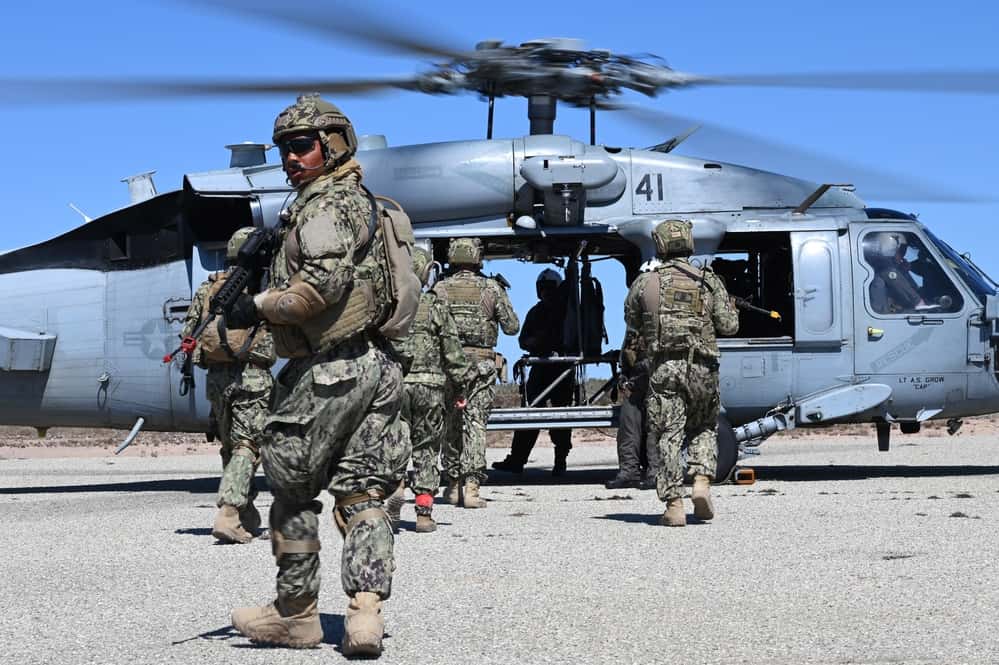
Federal prosecutors in Florida now face a lower bar when they have to show that the United States has jurisdiction over a drug-smuggling boat seized in international waters. Ruling in a Miami case, the 11th U.S. Circuit Court of Appeals answered a question it had left open for 30 years.
In a published opinion issued Thursday, Oct. 8, a three-judge panel held that the government needs to prove jurisdiction under the Maritime Drug Law Enforcement Act only by a "preponderance of the evidence." Defendants had argued for the much tougher "beyond a reasonable doubt" standard. The court affirmed the convictions and 96-month prison sentences of three men caught by the U.S. Coast Guard in the Caribbean with 623 kilograms of cocaine in October 2022.
Federal courts in South Florida handle a steady stream of these cases. Coast Guard crews routinely stop smuggling boats far from U.S. shores, and many of the people aboard are brought to Florida for prosecution. The 11th Circuit, which covers Florida, Georgia and Alabama, called high-seas drug trafficking "a familiar subject for our Court." The ruling binds every federal trial judge in Florida.
The chase off Colombia
According to facts the defendants agreed to as part of their guilty pleas, a Coast Guard aircraft spotted a go-fast boat on Oct. 18, 2022, about 128 nautical miles off the coast of Colombia. The boat was inside Colombia's Exclusive Economic Zone. A Coast Guard cutter launched a helicopter and two small "Over the Horizon" boats with boarding teams.
When the three men aboard realized they had been spotted, they fled. One drove while the other two threw bales overboard. The helicopter fired warning shots, then used "disabling fire" to stop the boat. Before the boarding teams arrived, the men also threw electronic equipment into the water. The Coast Guard recovered 19 bales holding 623 kilograms of cocaine and later sank the boat so it would not endanger other ships.
A federal grand jury in the Southern District of Florida indicted Junior Xavier Chirino-Lovera, Jose Gregorio Palencia and Alejandro Guerrero on Nov. 1, 2022. Two were Venezuelan nationals and one was Dominican, according to the opinion. Each was charged with conspiracy and possession with intent to distribute more than five kilograms of cocaine on the high seas.
The fight over 'Do you claim nationality?'
The Maritime Drug Law Enforcement Act lets the United States prosecute people caught on a "vessel without nationality" anywhere on the high seas. One way a boat becomes stateless under the law is if the master or person in charge fails to claim a nationality when a U.S. officer asks. Coast Guard boarding teams use a script called the Right of Visit form. It directs officers to ask who is in charge and, if no one answers, to ask each person individually whether he claims a nationality for the vessel.
The defendants argued the boarding team never properly asked those questions. At an evidentiary hearing in Miami, the Coast Guard petty officer who served as Spanish interpreter testified that he asked each man individually whether he claimed nationality for the boat, and each said no. His written report and those of two other boarding officers said the same thing. A contemporaneous Coast Guard report listed the vessel's claimed nationality as "none."
But the interpreter's testimony had problems. He wrongly recalled that the Spanish version of the form mistranslated "master" with the word for teacher. Another officer testified that one word the interpreter said he used did not appear on the form. The trial judge found that the interpreter had lied about asking each man whether he was the person in charge. She still believed his testimony on the key point, that he had asked each defendant about the boat's nationality.
What the appeals court decided
Judge Stanley Marcus wrote the opinion for a panel that also included Judges Robin Rosenbaum and Barbara Lagoa. The panel first resolved a question the circuit had left open since 1996: what standard of proof applies when a trial judge decides jurisdiction in these cases.
That year the 11th Circuit ruled in United States v. Medina that jurisdiction was an element of the crime that a jury had to find beyond a reasonable doubt. Later the same year, Congress amended the law to say jurisdiction "is not an element of an offense" and that jurisdictional issues are "preliminary questions of law to be determined solely by the trial judge."
The panel held that the amendment overturned Medina. It concluded that "preliminary questions" decided by judges have traditionally required only a preponderance of the evidence, meaning more likely than not. In doing so, the 11th Circuit joined the 1st Circuit, the only other federal appeals court to decide the issue, in a 2010 decision.
The panel also refused to throw out the interpreter's testimony entirely because the judge found he lied about one thing. The court rejected the old maxim "falsus in uno, falsus in omnibus," meaning false in one thing, false in all, and noted that the circuit's own pattern jury instructions tell jurors "you may believe everything a witness says, or part of it, or none of it." The judge's decision to credit part of the testimony was not "contrary to the laws of nature," the standard the court applies to such findings, and documents supported it.
Colombia's waters count as the 'high seas'
The defendants also argued that Congress lacks constitutional power to punish conduct inside another nation's Exclusive Economic Zone, the band of ocean up to 200 nautical miles offshore where a coastal country controls resources. The panel said its 2024 decision in United States v. Alfonso already settled that question. That case held that such zones are part of the "high seas" under the Constitution's Felonies Clause.
Finally, the court upheld a two-level sentencing enhancement for recklessly endangering others while fleeing. "Dumping sizeable bales of cocaine into the vessel's wake undoubtedly created dangerous obstacles for the pursuing Coast Guard Over the Horizon vessels," Marcus wrote. The guidelines called for 135 to 168 months in prison, but the trial judge sentenced each man to 96 months, well below that range.
Why it matters in Florida courtrooms
Defendants in maritime drug cases frequently challenge whether the boarding team asked the right questions, and the burden of proof can decide those fights. Under the new ruling, prosecutors in Miami, Tampa and elsewhere in the circuit need only show it is more likely than not that the boat was stateless. The panel did warn that following the Coast Guard script "is wise" because it avoids unnecessary jurisdictional disputes.
What's next
The defendants could ask the full 11th Circuit to rehear the case or petition the U.S. Supreme Court. Because the 1st and 11th Circuits now agree and no other circuit has ruled the other way, there is no split among the appeals courts, which usually lowers the odds of Supreme Court review. Unless the decision is overturned, it will govern jurisdiction hearings in pending high-seas drug cases in federal courts across Florida.
Spotted an issue with this article?
Have something to say about this story?
Write us a letterComments
No comments yet. Be the first to weigh in.
Related Coverage

ATF Ends Registration for Suppressors and Short-Barreled Rifles, Leaving Florida's Federal-Linked Gun Law in Limbo
17m ago

Trump's Russian Diesel Deal Unlikely to Ease Florida's Near-$6 Fuel Bills, Experts Say
18h ago
Trump Approves Federal Emergency Declaration for 27 Florida Counties Hit by Isaias. Here's What It Covers and What It Doesn't
18h ago

Severe Turbulence on Avianca Flight Sends 8 to Miami Hospitals After Emergency Diversion
19h ago