Board of Governors Approves New College's $47.5 Million Borrowing Tied to USF Sarasota-Manatee Takeover; Florida Poly Gets $101 Million Housing Deal
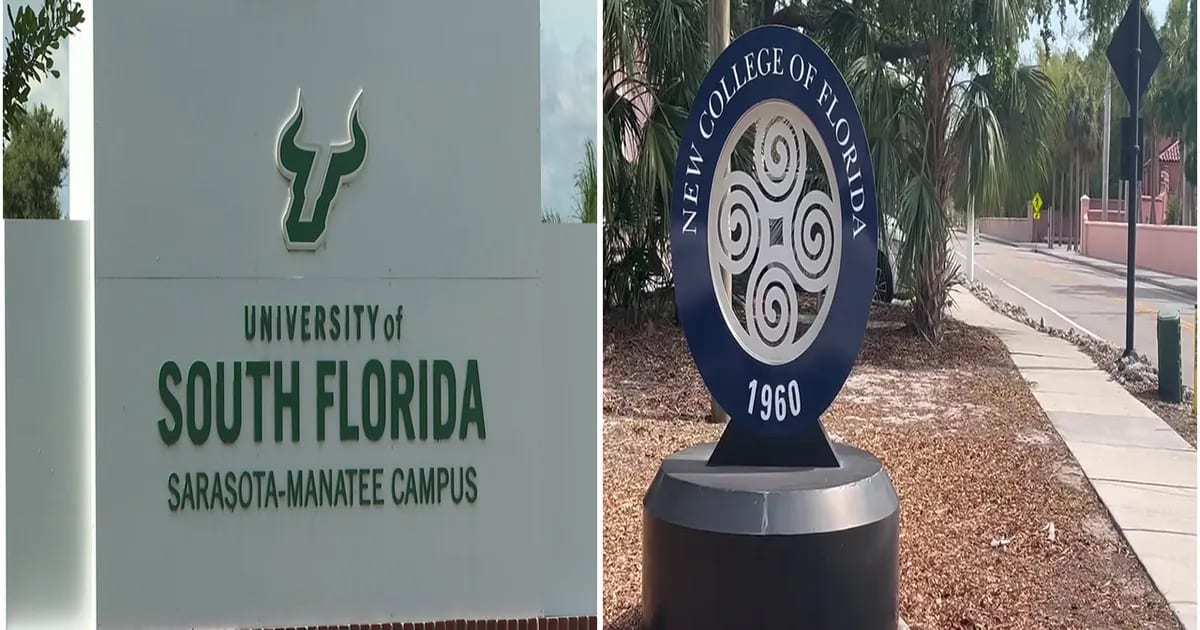
The Florida Board of Governors on Friday, Nov. 13, approved a plan that lets New College of Florida borrow up to $47.5 million to refinance old dormitory debt and take on the housing debt that comes with its acquisition of the University of South Florida's Sarasota-Manatee campus. The same meeting cleared Florida Polytechnic University in Lakeland to borrow about $101 million for new student housing, a larger dining hall and 500 parking spaces.
Both deals needed the board's sign-off because their terms went beyond what the State University System's debt guidelines typically allow, WUSF reported. For New College, the approval is more than routine: the state budget made the handover of the USF Sarasota-Manatee campus contingent on the college securing the financing, and New College has until Dec. 31 to show that it has done so.
"It's not within the regular guidelines. But we know that there are exceptions that have to be made sometimes, especially when you're growing enrollment. And these two universities are," Board of Governors member Ken Jones said, according to WUSF.
What the board approved for New College
The $47.5 million package combines two debts. About $16 million is older debt New College has owed for years on its existing dormitories. The other $28.5 million is USF's debt on Atala Hall, the residence hall it opened on the Sarasota-Manatee campus in 2024, which New College takes on with the campus.
The financing has two lenders. BankUnited would provide a $40 million loan, and a private investor would cover between $4 million and $7.5 million beyond that. The package also allows up-front interest-only payments, one of the features that pushed it outside normal system rules.
The main figures in the plan, as reported by WUSF:
| Item | Amount or term |
|---|---|
| Total borrowing authorized | Up to $47.5 million |
| Older New College dorm debt refinanced | About $16 million |
| New debt from USF Sarasota-Manatee | $28.5 million |
| BankUnited loan | $40 million |
| Private investor (Aldina L.C.) | $4 million to $7.5 million |
| Projected Atala Hall payments over 30 years | About $68 million |
Debt schedules project New College will pay about $68 million in principal and interest for Atala Hall over 30 years. WUSF reported that USF's total debt on the dormitory was about $53 million.
The investor is named
New College had not identified the private investor when its finance committee first approved the plan on Oct. 30. At Friday's meeting, the investor was revealed to be Aldina L.C. Florida's business registry shows the company is run by Mark Famiglio, chairman of the Sarasota Film Festival, and accountant George Famiglio, WUSF reported.
Kevin Pichard, the Board of Governors' associate vice chancellor of finance and facilities, told the board that Aldina is "acting as trustee of a nearly 40-year-old family trust that's affiliated with three New College alumni."
Earlier documents reviewed by WUSF showed the investor would lend up to $7.5 million at a tax-exempt rate of 6.1 percent, receiving interest-only payments for the first several years, with principal payments beginning in 2032 and the full balance due by 2036.
Three departures from the rules
Pichard laid out exactly where the deal breaks from the system's debt management guidelines. "It does deviate from the State University System's debt management guidelines in three regards," he said, citing the private investor, a debt service coverage ratio that falls short of the standard for about a decade, and a payment schedule that rises over time.
"The debt service coverage does not achieve the minimum 1.20 until later years, around 2037, and debt service is structured in an ascending fashion, as opposed to level debt service per the guidelines," Pichard said.
The debt service coverage ratio compares the revenue available to pay a debt with the payments due. New College trustees were told in late October that the housing system could meet its obligations at a ratio of 1.1, meaning slightly more revenue than needed. Most conventional loans require 1.2 or higher, WUSF reported.
Board staff concluded the risk was manageable. "We view that any risk that's imparted by these deviations is mitigated by financial backing of this transaction by the New College Foundation," Pichard said. New College has said it would lean on the foundation to fill any gaps. The 88-page financing packet presented to New College trustees listed student activity fees, venue rental revenue and "annual support payments made by the New College Foundation" as sources of repayment, and noted the foundation had $3.6 million in unrestricted assets.
What it means for students and the payment schedule
Students living on campus will help carry the debt. "As part of the financing plan, importantly, New College will be increasing its housing system rental rates by at least 10% in fiscal '28, and by 5% annually in fiscal '29, '30, and '31," Pichard said.
The payments themselves climb steeply. A debt schedule reported by WUSF shows total annual payments rising from $1.78 million in fiscal year 2026 to $3.78 million in 2028 and $4.16 million in 2030. The plan also calls for a mandatory refinancing of the package in 2032, the year the Atala Hall debt becomes eligible for prepayment. New College's older senior loan of about $16 million could then be refinanced at a tax-exempt rate on a 30-year term running to 2056.
President Richard Corcoran told trustees the package would be renegotiated for better terms in 2032. "Once we can go back out in 2032 and get tax free, hopefully, those numbers get you there," he said at the Oct. 30 meeting, without explaining how.
Critics have focused on the timing. The Novo Collegian Alliance, a nonprofit of former faculty, staff, alumni and supporters, said in a statement that "the schedule clearly delays the true fiscal impacts of the financing until 2028, with another hurdle posed by mandatory refinancing in 2032." WUSF noted that the payments nearly double in two years, when Corcoran's contract expires.
How New College got the USF campus
New College was taken over in 2023 by allies of Gov. Ron DeSantis, who set out to remake the small liberal arts school into a conservative institution. The transfer of USF Sarasota-Manatee, which DeSantis backed for two years, was written into this year's state budget. New College has already moved onto the 32-acre campus on North Tamiami Trail and is sharing space with remaining USF classes and faculty during a multiyear teach-out.
When lawmakers reached the budget deal in May, the Sarasota-Manatee campus served more than 2,000 students, while New College enrolled roughly 900, FOX 13 reported. Students enrolled at USF Sarasota-Manatee before July 1 continue as USF students through a teach-out lasting up to four years. Anila Jain, then vice chair of the campus board, told FOX 13 she was concerned about the financial obligations New College would assume, including what she described as a monthly debt payment of about $166,000.
New College is the smallest school in the system by enrollment, and a Florida DOGE report last year put its cost to produce a degree at $494,715, compared with $72,252 at USF, according to WUSF.
Florida Poly's $101 million housing deal
The board also approved a public-private partnership at Florida Polytechnic University to build a student housing facility, a dining hall, 500 parking spaces and related infrastructure. The roughly $101 million financing is made up mostly of insured senior bonds and some uninsured subordinate bonds, at a 6 percent interest rate over 40 years instead of the usual 30.
Florida Poly President Devin Stephenson said the Lakeland campus has outgrown its facilities. "We do have a significant shortage of student housing, and there are no substantial options close to the campus to absorb the demand," he told the board. "Our current dining building has reached its capacity. We currently have seating for 300, and we need to at least double that."
"Applications are up another 31 percent compared to this time last year, and our residence halls are at 100% capacity, so the demand is there, but our facilities are quickly reaching their limits," Stephenson said.
What's next
The Board of Governors' approval was the last state sign-off the financing needed. Under the transfer terms, New College must show by Dec. 31 that it has secured the money for the USF Sarasota-Manatee handover to be completed. After that, the milestones are on the payment schedule: housing rent increases of at least 10 percent in fiscal 2028, annual 5 percent increases through fiscal 2031, and the mandatory refinancing in 2032. Florida Poly's approval allows the Lakeland university to enter its housing partnership; a construction schedule was not part of the reporting on Friday's vote.
Spotted an issue with this article?
Have something to say about this story?
Write us a letterComments
No comments yet. Be the first to weigh in.
Related Coverage

Orange County School Board Imposes District Health Plan in 5-3 Vote; Unions Say $66.6 Million Shifts to 20,000 Workers
6h ago

Florida Universities Move Closer to Armed Guardians as Board Weighs Mass-Casualty Training After FAMU Shooting
7h ago

Florida Education Commissioner Henry Mack Pushes to Remove District Cap on School Voucher Funding
1d ago

Florida College Students Lean on Campus Food Pantries as Hunger-Free Campus Bills Stall and SNAP Stays Out of Reach
1d ago