Florida Universities Move Closer to Armed Guardians as Board Weighs Mass-Casualty Training After FAMU Shooting
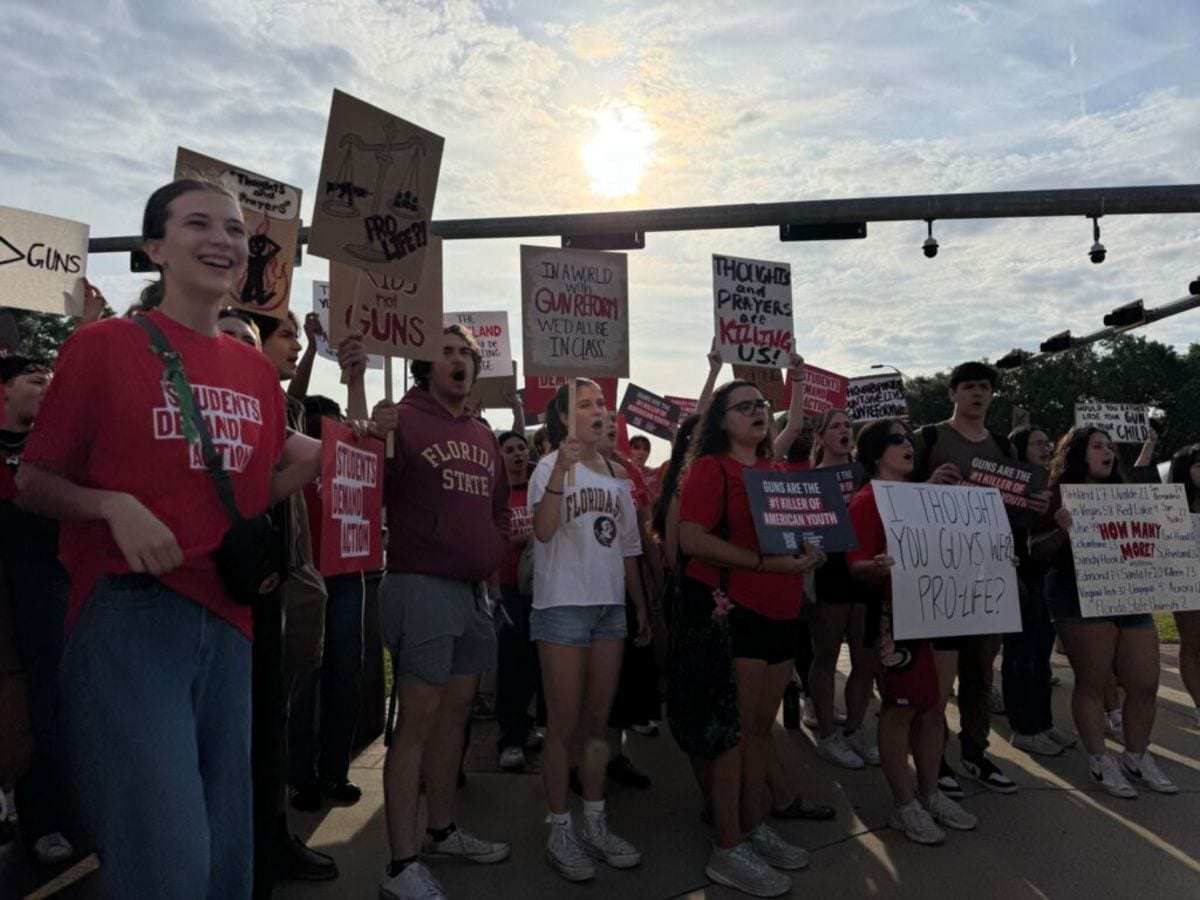
Florida's public universities are a step closer to putting trained, armed employees on campus. The State University System's Board of Governors on Friday, Nov. 13, advanced rules that would let universities take part in the state's School Guardian Program, and board members used the same meeting to push for mass-casualty training for students, faculty and staff in the wake of last month's homecoming shooting outside Florida A&M University's Bragg Memorial Stadium.
The guardian rules are expected to return to the board in January for final approval and could be in place on university campuses this spring, according to The News Service of Florida. Participation is optional, and so far the state's largest university has said it will not take part.
What the board did
The School Guardian Program allows school districts and charter schools to designate trained, armed personnel to respond immediately to active threats. Friday's action set out how universities would join it, under authority the Legislature granted earlier this year.
Before the vote, board member Ashley Bell Barnett said that since the shooting after the FAMU homecoming football game there has been an increased call for on-campus mass-casualty training of students, faculty and staff "to assist students waiting on local law enforcement," The News Service of Florida reported.
Ian Seibert, Florida State University's student body president and the student voting member of the board, said there is "a taste for students that want to be prepared for trauma response and trauma training in those exact moments." He added that not all students should be forced to take such training, but that students need to be involved in any plans to offer it.
Florida International University President Jeanette Nuñez said her campus and other schools work with local first responders and use the "Run. Hide. Fight." protocol for active threat and active shooter emergencies. "We are actively working on making sure that we are as prepared as possible," she said.
Board members also argued that local governments need to step up enforcement around campuses. "I know it's been an issue in Gainesville, with increasing numbers of students getting engaged by non-students near campus and I'm sure it's happening in other places as well," Board of Governors Chairman Alan Levine said.
The FAMU shooting behind the push
The renewed urgency traces to Saturday, Oct. 24. Just before 8 p.m., after Florida A&M lost its homecoming game to Arkansas-Pine Bluff, gunfire broke out near Perry and Manatee streets on the west side of Bragg Memorial Stadium in Tallahassee, according to the Tallahassee Police Department.
Eleven people were hit by gunfire, and a grandmother of one of the victims was hurt while running away, bringing the number injured to 12. Six of those hurt were minors, and the youngest victim was 11 years old, police said. Police said a fight broke out before the shooting and that it appeared none of the injured were intended targets. Police Chief Lawrence Revell said the area was so crowded that ambulances could not get through, and officers carried the wounded through the crowd to emergency vehicles.
A 15-year-old was arrested the next day and charged with 11 counts of attempted second-degree murder and possession of a firearm by a delinquent. State Attorney Jack Campbell said prosecutors would move the case to adult court. Police have said the investigation remains open and more arrests are possible.
At Friday's meeting, FAMU President Marva Johnson credited local first responders and said the university has increased security, but does not intend to "build walls around us to exclude the community." She said the school has been strengthening its security infrastructure with a $5 million investment from the Legislature.
The law that opened the door
The Guardian Program was created after the February 2018 massacre at Marjory Stoneman Douglas High School in Parkland, which killed 17 people, including 14 children. For years it was limited to K-12 schools.
That changed with House Bill 757, which Gov. Ron DeSantis signed on May 15, 2026. According to the governor's office, the law opens the Chris Hixon, Coach Aaron Feis and Coach Scott Beigel Guardian Program to Florida's public colleges and universities. DeSantis said the bill "enhances campus security requirements and best practices at our colleges and universities throughout Florida."
Speaking at the signing in Miami, DeSantis argued that guardians deter attackers. "The guardian, it puts the bad guys on the defense. They don't know who is going to be able to offer them resistance," he said, according to WUSF.
The Legislature took up the measure after an April 17, 2025, shooting at Florida State University in which a gunman killed two people and wounded several others. Beyond the guardian provision, the law:
- Makes discharging a weapon or firearm within 1,000 feet of a school a second-degree felony.
- Requires colleges and universities to adopt active assailant response plans, post-incident family reunification plans and threat management teams.
- Requires training for faculty to detect and respond to mental health issues.
- Requires a student's behavioral records, including threat assessment reports and psychological evaluations, to transfer when the student moves from a K-12 school to a state college or university.
Employees who volunteer as guardians would have to complete 144 hours of training and pass drug tests and psychological evaluations, the Florida Phoenix reported.
The board has been working on a companion regulation since late summer. At a Sept. 2 workshop of its Campus Safety and Student Success Committee, board staff presented proposed Regulation 3.0015, Campus Safety and Security, to carry out HB 757. According to the committee's agenda materials, the draft would require universities to offer a public safety reporting app or mobile suspicious-activity reporting tool, provide annual mental health training for faculty and staff, establish threat management teams, post campus safety, mental health and suicide prevention information on campus and online, conduct annual university-wide security risk assessments and adopt post-incident recovery policies.
Will any university opt in?
Whether armed guardians actually appear on a Florida university campus is up to each institution, and early signals point the other way.
The University of Central Florida, which has the state's largest enrollment, confirmed at a September Board of Trustees meeting that it will not participate, WFTV reported. "In discussions with the Board of Governors, the state university system, universities have requested to opt out of the guardian program," said Rhonda Bishop, staff for UCF's Audit and Compliance Committee. "This is because the majority of us have sworn police departments, sworn police officers, and departments on our campus, as well as existing campus security staffing."
In October, the Florida Phoenix reported that gun safety groups tracking the law had found no college or university that had publicly opted in. The University of South Florida told the Phoenix it was "currently reviewing the implementation requirements of the Guardian Program in consultation with the Florida Board of Governors and will determine how best to move forward," according to Althea Johnson, senior director for media relations on the Tampa campus.
Rep. Susan Valdés, a Hillsborough County Republican who co-sponsored the bill, told the Phoenix the law was meant to give schools an option. "But if by the same token they feel in the future that they have a need, they have an avenue to be able to implement and to do what they need to do to protect our students," she said.
Criticism comes from both directions. Angela Ferrell-Zabala, executive director of Moms Demand Action, told the Phoenix that students, staff and families made clear during committee debate that they did not want more guns on campus. On the other side, Luis Valdes, Florida state director of Gun Owners of America, called HB 757 "a fake campus carry bill," saying his group had wanted full campus carry rather than an expansion of the guardian program.
What it means for students and families
For students on Florida's 12 public university campuses, the most immediate changes are likely to come from the parts of the law that are mandatory rather than optional: threat management teams, active assailant plans, family reunification procedures and the transfer of high school threat assessment records. UCF officials said those measures were already in place on their campus before the law passed.
The mass-casualty training idea raised Friday is not yet a formal proposal. Seibert's comments suggest any student training would be voluntary, and Nuñez's remarks indicate universities are leaning on existing protocols built with local police and fire departments.
The FAMU shooting also exposed a gap the guardian program does not directly address: violence just off campus, at public events that draw large crowds from the surrounding community. Levine's call for more local enforcement near campuses and Johnson's insistence on keeping FAMU open to Tallahassee point to a debate that will involve city and county governments as much as university boards.
What's next
The guardian rules are expected to go back before the Board of Governors in January for final approval. If adopted, universities that choose to participate could have the program running this spring. Each university's leadership would decide whether to opt in, and the criminal case stemming from the Oct. 24 shooting near Bragg Memorial Stadium remains under investigation by Tallahassee police.
Spotted an issue with this article?
Have something to say about this story?
Write us a letterComments
No comments yet. Be the first to weigh in.
Related Coverage
Orange County School Board Imposes District Health Plan in 5-3 Vote; Unions Say $66.6 Million Shifts to 20,000 Workers
6h ago
Board of Governors Approves New College's $47.5 Million Borrowing Tied to USF Sarasota-Manatee Takeover; Florida Poly Gets $101 Million Housing Deal
11h ago
Florida Education Commissioner Henry Mack Pushes to Remove District Cap on School Voucher Funding
1d ago

Florida College Students Lean on Campus Food Pantries as Hunger-Free Campus Bills Stall and SNAP Stays Out of Reach
1d ago