Cape Canaveral's Record Launch Pace Powers Florida's Space Coast Boom
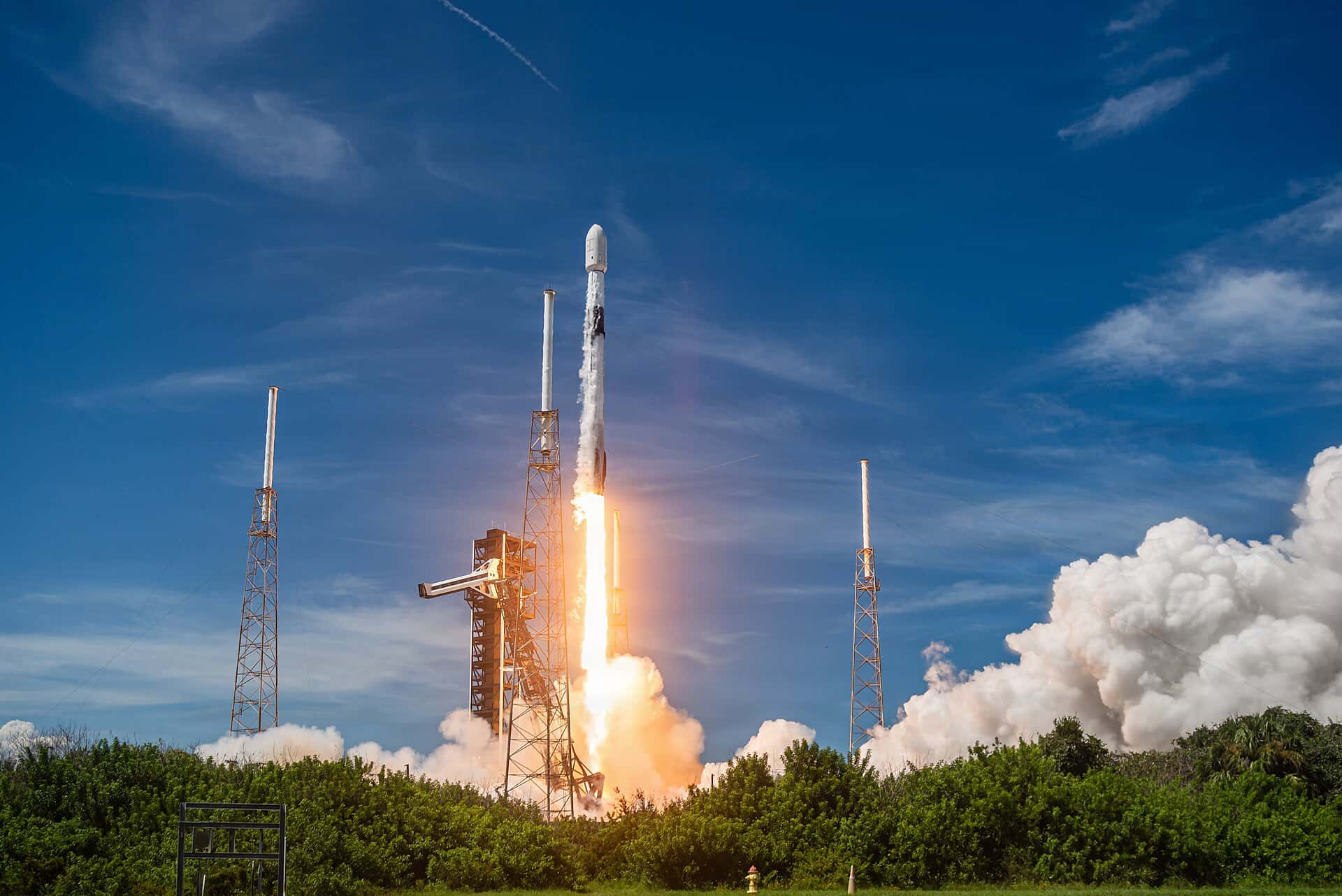
Florida's Space Coast is running at a record pace in 2026, and the ripple effects reach far beyond the launch pads that line Brevard County's Atlantic shore. On July 9, 2026, SpaceX launched a Falcon 9 whose first-stage booster flew for a record-setting 36th time, lifting off from Cape Canaveral and adding another mark to a year of relentless launch activity. For a region whose economy is built on rocketry, each mission is more than a spectacle in the sky. It is a driver of jobs, tax revenue, and investment across a corner of the state that has staked its future on space.
The July 9 flight underscored how far reusable rocketry has come and how central Florida has become to it. A booster completing a 36th trip to orbit and back would have seemed implausible a decade ago, when rockets were treated as single-use hardware discarded after a single flight. Today that kind of reuse is the operational reality at Cape Canaveral, where boosters return, refurbish, and fly again on a cadence that keeps the region's launch infrastructure in near-constant use.
For Florida, the significance is economic as much as technical. The Space Coast, anchored by Cape Canaveral Space Force Station and NASA's Kennedy Space Center, supports thousands of jobs and a fast-growing aerospace sector that state leaders have worked aggressively to expand. A record launch year translates into steady work for the engineers, technicians, range personnel, and support businesses whose livelihoods depend on the pace of activity along the coast.
A Booster Built for Its 36th Trip
The centerpiece of the July 9, 2026, mission was the first-stage booster itself, which flew for a record-setting 36th time according to SpaceX and public launch reporting. Reaching that number required the booster to survive dozens of ascents, stage separations, controlled descents, and landings, each of which subjects the vehicle to extreme heat, pressure, and mechanical stress. That a single stage could be refurbished and reflown so many times reflects years of incremental engineering refinement.
Reusability has reshaped the economics of spaceflight, and Cape Canaveral has been the proving ground for much of that shift. When a booster can fly repeatedly, the cost of reaching orbit falls and the tempo of launches can rise, because operators are no longer waiting to build a fresh rocket for every mission. That dynamic helps explain why Florida's launch sites have been able to sustain such a busy schedule through 2026.
The record flight also carried symbolic weight for a region that has watched commercial space grow from an ambition into an industry. Cape Canaveral built its identity during the era of government spaceflight, when each launch was a rare and carefully staged event. The 36th flight of a single booster illustrates how routine and repeatable orbital access has become, and how thoroughly that transformation has played out on Florida soil.
A 600th Flight Across the Fleet
Days after the record booster flight, the broader significance of SpaceX's Florida operations came into sharper focus. In mid-July 2026, a Falcon booster flew for the 600th time across the company's fleet, a program milestone that captured just how many times these rockets have carried payloads to orbit and returned to fly again. The number reflects the cumulative reuse of many boosters rather than a single vehicle, but it speaks to the scale of the operation that Cape Canaveral helps sustain.
A 600th fleet flight is the kind of figure that would have been unimaginable in the early years of reusable rocketry, when landing a booster at all was treated as a breakthrough. Passing that threshold signals that reuse has matured from an experimental capability into a dependable, repeatable process. Much of that repetition happens in Florida, where the launch and recovery infrastructure is concentrated.
For the Space Coast, milestones like these are more than trophies. They validate the region's role as a hub where reusable rockets are launched, recovered, and turned around for future missions. Each flight in that running total represents work performed on the ground: inspection, refurbishment, integration, and launch operations that keep local aerospace employment steady and the region's facilities in demand.
Starlink Missions Keep Complex 40 Busy
Much of the launch cadence at Cape Canaveral is driven by frequent Starlink satellite missions, which SpaceX flies from the Cape Canaveral Space Force Station's Space Launch Complex 40. Recent Starlink flights have carried batches of roughly 24 to 29 satellites at a time, steadily building out the company's low-Earth-orbit network. Because the deployment relies on regular launches, it generates a consistent stream of missions that keeps the pad and its supporting crews continuously occupied.
That steady rhythm is a defining feature of the 2026 launch year on the Space Coast. Rather than a handful of high-profile, one-off launches, the schedule is filled with recurring missions that require the same ground teams, range assets, and logistics networks time after time. The result is a workload that supports sustained employment rather than sporadic bursts of activity tied to isolated events.
Not every mission proceeds exactly on schedule, a reminder that launch operations remain sensitive to timing and conditions. A late-July Starlink launch was delayed from July 23 to July 24, according to launch reporting, a routine slip of the kind that regularly occurs in a busy launch environment. Such adjustments are a normal part of maintaining a high flight rate, where missions are sequenced closely and small shifts in timing are common.
Even with occasional delays, the underlying trend has been one of sustained, high-volume activity at Complex 40 and across the Cape. The frequency of Starlink launches has helped make Cape Canaveral one of the busiest launch sites in the United States, and that busyness is precisely what feeds the local economy that depends on it.
Among the Busiest Launch Sites in the Nation
Cape Canaveral now stands among the busiest launch sites in the United States, and Florida's Space Coast has seen record launch activity in 2026. That standing is the product of years of investment, both public and private, in the launch pads, tracking systems, and recovery operations that make a high flight rate possible. It also reflects the concentration of commercial launch activity in a single stretch of Florida coastline.
Being among the nation's busiest launch sites carries practical benefits for the region. A high flight rate keeps facilities utilized, supply chains active, and specialized workers employed. It also strengthens the case for further investment, because companies weighing where to build tend to favor locations with proven infrastructure and a demonstrated ability to fly often and reliably.
The record activity of 2026 reinforces a narrative that Florida officials have promoted for years: that the state is the natural home of American commercial spaceflight. Each busy month at Cape Canaveral adds evidence to that claim and helps distinguish the Space Coast from other regions competing for the same launches, jobs, and investment.
Thousands of Florida Jobs Ride Along
Behind every launch statistic is a workforce, and on the Space Coast that workforce numbers in the thousands. Brevard County, which includes Cape Canaveral Space Force Station and NASA's Kennedy Space Center, has built its modern economy around aerospace employment. The engineers, technicians, machinists, range operators, and logistics workers who make launches happen represent a substantial share of the region's high-skill labor force.
High-wage aerospace jobs carry outsized economic weight because they tend to support additional employment in surrounding industries. Precision manufacturing, electronics, construction, transportation, and professional services all feed into and benefit from a busy launch sector. When launch activity rises, the demand for those supporting services rises with it, spreading the economic impact well beyond the pads themselves.
The Space Coast has traveled a notable arc to reach this point. After the retirement of the Space Shuttle program, the region confronted hard questions about the future of a workforce built around government spaceflight. The rise of commercial launch companies has since reshaped that outlook, drawing new employers and putting existing facilities and skilled workers back to sustained use.
A record launch year such as 2026 delivers exactly the kind of steady demand that stabilizes and grows that workforce. Consistent flight rates mean consistent work, and consistent work means households across Brevard County and neighboring communities can count on aerospace paychecks that anchor local spending, housing, and tax bases.
The State's Bet on Aerospace
Florida has spent years cultivating an identity as the nation's leading commercial space state, and the record activity of 2026 is the payoff the state has been chasing. Space Florida, the state's aerospace economic-development agency, works to recruit companies, finance infrastructure, and market Florida's spaceport assets to a global industry with many potential homes to choose from. A busy Cape Canaveral strengthens every pitch the agency makes.
The state has actively courted aerospace investment, pairing federal launch infrastructure with incentives and workforce programs designed to attract private companies. That strategy rests on a simple premise: the more launches Florida hosts, the more attractive it becomes to the next company deciding where to build, hire, and fly. A record launch pace is both a result of that strategy and an argument for continuing it.
Competition for aerospace investment is intense, with other states and international spaceports courting the same companies. Florida's advantage lies in a combination of geography, established launch ranges, an experienced workforce, and a track record of high flight rates that few rivals can match. The 2026 numbers coming out of Cape Canaveral reinforce that competitive edge at a moment when the launch market is expanding worldwide.
What's Next
The immediate future on the Space Coast points to more of the same relentless cadence that has defined 2026. With Starlink missions flying regularly from Space Launch Complex 40, the schedule ahead is likely to remain full, subject to the routine timing adjustments that come with a high flight rate, such as the late-July Starlink launch that slipped from July 23 to July 24. Each mission adds to a year already marked by record activity.
For Florida, the questions turn on how well the region can sustain and build on this pace. The workforce pipeline, housing stock, and local infrastructure of Brevard County will need to keep step with an aerospace sector that continues to demand skilled labor and reliable facilities. Local leaders and educators will be watching to align training programs with the high-skill jobs that the launch industry keeps generating.
The broader test is whether 2026 marks a peak or another rung in a longer climb for Florida's space economy. State officials have staked a clear claim to leadership in commercial spaceflight, and the record launch pace at Cape Canaveral gives that claim fresh momentum. As boosters keep flying and milestones keep falling, the Space Coast looks set to remain at the center of the nation's push toward routine, repeatable access to orbit.
Spotted an issue with this article?
Have something to say about this story?
Write us a letterComments
No comments yet. Be the first to weigh in.
Related Coverage

SpaceX Launches Bandwagon-5 Rideshare From Cape Canaveral, Lighting Up a Brief Space Jellyfish Over Florida
12h ago

Kathy Castor and Mike Beltran enter final stretch of a tight race in a redrawn, Trump-leaning Tampa district
17h ago
G20 Summit at Trump National Doral Will Bring Road Closures and a Secret Service Security Zone to Miami-Dade in December
19h ago

Florida's Brazilian voters head back to the polls for Oct. 25 presidential runoff as corruption dominates the race
20h ago