SpaceX Launches Bandwagon-5 Rideshare From Cape Canaveral, Lighting Up a Brief Space Jellyfish Over Florida
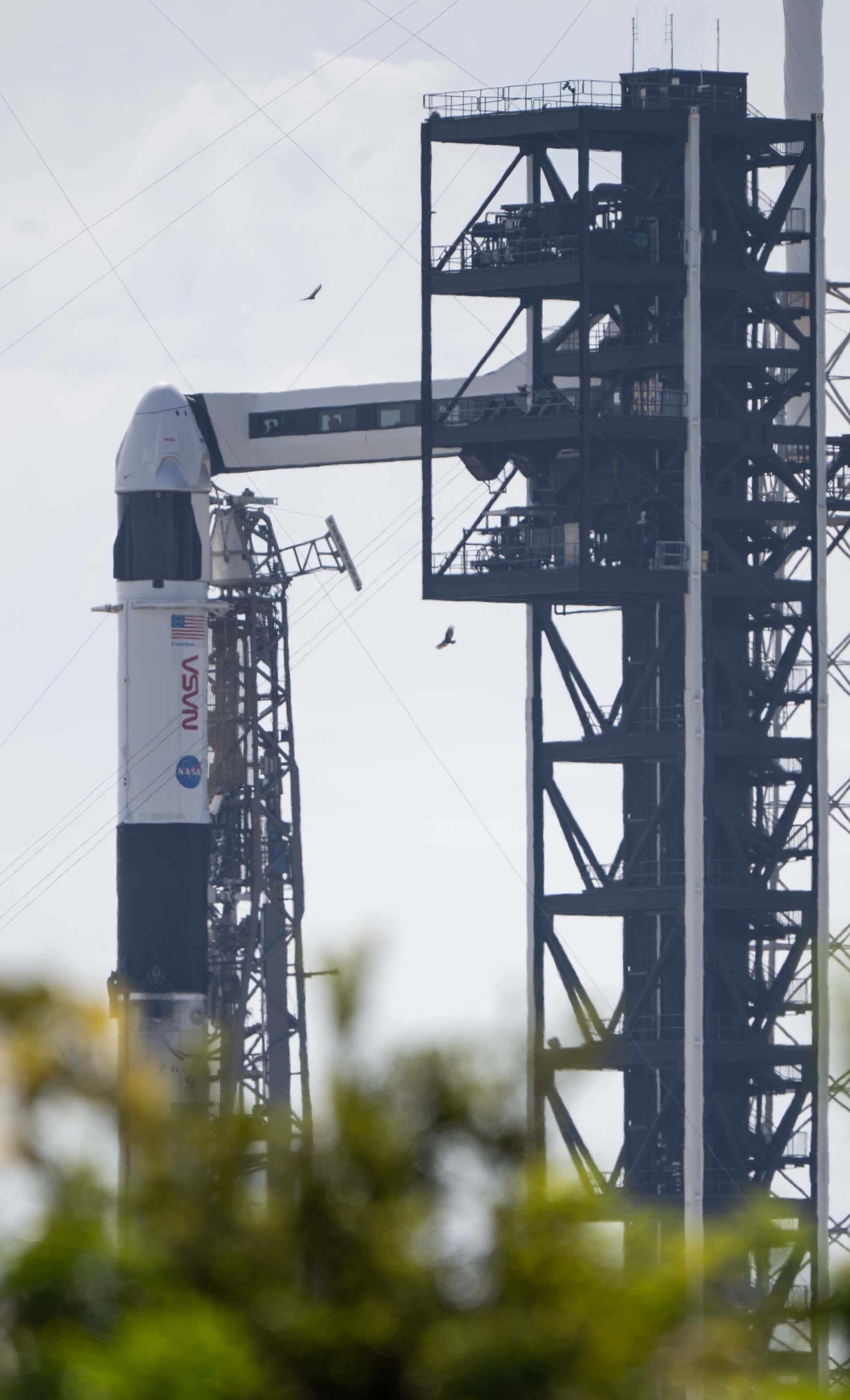
A SpaceX Falcon 9 rocket lifted off from Cape Canaveral Space Force Station at 7:04 a.m. Tuesday, Oct. 20, carrying 32 payloads on the company's Bandwagon-5 rideshare mission, one day after a scrub for poor weather in the booster recovery zone. The early morning launch painted a brief glowing "space jellyfish" across the sky that drew skywatchers from Brevard County to the Tampa Bay area.
The mission launched from Space Launch Complex 40 and headed to a mid-inclination orbit with a mix of small satellites and two reentry capsules, including the second flight of SpaceX's own Starfall return vehicle. The first-stage booster, making its 19th flight, landed on the droneship A Shortfall of Gravitas in the Atlantic Ocean, News 6 reported.
A one-day delay
SpaceX first targeted a launch window opening at 6:30 a.m. Monday, Oct. 19, but called off the attempt because of unfavorable recovery weather conditions, the area of the Atlantic where the droneship waits to catch the booster. The company reset for Tuesday morning, and the rocket flew on the second try, according to News 6 and FOX 13.
A veteran booster
The first stage, tail number B1085, has become one of the workhorses of SpaceX's Florida fleet. According to SpaceX flight history reported by FOX 13 and News 6, the booster previously launched NASA's Crew-9 astronaut mission to the International Space Station, Firefly Aerospace's Blue Ghost Mission 1 lunar lander, the private Fram2 polar crew flight and 10 Starlink missions, among others.
Each landing on A Shortfall of Gravitas brings the booster back to Port Canaveral, where SpaceX refurbishes it for another flight. That rapid reuse is the backbone of the launch pace that has turned the Space Coast into one of the busiest spaceports in the world.
What was on board
Bandwagon flights are SpaceX's dedicated rideshare missions to mid-inclination orbits, a complement to its Transporter series, which serves sun-synchronous polar orbits. Satellite operators book space on a single Falcon 9 rather than buying a rocket of their own. Bandwagon-5 carried cubesats, microsatellites and reentry vehicles, FOX 13 reported.
Spaceflight Now reported that 20 of the 31 customer payloads were arranged by Exolaunch, a German rideshare mission management company. Among the named customers:
- Four radio-frequency monitoring satellites from HawkEye 360, based in Virginia.
- Four satellites for the Finnish company Iceye.
- Six navigation satellites from Xona Space Systems of California, satellites for its Pulsar constellation, which the company is pitching as a commercial complement to GPS.
- Varda Space Industries' W-7 capsule, which carries an experiment testing whether microgravity can improve the solubility of a cancer drug compound known as a PROTAC.
Xona has said four of its six Pulsar satellites are built on a platform from Belgian company Aerospacelab, while the other two were assembled at its own facility in Burlingame, California. The company plans to begin beta testing with customers once the satellites are in orbit. Xona has received conditional approval from the Federal Communications Commission for a proposed constellation of 258 satellites, with the agency initially authorizing 16 spacecraft pending an updated orbital debris assessment.
Starfall's second flight
The mission's headline payload belonged to SpaceX itself. Starfall is a disk-shaped return capsule SpaceX is developing to bring experiments and products back from orbit. According to a Federal Aviation Administration environmental assessment published in May and cited by Space.com, the capsule is about 10.2 feet wide and 2.5 feet tall, weighs about 4,600 pounds and can return up to about 2,200 pounds of cargo.
The first Starfall demonstration launched on a Falcon 9 on June 23. SpaceX has disclosed little about this second flight, including whether the capsule carries any payload. Varda's W-7, flying on the same rocket, is roughly a third the size of Starfall, according to Space.com. Reporting on the program has described a design that uses cold-gas thrusters to orient the capsule during reentry, a heat shield and parachutes for a splashdown, with early recovery tests planned in the Pacific Ocean.
The space jellyfish
The glowing plume that appeared shortly after liftoff is a twilight effect. It happens when a rocket climbs high enough that its expanding exhaust is lit by the sun, which has not yet risen for observers on the ground. FOX 13 published photos of the display over the Tampa Bay area, describing sunlight striking the plume while ground observers remained in darkness.
News 6 reported that Tuesday's jellyfish was brief and less vivid than the one produced by the Oct. 13 launch from Cape Canaveral. The effect depends on a narrow window of timing, and a launch even slightly too early or too late in the morning can miss it.
Context: a crowded Space Coast
Bandwagon-5 is one of a steady stream of launches from Brevard County this fall, coming about a week after SpaceX's CRS-35 cargo mission carried the final set of new solar arrays for the International Space Station from Cape Canaveral. Florida's Space Coast closed out 2025 with a record 109 rocket launches, according to Florida Today, and SpaceX accounts for the vast majority of the flights from the Cape and Kennedy Space Center.
The next big milestone for the region is Starship. SpaceX has been building a Starship launch tower at Kennedy Space Center's Launch Complex 39A and has pushed to fly the giant rocket from Florida before the end of 2026. Space.com reported in October that the tower and most other essential construction at the pad are nearly complete, but that SpaceX plans at least one more Starship test flight from its Starbase site in South Texas before the first Florida launch, which it described as a few months away. No date for a Florida Starship launch has been announced.
What's next
Satellite operators will spend the coming days confirming contact with their spacecraft and beginning checkout. Xona plans to start beta testing its navigation service, and SpaceX and Varda have not yet announced when their capsules will attempt reentry and recovery. For Florida skywatchers, the next chance at a launch-time jellyfish will depend on another predawn or post-sunset liftoff from the Cape.
Spotted an issue with this article?
Have something to say about this story?
Write us a letterComments
No comments yet. Be the first to weigh in.
Related Coverage

Kathy Castor and Mike Beltran enter final stretch of a tight race in a redrawn, Trump-leaning Tampa district
4h ago

G20 Summit at Trump National Doral Will Bring Road Closures and a Secret Service Security Zone to Miami-Dade in December
6h ago
Florida's Brazilian voters head back to the polls for Oct. 25 presidential runoff as corruption dominates the race
7h ago
Children Say Hillsborough Deputies Injured Their Father in Seffner Traffic Stop Before He Was Handed to ICE
7h ago