Caribbean Military Campaign Reverberates Through Florida's Venezuelan and Cuban Communities
An ongoing U.S. military campaign in the Caribbean, led by U.S. Southern Command, is reverberating across Florida like few foreign policy developments in recent memory. With the operation targeting maritime networks and, according to reports, expanding in scope, the campaign carries unusual weight in a state that is home to the largest Venezuelan and Cuban diaspora communities in the country. For hundreds of thousands of Floridians with family ties to the region, the news from the Caribbean is intensely personal.
The campaign so far
The operation, known as Operation Southern Spear, is a U.S. military and surveillance campaign coordinated by Southern Command and a joint task force, with the stated aim of detecting, disrupting, and degrading what officials describe as transnational criminal and illicit maritime networks. The campaign has involved a significant buildup of U.S. forces in the Caribbean, and reports indicate that a carrier strike group recently arrived in the region, underscoring the scale of the military presence.
According to reports, the campaign has involved numerous strikes on vessels alleged to be involved in drug trafficking, with significant reported casualties over the course of the operation. The Florida Press cannot independently verify the operational details, and figures cited in reporting should be treated as provisional. What is clear is that the campaign represents a substantial and sustained U.S. military commitment in waters close to American shores.
The diplomatic dimension has also drawn attention. Secretary of State Marco Rubio, a Florida figure long focused on Latin American affairs, has been engaged on the issue, including a reported meeting with the Southern Command leadership about the operation. Rubio's prominent role connects the campaign directly to Florida, given his deep roots in the state and his long-standing focus on Cuba and Venezuela.
The presence of a carrier strike group and the broader buildup, as described in reports, signal a level of commitment that goes well beyond routine maritime patrols. Such deployments concentrate substantial naval and air power in a single theater, and reporting has framed the campaign as a sustained effort rather than a brief show of force. The Florida Press cannot independently confirm the composition or movements of the forces involved, and details drawn from reporting should be understood as provisional accounts rather than verified facts.
For a region so close to the United States, the scale of the military presence described in reports has drawn attention across the hemisphere. Governments in the Caribbean and Latin America watch operations in nearby waters carefully, and the campaign has become a point of discussion among them. How those governments respond, and how the operation is characterized by the various parties involved, will shape the diplomatic context in which it unfolds, a context that Florida's diaspora communities follow with particular attention.
Why Florida feels it most
No state has a deeper stake in developments in Cuba and Venezuela than Florida. South Florida in particular is home to enormous communities with origins in both countries, families who follow events in the region closely and who often have relatives still living there. Policy toward Cuba and Venezuela is not an abstract foreign-policy question in Florida; it is woven into the fabric of community life, politics, and identity.
The Venezuelan diaspora has grown dramatically in recent years as people fled economic collapse and political turmoil, with many settling in the Orlando area and South Florida. The Cuban American community, long established and politically influential, has shaped Florida politics for generations. Both communities pay close attention to U.S. policy toward their countries of origin, and the current campaign has captured their attention intensely.
For these communities, developments in the region stir a complex mix of emotions, including concern for family members, hope for political change, and apprehension about the consequences of military action. The diversity of views within the diaspora is significant, and reactions to the campaign reflect a range of perspectives shaped by personal histories and political beliefs.
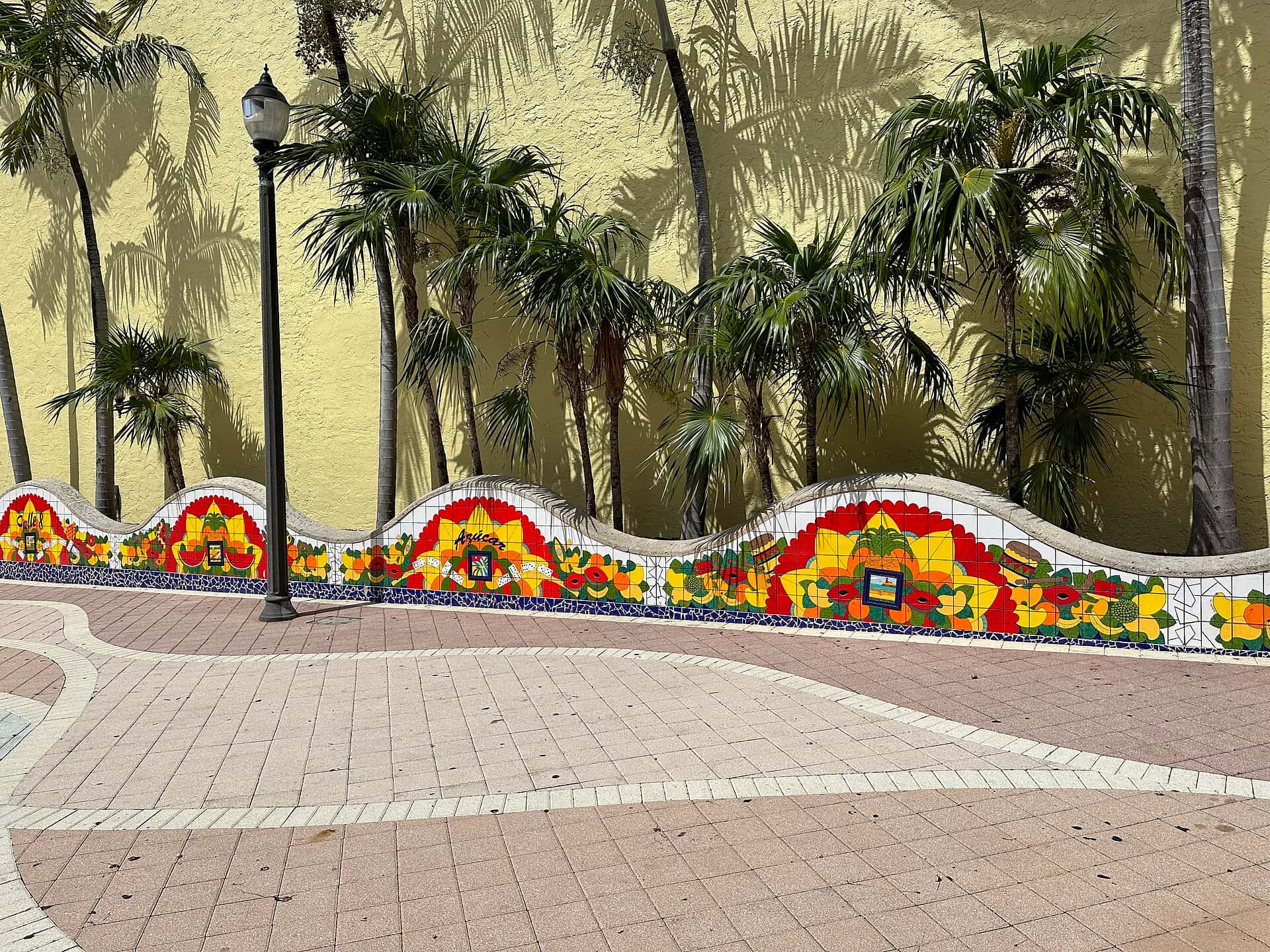
The geography of these communities reinforces their connection to events in the region. Cuban Americans have long anchored neighborhoods such as Miami's Little Havana and the surrounding areas of Miami-Dade County, building institutions, businesses, and media that keep the affairs of the island at the center of daily conversation. The more recently arrived Venezuelan community has established its own strongholds, including the area sometimes called Doralzuela in the city of Doral, where Venezuelan restaurants, shops, and cultural organizations cluster. In these places, news from the Caribbean is not distant reporting but a subject of immediate, lived concern.
The histories that brought these communities to Florida also shape how they interpret a U.S. military campaign in the region. Many Cuban Americans trace their presence to decades of political exile and carry strong views about confronting the government on the island, while many Venezuelans arrived more recently after fleeing economic collapse and political repression. Those distinct experiences produce a spectrum of reactions to the operation, from support for pressure on governments they oppose to worry about the safety of relatives and the broader stability of a region they still call home. No single sentiment captures the diaspora's response.
The political dimension in Florida
Florida's political class is deeply attuned to the sentiments of its diaspora communities. Policy toward Cuba and Venezuela has long been a defining issue in Florida elections, and politicians across the spectrum court these communities and respond to their concerns. The current campaign, with a Florida figure in Rubio playing a central diplomatic role, has a distinctly Florida flavor in its domestic politics.
The diaspora's political influence is substantial. These communities are concentrated in key areas and vote in large numbers, giving their views outsized weight in state and national politics. Candidates and officials calibrate their positions on Latin American policy with an eye toward these constituencies, and the campaign in the Caribbean is likely to feature in political discourse heading into the elections.
The intersection of foreign policy and local politics is a hallmark of Florida's distinctive political landscape. Few other states see international developments translate so directly into domestic political consequences, and the Caribbean campaign is a vivid example of that dynamic at work.
Florida's congressional delegation has long included members who built their political identities around policy toward Cuba and Venezuela, and the campaign gives those figures a renewed platform on an issue central to their constituencies. The prominence of Rubio in the diplomatic dimension of the operation only sharpens the Florida connection, linking a national security matter to a politician whose career has been closely tied to the concerns of the state's diaspora communities. The result is a foreign policy story that is also, unmistakably, a Florida political story.
The communities themselves are not monolithic in their politics, and the campaign may test the alignments that have defined diaspora voting patterns. Generational differences, the contrast between long-settled and recently arrived populations, and divergent views about the use of military force all complicate any assumption that the diaspora speaks with one voice. How candidates and officials read and respond to those currents will be part of the political calculation as the operation continues and as attention turns toward upcoming elections.
What it means for Floridians
For Floridians with family in the region, the campaign brings anxiety and uncertainty. Concerns about the safety of relatives, the stability of the region, and the broader consequences of military action weigh heavily on those with personal connections. Community organizations and advocacy groups have been engaged, providing forums for discussion and channels for expressing the diaspora's views.
The broader Florida public also has a stake in regional stability. Migration patterns, economic ties, and security considerations all connect Florida to the Caribbean and to Latin America more broadly. Developments in the region can influence migration flows, which in turn affect Florida communities, making regional stability a matter of practical concern for the state.
The humanitarian dimension is significant as well. Instability and conflict in the region can drive displacement, and Florida has historically been a primary destination for those fleeing turmoil in Cuba and Venezuela. How the campaign affects conditions in the region could have downstream consequences for migration and for the communities that receive new arrivals.
That prospect connects the campaign to other pressing questions in Florida, including the state's posture on immigration and the capacity of its communities to absorb new arrivals. Periods of heightened instability in Cuba and Venezuela have repeatedly translated into movements of people toward Florida, and any shift in regional conditions could renew those pressures. The diaspora communities that have themselves grown through earlier waves of migration are often the first to feel such effects, as established residents take in relatives and newcomers seek out the neighborhoods where their compatriots have settled.
Community organizations across South Florida have positioned themselves to respond to whatever the campaign brings, offering information, legal guidance, and forums where residents can process developments and voice their concerns. These groups serve as a bridge between distant events and local life, helping a diaspora that follows the news intently to make sense of a situation that touches their families directly. Their work underscores how thoroughly the affairs of the region are woven into the daily fabric of Florida communities.
What's next
The trajectory of the campaign remains uncertain, and Floridians with ties to the region will be watching closely for developments. The scale of the U.S. military presence suggests the operation is a sustained commitment, and its consequences, for the region and for the diaspora communities in Florida, will continue to unfold.
For Florida, the campaign is a reminder of how closely the state is bound to its southern neighbors. Events in the Caribbean and Latin America resonate in Florida in ways that few other places experience, and the current operation has brought that connection into sharp focus. The state's large diaspora communities will remain central to how Florida understands and responds to developments in the region.
As the operation proceeds, the gap between what is reported and what can be independently confirmed is likely to remain a feature of the story, leaving Floridians to weigh accounts that are still taking shape. In that environment, the diaspora's deep familiarity with the region offers a measure of perspective that outside observers often lack, even as the uncertainty surrounding the campaign keeps anxiety high. What is not in doubt is that Florida will feel the consequences of whatever unfolds, and that its communities will be among the most attentive audiences for every new development.
Spotted an issue with this article?
Have something to say about this story?
Write us a letterComments
No comments yet. Be the first to weigh in.
Related Coverage

USDA's $8 Billion Harvest Fuel Relief: What Florida Growers and Fishermen Can Expect
10h ago
SpaceX Posts $4.4 Billion Profit on $14.6 Billion Revenue as Starship Readies for Florida Pads
11h ago

NOAA Weighs Reopening Part of Florida's Rare Oculina Bank Coral Reef to Shrimp Trawling
13h ago

Monroe County Elections Chief Investigating Video of Apparent Armed Federal Agents Outside Keys Early Voting Site
13h ago