Coral Scientists Fear Amendment 3 Will Stall Florida Reef Restoration After State Money Dried Up

Coral scientists working to rebuild Florida's reef say Amendment 3, the property tax measure voters approved on Nov. 3, could become a bigger obstacle than the state funding cut that already stalled their work this year. With local governments bracing for billions of dollars in lost property tax revenue starting Jan. 1, 2027, researchers fear reef restoration will be pushed aside as cities and counties compete harder for state money, WLRN and WUSF reported on Nov. 18.
The concern lands on a program that is already short of cash. Earlier this year, Gov. Ron DeSantis and state lawmakers left out of the budget the money restoration groups had expected for the next phase of a state plan to restore a quarter of Florida's reef by 2050.
Why Amendment 3 worries reef scientists
Amendment 3 passed with more than the 60 percent supermajority required for a constitutional amendment. Beginning Jan. 1, 2027, it raises the homestead exemption from non-school property taxes from $50,000 to $150,000, and to $250,000 on Jan. 1, 2028, with annual inflation adjustments after that, according to FOX 13. It also lowers the annual cap on assessment increases for non-homestead property, such as rentals, second homes and commercial sites, from 10 percent to 5 percent. School taxes are not affected by the larger exemption.
City and county officials who opposed the measure warned that the revenue loss could reach tens of billions of dollars over five years. Local governments that rely on residential property taxes are already worried about paying for flood control, libraries, mosquito control and climate resilience projects, WLRN reported. Those resilience programs are one of the places reef restoration had looked for support, since healthy reefs buffer the coast from storm waves.
The fear among scientists is less about a single line item than about competition. As local budgets shrink, more cities and counties are expected to turn to the Legislature for help, and reef projects will be competing against road, drainage and public safety requests from across the state.
Joanna Walczak, the former chief of the Florida Department of Environmental Protection's coral restoration program and now head of conservation at Loggerhead Marinelife Center in Juno Beach, said scientists knew this would be a challenging year even before Amendment 3 was on the horizon, according to WLRN. She described the stakes as dire: if new corals are not placed on the reef, its structure will erode, and Florida could lose the reef's estimated $8 billion in annual economic impact.
A state program that ran out of road
DeSantis launched Florida's Coral Reef Restoration and Recovery Initiative, known as FCR3, through a 2023 executive order, citing the reef's role in reducing flooding and supporting the economy. The plan called for restoring 25 percent of the reef by 2050, which required expanding offshore and land-based coral nurseries and paying for staff at larger operations.
In its first three years, 14 groups received $28.5 million, WLRN reported. Recipients included the Florida Aquarium, the University of Miami, the Boy Scouts of America and the Newfound Harbor Marine Institute. Restoration groups expected about $25 million this year to begin the next phase. The 2026-27 state budget allocated nothing to the program, according to WGCU.
The program's funding history is summarized below.
| Period | Amount | Status |
|---|---|---|
| 2023 to 2026 (Phase 1) | $28.5 million | Awarded to 14 groups |
| 2026-27 budget | About $25 million expected | Zero allocated |
| Coming year operations | About $11.5 million estimated | No funding secured |
| Long-term goal | 25 percent of reef restored | Target year 2050 |
The operating estimate comes from WLRN's March reporting on the program. A Florida Department of Environmental Protection spokeswoman told WLRN at the time that the $28.5 million had been awarded and that more money remained, but did not say how much.
Nurseries full of corals with nowhere to go
Walczak said the budget omission left a "stalled out" pipeline, with many corals in nurseries ready for outplanting but no money to put them on the reef. After nearly $30 million invested over three years, she warned, those corals could be lost without resources to plant them.
At the Boy Scouts' Sea Base Brinton Environmental Center on Summerland Key in the lower Florida Keys, state money paid to expand the coral nursery. Abigail Clark, the center's STEM director, said that funding is expected to run out next year. "Without future funding, it will be very challenging for us to maintain our expanded coral nursery," she said, according to WUSF.
Other recipients raised similar concerns in September. Keri O'Neil, who directs the Florida Aquarium's coral conservation program, told reporters the budget gap felt like a waste of the state's large investment, and Kylie Smith, co-founder of the restoration group I.CARE, said the omission pulled the rug out from under the groups, WGCU reported.
A reef already in crisis
Florida's coral reef tract runs about 350 miles from the Dry Tortugas to the St. Lucie Inlet in Martin County. Disease, heat waves, pollution and physical damage have killed about 90 percent of Florida's coral since the 1970s, according to NOAA figures cited by WGCU.
The 2023 marine heat wave killed most nursery-grown staghorn coral and most wild staghorn and elkhorn stands, WLRN reported. Both species were declared functionally extinct in 2025, meaning the remaining wild populations can no longer sustain themselves without human help.
The state program works alongside a federal effort. NOAA's Mission: Iconic Reefs, launched in 2019, aims to restore seven reefs in the Florida Keys National Marine Sanctuary: Carysfort Reef, Horseshoe Reef, Cheeca Rocks, Newfound Harbor, Eastern Dry Rocks, Sombrero Reef and Looe Key Reef. Its goal is an average of 25 percent coral cover at those sites, with the Florida Aquarium, the Florida Department of Environmental Protection and the Florida Fish and Wildlife Conservation Commission among its partners, according to NOAA.
Scientists look to the Everglades model
After the budget omission, a small group of scientists began meeting monthly at Nova Southeastern University's National Coral Reef Institute in Dania Beach. They concluded that a restoration plan written into law, similar to the Comprehensive Everglades Restoration Plan Congress approved in 2000, would make it easier to secure steady funding year after year, WLRN reported.
At a reef symposium at the Phillip and Patricia Frost Museum of Science in Miami, Walczak and other scientists met privately with representatives of state lawmakers to discuss that approach. Some suggested treating the reef the way Florida treats the Everglades, including rebranding it as "America's Reef," since it is the only barrier reef in the continental United States.
Miami Waterkeeper has started a petition urging lawmakers to restore funding before December budget talks. Walczak said she worries that lawmakers from other parts of Florida, such as Central Florida, may be unwilling to pay for a reef off South Florida. Other scientists are more optimistic, she said, but acknowledge they have little experience in this kind of political arena and are building relationships with legislators to improve their chances.
What's next
Amendment 3's expanded homestead exemption takes effect Jan. 1, 2027, and local governments will write their first budgets under it next year. In Tallahassee, the incoming House and Senate leadership has signaled it is unlikely to hold a special session on Amendment 3 before January, and lawmakers' budget talks are expected to begin in December. Reef advocates hope to use that window to restore FCR3 money and to make the case for a long-term restoration plan written into state law before the corals waiting in nurseries run out of time.
Spotted an issue with this article?
Have something to say about this story?
Write us a letterComments
No comments yet. Be the first to weigh in.
Related Coverage
Red Tide Spreads Along the Florida Panhandle, With Bloom Levels at Mexico Beach, St. Andrews and Cape San Blas
17h ago

DeSantis and Cabinet Approve $240 Million in Land Deals, Including $20.5 Million Clearwater Beach Tract for Caladesi Island State Park
21h ago
Suncoast Waterkeeper Threatens Clean Water Act Suit Against Nokomis Scrapyard Over Metal Runoff Into Dona Bay
2d ago
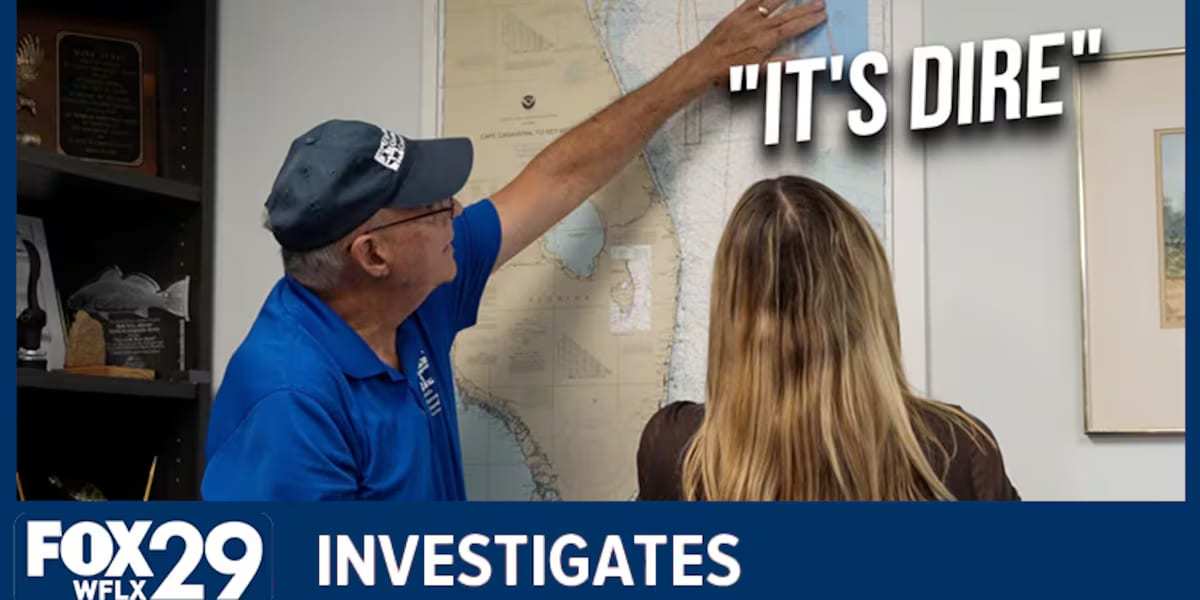
NOAA Proposes Reopening Part of Florida's Rare Oculina Bank Coral Reef to Shrimp Trawling
3d ago