Crew-13 Launch Slips to Early October After Dragon Oxidizer Leak
NASA and SpaceX are targeting early October for the launch of Crew-13 to the International Space Station after an oxidizer leak in the Dragon spacecraft's propulsion system forced a delay from the mission's original September 12 target. Engineers have replaced the oxidizer valve responsible for the leak, which was detected during standard prelaunch processing at Cape Canaveral.
The four-person crew consists of NASA astronauts Jessica Watkins and Luke Delaney, Canadian Space Agency astronaut Joshua Kutryk and Roscosmos cosmonaut Sergey Teteryatnikov. The mission will launch on a Falcon 9 from Florida's Space Coast, continuing the rotation of long-duration crews that has operated from Cape Canaveral since commercial crew flights began.
NASA Administrator Jared Isaacman indicated the repair could take two to four weeks, an estimate that has tracked closely with the revised early October target. The valve replacement has been completed, and the remaining work involves prelaunch testing to verify the propulsion system before flight.
What the leak was and why it mattered
The Dragon spacecraft's propulsion system uses hypergolic propellants, a fuel and oxidizer combination that ignites on contact without an ignition source. That chemistry makes the system reliable and simple, and it also makes leaks serious, because the propellants are corrosive and toxic and will react with each other on contact.
An oxidizer leak detected during standard prelaunch processing is, in one sense, the system working as intended. Processing exists specifically to find problems on the ground, and a leak identified in a hangar is an inconvenience while the same leak discovered in flight would be an emergency.
The Draco thrusters that the propulsion system feeds perform functions with no margin for failure. They execute the orbital maneuvers that bring Dragon to the station, the docking approach, and critically the deorbit burn that brings the capsule home. A propulsion problem is not a system a crew can fly without.
Valve replacement is a well-understood repair, though it requires careful handling given the propellants involved and extensive verification afterward. The two-to-four-week estimate reflected the testing sequence more than the physical work of changing the component.
Why delays are the norm rather than the exception
Human spaceflight schedules are provisional by nature, and anyone following launches from Cape Canaveral has learned to treat announced dates as targets. Weather, technical issues, range conflicts and station scheduling all move launch dates routinely.
The decision calculus favors delay heavily. There is no operational pressure that justifies launching a crew on a vehicle with a known propulsion anomaly, and both NASA and SpaceX operate under a safety culture shaped by the loss of two shuttle crews to decisions that discounted technical warnings.
Station scheduling adds complexity in the other direction. Crew rotations have to account for the overlap period when arriving and departing crews are both aboard, visiting vehicle traffic including cargo missions, and the certified on-orbit lifetime of the Dragon currently docked to the station.
Those constraints mean a delay of a few weeks can cascade. Pushing Crew-13 to early October affects when the outgoing crew returns, which affects station staffing for scheduled research and maintenance, and the scheduling team resolves those dependencies each time a date moves.
What it means for the Space Coast economy
Launch delays carry real economic consequences for Brevard County. Crewed launches draw substantially larger crowds than routine commercial missions, filling hotels along the beaches, restaurants in Titusville and Cocoa Beach and the viewing areas that local businesses depend on.
A postponement measured in weeks reschedules that activity rather than eliminating it, but the disruption is real for operators who staffed up for a specific date. Visitors who traveled for a September 12 launch and could not extend their stay do not necessarily return in October.
The workforce effect is different and larger. Thousands of Floridians work in the launch industry at Kennedy Space Center, Cape Canaveral Space Force Station and the supporting contractor base, and processing delays shift work rather than removing it. Employment in the sector has grown substantially with launch cadence.
Space Florida, the state's aerospace development authority, has built an economic development strategy around launch volume and the supplier ecosystem that supports it. Individual delays do not affect that strategy; sustained cadence growth is what does.
The broader commercial crew picture
Crew-13 represents the thirteenth operational crew rotation flown under NASA's Commercial Crew Program, a model that replaced government-owned launch vehicles with contracted services from private providers. The program has flown reliably enough that crew rotations have become routine.
That routine status is itself the program's most significant achievement. Before commercial crew, American astronauts reached the station on Russian Soyuz vehicles at substantial cost, and the capability gap between the shuttle's retirement and Dragon's first crewed flight lasted nearly a decade.
The international crew composition, with NASA, Canadian Space Agency and Roscosmos representatives aboard, reflects the station's continuing multinational operation despite geopolitical tension. Crew assignments are negotiated years ahead and have largely proceeded on their own track.
Boeing's Starliner has pursued certification as the program's second provider, work conducted substantially at Kennedy Space Center. A second operational vehicle would provide redundancy that the program has lacked, which matters precisely in situations like an oxidizer leak grounding the available capsule.
The station's remaining years
Crew rotations operate against a finite horizon. The International Space Station is planned for deorbit at the end of the decade, and each crew rotation is one of a diminishing number remaining in the program's history.
That timeline shapes what crews do aboard. Research priorities have shifted toward experiments that inform long-duration exploration and toward work that cannot be replicated on the commercial stations expected to succeed the ISS. The science program operates with a closing window.
For Florida, the transition raises a question about launch cadence. Commercial space stations under development would require crew and cargo flights, and those missions would launch from the Space Coast, which means the station's retirement need not reduce Florida's launch volume if successors materialize on schedule.
The state's aerospace sector has diversified substantially enough that station operations are no longer its center. Commercial satellite launches, national security missions and lunar program activity have made the Space Coast's business less dependent on any single destination in orbit.
Watching a launch from Florida
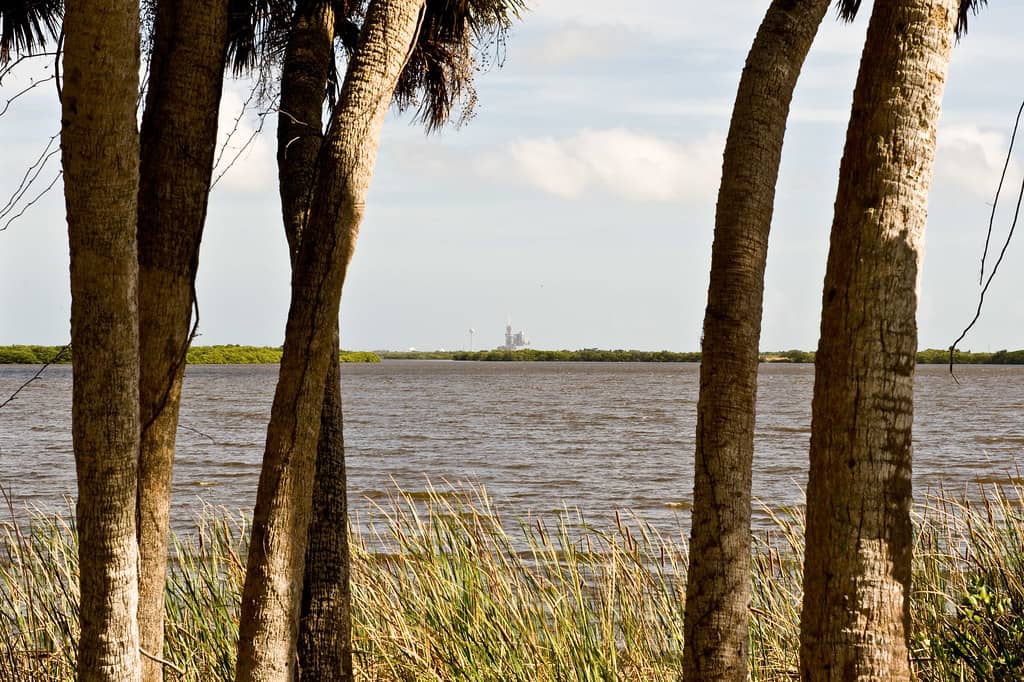
Crewed launches remain the Space Coast's premier public spectacle, and the early October window will draw viewers to the Brevard County beaches, the causeways and the Kennedy Space Center Visitor Complex, which sells ticketed viewing packages.
The practical advice for visitors is to treat any announced date as provisional and to build flexibility into travel plans. Launches scrub for weather, for technical holds and for range conflicts, sometimes minutes before liftoff and sometimes repeatedly.
Traffic is the logistical challenge. Brevard County's road network handles launch crowds with difficulty, and the causeways connecting the mainland to the barrier islands become severely congested before and after a high-profile launch.
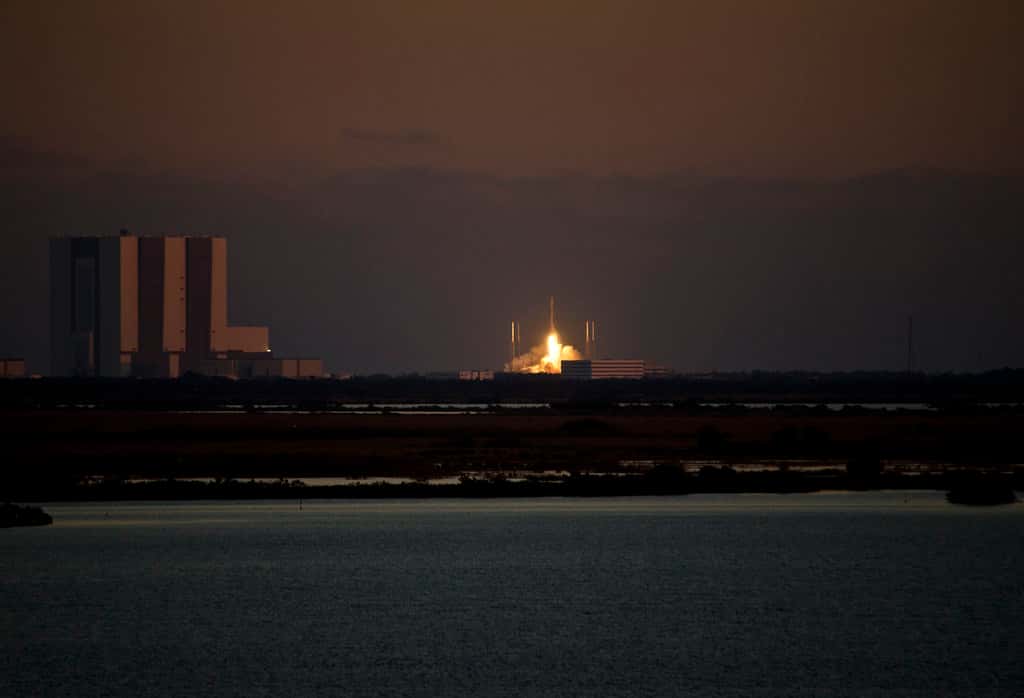
The viewing itself rewards the effort. A Falcon 9 carrying a crew produces a visible and audible event across a wide area of Central Florida, and the booster's return to a landing zone adds a second phase that has become part of the experience.
The safety culture behind the delay
The decision to stand down rather than press ahead reflects a specific institutional history. NASA's safety culture was reshaped by the Challenger and Columbia accidents, both of which investigation boards attributed substantially to organizational pressures that discounted engineering concerns.
The lesson embedded in program practice is that schedule pressure is the enemy. A crewed vehicle with a known propulsion anomaly does not launch, regardless of how much work has gone into a particular date or how many visitors have booked hotel rooms.
SpaceX's own operating approach, built around rapid iteration and high flight rates, has had to accommodate that culture for crewed missions specifically. The company flies uncrewed Falcon 9 missions at an extraordinary cadence and applies a more conservative posture to flights carrying people.
The transparency around the delay is itself notable. NASA published the schedule adjustment, identified the technical cause and communicated the repair estimate publicly, which is the practice that allows outside observers to evaluate the decision rather than simply accept it.
Who is flying
Crew-13 carries a four-person international complement. NASA astronauts Jessica Watkins and Luke Delaney represent the American contingent, joined by Joshua Kutryk of the Canadian Space Agency and Sergey Teteryatnikov of Roscosmos. Mixed crews of this composition have become standard on both Dragon and Soyuz flights under long-standing agreements that predate current geopolitical friction.
Crew assignments are made years in advance and involve extensive training on multiple vehicle and station systems. A delay of several weeks does not disrupt that preparation, though it does extend the period of quarantine and pre-flight isolation that crews enter before launch to avoid carrying illness to the station.
The international composition serves an operational purpose beyond diplomacy. The station's Russian and American segments use different systems and procedures, and maintaining crew members trained on each is necessary for the orbiting laboratory to function as an integrated facility.
Long-duration missions of this kind typically run about six months, which places the crew's return in the spring. Their work will include station maintenance, spacewalks if scheduled, and the research program that occupies the majority of crew time aboard.
What's next
NASA and SpaceX are targeting early October for launch, with the oxidizer valve replaced and prelaunch testing continuing. A specific date will be announced once the verification sequence is complete and the station's visiting vehicle schedule is confirmed.
Additional delays remain possible. Testing can reveal further issues, weather at the launch site and along the ascent corridor must cooperate, and station scheduling can shift for reasons unrelated to the vehicle.
For Floridians, the mission's eventual launch will be visible across much of the peninsula's east coast and audible for miles around the Space Coast. Watchers should confirm the date shortly before traveling, because in human spaceflight the schedule is the least reliable part of the plan.
Spotted an issue with this article?
Have something to say about this story?
Write a letter to the editor