DeSantis calls for Florida taxpayer bill of rights to stop local fee hikes after Amendment 3
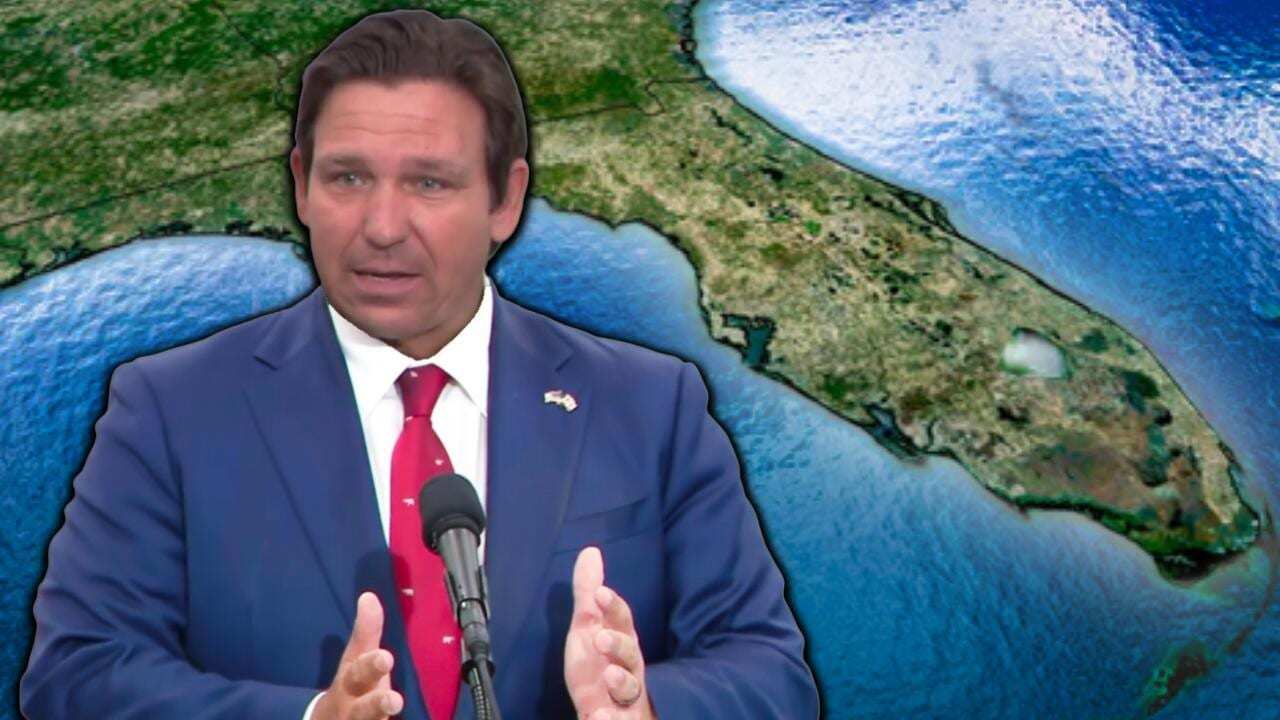
Gov. Ron DeSantis is pressing the Florida Legislature to pass what he calls a "taxpayer bill of rights" that would limit local government spending and block new local taxes and fees, arguing that cities and counties should not be allowed to claw back the property tax relief voters approved with Amendment 3 earlier this month. The incoming leaders of the House and Senate, however, signaled this week that they are in no hurry to act before the governor leaves office in January.
The push sets up an early test of how the state will carry out the largest change to Florida's property tax system in a generation, and of how much influence an outgoing governor will have over a Legislature that has just changed hands.
What DeSantis said
In a post on X on Wednesday, Nov. 18, DeSantis wrote: "There won't be fee hikes if the Legislature stops it." He added: "Pass a taxpayer bill of rights, limit local spending and protect against new local taxes and fees," according to WKMG News 6 in Orlando.
The governor's comments followed a Florida's Voice report that Chief Financial Officer Blaise Ingoglia was concerned local governments would try to get around the amendment through "alternative avenues," WKMG reported. Ingoglia, a DeSantis appointee, has made local government spending a central theme of his time in office.
DeSantis has said he will work with lawmakers to implement the property tax cuts properly before his term ends. The day after the Nov. 3 general election, he told reporters he wanted a special session to put a taxpayer bill of rights in place, saying the work "has to be done by January 1, and we will do it by January 1," WLRN reported at the time. He said he wanted to stop local governments from "doing an end-run around the amendment and taxing them in other ways." He also said he would work with lawmakers on a fund to help small, rural counties with low tax bases pay for core needs.
What Amendment 3 does
Amendment 3 was approved by nearly 62% of voters, according to the News Service of Florida, clearing the 60% threshold required for constitutional amendments. It takes effect Jan. 1, 2027.
The measure greatly expands the homestead exemption for taxes that do not fund public schools, and it tightens the cap on how fast assessments on non-homestead property can grow. The exemption changes phase in over two years for people who are permanent Florida residents before Jan. 1, 2027, according to WKMG:
| Year | Homestead exemption on non-school taxes | Non-homestead assessment cap |
|---|---|---|
| Current law | $25,000 from all taxes, plus $25,000 more on non-school taxes | 10% a year |
| 2027 | First $150,000 of assessed value | 5% a year |
| 2028 | First $250,000 of assessed value | 5% a year |
| 2029 and after | First $250,000, indexed to inflation | 5% a year |
The larger exemption does not apply to the portion of the tax bill that funds public schools. People who have not established permanent Florida residency by Dec. 31 must wait five years before qualifying for the expanded exemption, according to the News Service of Florida. Until then, newcomers keep a structure similar to today's.
The amendment also restricts how local governments may spend property tax revenue. Permitted uses listed in the measure include law enforcement, emergency medical services and fire protection, schools, roads, bridges and stormwater controls, flood control and other natural resource projects, bond payments for approved uses, employee obligations and retirement benefits, and the operations of county officers and commissions, WKMG reported.
Why fees are the flashpoint
State economists project that Amendment 3 will cost local governments, and save property owners, about $4.93 billion in the next fiscal year and nearly $12 billion within five years, according to the News Service of Florida. WLRN reported that economists estimate the reduction could reach $12 billion a year at full implementation.
Critics of the amendment warned during the campaign that cities and counties would try to recover the lost money through higher user fees and sales taxes. Local governments already have a range of fees and non-ad valorem assessments available under state law, and those charges are not covered by homestead exemptions.
That is the gap DeSantis wants to close. A taxpayer bill of rights, as he has described it, would restrict local governments' ability to replace property tax revenue with new taxes or fees and would cap local spending growth. He has not released bill language, and no lawmaker has filed a proposal.
Not everyone agrees a special session is needed to address the issue. Former state Sen. Jeff Brandes, president of the Florida Policy Project, told WLRN after the election that he did not understand how DeSantis would address fee shifts, given how many statutory fees local governments already have. Brandes suggested an implementing bill could simply be the first bill of the 2027 regular session.
Legislative leaders take a slower view
Senate President Jim Boyd, R-Bradenton, and House Speaker Sam Garrison, R-Fleming Island, formally took their gavels on Tuesday, Nov. 17, as new members were sworn in. Neither ruled out a special session before the end of the year, but both said they expect the main Amendment 3 work to happen during the 2027 regular session, according to the News Service of Florida.
"We believe there's time later on, during the regular session," Boyd said. "We want to be judicious in our process," he added, "because it is a big deal and it needs to be done right." Boyd also acknowledged concerns about the tax burden shifting and told senators they must consider communities that cannot absorb the revenue losses.
Garrison told the House that "it is our responsibility to ensure that we do not replace one broken system of local taxation with another." He called the amendment "the biggest fiscal challenge our State has faced in a generation" and said the work "will take time." Asked about DeSantis's taxpayer bill of rights idea, Garrison said, "I don't think we necessarily know the answer to that yet," WLRN reported.
Garrison noted that local governments have the summer to plan their budgets, since their fiscal year starts Oct. 1, while the state's fiscal year begins July 1. Boyd said leaders want to hear more from DeSantis and from Governor-elect Byron Donalds, who takes office in January. Donalds said Monday that nothing had been set for a special session or for an approach to implementing the amendment, according to the News Service of Florida.
Other priorities for the new leaders
Property taxes are not the only issue on the new leadership's list. Boyd, an insurance executive, said "it is imperative that we tackle affordability," and named further reductions in property insurance costs, preparing students for a changing job market and environmental preservation among his goals, WLRN reported.
Garrison summed up his priorities as "a strong economy, safe streets and quality schools" and created a House committee to study the risks and opportunities of artificial intelligence.
What it means for Floridians
For homeowners who are permanent residents by the end of this year, the higher exemption will show up on the 2027 tax bills that arrive in November 2027, regardless of what the Legislature does about fees. What remains unsettled is whether those savings will be partly offset by new charges for services such as fire protection, stormwater or parks, and whether rural counties with small tax bases will get state help.
Supporters of the amendment say it delivers long-promised relief to homeowners facing rising costs. Opponents, including many local officials, warned during the campaign that cuts to services could follow if the lost revenue is not replaced.
What's next
DeSantis's term ends Jan. 5, 2027. A special session would require agreement on timing from House and Senate leaders, who so far have not committed to one. Lawmakers are expected to discuss Amendment 3 in committee hearings ahead of the 60-day regular session, which begins March 2, 2027. Any limits on local fees and spending, whether called a taxpayer bill of rights or something else, will likely be written there, under a new governor.
Spotted an issue with this article?
Have something to say about this story?
Write us a letterComments
No comments yet. Be the first to weigh in.
Related Coverage
Doral Voter Sues DeSantis in Florida Supreme Court to Force Special Election for Vacant Senate District 39
21h ago
Doral Councilwoman Maureen Porras Keeps Pushing to Revisit City's ICE 287(g) Pact After City Attorney Blocks the Item
1d ago
Garrison and Boyd Take the Gavels, All but Rule Out DeSantis's Pre-January Special Session on Amendment 3
2d ago
Brett Moss Sworn In as Key Biscayne Mayor After Voters Reject the Big Dig Stormwater Plan
2d ago