DeSantis Signs Foreign Interference Restriction Act Targeting China, Russia, Iran, Cuba
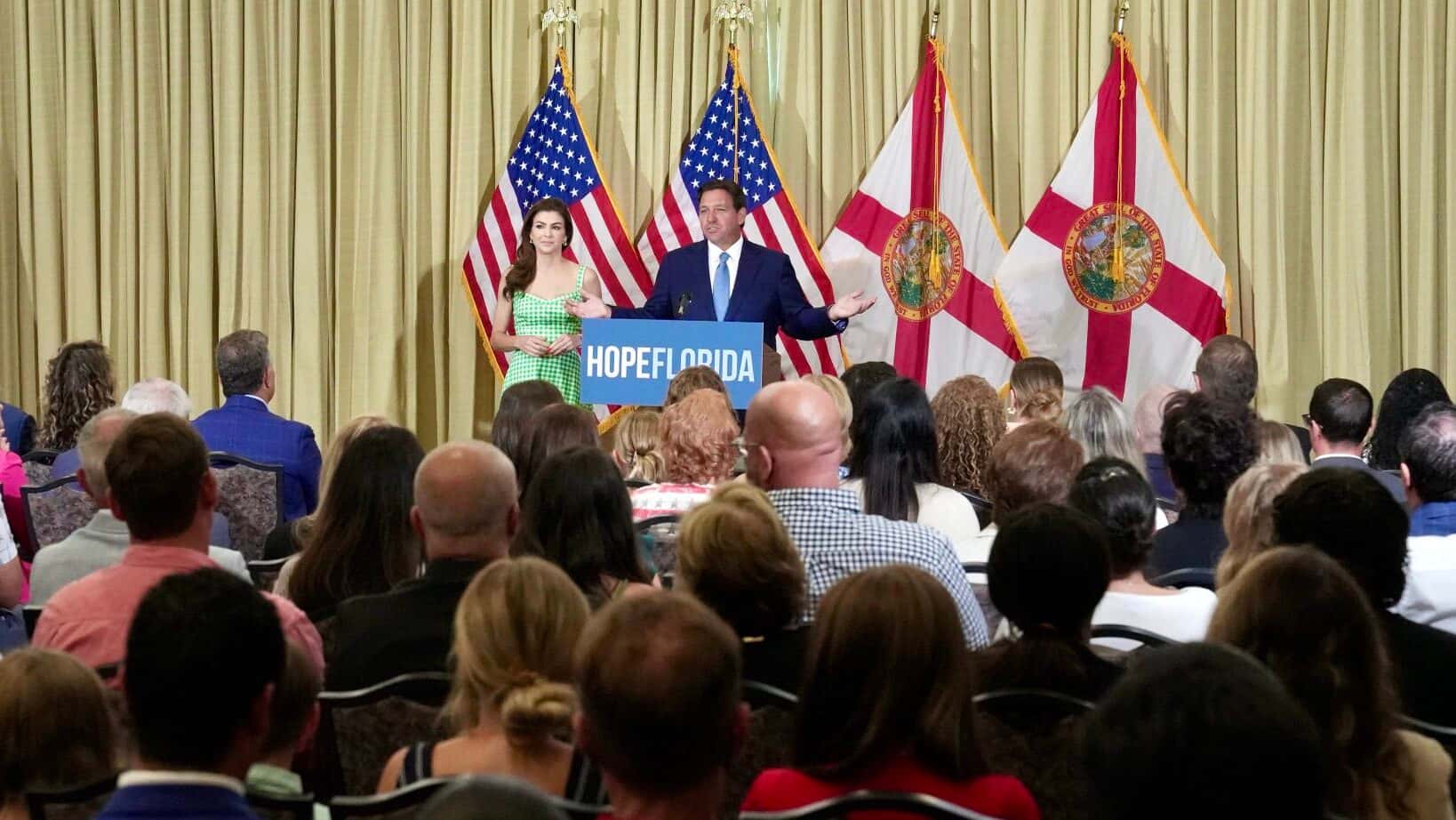
Governor Ron DeSantis signed the Foreign Interference Restriction and Enforcement Act into law on May 8, 2026, putting in place what state officials describe as Florida's most expansive package of restrictions on dealings with hostile foreign governments. House Bill 905, which takes effect on July 1, names China, Russia, Iran, North Korea, Cuba, Venezuela, and Syria as countries of concern and imposes new limits on contracts, surrogacy agreements, and ethics disclosures across state and local government.
The law is the latest in a string of measures from Tallahassee aimed at restricting the footprint of adversarial foreign powers in Florida's economy, infrastructure, and civic life. State leaders cast the legislation as a direct response to concerns about espionage, intellectual property theft, and political influence operations that federal agencies have flagged in recent years.
What the law actually does
HB 905 establishes a layered framework that touches several corners of state government. According to the governor's office, the bill restricts state and local agencies from entering into agreements with entities tied to the listed foreign countries of concern, expanding earlier prohibitions that had focused primarily on China. The bill also tightens conflict-of-interest disclosures for public officials whose business dealings or family ties intersect with those countries.
One of the most novel elements is a restriction on surrogacy contracts involving intended parents from the listed countries. Supporters of the provision say it is designed to prevent the use of Florida reproductive services as a back-door route to American citizenship for the children of foreign officials and influencers. Critics argue the language sweeps in private medical arrangements that have nothing to do with national security.
The act also strengthens ethics requirements for government officials at every level, requiring more granular disclosure of foreign sources of income and ownership stakes. Local officials, state employees, and members of state boards will be subject to the new reporting obligations starting in July.
The Florida context
Florida has been at the leading edge of state-level restrictions on foreign influence for the past three years. The Legislature previously passed limits on real estate purchases by certain Chinese nationals, restrictions on Confucius Institute partnerships at public universities, and screening requirements for foreign donations to state agencies. HB 905 builds on that earlier work but pushes the framework deeper into ethics, procurement, and family law.
The geography matters. Florida is home to more than 1.5 million residents of Cuban descent and growing Venezuelan and Nicaraguan communities, giving the state a politically active diaspora that has long pressed for tougher policies toward authoritarian governments in Havana and Caracas. The naming of Cuba and Venezuela alongside the more familiar list of Chinese and Russian adversaries reflects that political reality.
The state also hosts a heavy concentration of military installations, defense contractors, and Port of Miami logistics operations that federal officials consider potential targets for espionage. Tampa is home to U.S. Central Command and U.S. Special Operations Command, and Cape Canaveral remains the country's busiest launch corridor. State officials have repeatedly cited that infrastructure when justifying tighter restrictions on foreign entanglements.
Reaction from supporters
According to the governor's office release, DeSantis framed the legislation as a necessary defense of Florida's economy and sovereignty against threats originating from hostile regimes. Republican legislative leaders who shepherded the bill through the regular session described it as a tool for prosecutors, regulators, and procurement officers who have lacked clear authority to refuse foreign-tied bids.
Florida-based national security organizations and diaspora advocacy groups generally cheered the signing. Cuban American and Venezuelan American political groups in South Florida have lobbied for years for tougher state action against the regimes their members fled. Several of those groups have pointed to investments and influence campaigns inside the United States as evidence that federal restrictions alone are insufficient.
Supporters in business circles, particularly in defense contracting and high-tech research, argued that the predictability of a clear state-level statute will make compliance easier. Several research universities had already begun unwinding partnerships flagged under previous Florida laws, and supporters say HB 905 gives those institutions a clearer rulebook.
Concerns from critics
Civil liberties groups and immigration attorneys raised early concerns about how the law will be implemented, particularly the surrogacy provisions and the broader ethics disclosure rules. Some attorneys warned that the language could be read to require disclosures from public employees whose distant relatives hold property or business interests in a listed country, even when those relatives have no operational role in the official's work.
Business groups with international exposure cautioned that the legislation, layered on top of existing federal export controls and sanctions, could create a confusing compliance environment for Florida companies. Energy, pharmaceutical, and university research sectors have all flagged that work involving foreign collaborators may now require additional state-level vetting.
Some civil rights advocates argued that broad country-based restrictions risk stigmatizing law-abiding Florida residents and visitors from the listed nations. They pointed to research showing that Florida's earlier real estate restrictions chilled legitimate transactions and led to confusion among real estate agents about who could legally close a deal.
How it interacts with federal law
The new statute does not displace federal authority over foreign investment review, sanctions, or counterintelligence. Federal agencies including the Treasury Department's Committee on Foreign Investment in the United States and the Justice Department's National Security Division will continue to handle the largest cases. HB 905 is designed to layer state-level enforcement on top of that federal framework.
State Attorney General James Uthmeier's office has been a vocal advocate for tougher state action against foreign adversaries and is expected to take a leading role in interpreting and enforcing the new statute. The office handled litigation defending earlier Florida laws restricting Chinese real estate purchases, and lawyers there have signaled they expect legal challenges to portions of the new law.
Legal observers say the surrogacy and ethics provisions are likely to draw the first courtroom tests. Surrogacy contracts in particular touch on constitutional protections around family formation and travel that federal courts have historically scrutinized closely.
What it means for Floridians
For most Florida residents, the day-to-day impact of HB 905 will be invisible. The bulk of the law touches procurement officers, public officials, and businesses with international ties rather than ordinary consumers. State agencies will absorb most of the compliance burden as they update standard contract language and disclosure forms over the summer.
Floridians who work in higher education, technology research, or defense-adjacent industries may notice the most direct effects. University researchers will face additional questions about foreign collaborators on grant applications, and contractors bidding for state business will need to certify their ownership and funding chains in more detail.
Members of Florida's diaspora communities are likely to feel the political effects most acutely. The law sends an unmistakable message about how state government views the regimes in Havana, Caracas, and other listed capitals, and that messaging has political weight in a state where international policy frequently shapes local elections.
Local impact across the state
South Florida's port and logistics sector, which handles a significant share of trade with Latin America and the Caribbean, will face new scrutiny of partnerships and joint ventures with foreign-owned operators. PortMiami and Port Everglades, two of the busiest container facilities in the Southeast, will need to update their vendor screening procedures before the July 1 effective date.
The Tampa Bay region, home to MacDill Air Force Base and a growing tech sector, is expected to see the largest interaction between state restrictions and existing federal counterintelligence work. Universities in the region, including the University of South Florida, have already restructured several international research partnerships over the past three years.
In Central and North Florida, the state's twelve public universities will need to update foreign collaboration disclosures, particularly for projects funded with state appropriations. The new law adds another layer to a vetting process that has steadily expanded since 2021.
The compliance burden on businesses
For Florida businesses that contract with state and local government, the new law will require fresh due diligence on their own ownership chains and financial relationships. Companies bidding on state contracts will need to certify that they are not owned or substantially influenced by entities tied to the listed countries of concern, and they will need to document the basis for that certification.
Procurement attorneys across the state have already begun fielding questions from clients about how to structure compliance programs. The most affected sectors include construction, information technology, telecommunications, and any industry where ownership structures can involve foreign capital. Smaller vendors that may not have full visibility into their investor base could face new operational hurdles.
Trade associations representing Florida businesses have indicated they intend to engage with state regulators during the rulemaking process to clarify ambiguous provisions. Industry groups for shipping, real estate, agriculture, and health care are all reviewing the law's specific provisions to assess potential compliance challenges in their sectors.
Higher education and research implications
Florida's State University System has been at the front lines of the state's tightening foreign influence rules for several years. Universities have unwound certain international research partnerships, modified visiting scholar programs, and enhanced screening of foreign-funded research. HB 905 adds another layer to that compliance work, particularly for projects that involve state appropriations.
Research administrators at the state's twelve public universities will need to update their internal policies and grant management procedures to reflect the new requirements. The added scrutiny applies not only to large institutional partnerships but also to individual faculty collaborations with researchers based in or funded by the listed countries.
The State University System's Board of Governors has previously issued guidance on foreign influence matters, and additional guidance is expected following the signing of HB 905. The board's role in coordinating compliance across the twelve universities will likely intensify as the new rules take effect over the summer.
What is next
State agencies have until July 1 to update procurement forms, disclosure templates, and internal training materials. The Department of Management Services is expected to issue guidance to local governments in the coming weeks, focused on contracts that will need to be modified or terminated before the effective date.
Legal challenges are widely expected. Civil liberties organizations and at least one fertility services trade group have already signaled interest in the surrogacy provisions, and constitutional scholars expect litigation over the ethics disclosure requirements as they apply to dual nationals serving in public office. The early test cases are likely to play out in federal district courts in Tallahassee and Miami.
The political path forward is also still being written. Several other Republican-led states have studied Florida's earlier foreign influence laws, and HB 905 is expected to serve as a template for similar legislation elsewhere. Whether that nationwide pattern accelerates or runs into federal preemption claims will likely shape the next phase of state-level national security policy.
Florida's congressional delegation in Washington has also been active on related foreign influence questions, and several members have introduced or supported federal legislation on parallel issues. Coordination between state and federal action remains a central question for officials trying to ensure that the layered enforcement framework operates effectively without creating contradictory or duplicative requirements for businesses and residents.
Spotted an issue with this article?
Have something to say about this story?
Write us a letterComments
No comments yet. Be the first to weigh in.
Related Coverage

Florida AG Uthmeier proposes Safe Screens Act with overnight shutoff, app store age checks for teens
24m ago
Voter Lookup Tools Go Down on Florida County Election Sites as Early Voting Begins
19h ago

UNF Poll: Donalds Leads Jolly by 2, Moody Leads Nixon by 4 as Florida's Top Races Tighten
20h ago

Jacksonville Council Subpoenas Former JTA CEO Nat Ford as Transit Agency's $39 Million Shortfall Forces Layoffs, Skyway Shutdown
1d ago