Fed Holds Rates Steady a Fifth Time, Keeping Florida Buyers in Limbo
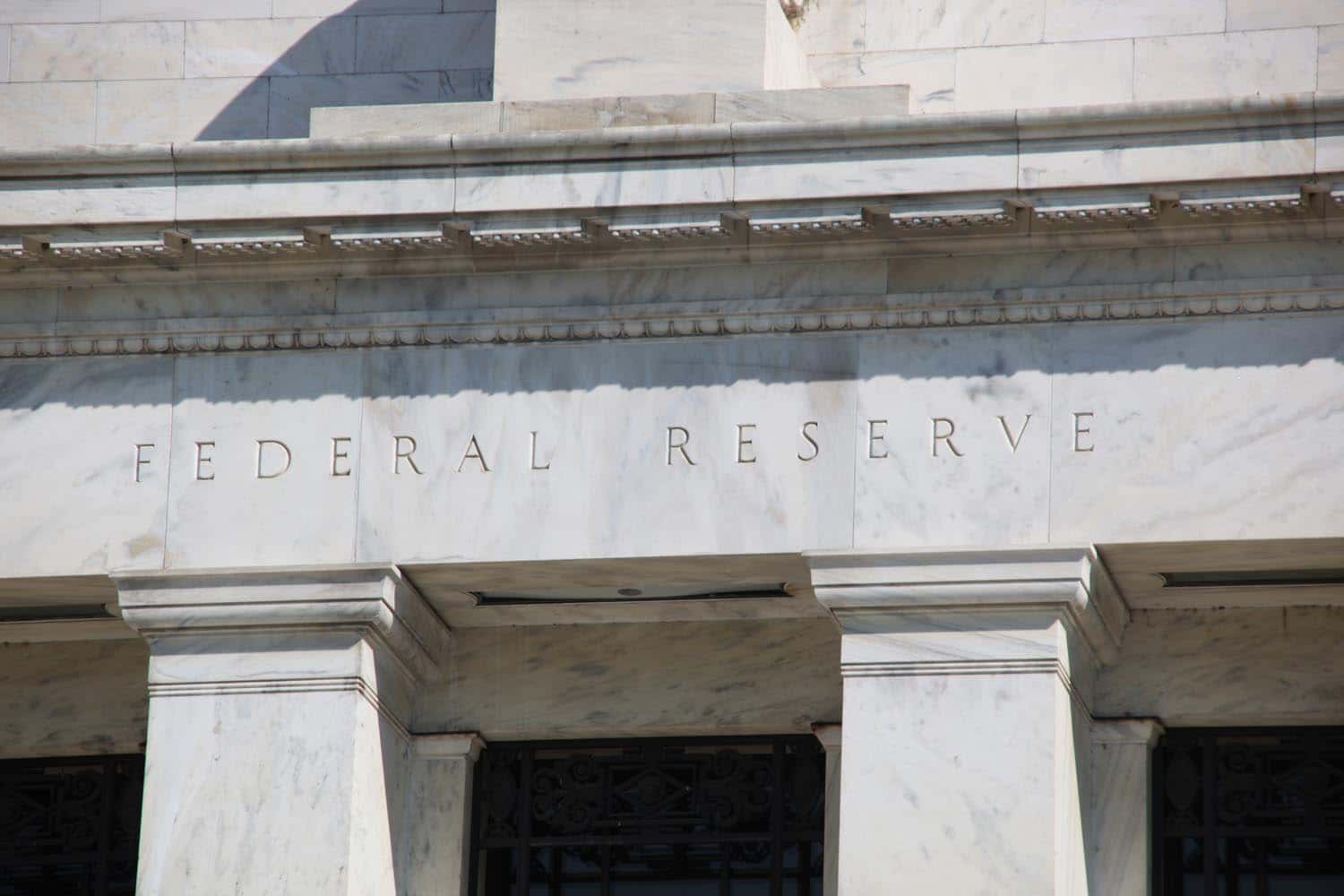
The Federal Reserve voted on July 29 to hold its benchmark interest rate steady in a range of 3.5 to 3.75 percent, the fifth consecutive meeting without a change. The decision leaves Florida homebuyers, borrowers, and savers in a holding pattern that has now persisted for the better part of a year.
What the Fed decided
The vote was 9-3, an unusually divided outcome for a body that historically prefers consensus. Three regional Federal Reserve bank presidents dissented: Beth Hammack of Cleveland, Neel Kashkari of Minneapolis, and Lorie Logan of Dallas. The dissents reflected concern that inflation has remained above the Fed's 2 percent target for an extended period.
Three dissenting votes is notable. The Federal Open Market Committee typically resolves internal disagreement before a formal vote, and a split of this size signals genuine division about whether current policy is appropriately calibrated.
In its statement, the committee described economic activity as expanding at a solid pace despite elevated uncertainty attributed in part to conflict in the Middle East. It noted that productivity growth and capital investment are strong, that job gains have kept pace with growth in the workforce, and that the unemployment rate has changed little.
The current rate range represents the lowest level since November 2022, meaning the Fed has already delivered substantial easing from its peak and is now assessing whether that easing has been sufficient.
How this reaches Florida households
The federal funds rate is not the mortgage rate, and this distinction matters more than it usually gets credit for. The Fed sets an overnight interbank lending rate. Mortgage rates track longer-term Treasury yields, particularly the 10-year, and those yields respond to inflation expectations, growth outlooks, and global capital flows rather than moving in lockstep with Fed decisions.
The practical consequence is that a Fed hold does not freeze mortgage rates, and a Fed cut does not guarantee cheaper mortgages. Homebuyers who wait for a Fed move expecting a corresponding drop in their mortgage quote are frequently disappointed.
Where Fed policy transmits more directly is in shorter-term and variable-rate borrowing. Credit card rates, home equity lines of credit, and auto loans track the federal funds rate more closely. Florida households carrying revolving debt see the effect of a hold in payments that do not decline.
Savers experience the mirror image. Money market yields and certificate of deposit rates remain elevated relative to the near-zero era, which benefits retirees and others holding cash. Florida's demographic profile, with a substantially higher share of residents over 65 than the national average, means this channel matters more here than in most states.
The Florida housing intersection
Florida's housing market has been posting higher sales volume and modestly rising prices. Closed sales of existing single-family homes rose 9.3 percent year over year in June, with the statewide single-family median around $425,000 for the second quarter, up 2.4 percent.
Affordability in Florida, however, is determined by a cost stack that mortgage rates only partially explain. The monthly obligation for a Florida homeowner includes principal and interest, property taxes, homeowners insurance, and for a large share of the housing stock, homeowners association or condominium association fees.
Insurance is the component that has done the most damage to Florida affordability over the past several years, and it responds to hurricane risk, reinsurance costs, and state regulatory policy rather than to anything the Federal Reserve does. Condominium association assessments, driven higher by structural inspection and reserve funding requirements, are similarly insulated from monetary policy.
This is why national affordability analyses that combine home price and mortgage rate consistently overstate Florida purchasing power. A buyer in Ohio and a buyer in Florida facing the same price and the same mortgage rate do not face the same monthly payment.
The insurance offset
There has been movement in the favorable direction on the insurance component. Citizens Property Insurance Corporation implemented rate reductions for personal lines policyholders in 2026, its first average decrease in roughly a decade, and its policy count has fallen sharply from a 2023 peak as private carriers have returned to the Florida market.
That development does more for Florida affordability than a quarter-point move in the federal funds rate would. For a household whose insurance premium had risen by thousands of dollars annually, a genuine reduction changes the purchase calculation in a way that incremental rate movement does not.
Whether the improvement persists depends substantially on hurricane activity. The reforms that reduced litigation costs and attracted carriers back to Florida have not been tested by a major landfall event, and a severe storm season would test the market's restored capacity.
What Floridians should take from this
For prospective buyers, the practical implication is that waiting for a specific rate environment is a poor strategy. Mortgage rates have not moved in a predictable relationship with Fed decisions, and buyers who delayed purchases in recent years waiting for cheaper financing generally faced higher prices when they returned to the market.
The better approach is evaluating whether the total monthly obligation, including insurance and association fees, fits the household budget at current terms. Refinancing remains available if rates decline later. A price increase, by contrast, cannot be refinanced away.
For homeowners carrying variable-rate debt, particularly home equity lines, the hold means no relief in payments. Households with meaningful balances on those instruments should evaluate whether fixed-rate consolidation makes sense rather than waiting for cuts that the Fed has not committed to delivering.
For savers, the current environment continues to reward holding cash in yield-bearing accounts rather than in non-interest-bearing checking. The gap between a competitive money market yield and a standard bank account remains wide enough to matter.
Why three dissents matter
The 9-3 vote deserves more attention than the unchanged rate itself, because Federal Open Market Committee dissents are uncommon and signal genuine institutional disagreement.
The committee has historically valued consensus, and chairs generally work to resolve differences before a formal vote. Members with reservations frequently express them in speeches rather than in dissenting votes, which preserves the appearance of unified policy.
Three dissents from regional bank presidents indicates that the disagreement was substantial enough that those members were unwilling to accommodate. The stated concern, that inflation has remained above the 2 percent target for more than five years, points toward a view that current policy is too accommodative.
For observers trying to anticipate future decisions, dissent patterns carry predictive value. A committee with a meaningful hawkish minority is less likely to cut rates and more likely to hold or tighten if inflation data disappoint.
Market pricing has reflected that reading, with expectations of limited easing and some probability assigned to eventual increases rather than reductions.
What Florida's economy shows
The Fed sets policy for the national economy, but conditions vary substantially across states, and Florida's profile differs from the aggregate in several respects.
The state's employment base is weighted toward tourism, hospitality, healthcare, construction, and real estate, sectors with different interest rate sensitivities. Construction and real estate respond directly to financing costs. Tourism responds to household discretionary spending, which interest rates affect indirectly.
Recent signals from Florida's tourism sector have been mixed. Orlando theme park operators described attendance softening beginning in June and continuing into the third quarter, attributing it to weaker consumer sentiment and higher travel costs. Royal Caribbean trimmed its annual revenue growth target while beating earnings expectations.
Those data points suggest some moderation in discretionary travel spending, which would eventually register in Florida employment and sales tax collections if it persisted.
Florida's population growth provides an offsetting force that most states lack. Continued in-migration supports housing demand and consumer spending somewhat independently of national cycles, which has historically made Florida's economy more resilient during national slowdowns and more volatile during shocks that specifically affect migration or tourism.
Practical guidance for households
Translating monetary policy into household decisions is where most coverage stops short, and a few concrete points follow from the current environment.
Households carrying variable-rate debt should not plan around imminent relief. A home equity line at current rates will remain at approximately current rates absent a Fed move the committee has not signaled. Borrowers with substantial balances should evaluate fixed-rate alternatives rather than waiting.
Savers should ensure cash is held in yield-bearing accounts. The spread between competitive money market rates and standard bank accounts remains wide, and the difference on meaningful balances is substantial over a year.
Prospective homebuyers should evaluate affordability on total monthly obligation including insurance and association fees rather than on price and mortgage rate alone. In Florida, those additional components frequently determine whether a purchase is sustainable.
Anyone with an adjustable-rate mortgage approaching a reset should understand the adjustment terms well in advance, because refinancing options require lead time and depend on conditions at the time of application rather than at the time of the original loan.
What's next
The Federal Open Market Committee meets on a scheduled cycle through the remainder of 2026, and market pricing has reflected expectations of limited movement. Those expectations shift with each inflation and employment report.
The data that will drive the next decision are the monthly consumer price index releases and the employment reports from the Bureau of Labor Statistics. Florida-specific employment data, released alongside the national figures, provide a read on how the state's labor market is performing relative to the country.
For Florida households, the more consequential variables through the remainder of the year are likely to be the hurricane season's outcome and its effect on the insurance market, rather than anything decided in Washington. That is an unusual thing to say about monetary policy, and it reflects how much of Florida's cost structure is determined by risks specific to this state.
Spotted an issue with this article?
Have something to say about this story?
Write us a letterComments
No comments yet. Be the first to weigh in.
Related Coverage

SpaceX Posts $4.4 Billion Profit on $14.6 Billion Revenue as Starship Readies for Florida Pads
37m ago

NOAA Weighs Reopening Part of Florida's Rare Oculina Bank Coral Reef to Shrimp Trawling
1h ago

Monroe County Elections Chief Investigating Video of Apparent Armed Federal Agents Outside Keys Early Voting Site
2h ago

Frost and Lee File Bipartisan SLOTHS Act to Ban Sloth Imports After Orlando's Sloth World Deaths
4h ago