DeSantis Endorses Byron Donalds for Governor, Closing a Rift Ahead of November
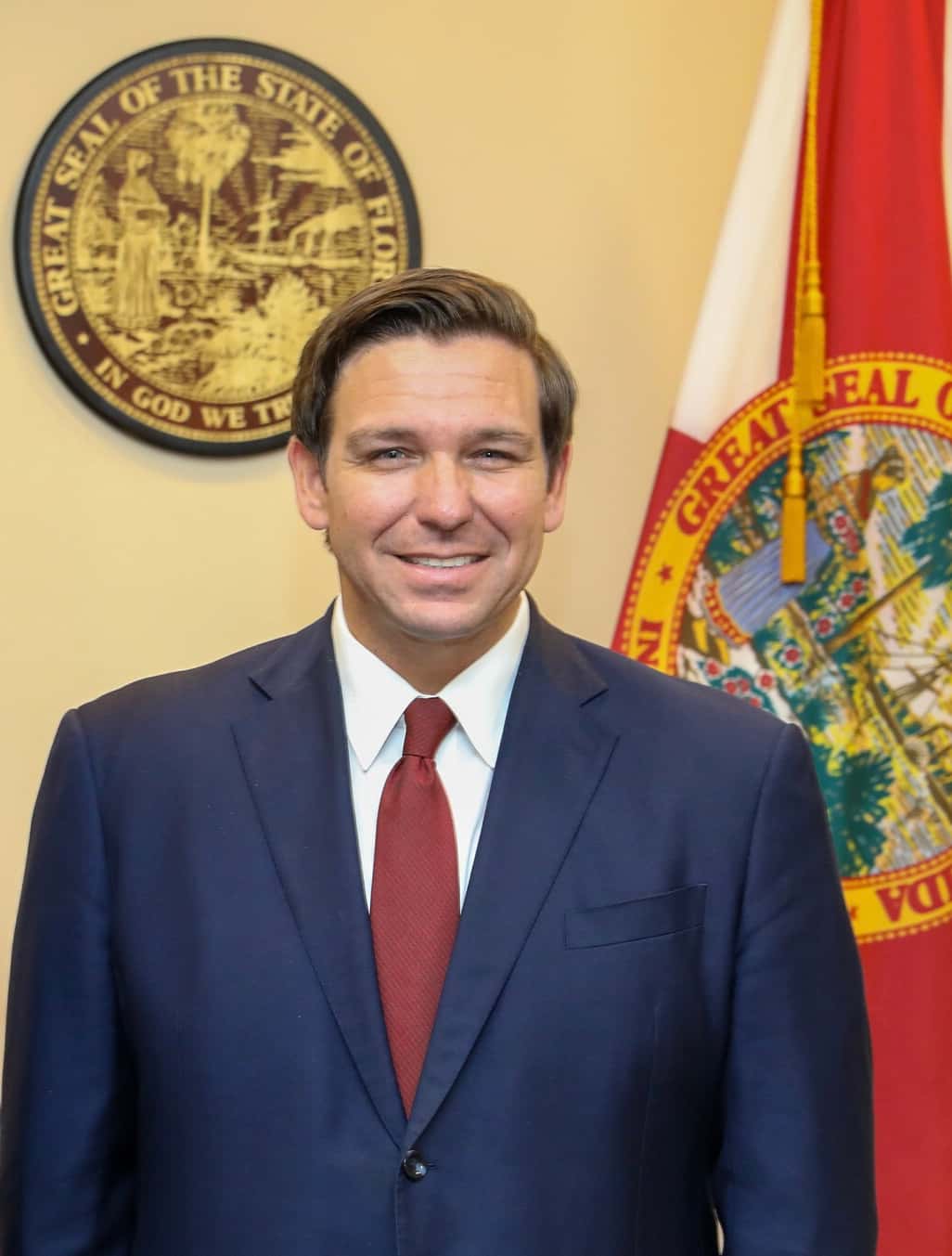
Governor Ron DeSantis has endorsed U.S. Representative Byron Donalds in the race to succeed him, appearing alongside the Republican nominee at the Florida GOP Leadership Forum in Tampa and introducing him as part of what the governor called the party's winning ticket. The endorsement resolves one of the longest-running questions of the 2026 Florida election cycle and sets up a general election against Democratic nominee David Jolly on November 3.
What happened in Tampa
DeSantis appeared on stage with Donalds and the rest of the Republican statewide slate at the party's leadership forum, presenting the candidates as a unified ticket heading into the fall campaign. The governor's introduction of Donalds was the first time the two had shared a stage in that posture since Donalds entered the race.
Donalds won the Republican gubernatorial primary in August with the backing of President Donald Trump, whose endorsement came early and effectively cleared much of the field. The primary drew a challenge from a former Florida House Speaker, but Donalds carried the nomination and moved into the general election as the party's standard bearer.
The Tampa forum served as the practical starting line for the general election campaign. Statewide races in Florida typically compress into a two-month sprint after Labor Day, with paid media, early voting logistics and get-out-the-vote operations all ramping simultaneously across the state's ten media markets.
The history behind the endorsement
The endorsement is notable because of what preceded it. DeSantis and Donalds had a publicly strained relationship through the early stages of the cycle. When Donalds announced his candidacy with Trump's support, DeSantis declined to endorse and offered pointed public commentary suggesting the race deserved a fuller debate about who had actually delivered on the state's conservative agenda.
Speculation persisted for months that First Lady Casey DeSantis might enter the race, an outcome that would have set up a direct confrontation between the governor's orbit and the Trump-endorsed candidate. DeSantis said at one point that his wife would not announce her plans until after the legislative session concluded. She ultimately did not run, and the primary proceeded without that contest.
Endorsements from a term-limited incumbent are not always forthcoming when a primary has been contentious, and the delay drew attention through the summer. DeSantis leaves office having served eight years, a period during which he built one of the most extensive political operations any Florida governor has assembled, and the machinery attached to that operation is a meaningful asset in a general election.
The general election matchup
Donalds faces David Jolly, a former Republican congressman from Pinellas County who left the party, spent several years as an independent, and later registered as a Democrat. Jolly's path gives Democrats a nominee with prior federal officeholding experience and a record of criticizing the Republican Party from outside it, a profile the party has not typically run statewide in Florida.
Florida has not elected a Democratic governor since 1994. Republicans hold a substantial voter registration advantage statewide, a reversal of the party's position a decade ago, and have won every statewide race in the past two cycles. Those structural facts frame the race, though registration advantages have historically translated imperfectly to turnout in gubernatorial years.
The governor's race sits at the top of a ballot that also includes the United States Senate special election, in which appointed Senator Ashley Moody faces Democratic state Representative Angie Nixon, along with the state's congressional delegation races and legislative contests. Turnout in the down-ballot races will be shaped substantially by how competitive the top of the ticket appears in October.
What Donalds would inherit
The next governor takes office with several major policy files already open. Property insurance remains the dominant kitchen-table issue in the state, though the market has stabilized considerably, with Citizens Property Insurance Corporation filing for rate decreases and a majority of counties seeing lower average premiums in 2026 than in the prior year. Sustaining that trajectory through a future landfall season is the harder test.
Housing affordability is a related pressure point. Statewide median prices have flattened after several years of rapid appreciation, inventory has rebuilt across most metros, and buyers have regained leverage they had not held since 2020. That correction has eased entry costs somewhat while creating its own strains for recent buyers and for local government revenue tied to property values.
The state's higher education system, its immigration enforcement partnerships with federal agencies, its Everglades restoration commitments and its response to a rapidly growing data center and technology sector all sit in the next governor's portfolio. So does the recurring question of how much of the DeSantis administration's approach carries forward and how much gets revised.
What it means for Floridians
For voters, the endorsement mainly signals consolidation. A Republican nominee running with both the president's backing and the outgoing governor's support is running with the party's full institutional apparatus behind him, including donor networks, county party organizations and the volunteer infrastructure that DeSantis built over two campaigns.
For Democrats, the practical question is whether Jolly can assemble a coalition that includes both the party's base in Broward, Miami-Dade, Orange and Palm Beach counties and the suburban and independent voters who have drifted Republican in recent Florida cycles. That coalition has not held together in a statewide race in more than two decades.
The campaign will also test whether the issues that dominate national politics or the ones specific to Florida drive the electorate. Insurance rates, housing costs, utility bills and school policy tend to move Florida voters in ways that national arguments do not always match.
The record the next governor inherits
DeSantis leaves office having signed the state's fiscal year 2026-2027 budget and having presided over a period in which Florida's population grew by well over a million residents. That growth is the underlying force behind most of the state's current policy problems, from housing costs and insurance availability to school capacity, road congestion and water supply.
The administration's signature initiatives, on immigration enforcement, higher education governance, school curriculum and public health policy, have all drawn national attention and, in several cases, federal litigation. Whether those approaches continue depends substantially on the November outcome.
The fiscal picture is comparatively strong. Florida has no personal income tax, has maintained substantial reserves, and has carried a budget surplus in recent years. The next governor inherits that position along with the spending commitments, including Everglades restoration and transportation infrastructure, that it funds.
What a Florida statewide campaign requires
Running statewide in Florida is a logistical undertaking that few other states demand. The state has ten media markets, stretches more than 800 miles from Pensacola to Key West, spans two time zones, and contains metropolitan areas with almost nothing in common politically, demographically or economically.
Advertising in Miami, Tampa and Orlando simultaneously costs more than campaigning in most entire states. That expense is the primary structural reason Florida statewide races have become harder for underfunded candidates and why party committee support and outside spending carry disproportionate weight.
Field organization is the other half. Florida's early voting period and vote-by-mail infrastructure mean campaigns must run turnout operations across weeks rather than concentrating on a single day. Tracking which supporters have already voted and redirecting resources accordingly is a data operation as much as a volunteer one.
Language matters as well. Campaigns in South Florida run substantial Spanish-language programs, and effective outreach distinguishes among Cuban American, Venezuelan, Colombian, Puerto Rican and other communities rather than treating Hispanic voters as a single bloc. Creole-language outreach is significant in parts of Broward and Miami-Dade counties.
The candidate who assembles all of that, paid media across expensive markets, sustained field operations, and community-specific outreach, generally wins Florida. The party that has done it more consistently over the past decade is the one entering November with a registration advantage.
What Democrats are betting on
David Jolly's candidacy rests on a theory that Florida's general election electorate contains a bloc of moderate and independent voters who have voted Republican in recent cycles but are reachable by a candidate who is not a conventional Democrat. His own trajectory, from Republican congressman to independent to Democrat, is the argument in biographical form.
Whether that bloc exists at the scale required is the question the campaign will answer. Florida's recent statewide results suggest the persuadable middle has narrowed considerably, and that outcomes are now driven more by which party's base turns out than by which candidate wins undecided voters.
Democrats also face an infrastructure gap. The party's county organizations, voter registration operations and donor networks in Florida have weakened relative to a decade ago, and rebuilding them is a multi-cycle project rather than something a single campaign accomplishes.
The counterweight is that gubernatorial races in Florida have historically been closer than the current registration gap would predict. Several recent contests were decided by narrow margins despite structural advantages, which is the precedent Jolly's campaign points to.
What's next
The campaign now enters its most intensive phase. Debates, if the candidates agree to them, are typically scheduled for October. Vote-by-mail ballots go out to requesting voters well ahead of Election Day, and Florida's early voting period opens in late October, meaning a substantial share of the electorate will have voted before the final week of the campaign.
Fundraising reports filed through the fall will offer the clearest available measure of how each campaign is resourced heading into the paid media window. Florida is an expensive state to advertise in, with several of the country's costlier media markets, and campaigns that cannot fund broadcast in Tampa, Orlando and Miami simultaneously face a structural disadvantage.
Election Day is November 3. The winner takes office in January, becoming Florida's first new governor in eight years and inheriting a state that has added millions of residents and reshaped its politics over that span.
Spotted an issue with this article?
Have something to say about this story?
Write us a letterComments
No comments yet. Be the first to weigh in.
Related Coverage

Clearwater approves $7.5 million FrankCrum settlement over erased Black cemetery as residents seek resolution
3h ago

Byron Donalds calls for a multi-tier property tax system beyond Amendment 3
3h ago

Broward judge rules Tamarac Commissioner Morey Wright off the Nov. 3 ballot, sparking clash at City Hall
4h ago

Appeals court lets Florida enforce HB 3, its social media ban for children under 14
4h ago