Appeals court lets Florida enforce HB 3, its social media ban for children under 14
A federal appeals court on Wednesday, Oct. 14, 2026, threw out the injunction that had blocked Florida's HB 3, the 2024 law that bars children under 14 from opening social media accounts and requires parental consent for 14- and 15-year-olds. A unanimous three-judge panel of the 11th U.S. Circuit Court of Appeals in Atlanta ruled that the law is likely constitutional because it regulates addictive platform features rather than the content of speech, a decision that strengthens the state's hand as Attorney General James Uthmeier presses separate cases against Snap and Meta.
The case, Computer & Communications Industry Association and NetChoice v. Uthmeier, now returns to the federal district court in Tallahassee. The tech trade groups that brought it said they are weighing their next move.
What the 11th Circuit decided
The panel was made up of Circuit Judges Kevin Newsom, Robert Luck and Gerald Tjoflat. Newsom wrote the 47-page opinion for the court and added a separate concurrence.
The court ruled on four questions. It agreed with the district court that the two trade associations have standing to challenge HB 3 on behalf of their member platforms, and that the federal court did not have to step aside in favor of Florida's state-court enforcement case against Snap. On the merits, it held that HB 3 implicates the First Amendment but likely survives the intermediate level of scrutiny that applies to content-neutral rules. It also rejected the groups' broader facial challenge, finding they had not shown that the law's unconstitutional applications substantially outweigh its valid ones, the test the U.S. Supreme Court set out in its 2024 Moody v. NetChoice decision.
The court affirmed the district court on standing and abstention, reversed the preliminary injunction as it applied to the groups' members, vacated the injunction as to the facial challenge, and sent the case back for further proceedings.
"Yes, (the law) implicates the First Amendment and thus triggers constitutional scrutiny," the opinion states, as quoted by the News Service of Florida. "But it likely does so in a content-neutral manner, and it likely survives intermediate scrutiny because it doesn't burden substantially more speech than necessary to advance the important interest in protecting minors from social-media addiction."
The panel pointed to the way the Legislature drew the law. According to the ruling, HB 3 calibrates its restrictions by age, regulates the creation of accounts rather than necessarily minors' access to the platforms, and covers only platforms that both use algorithms and employ at least one of several listed addictive features.
What HB 3 requires
The law, codified at section 501.1736 of the Florida Statutes, does not apply to every website. As the opinion describes it, a covered "social media platform" is one that lets users upload content or view other users' activity, on which at least 10% of daily active users under 16 spend an average of two hours or more a day, that uses algorithms to select content for users, and that has at least one of five features the law calls addictive:
- Infinite scrolling, meaning content that loads continuously with no apparent end
- Push notifications about activity on a user's account
- Personal interactive metrics such as likes, comments, reposts and shares
- Auto-play video
- Live-streaming
Covered platforms must bar children under 14 from creating accounts and must bar 14- and 15-year-olds from doing so without a parent's consent. If an account holder is under 14, or is 14 or 15 without parental consent, the platform must terminate the account. Services whose only function is email or direct messaging between a sender and recipients are exempt.
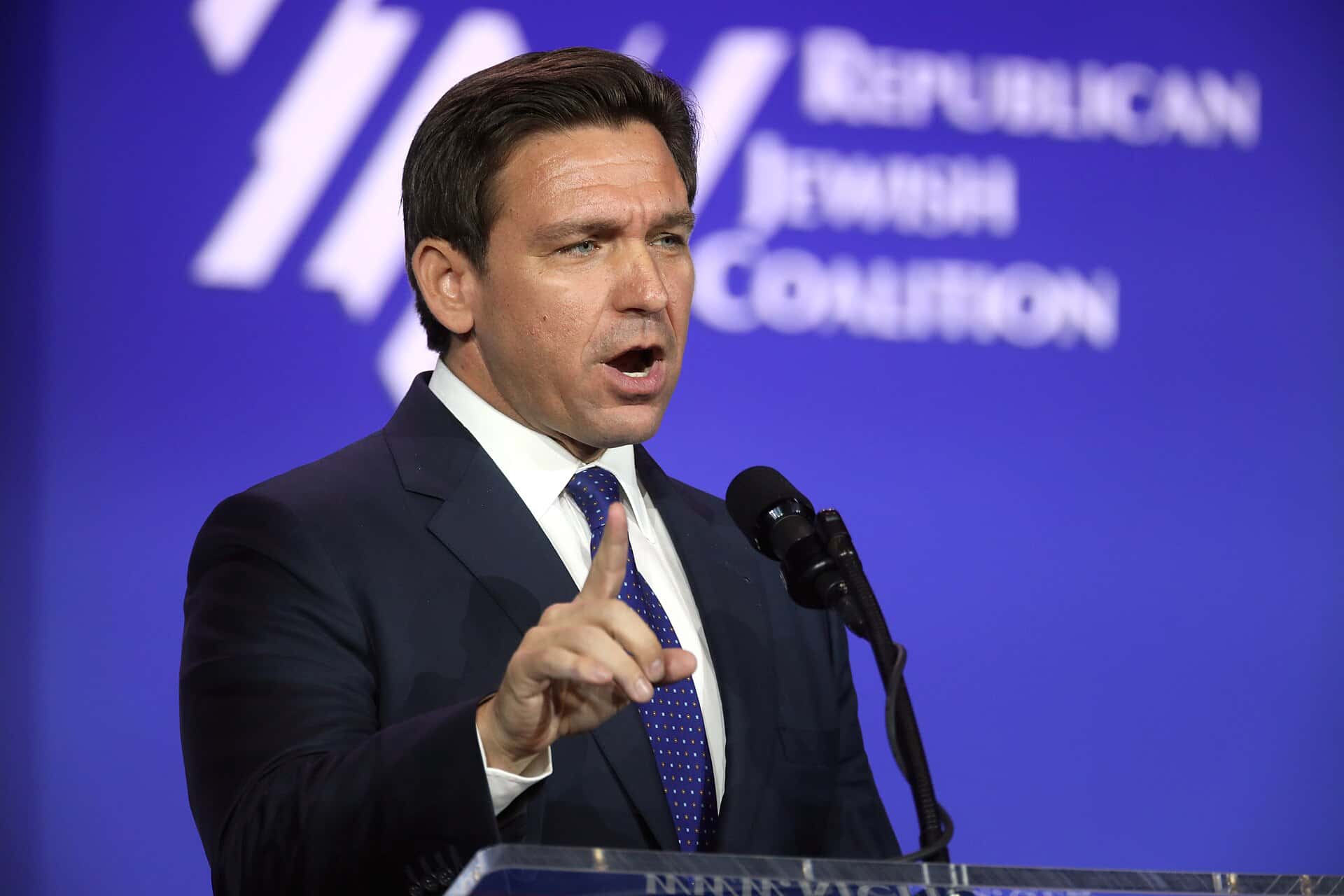
Gov. Ron DeSantis signed the measure in 2024. Then-House Speaker Paul Renner, a Palm Coast Republican, made it a priority, and it passed with wide bipartisan margins of 30-5 in the Senate and 109-4 in the House, according to the News Service of Florida.
How the case got here
The Computer & Communications Industry Association and NetChoice, two internet industry groups whose members include major platforms, sued on Oct. 28, 2024, shortly before the law took effect. Their case was assigned to U.S. District Judge Mark Walker of the Northern District of Florida.
The litigation took several turns. A timeline drawn from the appeals court opinion and the case record:
| Date | What happened |
|---|---|
| Oct. 28, 2024 | CCIA and NetChoice file suit in Tallahassee |
| March 13, 2025 | Walker denies first injunction request on standing grounds |
| April 21, 2025 | Florida sues Snap in state court under HB 3 |
| June 3, 2025 | Walker grants renewed request and blocks the law |
| Nov. 25, 2025 | 11th Circuit stays the injunction in a 2-1 order |
| Oct. 14, 2026 | Panel unanimously throws out the injunction |
Walker had agreed that HB 3 was likely content neutral but concluded it was not narrowly enough tailored to survive intermediate scrutiny. The 11th Circuit's November 2025 stay order let the state enforce the law while the appeal went forward. Judge Robin Rosenbaum dissented from that order, arguing the restrictions were a stand-in for a content-based regulation of social speech between users. The new opinion addressed that view directly and rejected it, saying the social nature of speech on these platforms is a matter of form, not substance.
Reaction from the tech industry and the state
Paul Taske, director of NetChoice's litigation center, said the group was disappointed and considering its options. NetChoice also warned that social media sites could be forced to verify the age and parental status of every user as a result of the ruling.
"We are disappointed in the Eleventh Circuit's ruling, which allows Florida to enforce its law imposing digital ID requirements as a condition for accessing lawful speech," Taske said in a statement reported by the News Service of Florida. "We are currently evaluating all of our options as we continue the fight to ensure Floridians' rights to free expression online are protected, and parents remain in the driver's seat when it comes to making decisions for their families."
The attorney general's office did not immediately respond to a request for comment on Wednesday, FOX 13 reported, and it was not clear when the state would step up active enforcement. When the appeals court granted the stay last November, Uthmeier said on social media that HB 3 was now the law of the state and would be enforced.
The Snap and Meta cases
The ruling lands as Florida pursues two of the largest platforms in separate cases.
The first is the state's HB 3 enforcement action against Snap, the company behind Snapchat and a member of NetChoice. Florida filed it in state court in April 2025, and Snap moved it to federal court. The 11th Circuit noted in Wednesday's opinion that on the same day it heard arguments in the HB 3 challenge, it also heard Florida's appeal of a district court order refusing to send the Snap case back to state court. That appeal remains a separate matter.
The second is the state's lawsuit against Meta, the parent of Instagram and Facebook, in Pasco County. That suit accuses the company of engineering its platforms to be addictive for young users and misleading consumers about their safety. Reuters reported on Oct. 7 that Uthmeier had asked the Pasco County court for a temporary injunction requiring Meta to identify and remove Florida users under 14, cap teens at two hours a day across its apps, and turn off autoplay and infinite scroll for them while the case proceeds. Florida did not join a settlement that Meta reached with most other states in August, according to Reuters, and a Meta spokesperson called the state's injunction request meritless.
Wednesday's ruling does not decide either case. But it removes the federal injunction that had hung over HB 3 and gives the state an appellate opinion holding that the law is likely constitutional.
What it means for Florida families
For parents, the practical rule is the one the law sets out: covered platforms must keep children under 14 from opening accounts and must get a parent's consent before 14- and 15-year-olds can do so. The opinion stresses that the law targets the creation of accounts, not necessarily a minor's ability to view a platform, and that it reaches only services that meet its usage, algorithm and design tests.
Florida is one of many states testing these limits. The opinion lists industry challenges to similar laws in Georgia, Tennessee, Texas, Ohio, California, Mississippi, Louisiana, Arkansas and Utah, and the Georgia case is pending before the same appeals court.
What's next
The case goes back to Walker's court in Tallahassee for further proceedings consistent with the appeals court's opinion. Because the 11th Circuit ruled on a preliminary injunction, its decision is not a final judgment on the law.
NetChoice has not said what it will do. The options open to the challengers include asking the full 11th Circuit to rehear the case or petitioning the U.S. Supreme Court. In his concurrence, Newsom flagged an open question about whether a 2026 Supreme Court decision limits as-applied challenges to laws reviewed under intermediate scrutiny, and said he would wait for a clearer signal from the high court before applying it to First Amendment cases.
Spotted an issue with this article?
Have something to say about this story?
Write us a letterComments
No comments yet. Be the first to weigh in.
Related Coverage

Broward judge rules Tamarac Commissioner Morey Wright off the Nov. 3 ballot, sparking clash at City Hall
30m ago

Florida Voters Return More Than 500,000 Mail Ballots for November Election as Democrats Take Early Lead
22h ago
HUD Mapping Error Fixed: St. Petersburg Gets $173 Million in Hurricane Milton Recovery Money
1d ago

Bernie Sanders Brings Tour to Florida for Angie Nixon's Senate Bid Against Ashley Moody as Thune Readies Visit
2d ago