Dunedin Advances Ban on Motorized Watercraft Launches at the Causeway
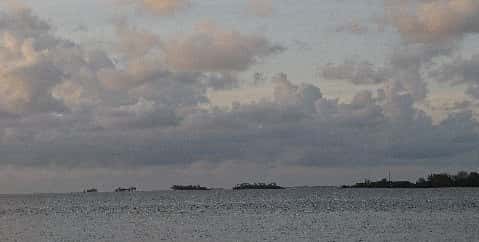
The Dunedin City Commission voted unanimously this week to advance an ordinance that would ban launching motorized watercraft from the south side of the Dunedin Causeway, moving a proposal that has been under discussion since early summer toward a final decision. Four commissioners supported the measure in the preliminary vote, and a final vote is scheduled for September 3.
City officials have cited two justifications: public safety and protection of the seagrass beds and shoreline along the causeway. Both arguments draw on conditions observed during the period the area has already been closed to motorized launches, a closure that began after Hurricane Milton damaged the causeway.
The Dunedin Causeway connects the city to Honeymoon Island State Park across St. Joseph Sound, and its sandy shoulders have long served as an informal launch area for jet skis, small boats and other watercraft. The proposed ordinance would make permanent a restriction that has functioned as a temporary condition.
The safety record
Dunedin Fire Chief Michael Handoga has reported two jet ski fatalities in the area since 2020. Pinellas County has documented 80 jet ski-related incidents between 2022 and the end of April this year, a figure that encompasses collisions, injuries and other events requiring response.
Personal watercraft safety has been a persistent issue across Florida, which has more registered vessels than any other state. Jet skis are frequently operated by renters and occasional users without extensive experience, and they combine high speed with limited braking capability, a combination that produces a distinctive injury profile.
The causeway environment compounds the risk. Shallow water, swimmers, wading families, anchored boats and shore fishing all occupy the same nearshore area where watercraft accelerate away from the launch point. Mixing high-speed vessels with recreational swimmers in shallow water is the specific hazard city officials have identified.
The seagrass recovery
The environmental argument rests on observed change during the closure. City officials have said the coastline has improved while motorized launching has been suspended, with a resurgence of seagrass and native wildlife in the area.
Seagrass is among the most ecologically valuable habitat in Florida's coastal waters. It stabilizes sediment, filters water, sequesters carbon and provides nursery habitat for fish, crabs and shrimp. It is also the primary food source for manatees, and seagrass loss has been directly implicated in the manatee mortality events that affected Florida in recent years.
Propeller scarring is a well-documented mechanism of seagrass damage in shallow Florida waters. When vessels operate in water shallower than their draft plus propeller depth, propellers cut channels through the seagrass bed. Those scars can take years to recover, and in areas with repeated traffic they may not recover at all. Launch areas concentrate that damage because every vessel entering the water crosses the same shallow zone.
The Tampa Bay seagrass context
The Dunedin decision sits within a broader regional story. Tampa Bay's seagrass recovery has been one of the more prominent environmental success stories in Florida, with coverage rebounding substantially from mid-century lows following decades of investment in wastewater treatment and nutrient reduction. That recovery has since faced setbacks, and monitoring in recent years has shown losses in portions of the bay.
St. Joseph Sound, where the Dunedin Causeway sits, is part of the broader coastal system north of Tampa Bay proper. Its water quality and habitat conditions are influenced by the same regional factors, including stormwater management, nutrient loading and the physical disturbance from recreational use.
Local governments around Tampa Bay have used a range of tools to protect seagrass, including idle-speed zones, marked channels, propeller-free zones and restrictions on shoreline access. A launch ban is on the more restrictive end of that spectrum, and it addresses the disturbance at its source rather than managing it after vessels are in the water.
The access question
Restrictions of this kind invariably raise questions about public access to public water. Florida's constitution and its public trust doctrine protect public access to navigable waters, and any restriction on how the public reaches the water attracts scrutiny.
The distinction the city is drawing is between access and launching. The ordinance as described addresses launching motorized watercraft from the south causeway specifically, not access to the water generally. Swimming, wading, paddling and shore fishing would be unaffected, as would launching from designated ramps elsewhere in Pinellas County.
Pinellas County operates public boat ramps at multiple locations, and the practical effect of the ordinance for boaters would be to shift launches to those facilities. Ramps offer deeper water access, controlled traffic patterns and parking, and launching from a ramp does not involve driving a vessel across shallow seagrass beds.
What it means for Pinellas residents
For Dunedin residents, the immediate effect would be the codification of conditions that have existed since the causeway closure. Residents who have used the causeway shoulders to launch watercraft would need to use county ramps instead, which for some means additional travel time.
For visitors, the causeway remains one of the more accessible stretches of shoreline in northern Pinellas County, with parking along its length and easy water access. The character of that access would change, shifting further toward swimming, paddling and shore activities rather than motorized recreation.
For the Honeymoon Island corridor generally, the ordinance would align the causeway with the conservation orientation of the state park at its western end. Honeymoon Island is among Florida's most visited state parks, and its shoreline and shallow waters are managed with habitat protection as a primary objective.
What Hurricane Milton changed
The causeway closure that produced the observed environmental improvement was not a policy choice. Hurricane Milton damaged the causeway in October 2024, and the resulting restrictions on access removed motorized launching from the area for an extended period.
That unplanned interruption functioned as an inadvertent experiment. City officials have pointed to the recovery observed during the closure as evidence for what a permanent restriction would produce, and observations of that kind, drawn from an actual absence of the activity rather than from modeling, carry more weight than projections.
Storm damage to coastal infrastructure has become a recurring feature of Florida municipal budgeting, and Milton was one of several storms in recent years that forced Pinellas County communities into extended repair cycles. Reconstruction decisions made during those cycles frequently become opportunities to revisit how a facility is used, which is part of what has happened here.
Personal watercraft regulation in Florida
Florida regulates personal watercraft through the Fish and Wildlife Conservation Commission, which enforces requirements including a minimum operator age of 14, a boating safety education requirement for operators born after January 1, 1988, and prohibitions on operation between sunset and sunrise.
Rental operators face additional obligations, including providing safety instruction to renters before departure. Enforcement of those requirements has been an ongoing challenge given the volume of rental activity across Florida's coastal communities during peak season.
Local governments retain authority over shoreline access and launching within their jurisdictions even though vessel operation on the water is regulated at the state level. That division is why a city can address the problem by restricting launching from municipal property while having no authority to restrict operation in the adjacent waters.
Seagrass recovery in context
Seagrass beds in Florida's coastal waters have experienced significant losses over the past decade, with the most severe declines documented in the Indian River Lagoon on the Atlantic coast, where die-offs contributed directly to manatee starvation events that prompted an unusual mortality event declaration. Those losses focused statewide attention on seagrass as a management priority.
The primary drivers of large-scale seagrass loss are water clarity and nutrient loading. When nutrients fuel algae growth in the water column, less light reaches the bottom, and seagrass cannot photosynthesize. Physical damage from vessel propellers is a separate and more localized mechanism, but in shallow nearshore areas with concentrated boat traffic it can be the dominant factor.
Recovery timelines vary by species. Shoal grass, which colonizes disturbed areas relatively quickly, can begin filling propeller scars within a few growing seasons under good conditions. Turtle grass, which forms the more structurally complex and ecologically valuable beds, recovers far more slowly and may take a decade or more to reestablish in scarred areas.
That difference explains why protecting existing beds is generally considered more effective than restoring damaged ones. Restoration projects are expensive and have mixed success rates, while preventing damage costs comparatively little. A launch restriction is a low-cost prevention measure targeting a specific, well-documented source of physical damage.
Pinellas County has invested in seagrass monitoring alongside the Tampa Bay Estuary Program, which tracks coverage across the broader bay system on a regular cycle. Those monitoring results are what allow local governments to evaluate whether measures like the Dunedin restriction produce measurable outcomes over time.
What's next
The final commission vote is scheduled for September 3. Ordinances in Florida municipalities typically require two readings, and the September vote would be the second, at which point the ordinance would take effect according to the terms it specifies.
Public comment periods are available at commission meetings, and residents on both sides of the question have participated in the discussions to date. The city publishes meeting agendas and materials in advance, and the ordinance text will be available before the final vote.
Boaters seeking alternative launch locations should consult Pinellas County's list of public boat ramps. The county maintains facilities around the peninsula, and several are within a short drive of Dunedin.
Dunedin has pursued environmental initiatives across several policy areas in recent years, including stormwater management, shoreline stabilization and coastal resilience planning. The causeway ordinance fits that pattern, and city officials have generally framed the proposal as consistent with the community's broader approach to its waterfront rather than as a departure from it. Residents on both sides of the question have engaged with the commission through the summer, and the September vote will close a debate that has been running since early June.
Spotted an issue with this article?
Have something to say about this story?
Write us a letterComments
No comments yet. Be the first to weigh in.
Related Coverage

Deep Gulf life has collapsed since Deepwater Horizon and shows no sign of recovery, Florida-led study finds
8h ago

Residents Sue Miami-Dade to Force a Public Vote on Superyacht Marina at Former Miami Seaquarium
1d ago

Florida Panther Deaths Reach 14 in 2026 as Two Young Females Die on Collier and Hendry Roads
4d ago

71-Year-Old Man Killed by Nearly 12-Foot Alligator While Fishing at Winter Garden Park
6d ago