Eleventh Circuit Ruling Expands Bond Hearings for Immigrants Detained in Florida
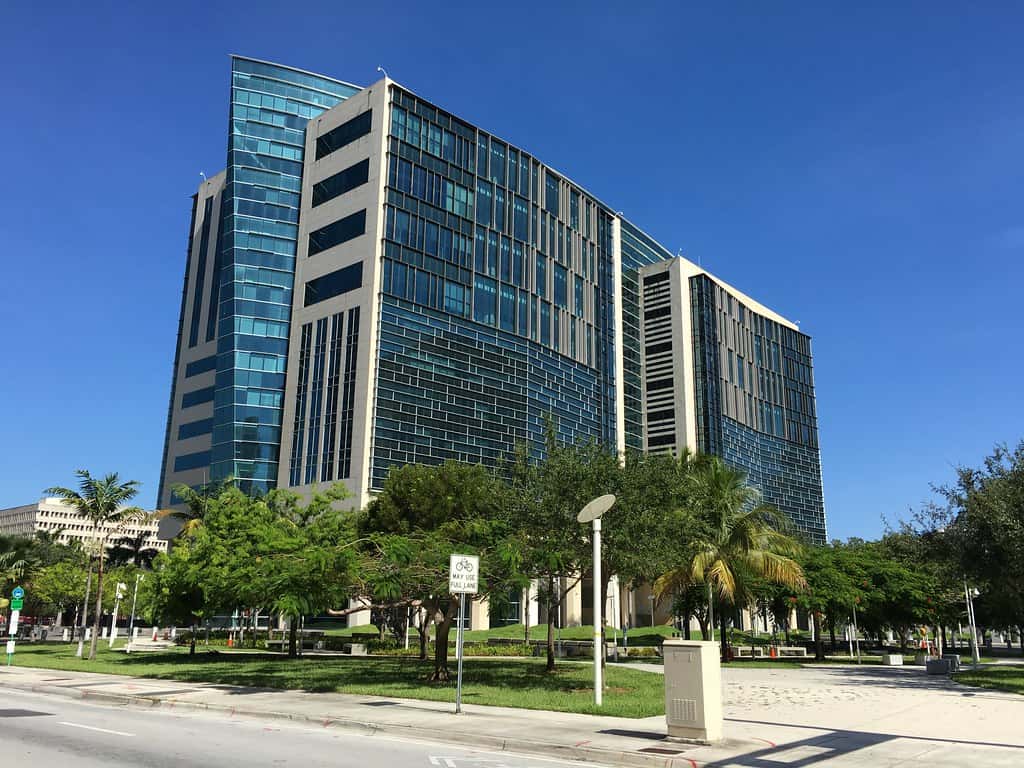
The U.S. Court of Appeals for the Eleventh Circuit ruled that immigrants who entered the country without inspection but were later arrested in the interior of the United States are generally entitled to bond hearings, a decision that directly affects people detained at Florida facilities such as the Krome detention center and the Federal Detention Center in Miami. The published opinion, issued May 6, 2026, reshapes how a category of detainees in Florida can seek release while their cases proceed.
The court, whose jurisdiction covers Florida, Georgia, and Alabama, held that such individuals fall under Section 236(a) of the Immigration and Nationality Act, which allows for bond hearings, rather than under Section 235(b)(2)(A), which imposes mandatory detention. The distinction is significant for the thousands of people held in Florida's busy immigration system.
The ruling does not order anyone released. A bond hearing is a proceeding at which an immigration judge decides whether a detainee may be released on bond and on what conditions, not an automatic grant of freedom. But the decision opens a door that mandatory detention had kept closed for many detainees in the interior.
The federal appeals courts sit one level below the U.S. Supreme Court and divide the country into geographic circuits, each of which issues rulings that bind the district courts and, in immigration matters, the administrative proceedings conducted within its territory. Because the Eleventh Circuit covers Florida along with Georgia and Alabama, its published opinions carry direct force in the state's immigration courts. A ruling of this kind does not merely guide one case; it establishes the rule that judges across the circuit are expected to follow when similar facts arise. For Florida, where immigration enforcement and detention have been unusually prominent, that means the decision reaches a large and active portion of the nation's detention system.
The legal distinction at the center of the case
At the heart of the ruling is a question about which provision of the Immigration and Nationality Act applies to certain detainees. The court drew a line between two sections that lead to very different outcomes for people in custody.
Section 236(a) of the act governs the detention of immigrants and permits bond hearings, at which a judge can weigh whether someone should be released while their case moves through the system. Section 235(b)(2)(A), by contrast, applies to people deemed to be seeking admission to the country and generally requires mandatory detention without the same opportunity for a bond hearing.
The Eleventh Circuit reasoned that being present in the United States without lawful admission does not by itself mean a person is actively seeking admission under the statute. Someone who entered without inspection and was later arrested in the interior, the court concluded, is not in the same posture as a person presenting at the border seeking entry.
That reasoning placed this category of detainees under Section 236(a), entitling them to bond hearings. The published nature of the decision means it carries precedential weight within the circuit, binding immigration proceedings across Florida, Georgia, and Alabama.
The two provisions reflect different assumptions built into immigration law. Section 235 is written largely around the moment of arrival, the point at which a person presents themselves at a port of entry or is encountered shortly after crossing and is treated as someone seeking to be admitted. Section 236, by contrast, addresses the detention of people who are already within the country and whose removal the government is pursuing. The Eleventh Circuit's task was to decide which framework fits a person who crossed without inspection at some earlier point and was then arrested away from the border. By concluding that such a person is not, in the statutory sense, still seeking admission, the court placed them squarely within the framework that allows a judge to consider release. The choice between the two sections, in other words, determines not only the conditions of detention but whether a detainee ever gets a chance to argue for freedom at all.
What a bond hearing actually means
It is important to understand what the ruling does and does not do. A bond hearing is a step in the process, not a guarantee of release. At such a hearing, an immigration judge considers factors such as whether a detainee poses a flight risk or a danger to the community before deciding whether to grant bond and set its amount.
Under mandatory detention, that opportunity is largely unavailable. People held under Section 235(b)(2)(A) generally remain in custody throughout their proceedings without the chance to argue for release before a judge. The Eleventh Circuit's decision changes that for the affected category by restoring access to the hearing.
For a detainee, the practical effect is the ability to make a case for release. Some will be granted bond and able to leave detention while their immigration cases continue. Others may be denied bond or unable to afford the amount set, and they will remain in custody. The ruling expands the opportunity, not the outcome.
This distinction matters for accurately understanding the decision's reach. The court did not declare that anyone must be freed. It held that a group of detainees who had been subject to mandatory detention are instead entitled to have a judge consider their release.
Florida's crowded immigration docket
The ruling lands in a state where immigration detention and litigation are especially active. Thousands of detainees are held in Florida facilities, and the state's federal courts carry busy immigration dockets. The decision affects how that system processes a significant share of cases.
Among the facilities directly implicated are the Krome detention center and the Federal Detention Center in Miami, both of which hold immigration detainees. People held at those facilities who fall within the category addressed by the ruling now have a path to bond hearings that mandatory detention had foreclosed.
A related case underscores how closely these issues are being litigated in Florida. Alvarez v. Warden, Federal Detention Center Miami, docketed as No. 25-14065, arose from a habeas corpus grant in the Southern District of Florida and had oral argument before the appeals court on March 26, 2026. The case reflects the active back-and-forth over detention authority playing out in the state's courts.
The volume of cases means the ruling's effect could be felt broadly. As immigration judges apply the decision, detainees across Florida facilities may seek the hearings the court has now made available to them.
A broader legal backdrop
The bond-hearing ruling is part of a wider set of disputes over immigration authority involving Florida. In 2025, the U.S. Supreme Court declined Florida's request to enforce its state immigration-crime law, known as SB 4-C, a separate matter from the detention question but part of the same charged legal environment.
That Supreme Court action and the Eleventh Circuit's bond-hearing decision arise from different legal questions, but together they illustrate how much immigration policy is being contested in and around Florida. The state has been a focal point for both federal detention practices and state-level immigration legislation.
The Eleventh Circuit's role is significant because its decisions bind immigration proceedings throughout its three-state jurisdiction. A published ruling on detention authority therefore has consequences well beyond the individual case in which it was decided.
For detainees, advocates, and government attorneys alike, the decision establishes a precedent that will guide how a recurring category of cases is handled. That clarity, even as it favors access to bond hearings, sets the terms for future litigation.
Implications for detainees and the government
For people detained in Florida's interior after entering without inspection, the ruling offers a procedural avenue that was previously closed. The ability to request a bond hearing means a judge will consider whether release is appropriate, a meaningful change for those who had faced mandatory detention.
For the government, the decision constrains the use of mandatory detention for this category of cases within the circuit. Authorities must now afford bond hearings to detainees who fall under the court's reasoning, altering how detention is administered at facilities such as Krome and the Federal Detention Center in Miami.
The outcome of individual hearings will still vary. Immigration judges retain discretion to grant or deny bond based on the specifics of each case, and a hearing does not assure release. But the structural shift, from mandatory detention to eligibility for a hearing, is the core of what the ruling accomplishes.
As immigration judges begin applying the decision, the practical effects will become clearer. The number of detainees who actually obtain release through bond hearings will depend on how those hearings unfold case by case.
The shift also has practical consequences for how legal representation works in Florida's detention system. A detainee who is eligible for a bond hearing has a concrete proceeding at which an attorney can advocate, gathering evidence of community ties, employment history, and family relationships to argue that release is warranted. Under mandatory detention, that avenue was largely foreclosed, leaving little for counsel to do on the question of custody. By restoring the hearing, the ruling gives lawyers and the detainees they represent a meaningful point of intervention. In a state with a heavy volume of detention cases and a network of legal-aid organizations and private immigration attorneys, that change could influence how many people are able to make their case for release before a judge.
What's next
Implementation is the immediate question. Immigration judges in Florida and across the circuit will apply the Eleventh Circuit's reasoning to determine which detainees are entitled to bond hearings, and how those hearings proceed. The pace and consistency of that implementation will shape the ruling's real-world impact.
Pending appeals add another layer. The related Alvarez case, which had oral argument in March 2026, reflects the ongoing litigation over detention authority in Florida's courts. Decisions in that and similar cases could further define the boundaries of who is entitled to a bond hearing and under what circumstances.
The government's response will also bear watching. Authorities may seek further review or adjust detention practices to comply with the ruling. How those choices play out will influence the experience of detainees at Florida facilities in the months ahead.
For now, the decision stands as a notable shift in the legal landscape for immigrants detained in Florida's interior. By distinguishing presence without admission from actively seeking admission, the Eleventh Circuit has expanded access to bond hearings, even as the ultimate question of release remains in the hands of individual immigration judges.
Spotted an issue with this article?
Have something to say about this story?
Write us a letterComments
No comments yet. Be the first to weigh in.
Related Coverage

Blue Origin Seeks FAA Approval for Up to 50 New Glenn Launches a Year From Cape Canaveral
1h ago

Second Kennedy Space Center Contractor Plans Layoffs as NASA Brings Work In-House
19h ago

RFK Jr. Brings Medical School Nutrition Push to Orange Park as UF, LMU and Jacksonville Programs Sign On
20h ago

Nine Florida HIV Prevention Groups Lose Direct CDC Grants as Federal Money Shifts to State Health Department
21h ago