Everglades Immigration Detention Center Faces Uncertain Future as Federal Money Lags
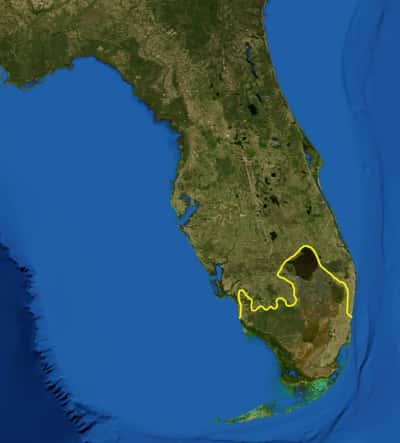
The immigration detention center Florida built in the Everglades, widely known as Alligator Alcatraz, faces an uncertain future as the state waits for federal money to cover the hundreds of millions of dollars it has already spent and weighs whether the controversial facility will remain open. State officials have confirmed they are in talks with federal authorities over the facility's future, raising the prospect that one of the most prominent symbols of Florida's aggressive immigration enforcement could close earlier than anticipated.
The facility, hastily constructed in a remote stretch of the Everglades, became a national flashpoint over immigration policy, environmental concerns and the fraught relationship between state and federal funding. Now the questions surrounding it, including who ultimately pays and whether it continues operating, illustrate the financial and political complexities of Florida's decision to take an outsized role in immigration detention.
The funding standoff
At the heart of the facility's uncertainty is money. Florida has spent heavily to build and operate the detention center, with reported costs running into the hundreds of millions of dollars and daily operating expenses estimated in the range of three quarters of a million dollars or more. The state initially sought a large federal grant, applying for nearly $1.5 billion in federal funding to sustain the operation, but the flow of federal dollars has been anything but smooth.
Federal funding for the facility was stalled for months amid an environmental review, with authorities at one point blocking a major grant pending that review before later lifting the hold. Even after Florida became eligible for a federal grant of more than $600 million, the actual money had not materialized as of recent reporting, leaving the state covering the costs while it awaited reimbursement that had been promised but not delivered.
That gap between commitment and cash is the crux of the problem. Florida fronted the expense on the expectation of federal reimbursement, but with the dollars slow to arrive, the state has effectively financed a federal immigration function out of its own budget, raising questions about whether and when it will be made whole. The uncertainty over reimbursement is directly tied to the questions now being raised about the facility's future.
Talk of an earlier closure
The financial strain has fed speculation that the detention center could close sooner than expected. The governor confirmed reporting that Florida officials are in talks with federal authorities over the future of the facility, an acknowledgment that the operation's continuation is not assured. For a facility that was built quickly and promoted prominently, the prospect of an early wind-down marks a significant turn.
The high operating costs make the calculus stark. Running the facility consumes a substantial sum each day, and absent reliable federal reimbursement, sustaining that expense indefinitely is a heavy lift for the state budget. The discussions with federal authorities appear aimed at resolving the fundamental question of who bears the ongoing cost, and the answer may determine whether the center stays open.
The possibility of closure underscores the gap between the political symbolism of the facility and the practical realities of operating it. Built and publicized as a demonstration of Florida's commitment to immigration enforcement, the center now faces the unglamorous test of whether its costs can be sustained, a test that its future may hinge on.
The Florida angle
The Everglades facility is the most visible piece of Florida's broader and expensive immigration enforcement effort, which has included joint operations with federal authorities and significant state expenditures. The state has positioned itself as a leading partner in immigration enforcement, and the detention center embodies that role, both its ambitions and its financial risks.
The fiscal stakes for Florida are considerable. The state has spent large sums on immigration-related activities broadly, and the detention center represents a major component of that spending. Whether the federal government ultimately reimburses those costs has direct implications for Florida taxpayers, who have effectively underwritten a federal function pending repayment that remains uncertain.
The facility also drew intense environmental scrutiny given its location in the ecologically sensitive Everglades, a factor that contributed to the funding delays through the environmental review process. The combination of immigration politics, environmental concerns and funding disputes made the center a uniquely contentious project, and those same factors now shape the debate over its future.
What it means for Floridians
For Florida taxpayers, the central concern is the money. The state has spent heavily on the facility with the expectation of federal reimbursement, and the slow arrival of those funds means Floridians have, at least for now, borne costs that were supposed to be federal. Whether the state recovers that money, and what happens to the facility, directly affects the state budget.
For the communities and environment surrounding the Everglades site, the facility's future carries implications for the sensitive ecosystem and for the surrounding area. The environmental review that delayed funding reflected genuine concerns about operating a detention facility in such a location, concerns that remain relevant to any decision about whether to continue or close the operation.
For the broader debate over immigration enforcement in Florida, the facility's trajectory is a case study in the gap between policy ambitions and fiscal sustainability. The state's willingness to build and operate a major detention center demonstrated its commitment to enforcement, but the funding standoff shows the limits of going it alone when federal reimbursement is uncertain.
The federal-state tension
The situation highlights a recurring tension in Florida's approach to immigration: the state has taken on functions traditionally handled by the federal government, but it depends on federal cooperation and funding to sustain them. The detention center crystallizes that dynamic, with Florida having built and operated a facility on the expectation of federal support that has proven slow and uncertain.
That tension is not unique to this facility. Across its immigration enforcement efforts, Florida has committed state resources to a federal policy area, creating a dependency on federal reimbursement and cooperation. When that support lags, as it has with the detention center funding, the state is left exposed, having spent money it expected to recover but has not.
The talks between state and federal officials over the facility's future are, in essence, an effort to resolve that tension for this specific case. The outcome will signal how the broader financial relationship between Florida and the federal government on immigration is likely to function, with implications well beyond the single facility in the Everglades.
The environmental dimension
The facility's location in the Everglades added a layer of controversy that distinguished it from other detention sites. The Everglades is one of the most ecologically significant and sensitive regions in North America, a vast wetland that has been the focus of decades of restoration efforts and billions of dollars in conservation investment. Placing a detention facility in such a setting raised immediate objections from environmental advocates concerned about its impact on the surrounding ecosystem.
Those environmental concerns were not merely symbolic; they directly affected the facility's funding. Federal authorities at one point blocked grant money pending an environmental review, a hold that stalled the dollars for months before being lifted. The review process reflected the genuine legal and ecological questions raised by operating a facility in the Everglades, and it contributed to the funding delays that have left Florida covering costs while awaiting reimbursement.
Environmental groups have remained engaged with the facility's fate, scrutinizing its operations and its effect on the surrounding wetlands. The intersection of immigration enforcement and Everglades conservation created an unusual coalition of critics, combining those opposed to the detention policy with those focused on protecting the ecosystem. That combination has kept the facility under sustained scrutiny from multiple directions.
The environmental questions also factor into any decision about the facility's future. Continuing to operate a detention center in the Everglades carries ongoing ecological and legal considerations, while winding it down would address those concerns. The environmental dimension thus intertwines with the financial one, as the facility's fate depends on resolving both the funding standoff and the questions surrounding its location.
The facility's trajectory has drawn national attention as a high-profile test of how far a state can go in taking on immigration detention. Its rapid construction and prominent promotion made it a symbol of aggressive enforcement, and its subsequent funding troubles have made it an equally prominent example of the practical difficulties such efforts encounter. The outcome will be watched well beyond Florida as other states weigh their own roles in immigration enforcement.
For the people held at the facility, the uncertainty over its future adds another layer to an already fraught situation. Decisions about whether the center continues operating affect not only state budgets and federal relations but also the individuals in custody and their cases, which proceed through the immigration system regardless of the facility's fate. The human dimension underlies the financial and political questions that dominate the public debate.
What's next
The discussions between Florida and federal authorities will determine the detention center's fate, including whether the promised federal funds finally arrive and whether the facility continues operating or winds down earlier than planned. The resolution of the funding question is likely to drive the decision about the facility's future.
For Florida, the episode offers lessons about the costs and risks of taking on federal functions in anticipation of reimbursement. However the specific situation is resolved, the experience of the Everglades detention center will inform the state's future decisions about how far to extend its role in immigration enforcement and how to structure the financial arrangements that underpin it. For now, the facility's future hangs in the balance, tied to the slow and uncertain flow of federal dollars.
Spotted an issue with this article?
Have something to say about this story?
Write us a letterComments
No comments yet. Be the first to weigh in.
Related Coverage
Democrat Nicole Locklin Challenges Longtime Rep. Mario Díaz-Balart in Redrawn 26th Congressional District
1h ago

SpaceX Launches Bandwagon-5 Rideshare From Cape Canaveral, Lighting Up a Brief Space Jellyfish Over Florida
18h ago

Kathy Castor and Mike Beltran enter final stretch of a tight race in a redrawn, Trump-leaning Tampa district
23h ago

G20 Summit at Trump National Doral Will Bring Road Closures and a Secret Service Security Zone to Miami-Dade in December
1d ago