Falcon 9 Lofts Three AST SpaceMobile BlueBird Satellites From Cape Canaveral in Predawn Launch
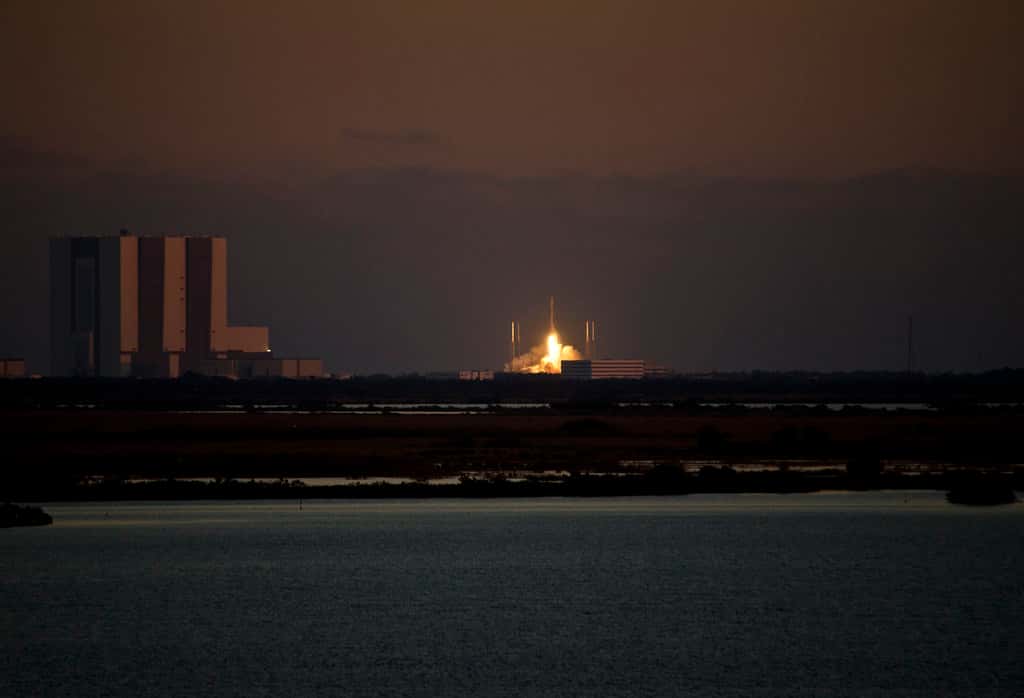
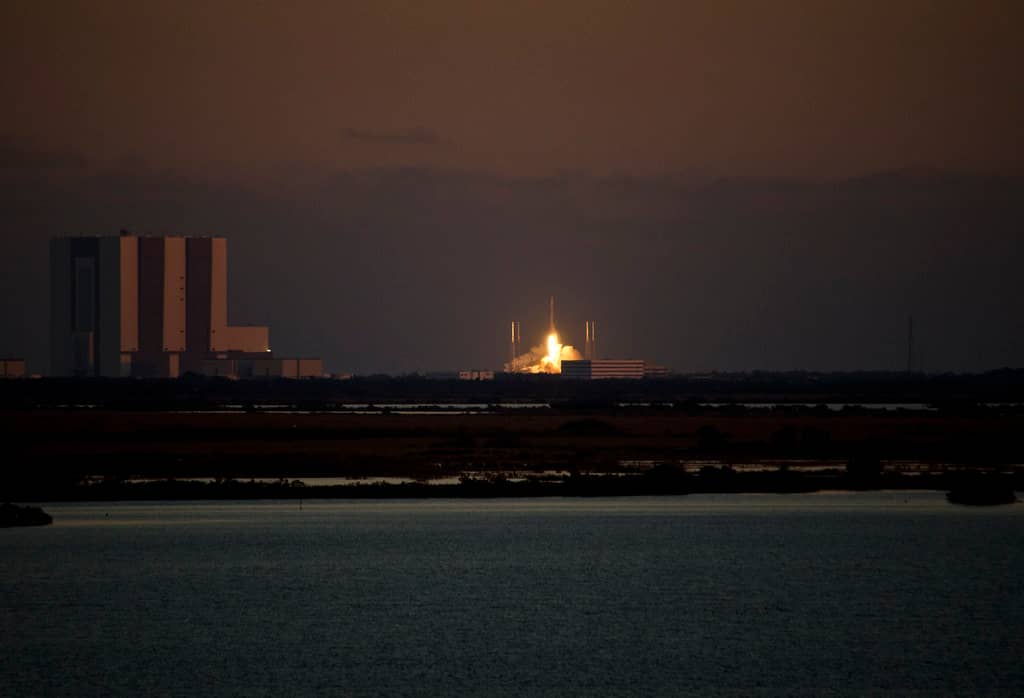
SpaceX launched three AST SpaceMobile BlueBird satellites from Cape Canaveral Space Force Station early Wednesday, with the Falcon 9 lifting off from Space Launch Complex 40 at 3:42 a.m. Eastern. The mission adds to a Space Coast launch cadence that has made Brevard County the busiest orbital launch site in the world and a substantial economic engine for Central Florida.
The BlueBird satellites belong to AST SpaceMobile's constellation, designed to provide cellular broadband connectivity directly to standard mobile phones from orbit without requiring specialized satellite handsets. The concept, generally described as direct-to-device connectivity, represents one of the more commercially ambitious efforts in the current satellite market.
The launch was one of many scheduled from Florida's Space Coast this year, with a Falcon Heavy mission also on the calendar from Kennedy Space Center later in August.
The direct-to-device concept
Conventional satellite communications require purpose-built ground equipment, whether a dish, a terminal, or a satellite phone with specialized antennas. Direct-to-device systems aim to eliminate that requirement by transmitting signals a standard smartphone can receive using its existing cellular radio.
The engineering challenge is substantial. A satellite in low Earth orbit is hundreds of kilometers from a phone whose antenna was designed to communicate with a cell tower a few kilometers away. Closing that link budget requires very large satellite antenna arrays, which is why the BlueBird satellites are physically among the larger commercial spacecraft flying.
The commercial proposition is coverage where terrestrial networks do not reach. That includes remote terrain, ocean areas, and, significantly for Florida, regions where terrestrial infrastructure has been damaged or destroyed.
Why this matters for Florida
The hurricane connection is the most direct Florida application. Storm damage regularly destroys cell towers and the fiber backhaul connecting them, leaving affected areas without communications precisely when residents most need to reach emergency services and family.
Restoring terrestrial networks after a major hurricane takes days to weeks depending on the severity of damage and the accessibility of the affected area. Carriers deploy portable cell sites to fill gaps, but those require road access and power.
A system that delivers connectivity to ordinary phones without any ground infrastructure would change post-storm communications substantially. Whether the technology delivers on that promise at scale remains to be demonstrated commercially, but the use case is one Florida understands better than almost anywhere.
The Space Coast economy
Brevard County's economy is built around the launch industry, and the current cadence represents a historic high. The county hosts Cape Canaveral Space Force Station, operated by the Space Force, and Kennedy Space Center, operated by NASA, with commercial operators leasing pads at both.
The industry supports employment well beyond launch operations, including manufacturing, engineering, range operations, logistics, and the supporting services that a concentrated technical workforce requires. Space Florida, the state's aerospace economic development authority, works to attract additional aerospace business to the state.
Launch tourism has become a meaningful contributor. Launches draw spectators to Brevard beaches and to viewing areas, filling hotels and restaurants, and the frequency of launches has turned what was once an occasional event into a recurring driver of visitation.
The cadence has also created challenges. Road capacity, housing costs, and workforce availability in Brevard County have all come under pressure as the industry has expanded.
How the Falcon 9 changed the economics
The Falcon 9's reusable first stage is the development that made the current launch rate possible. Boosters return to landing zones or to droneships at sea, undergo refurbishment, and fly again, with individual boosters completing many missions.
The economics that follow have reshaped the satellite industry. Lower launch costs make constellations of hundreds or thousands of satellites financially viable, which in turn has driven the growth of satellite internet and direct-to-device services.
The rate is now high enough that launch operations must be coordinated carefully with airspace and maritime traffic. The Eastern Range manages that deconfliction, and launch windows are set around air traffic, shipping, and weather.
The regulatory and environmental dimension
The pace of launch activity has drawn attention to environmental effects along the Space Coast. Launch operations produce noise and emissions, and the frequency of sonic booms from returning boosters has become a regular feature of life in Brevard County.
The Federal Aviation Administration licenses commercial launches and conducts environmental reviews under the National Environmental Policy Act. Those reviews have grown more consequential as launch rates have increased and as operators seek approval for higher annual cadences.
Coastal habitat is a specific concern given the proximity of launch facilities to the Merritt Island National Wildlife Refuge and Canaveral National Seashore, which host protected species including sea turtles nesting on adjacent beaches.
Florida's broader aerospace picture
SpaceX is the most active operator on the Space Coast but not the only one. United Launch Alliance operates from Cape Canaveral, Blue Origin has developed facilities in the area, and NASA conducts its own missions from Kennedy Space Center.
The state has worked to build aerospace capability beyond launch, including satellite manufacturing, research partnerships with Florida universities, and workforce development programs at state colleges in the region. Embry-Riddle Aeronautical University in Daytona Beach and the University of Central Florida in Orlando both feed the regional talent pipeline.
NASA's human spaceflight programs continue to route through Kennedy Space Center, keeping Florida central to the nation's crewed launch capability.
What a launch morning looks like on the Space Coast
A 3:42 a.m. liftoff is routine on the Space Coast in a way it would not be anywhere else, and the operational machinery behind it involves considerably more than the vehicle.
Launch windows are set by orbital mechanics. Reaching a specific orbital plane requires launching when the launch site rotates beneath it, which fixes the window to particular times of day and often produces overnight launches.
The Eastern Range, operated by Space Force personnel at Patrick Space Force Base and Cape Canaveral, manages the safety and coordination functions surrounding every launch. That includes clearing airspace and maritime areas downrange, tracking the vehicle, and maintaining flight termination capability if a vehicle deviates from its approved corridor.
Weather constrains launches through criteria that extend beyond wind and rain. Lightning potential, cumulus cloud thickness, and electric field readings all factor into launch commit criteria, because a vehicle ascending through a charged atmosphere can trigger a strike.
Recovery operations add another layer. Booster landings, whether at a landing zone on the Cape or on a droneship positioned offshore, require their own weather conditions, and sea state downrange has scrubbed launches that were otherwise ready.
The connectivity gap this technology targets
Direct-to-device satellite service addresses a problem that is easy to underestimate from an urban Florida perspective.
Substantial areas of the United States lack reliable cellular coverage, concentrated in mountainous terrain, sparsely populated regions, and offshore waters. Building terrestrial infrastructure into those areas is frequently uneconomic, since the cost of a tower and its backhaul cannot be recovered from the small number of users it would serve.
Florida has its own version of this gap. Coverage across the Everglades, in portions of the Big Bend, across large agricultural areas in the interior, and offshore in the Gulf and the Straits ranges from spotty to nonexistent.
Boaters face the issue most directly. Recreational and commercial vessels operating out of Florida ports move quickly beyond cellular range, and marine radio serves a different function than a phone call.
Agricultural operations in the state's interior face similar constraints, as do emergency responders working in remote terrain during search operations or wildfire response.
How Florida built its space economy
The state's position in the launch industry was not inevitable, and the reasons it developed here explain why it has persisted.
Geography did most of the work. Launching eastward over the Atlantic means expended stages and any failed vehicle fall into open ocean rather than over populated land. Florida's latitude provides an additional benefit, since launching closer to the equator captures more of the Earth's rotational velocity, increasing payload capacity for equatorial and geostationary orbits.
Federal investment built on that geography beginning in the 1950s, establishing the infrastructure that supported the Mercury, Gemini, Apollo, and Space Shuttle programs and creating a technical workforce concentrated in Brevard County.
The transition to commercial launch operations preserved that base while changing its character. When the Shuttle program ended, the region absorbed significant job losses, and the recovery came through commercial operators leasing pads and building their own facilities.
State policy supported that transition through Space Florida, which finances infrastructure and works to attract aerospace companies. The result is an industry that now launches at rates exceeding anything the government programs achieved.
The workforce that sustains it is the asset hardest to replicate elsewhere. Launch operations require technicians, engineers, range safety specialists, and logistics personnel with experience that takes years to develop, and that concentration of expertise in Brevard County is a substantial part of why operators continue choosing Florida over alternative sites.
Educational institutions feed that pipeline directly. Eastern Florida State College operates aerospace technology programs, the University of Central Florida supplies engineering graduates, and Embry-Riddle in Daytona Beach maintains one of the largest aerospace-focused enrollments in the country. The pipeline is a policy achievement rather than an accident of geography.
What's next
The Space Coast launch schedule continues through August, with a Falcon Heavy mission scheduled from Kennedy Space Center on August 30. Launch schedules routinely shift for weather, technical issues, and range availability.
AST SpaceMobile will continue building out its constellation, with commercial service capability scaling as additional satellites reach orbit. Direct-to-device services face regulatory questions around spectrum coordination in addition to the engineering challenges.
For Floridians, the immediate value is straightforward: another launch, another economic contribution to Brevard County, and another step toward a technology whose most compelling application in this state involves the weeks after a hurricane, when the towers are down and the phones still need to work.
Spotted an issue with this article?
Have something to say about this story?
Write a letter to the editor