Federal Case Over an Explosive Device at MacDill Air Force Base Advances With One Suspect in China
A federal case involving an improvised explosive device found outside MacDill Air Force Base in Tampa has advanced, with prosecutors saying the man charged with planting it fled the country to China while his sister remains in custody in the United States on charges of helping him escape and tampering with evidence.
Alen Zheng, 20, faces federal charges including attempting to damage government property, unlawfully making a destructive device, and possessing an unregistered destructive device. Ann Mary Zheng, 27, was booked on charges of witness tampering and acting as an accessory after the fact. Both have been charged; neither has been convicted, and the allegations remain to be proven in court.
MacDill is among the most strategically significant military installations in the United States, hosting the headquarters of United States Central Command and United States Special Operations Command. An incident at its perimeter carries national security implications well beyond Tampa Bay.
What prosecutors allege
According to federal court filings, a 911 bomb threat was reported on March 10. The device itself, later identified as a potentially deadly improvised explosive, was not located until March 16 near the base's visitor center.
Investigators allege that Alen Zheng planted the device on March 10 before placing the 911 call that alerted authorities to its presence. Prosecutors have connected the alleged plot to the period surrounding conflict involving Iran, according to court documents described in reporting on the case.
The day after the 911 call, according to the allegations, the Zhengs sold a Mercedes-Benz SUV and flew to China. Ann Mary Zheng returned to the United States several days later. Alen Zheng has not returned.
Prosecutors have said Alen Zheng could face up to 40 years in prison if convicted on the charges as filed. These are allegations contained in an indictment, which is a formal accusation rather than a finding of guilt.
The extradition problem
The central practical obstacle in the case is that the United States and China do not have a bilateral extradition treaty. That absence means the ordinary mechanism for returning a charged defendant to face trial is unavailable.
Federal prosecutors in cases involving defendants who have left for countries without extradition arrangements typically pursue several parallel avenues. These can include Interpol notices, requests for deportation on immigration grounds if the individual's status in the destination country permits it, and monitoring for travel to third countries that do have extradition agreements with the United States.
None of those approaches guarantees a result, and cases can remain open for years without a defendant appearing. Indictments do not expire in the same way charging deadlines do once a case has been formally filed.
The practical consequence is that the prosecution most likely to reach trial in the near term is the one against Ann Mary Zheng, who is in custody in the United States.
Recent security activity at MacDill
MacDill has experienced additional security incidents in recent weeks. The base raised its force protection condition to FPCON Charlie following a suspicious package investigation, and a shelter in place order issued after a reported threat was lifted the following day once officials determined the threat had been cleared and reopened the gates.
Force protection conditions are a graduated system used by the Department of Defense to communicate the assessed level of terrorist threat and to trigger corresponding security measures. FPCON Charlie indicates that an incident has occurred or that intelligence indicates likely terrorist action against personnel or facilities, and it produces visible changes in base access procedures.
For the roughly tens of thousands of service members, civilian employees, contractors, and family members connected to MacDill, elevated conditions mean longer gate lines, additional vehicle inspections, and restricted access for visitors.
Base security actions are handled by the installation's security forces in coordination with federal law enforcement, and incidents involving potential explosives bring in the Federal Bureau of Investigation and the Bureau of Alcohol, Tobacco, Firearms and Explosives.
Why MacDill matters
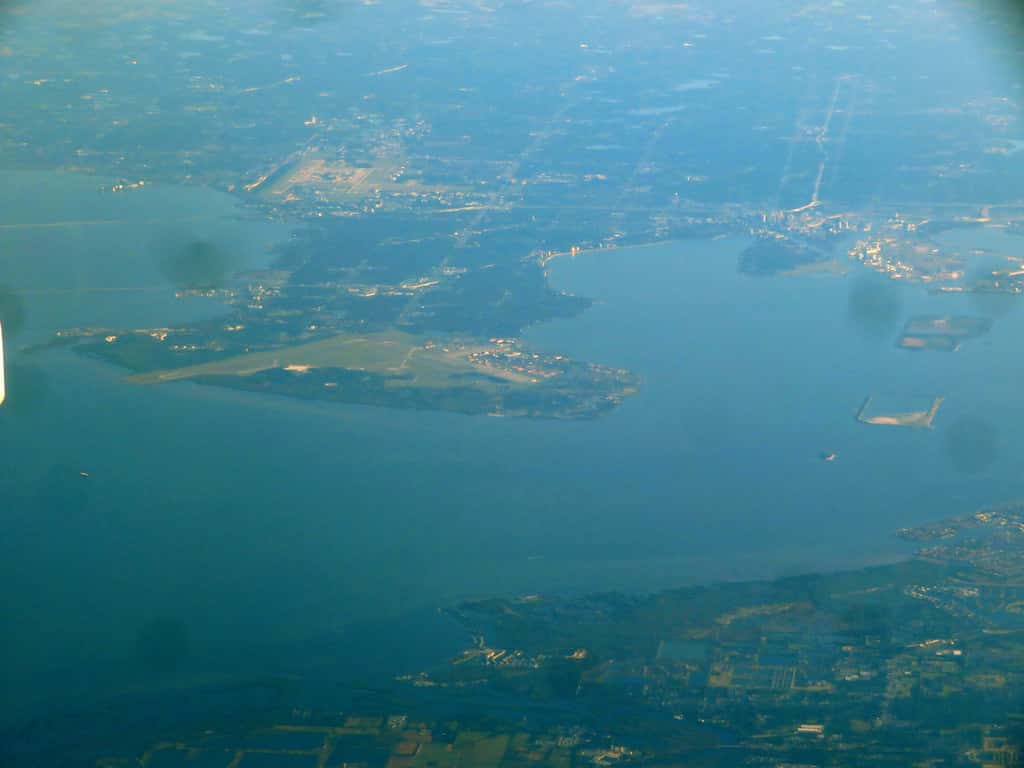
MacDill Air Force Base occupies the southern tip of the Interbay Peninsula in Tampa. Its host unit operates aerial refueling aircraft, but its national significance derives from the combatant commands headquartered there.
United States Central Command directs American military operations across the Middle East, Central Asia, and parts of South Asia. United States Special Operations Command oversees special operations forces across all military branches.
That concentration makes MacDill a location where decisions affecting overseas operations are made daily, and it explains why security incidents at the installation draw federal attention disproportionate to their physical scale.
The base is also a major economic presence in Hillsborough County, employing thousands and generating substantial regional economic activity through payroll, contracting, and family spending.
What it means for Floridians
Florida hosts an unusually large concentration of military installations, including Eglin Air Force Base in the Panhandle, Naval Air Station Pensacola, Naval Station Mayport and Naval Air Station Jacksonville in Northeast Florida, Tyndall Air Force Base near Panama City, Patrick Space Force Base on the Space Coast, and Homestead Air Reserve Base in South Florida.
Security at those installations affects surrounding communities directly. Gate closures produce traffic effects on public roads, and force protection changes alter access for the civilian workforce and for family members.
The federal charges also illustrate the jurisdictional structure that governs incidents on and adjacent to military property. Offenses against federal property are prosecuted in federal court, in this case the Middle District of Florida, rather than by state prosecutors.
For residents near MacDill, the practical guidance during elevated conditions is to allow additional time at gates and to follow instructions from base security during any shelter in place order.
How federal charges of this type work
The charges filed in this case fall into categories that carry distinct elements, and separating them clarifies what prosecutors must prove.
Attempting to damage government property requires proof of an attempt and of intent, meaning prosecutors must establish that the defendant took a substantial step toward damaging federal property with the intent to do so. An attempt charge does not require that damage occurred.
Unlawfully making a destructive device and possessing an unregistered destructive device arise under federal firearms law, which classifies certain explosive devices as items requiring registration in the National Firearms Registration and Transfer Record. Devices meeting the statutory definition of a destructive device cannot lawfully be registered by most private individuals, which makes possession itself the offense.
Witness tampering and accessory after the fact, the charges against Ann Mary Zheng, address conduct occurring after an underlying offense. Accessory after the fact requires proof that the defendant knew an offense had been committed and assisted the principal in avoiding apprehension or trial.
Every element must be proven beyond a reasonable doubt to a unanimous jury, and the defendants are presumed innocent throughout. An indictment establishes that a grand jury found probable cause, which is a substantially lower standard.
Investigating a device near a federal installation
Incidents involving suspected explosives near military installations trigger a layered response that involves both military and civilian authorities.
Installation security forces control access and establish perimeters on base property. Explosive ordnance disposal personnel handle assessment and rendering safe of any suspected device. Off installation, local law enforcement bomb squads and federal agencies take the lead depending on jurisdiction.
The Federal Bureau of Investigation typically leads investigations of suspected terrorism or attacks on federal property, working with the Bureau of Alcohol, Tobacco, Firearms and Explosives, which has specialized expertise in explosive device forensics and maintains national databases of device signatures.
Device forensics can be highly informative. Components, construction methods, and materials frequently leave traces that connect a device to purchases, to a location, or to a specific individual. The six day interval between the reported threat and the discovery of the device in this case reflects the difficulty of searching a large area for an object whose location is not precisely known.
Prosecution occurs in federal district court because the alleged conduct involved federal property, and in this instance the Middle District of Florida has jurisdiction over Tampa.
Force protection conditions explained
The system MacDill used when it raised its posture is standardized across the Department of Defense, and knowing what the levels mean helps residents interpret news from any Florida installation.
FPCON Normal applies when no particular threat is identified. FPCON Alpha indicates a general threat of possible terrorist activity that is unpredictable. FPCON Bravo indicates an increased and more predictable threat, and it involves measures that can be sustained for extended periods.
FPCON Charlie, the level MacDill reached, applies when an incident has occurred or when intelligence indicates likely terrorist action against personnel or facilities. Measures at that level noticeably affect base operations, including reduced access points, more thorough vehicle inspections, and restrictions on visitors.
FPCON Delta is the highest level and applies to a specific location where an attack has occurred or is imminent. It is normally localized and short in duration because it is not sustainable operationally.
Installation commanders set these levels based on threat assessments, and they may apply different conditions to different parts of an installation. For surrounding communities, the visible effects are traffic backups at gates and, occasionally, temporary closures of adjacent public roads.
What's next
The case against Ann Mary Zheng proceeds through the Middle District of Florida, where the standard sequence involves arraignment, pretrial motions, and either a plea or a trial. Defendants are presumed innocent throughout.
The case against Alen Zheng remains pending, and its progress depends on whether he can be returned to the United States. Absent extradition arrangements with China, that outcome is uncertain.
Court filings in federal cases are generally accessible through the public docket, which is where the substantive allegations and the defense responses will appear as the case develops.
MacDill's security posture is set by the installation commander based on threat assessments, and changes are communicated through base channels and local media when they affect public access.
Spotted an issue with this article?
Have something to say about this story?
Write us a letterComments
No comments yet. Be the first to weigh in.
Related Coverage

U.S. Exports to Cuba Hit a Record $202.5 Million in August as Fuel Sold to Private Firms Makes America the Island's Top Supplier
1h ago
Seven Florida Cases Are Part of the Justice Department's Largest Push Yet to Strip Citizenship From Naturalized Americans
1h ago

Proposed 2030 Census Rule Could Cost Florida a House Seat, and Count Snowbirds as Floridians
2h ago
Alligator Alcatraz Is Closed, but Florida Is Still Chasing More Than $500 Million in Federal Reimbursement
6h ago