Alligator Alcatraz Is Closed, but Florida Is Still Chasing More Than $500 Million in Federal Reimbursement
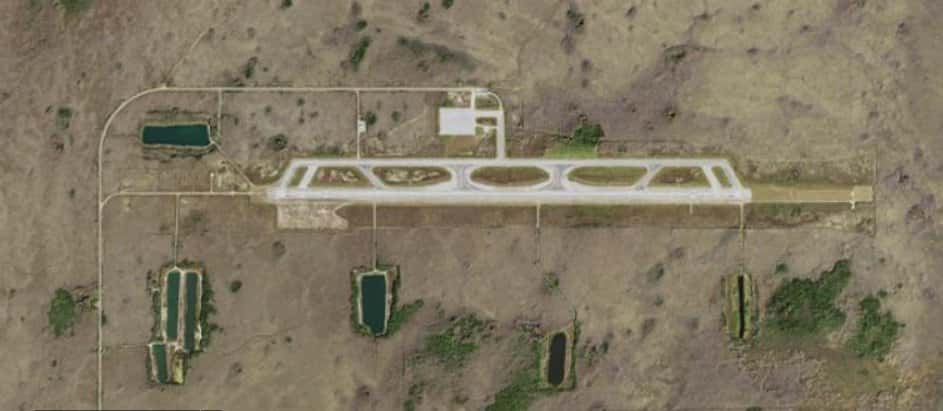
The Everglades immigration detention center Florida called "Alligator Alcatraz" closed in June, but the bill for it is still open. The state has spent about $1 billion on the site and is still owed more than $500 million under a $608 million FEMA grant, according to WLRN and WUSF, and two federal watchdog reports released in the past month have given Washington fresh reasons to look hard at what it pays.
A Government Accountability Office report found that U.S. Immigration and Customs Enforcement never finalized a contract or formal agreement with Florida before detainees arrived and that the state's approved rate was far above what ICE typically pays. A separate report from the Department of Homeland Security's Office of Inspector General found the facility failed basic detention standards. Neither report concludes Florida violated the terms of its grant, but together they leave Florida taxpayers with no guarantee they will not cover part of the final cost, WPTV reported.
Where the money stands
The federal government did not pay for the facility directly. DHS is reimbursing the state through a FEMA grant created for Florida, which GAO said was the sole eligible recipient of the program FEMA and ICE began developing in April 2025. FEMA later approved adding Baker Correctional Institution in North Florida, the state-run immigration detention center known as the "Deportation Depot," to the same grant.
Payments have been slow. The first reimbursement, $58,292,145, was approved by FEMA in May 2026, two months after federal officials lifted environmental holds on the grant, WUWF reported. Coverage of the GAO report put disbursements at roughly $58.2 million as of May. As of WPTV's reporting this month, USAspending.gov showed just over $134 million paid out from the grant, meaning additional money has flowed since spring, but most of the award remains unpaid.
The timeline below shows how the money and the oversight have moved.
| Date | Development |
|---|---|
| April 2025 | FEMA and ICE begin building the grant program |
| July 2025 | Alligator Alcatraz opens in the Everglades |
| 2025 | FEMA awards Florida about $608 million |
| March 2026 | Environmental holds on the grant lifted |
| May 2026 | First payment of about $58.3 million approved |
| June 2026 | Facility closes |
| September 2026 | DHS inspector general report released |
| October 2026 | GAO report; USAspending shows about $134 million paid |
The grant covers operating costs only. FEMA's rules allow reimbursement for items such as staff salaries, meals, bedding, hygiene and janitorial supplies, medical supplies, and legal and translation services, but not construction or modifications at the Everglades site, according to WUWF.
What GAO found
GAO reviewed six ICE detention expansion efforts, including Guantanamo Bay, military installations, warehouses, purchased facilities, federal prisons and Florida's state-run sites. Its broad conclusion was that ICE lacked a plan. "I think our main takeaway is that there was no plan for ICE to proceed with these different initiatives," GAO Director Heather MacLeod told WUSF.
On Florida, MacLeod said ICE "didn't have a contract or agreement with the state authorizing its use" as a detention facility. Officials told GAO it took eight days to get everything in order when the site opened.
The cost comparison is what could matter most for reimbursement. GAO found Florida's approved rate was $249 per detainee per day, while ICE's reported median detention bed rate is $92 per day, a difference of 171%, according to WPTV.
GAO recommended that ICE develop a comprehensive plan laying out goals, activities and resources. ICE agreed but said the plan will take almost another year, a timeline MacLeod said does not match the urgency of the findings. GAO is also preparing a separate report on ICE expansion costs, expected before the end of the year. The review was requested by Democratic Sens. Jack Reed of Rhode Island, Gary Peters of Michigan and Dick Durbin of Illinois, and Rep. Bennie Thompson of Mississippi.
What the inspector general found
The DHS inspector general's report, based on an unannounced inspection in January 2026, found the facility did not meet standards for environmental health and safety, medical care, food service and personal hygiene, according to WPTV and WLRN. Staff could not clearly identify which detention standards applied, and the facility provided no written policy specifying them.
The most striking finding involved what the report called "small metal enclosures." Facility records showed 79 detainees were placed in them between July 17, 2025, and Jan. 18, 2026, each with about 18 square feet of floor space, for periods from several minutes to nearly two hours. "Use of these small metal enclosures for any reason is unprecedented among detention facilities OIG has inspected," the report said, according to WLRN. Dormitories provided 28 square feet per detainee at maximum capacity, which the report called "well below the required minimum." DHS has said Florida, not DHS, ran the facility's day-to-day operations.
Does any of this put the money at risk?
Not automatically. The grant does not include typical termination language, but it requires a detailed cost breakdown and justification for every reimbursement request, and FEMA can review spending, conduct audits and challenge costs it considers unreasonable, WPTV reported.
"I think what these reports and the findings in them do is create a potential basis for scrutiny," Anthony Palermo, a Stetson University law professor, told WPTV. He cautioned that a deviation from the expected standard does not necessarily mean funding will be withheld, but said "there is always a chance that there could be an audit or even an investigation" into reimbursements already granted.
Florida's response
State officials have brushed the reports aside. "Nobody takes the GAO seriously. Illegal immigration costs the American taxpayers hundreds of billions of dollars annually," a spokesperson for the Florida Division of Emergency Management told WLRN and WUSF. Gov. Ron DeSantis has dismissed the federal findings and told WPTV last month that additional federal money continues to flow to the state. Neither the governor's office nor FDEM answered WPTV's questions about how the reports could affect funding.
A DHS spokesperson told WUSF that costs tied to the department's property acquisitions were "appropriate and necessary." Separately, a federal environmental lawsuit over the site is still pending. The state filed a motion to dismiss this month, and Center for Biological Diversity attorney Elise Bennett said the GAO's findings on planning support the plaintiffs' case, WUSF reported.
What's next
Federal officials still have to decide whether each of Florida's remaining reimbursement requests meets the grant's requirements, and the GAO's $249 versus $92 comparison gives reviewers a ready benchmark. Until FEMA pays or rejects the remaining claims, the gap between the roughly $1 billion Florida spent and the money it has received stays on the state's books. GAO's forthcoming cost report could add more pressure before the end of the year.
Spotted an issue with this article?
Have something to say about this story?
Write us a letterComments
No comments yet. Be the first to weigh in.
Related Coverage

Florida Voters Face Few New Rules on Nov. 3 as Other GOP States Roll Out Citizenship and ID Laws
22h ago

Florida Leads the Nation in ICE Detainer Arrests as Local Police Take a Growing Role, New Data Show
23h ago
Federal Government Again Asks Miami Judge to Toss Lawsuit by Nearly 1,000 Cubans With I-220A Papers
23h ago

Alvaro Pulido, Alex Saab's Longtime Partner, Heads to Miami Federal Court After Arrest in Venezuela Bribery Case
1d ago