Federal Courts Keep Narrowing ICE Detention Practices in Florida Cases
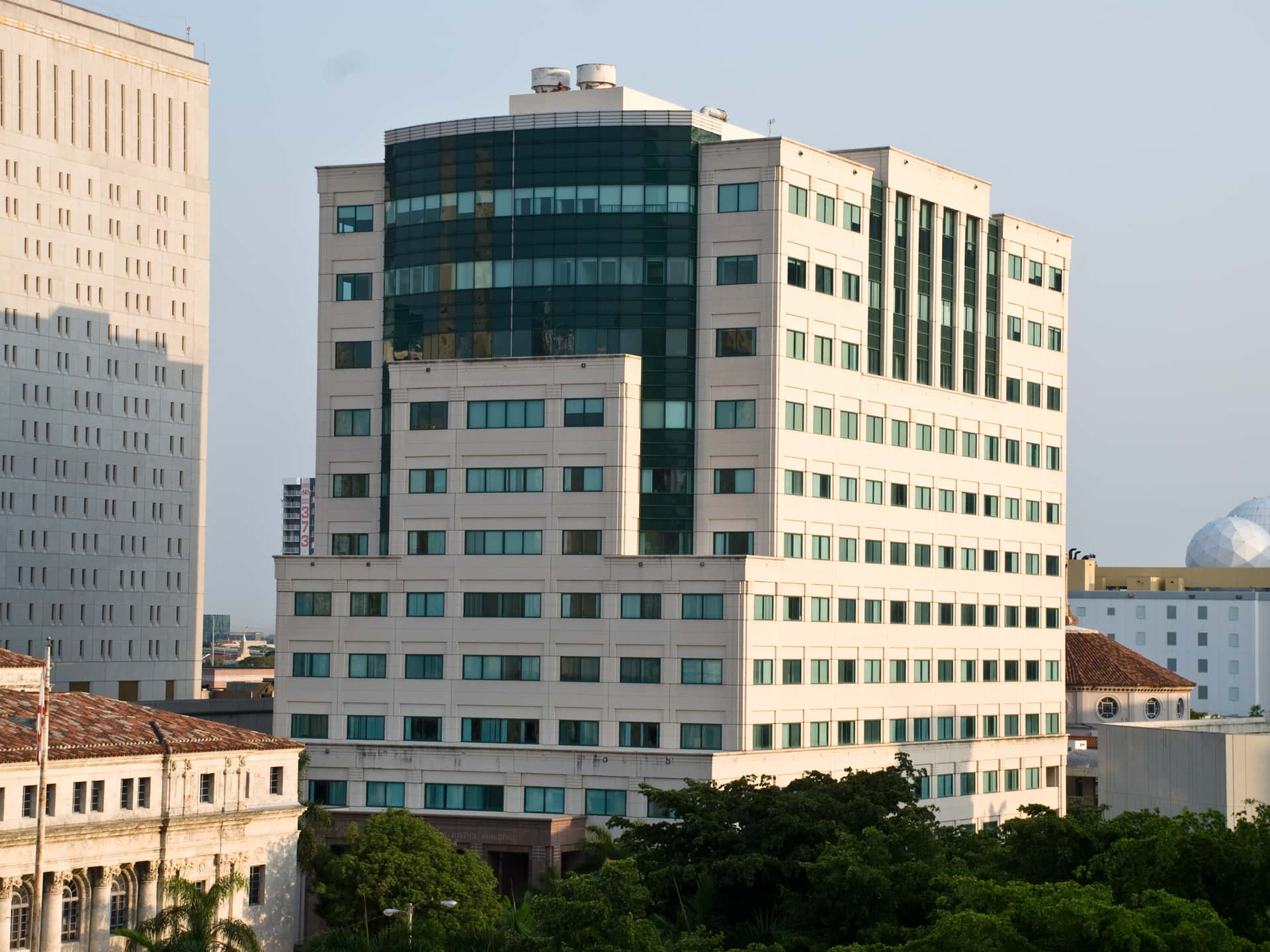
A federal judge in the Middle District of Florida ordered the release of an immigration detainee this month, granting a habeas corpus petition and giving the government 24 hours to comply. The ruling by Judge Sheri Polster Chappell held that the government violated due process, and it is the most recent in a series of decisions from Florida federal courts examining how immigration detention is authorized and reviewed.
The case involved a person arrested by Immigration and Customs Enforcement on July 2, 2026, on an administrative warrant, at a point when no criminal charges had been filed and no formal removal proceedings had been initiated. The court's reasoning, as described in reporting on the decision, was that immigration authorities cannot detain first and establish justification afterward.
The Florida stakes are unusually direct. The state hosts one of the largest immigrant populations in the country, its federal districts handle a substantial immigration docket, and the Eleventh Circuit, which sits in Atlanta and covers Florida, has become one of the venues where national detention policy is being tested.
What the ruling addressed
Habeas corpus is the mechanism through which a person in custody challenges the legality of that custody. In the immigration context it is the primary avenue available to someone detained without criminal charges, because immigration detention is civil rather than criminal and does not carry the procedural protections attached to a criminal arrest.
The administrative warrant at issue is issued by an immigration officer rather than a judge. It authorizes arrest for immigration purposes but is not the product of judicial review, which is the distinction at the center of the due process argument.
The court's holding, as reported, was that detention must be justified at the time it occurs rather than retroactively. That principle, applied broadly, constrains a practice in which a person can be held while the government determines what proceedings to initiate.
A district court ruling binds the parties before it and does not establish circuit-wide precedent. Its significance lies in the reasoning, which other litigants can invoke, and in the pattern it forms with other decisions.
The broader litigation
Earlier in 2026, a federal appeals court ruled against the administration's mandatory detention policy, with the Eleventh Circuit among the courts weighing whether people in immigration detention are entitled to bond hearings. The circuits have divided on that question, which is the classic condition for Supreme Court review.
The Supreme Court is expected to take up the issue when its term begins in October 2026. A ruling would resolve the split and establish a uniform national rule, replacing the current situation in which a detainee's eligibility for a bond hearing depends substantially on geography.
Separately, a federal judge in June barred ICE from conducting arrests at immigration courts and from prolonged detention in certain circumstances. Courthouse arrests have been contested because they discourage attendance at proceedings, which undermines the functioning of the immigration court system itself.
Florida has also been at the center of litigation over detention facility construction and operation, including a facility in the Everglades that drew federal court attention and congressional scrutiny during 2025.
The Florida context
Florida's immigrant population is large and diverse, with substantial communities of Cuban, Haitian, Venezuelan, Nicaraguan, Colombian and Mexican origin, alongside significant populations from across the Caribbean and Central America. Immigration policy is not an abstract federal matter in Florida; it affects household composition, workforce availability and local economies directly.
The state has also pursued its own enforcement posture. Florida enacted immigration legislation creating state-level enforcement mechanisms, and portions of that framework have themselves been challenged in federal court, with a judge rebuking the state over aspects of its enforcement earlier in this period.
Enforcement activity continues alongside the litigation. Florida Attorney General James Uthmeier announced this week the arrest of a person he identified as an undocumented immigrant on a charge of battery on a law enforcement officer in Fort Myers, an example of the state-federal enforcement interaction that operates in parallel with the detention cases.
Florida's agricultural, construction, hospitality and health care sectors employ substantial immigrant workforces. Employers in those industries have consistently reported labor availability effects from enforcement activity, and those effects reach consumer prices and project timelines.
What it means for Floridians
For families with members in immigration proceedings, the practical significance is whether a bond hearing is available. The difference between detention throughout a case and release on bond determines whether someone continues working, whether a household retains income and whether a person can meaningfully participate in preparing their own defense.
For employers, detention practices affect workforce stability. Sectors that depend on immigrant labor experience disruption when workers are detained, and that disruption reaches operations regardless of any individual case outcome.
For the broader public, the immigration court backlog is the structural context. Cases routinely take years to resolve, and detention policy determines whether people spend that period in custody or in the community. The scale of the backlog means the policy question affects a very large number of people.
Local impact across the state
South Florida carries the largest concentration of affected communities, with Miami-Dade and Broward counties home to substantial populations from Cuba, Haiti, Venezuela and across Latin America. Immigration legal services organizations in the region operate at capacity.
Southwest and Central Florida have significant agricultural and hospitality workforces where enforcement activity produces measurable labor effects. Communities such as Immokalee and the agricultural areas of Hendry, Hardee and Palm Beach counties are directly affected.
Tampa Bay, Orlando and Jacksonville each host growing immigrant communities and the associated legal, social service and faith-based support infrastructure. The Middle District of Florida, which issued this month's ruling, covers a swath of the state including Tampa, Orlando, Jacksonville and Fort Myers.
How immigration detention differs from criminal custody
Immigration detention is civil, and that classification carries substantial consequences. A person arrested on a criminal charge receives a prompt appearance before a judge, appointed counsel if they cannot afford an attorney, and a bail determination under established standards. None of those protections apply automatically in immigration custody.
There is no right to appointed counsel in immigration proceedings. A person may hire an attorney or obtain representation from a nonprofit legal services organization, but if neither is available they proceed alone, including through hearings that determine whether they will be removed from the country.
Representation correlates strongly with outcomes, and detention makes obtaining it substantially harder. A detained person cannot easily contact attorneys, gather documents or arrange payment, which is why the availability of bond has consequences reaching well beyond the immediate question of custody.
The government's position in defending detention practices has generally been that immigration custody serves to ensure appearance at proceedings and to effectuate removal orders, purposes distinct from the punitive function of criminal detention. Courts examining due process claims weigh that stated purpose against the length and conditions of the detention actually imposed.
The Florida detention landscape
Florida hosts significant immigration detention capacity, operated through a mix of federal facilities, contracted private operators and county jails holding detainees under agreements with federal authorities. That distributed structure means detention conditions vary considerably by location.
The state also drew national attention during 2025 over a detention facility constructed in the Everglades, which became the subject of federal court proceedings and congressional inquiry. Litigation over that facility addressed environmental and operational questions distinct from the individual detention cases now moving through the courts.
County participation adds a local governance dimension. Agreements under which a county sheriff holds federal detainees generate revenue for the county and are approved locally, which makes them a subject of county commission debate in several Florida jurisdictions.
Immigration courts, which are administrative tribunals within the Department of Justice rather than part of the federal judiciary, operate at several Florida locations. Their backlog is substantial, and the interval between a case being filed and a merits hearing frequently extends for years, which is the context that makes detention policy consequential.
Why the circuits split
The disagreement among federal appeals courts concerns which statutory provision governs detention for people arrested in the interior of the country rather than at a border. Different provisions of immigration law carry different consequences: some make detention mandatory without a bond hearing, while others permit release on bond at the discretion of an immigration judge.
The government's position has generally been that a broader category of detainees falls under the mandatory provisions. Detainees have argued that the mandatory provisions apply narrowly and that the default rule permits bond hearings, with due process requiring individualized determination beyond a certain duration of custody.
Courts have resolved that question differently, which produces the current situation in which a person detained in one circuit may receive a bond hearing while a person in identical circumstances detained in another does not. Geographic variation of that kind in the application of a federal statute is what Supreme Court review exists to correct.
Because the Eleventh Circuit covers Florida, Georgia and Alabama, its rulings govern a large detained population. Whatever the Supreme Court decides will either ratify or displace the rule currently applied to Florida detainees, and either outcome will apply immediately to pending cases.
What is next
The Supreme Court term beginning in October is the decisive event. A ruling on bond hearing eligibility would apply nationally and would either preserve or eliminate the current variation between circuits.
Until then, district and circuit decisions continue to shape practice within their jurisdictions. Florida cases have generated a meaningful share of the litigation, and additional rulings from the Eleventh Circuit are likely before the Supreme Court acts.
State-level litigation over Florida's own enforcement statutes continues on a separate track. The interaction between state enforcement authority and federal immigration power is a distinct constitutional question from the detention issues, and it is being resolved in different cases on a different timeline.
Spotted an issue with this article?
Have something to say about this story?
Write us a letterComments
No comments yet. Be the first to weigh in.
Related Coverage

Florida Voters Face Few New Rules on Nov. 3 as Other GOP States Roll Out Citizenship and ID Laws
30m ago

Florida Leads the Nation in ICE Detainer Arrests as Local Police Take a Growing Role, New Data Show
57m ago
Federal Government Again Asks Miami Judge to Toss Lawsuit by Nearly 1,000 Cubans With I-220A Papers
1h ago
Alvaro Pulido, Alex Saab's Longtime Partner, Heads to Miami Federal Court After Arrest in Venezuela Bribery Case
2h ago