Florida Voters Face Few New Rules on Nov. 3 as Other GOP States Roll Out Citizenship and ID Laws
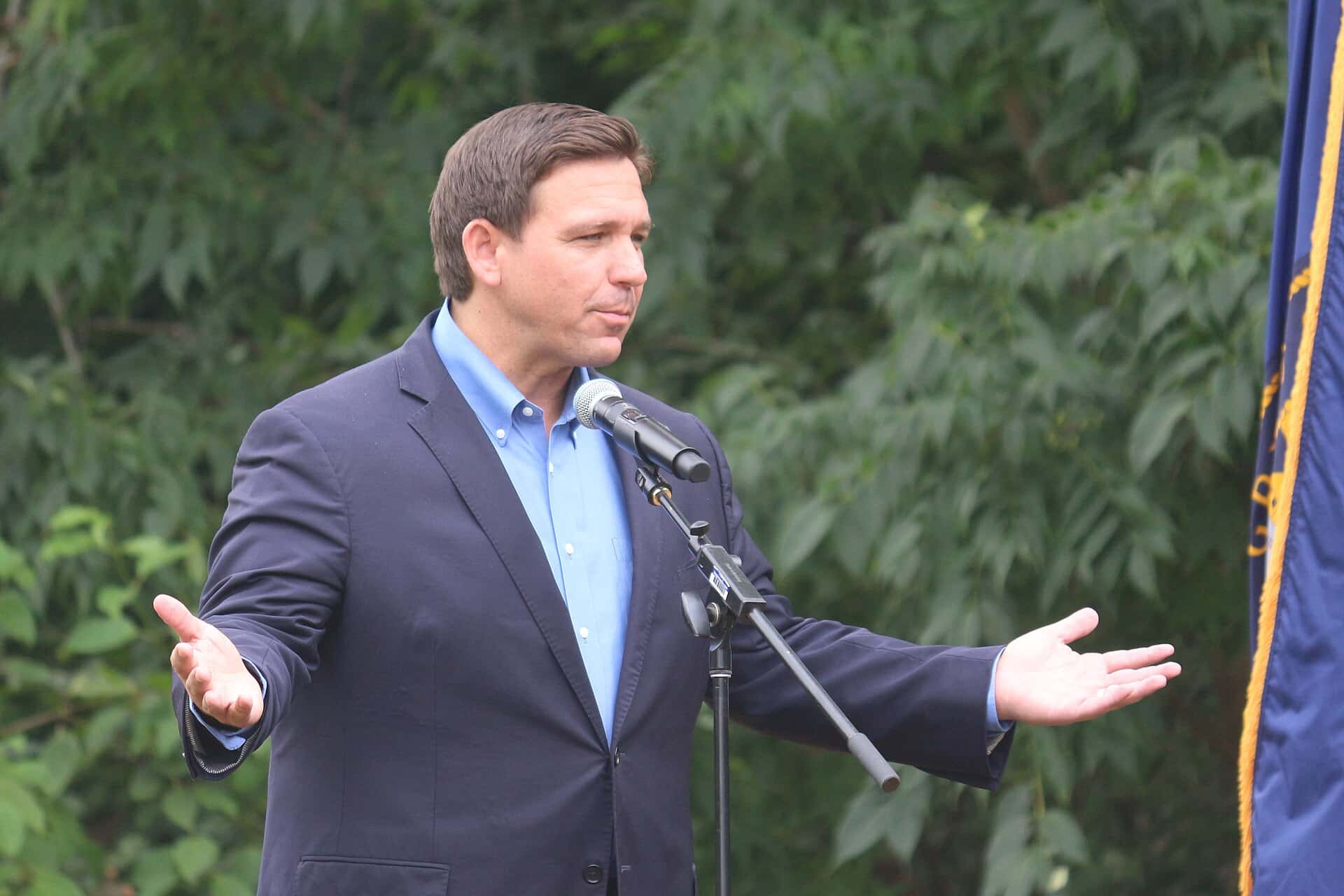
Florida voters heading to the polls for the Nov. 3 general election will cast ballots under rules that are largely unchanged from 2024, even as more than three dozen new voting laws take effect for the first time this year in other Republican-controlled states, according to an Associated Press review published Monday. Florida's own sweeping election overhaul, House Bill 991, was signed by Gov. Ron DeSantis on April 1, but its proof-of-citizenship, voter ID and paper-ballot provisions do not take effect until Jan. 1, 2027.
The parts of the law already in force deal mostly with candidates, campaign money and election-crime prosecutions rather than with how an ordinary voter registers or casts a ballot. That makes Florida something of an outlier in the AP's survey, which found that many states moved this year to put elements of President Donald Trump's stalled federal proposals, including proof of citizenship and tighter ID rules, in front of voters before the midterms.
What the AP found across the states
Trump has pushed Congress to pass a proof-of-citizenship law, signed an executive order seeking a national voter ID requirement and tried to limit mail voting through U.S. Postal Service changes. None of those moves succeeded in time to affect this year's midterm elections, the AP reported, but more than three dozen laws passed in Republican-led states are taking effect this year, many containing elements of his proposals.
Among the changes the AP highlighted:
- New Hampshire voters can no longer use student IDs at the polls.
- Utah voters returning mail ballots must include more information on the envelope.
- Some Mississippi voters may need birth certificates or passports to verify their identities.
- South Dakota now requires first-time registrants to present a driver's license, Tribal ID or non-driver state ID in person, a law the ACLU has sued to block.
- Ohio requires proof of citizenship for people registering or updating their registration at a Bureau of Motor Vehicles office, and it eliminated its four-day grace period for mail ballots, which now must arrive by Election Day.
The Brennan Center for Justice at New York University School of Law has identified nearly 40 laws in 21 states taking effect this election season that it says will make it harder for eligible voters to register, stay on the rolls or cast ballots. Supporters of the tighter rules describe them as common-sense safeguards. New Hampshire state Rep. Donald McFarlane told the AP his student ID bill applies the same government-issued ID standard to all voters, and Ohio state Sen. Theresa Gavarone said hundreds of noncitizens had been removed from her state's rolls in the past two years.
The U.S. Department of Justice recently announced charges in roughly 90 election misconduct cases, including 50 against people alleged to have voted as noncitizens, the AP reported. The country had 227 million registered voters for the 2024 presidential election.
What Florida's new law changes, and when
HB 991, sponsored in the Senate by Sen. Erin Grall, R-Vero Beach, passed the House 77-28 on final vote and the Senate 27-12 before DeSantis signed it in The Villages. It became Chapter 2026-26, Laws of Florida. According to the House's final bill analysis, the law's general effective date is Jan. 1, 2027, with several sections taking effect earlier. The table below summarizes the major provisions and when they apply.
| Provision | Effective | Applies Nov. 3? |
|---|---|---|
| Candidates must disclose any dual citizenship | April 1, 2026 | Yes |
| Candidates barred if they changed their name by petition within 365 days of qualifying | April 1, 2026 | Yes |
| Rival candidates or parties may sue to remove an unqualified candidate from the ballot | April 1, 2026 | Yes |
| Federal candidates must state whether they will trade stocks outside a blind trust or similar arrangement | April 1, 2026 | Yes |
| Ban on parties, committees and candidates accepting foreign national contributions | July 1, 2026 | Yes |
| Five-year statute of limitations for election-code felonies | July 1, 2026 | Yes |
| Certain petition-gathering crimes added to Florida's racketeering law | July 1, 2026 | Yes |
| Citizenship verification for voter registration | Jan. 1, 2027 | No |
| Revised list of photo IDs accepted at the polls | Jan. 1, 2027 | No |
| Ballots defined as hand-marked paper, with an accessible-device exception | Jan. 1, 2027 | No |
When the voter-facing provisions do take effect, supervisors of elections will have to verify the citizenship of applicants whose records do not show a Florida driver license, Florida ID card or Social Security number, or whose state motor vehicle records do not show citizenship. Acceptable proof will include a U.S. birth certificate, an unexpired U.S. passport, a naturalization certificate, a consular report of birth abroad, or a Florida license or ID that indicates citizenship. An applicant whose citizenship cannot be verified before voting will receive a provisional ballot, which will count only if citizenship is confirmed by the end of canvassing or the voter brings proof by 5 p.m. on the second day after the election.
The 2027 ID changes add a U.S. passport card and government-issued ID cards to the accepted list and remove debit and credit cards, student IDs, retirement center IDs, neighborhood association IDs and public assistance IDs. That student ID change mirrors the New Hampshire rule that is already in effect this year. The law also requires the Department of Highway Safety and Motor Vehicles to show a licensee's citizenship status on new and renewed licenses and ID cards by July 1, 2027.
Lawsuits filed the day it was signed
Two federal lawsuits were filed on April 1, WUSF reported. The Elias Law Group sued in the Northern District of Florida on behalf of the Florida NAACP and the Florida Alliance for Retired Americans. A second suit in the Southern District of Florida was brought by the League of Women Voters of Florida, UnidosUS, the Hispanic Federation, Common Cause, Florida Rising and Florida immigrant advocacy groups, with the ACLU, ACLU of Florida, LatinoJustice PRLDEF and Advancement Project as counsel. Both argue the law places unconstitutional burdens on the right to vote under the First and Fourteenth Amendments, and plaintiffs have said its documentation rules would fall hardest on naturalized citizens, low-income voters, married women who changed their names, students and seniors.
DeSantis said at the signing that the state constitution limits voting to American citizens, dismissed the expected lawsuits as a "song and dance" and predicted the state would win on appeal, according to WUSF. Grall called the changes "common sense." No ruling on the law had been reported as of Monday.
The federal fight over mail ballots
One Trump effort that could have reached Florida voters directly was blocked before ballots went out. On Sept. 14, the U.S. Supreme Court refused to let the Postal Service enforce a rule stemming from a March executive order that would have required states to give the agency lists of mail ballot recipients and use agency-approved envelopes with unique barcodes. Justices Samuel Alito and Clarence Thomas dissented. Florida's mail voting therefore proceeds under existing state law.
That matters in a state where millions vote by mail. Counties sent about 200,000 ballots to military and overseas voters in mid-September and mailed domestic ballots between Sept. 24 and Oct. 1, CBS News Miami and the News Service of Florida reported, with about 8 million Floridians expected to vote in the general election. "In 2026, the rules are exactly the same as they were in 2024," Amy Keith, executive director of Common Cause Florida, told the outlets.
Key dates for Florida voters
Voter registration for the general election closed on Oct. 5. The remaining deadlines are set by state law, and county supervisors of elections may add early voting days within the limits below.
| Date | What happens |
|---|---|
| Oct. 19 | Earliest optional early voting day counties may offer |
| Oct. 22, 5 p.m. | Deadline to request a mail ballot be sent to you |
| Oct. 24 to Oct. 31 | Mandatory statewide early voting period |
| Nov. 1 | Last optional early voting day counties may offer |
| Nov. 3, 7 a.m. to 7 p.m. | Election Day; mail ballots must reach the supervisor by 7 p.m. |
| Nov. 5, 5 p.m. | Deadline to cure a mail ballot signature problem |
Under Florida law, the request deadline is 5 p.m. local time on the 12th day before the election, and mandatory early voting runs from the 10th day through the 3rd day before an election with state or federal races. Counties may also offer early voting on the 15th through 11th days and on the 2nd day before the election. Palm Beach County, for example, is running early voting from Oct. 19 through Nov. 1, according to WPTV, while Okeechobee County is holding only the mandatory Oct. 24 to Oct. 31 period.
Voters who received mail ballots in 2024 should check their status. A 2021 state law makes each request valid only through the end of the calendar year of the next regularly scheduled general election, so requests made before or during 2024 expired, and voters had to ask again for 2026. A postmark does not count: ballots that arrive after 7 p.m. on Election Day are not counted, except for certain overseas ballots.
What's next
The Oct. 22 mail ballot request deadline is the next milestone, followed by the start of mandatory early voting on Oct. 24. After Nov. 3, attention turns to the federal lawsuits over HB 991, which will determine whether the citizenship verification and ID changes take effect as scheduled on Jan. 1, 2027, ahead of the 2028 presidential election. Voters can confirm their registration, mail ballot status and early voting sites through their county supervisor of elections.
Spotted an issue with this article?
Have something to say about this story?
Write us a letterComments
No comments yet. Be the first to weigh in.
Related Coverage

Florida Leads the Nation in ICE Detainer Arrests as Local Police Take a Growing Role, New Data Show
1h ago
Federal Government Again Asks Miami Judge to Toss Lawsuit by Nearly 1,000 Cubans With I-220A Papers
1h ago

Alvaro Pulido, Alex Saab's Longtime Partner, Heads to Miami Federal Court After Arrest in Venezuela Bribery Case
2h ago
SpaceX Targets Tuesday Dawn Launch From Cape Canaveral With Final Solar Arrays for the Space Station
21h ago