Record Sargassum Season Fades as Key West and UM Researchers Prepare for the Next Wave
The 2026 sargassum season is finally fading, but South Florida communities are already planning for the next one. Key West commissioners have voted to study a pilot program to keep the seaweed off a half-mile of the city's Atlantic beachfront. At the University of Miami, researchers are testing whether fly larvae can turn the rotting piles into animal feed and fertilizer. The two efforts follow one of the heaviest sargassum years on record.
The University of South Florida's Optical Oceanography Lab, which tracks the blooms by satellite, reported in its Sept. 30 bulletin that the total amount of sargassum in the Atlantic "belt" was halved from August, after being halved from July. The lab expects amounts to keep dropping until about November. It said beaching along Florida's southeast coast will continue, but not as severely as during the summer.
A summer of record seaweed
The USF lab's monthly bulletins trace how heavy this year got. In March, the lab forecast another major sargassum year that would likely set a record by summer. By the end of June, it reported record-high amounts in the Caribbean for that month. It also reported that the total in the Gulf had reached 5 million metric tons, nearly double the previous record set in 2025, and that severe beaching was being reported along Florida's southeast coast.
Amounts began to fall in July, a pattern the lab says is consistent with past years. Even so, the Gulf total stayed at a record for July, and the lab said 2026 was on track to be the second-largest sargassum year on record, behind only 2025. By September, the Gulf held about one-ninth of its July amount. Every region except the eastern Atlantic was still above the 75th percentile of historical levels for the month, and the amount in the western Caribbean had not changed.
Researchers are still debating why the blooms have grown so large since 2011, when the Great Atlantic Sargassum Belt first appeared. An April study in Nature, described by WLRN, argued that westerly winds shifted east between 2009 and 2011. That pushed sargassum off its historic path, stirred up nutrient-rich deep water and seeded the belt. The authors said earlier explanations, including fertilizer runoff from the Amazon and Congo rivers and Saharan dust, did not fully explain year-to-year swings.
Key West takes a first step
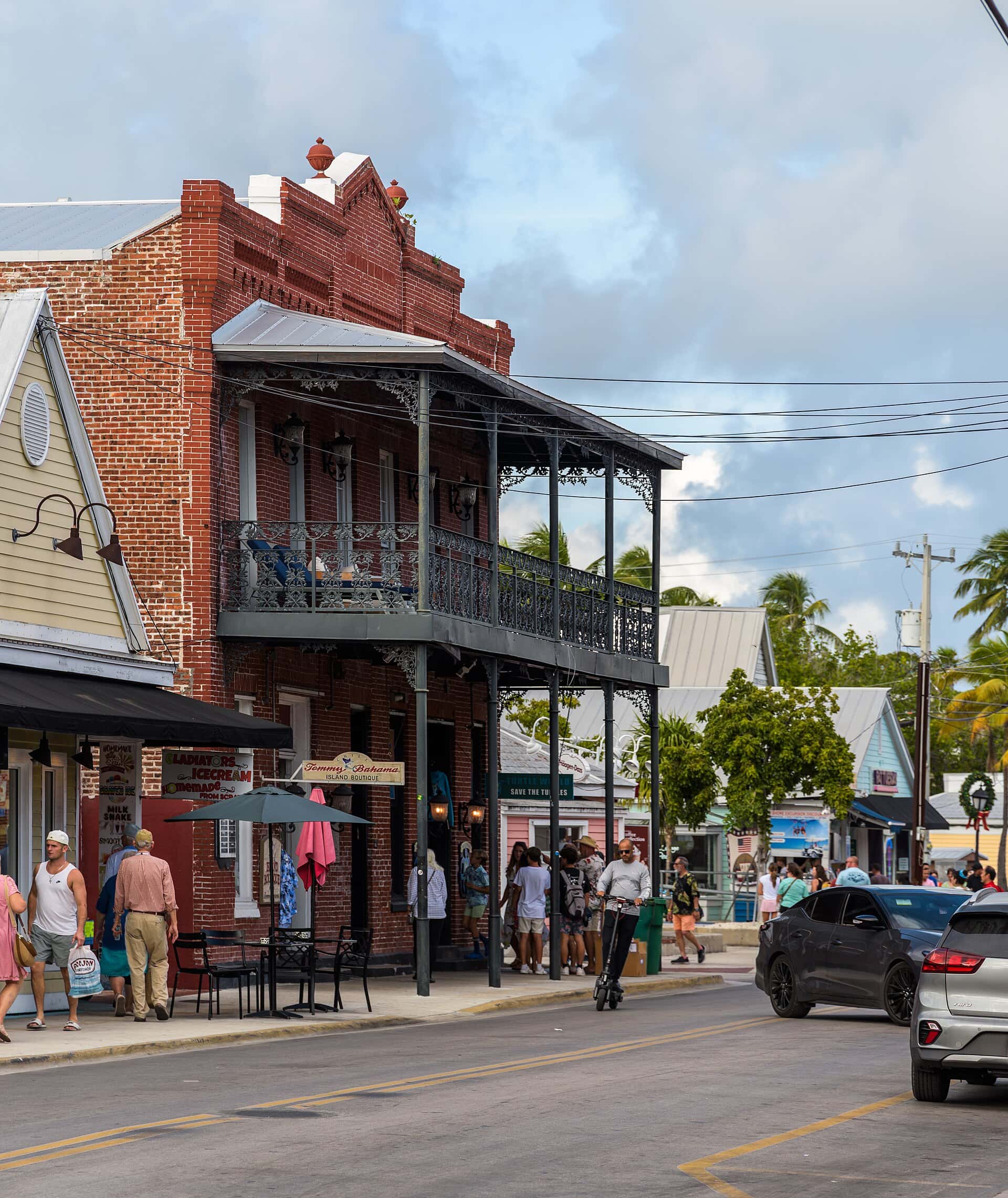
In Key West, Mayor Sam Kaufman sponsored a resolution to hire scientific and environmental consultants to determine whether removing sargassum from a half-mile stretch of the city's southern Atlantic coastline is feasible. The measure also directs the city manager to apply for grants and identify funding partners. It does not approve construction or any removal system, and a future project would need another commission vote, according to WLRN.
"We've heard that this is an emergency health problem for our residents," Kaufman said. He also called it an "emergency economic potential problem for our tourist industry." On timing, he said, "If we don't start now, we're not gonna be in place to do something by next spring."
The vote followed a Sept. 22 commission workshop on a sargassum management plan and how a pilot might be permitted. Local coverage of that workshop reported that one company, Golden Tides, proposed studying a floating barrier off the east end of Smathers Beach that would concentrate the seaweed so it could be pumped ashore, dewatered and processed. Any such project would need approval through the Florida Keys National Marine Sanctuary, which is managed by the National Oceanic and Atmospheric Administration.
Turning seaweed into feed
On the mainland, the University of Miami's Rosenstiel School is testing a different approach. Julio Camperio, a doctoral student in the school's aquaculture program, leads a two-year pilot that feeds beached sargassum to black soldier fly larvae. The wasp-sized fly is native to Florida and the Caribbean, and its larvae mature in nine to 14 days. They can then be ground into meal for livestock, fish and pets, and their waste, called frass, can be used as fertilizer.
Sargassum is too salty for the larvae to eat alone, so Camperio mixes it with farm and fish-processing scraps. His feedstocks have included damaged mangoes and bananas, offal from a Homestead salmon farm and university cafeteria leftovers, WLRN reported. "The idea is to provide local governments or local municipalities with either a tool or an additional tool to manage the sargassum in a relatively rapid cycle," Camperio said.
The project has more than $320,000 in seed funding from Florida Sea Grant and the Hinkley Center for Solid and Hazardous Waste Management, according to the University of Miami. The plan calls for modular, climate-controlled container units that could process beached seaweed in coastal communities. Daniel Benetti, director of the school's aquaculture program, said in a university release, "We're turning an environmental burden into a coastal value solution."
The arsenic problem
The main obstacle to reusing sargassum is what it carries. The seaweed absorbs arsenic and heavy metals, which limits how it can be used. In 2022, UM worked with Hallandale Beach on composting tests that found sargassum compost usable commercially but restricted for residential and food use. Fort Lauderdale has used traditional composting to cut disposal costs.
The Hinkley Center grant pays for testing whether fly larvae and other decomposers, such as worms, can remove arsenic, the university said. At least one study has found that black soldier fly larvae can convert arsenic into a nontoxic form, and the UM rearing system is designed to keep inorganic arsenic from getting back into soil or water. In 2025, the organization that sets animal feed nutrition standards approved black soldier fly meal for livestock, opening a market for the product if the arsenic issue can be managed.
Costs and health concerns
The seaweed is expensive to deal with. Miami-Dade County spends about $4 million a year cleaning its beaches, and a 2025 scientific estimate put the economic toll on southeast Florida alone above $2.5 billion, WLRN reported.
Rotting sargassum also releases hydrogen sulfide, the gas behind its rotten-egg smell. The Florida Department of Health says people with respiratory conditions may be more sensitive to the gas. The department says the general public should not experience harmful health effects in open areas such as beaches, though the gas can irritate the eyes, nose and throat. The seaweed itself is not toxic, but tiny sea creatures living in it can irritate the skin.
What's next
Key West's consultants will have to report back before commissioners decide whether to fund a pilot, and Kaufman has said the goal is to have something in place by next spring. In Miami, the second year of the UM project calls for setting up small fly farms and mobile breeding labs near where sargassum piles up. USF's lab will keep publishing monthly outlooks. Those bulletins will give coastal managers their first look at whether 2027 will bring another record year.
Spotted an issue with this article?
Have something to say about this story?
Write us a letterComments
No comments yet. Be the first to weigh in.
Related Coverage
Florida's New Stormwater Pollution Credit Rules Draw Fire From Environmentalists and Industry Alike
1d ago
Lead pellets from shot iguanas linked to first known crocodile poisoning death in Florida
4d ago

DeSantis and Cabinet protect more than 10,770 acres, from Putnam County woods to Martin County ranches
Oct 4

Record King Tides and Heavy Rain Swamp South Florida Streets as Water Managers Warn the Season Peaks Oct. 27
Oct 2