Florida Buyers Watch the Fed as the September Meeting Approaches With Mortgage Rates Above 6 Percent
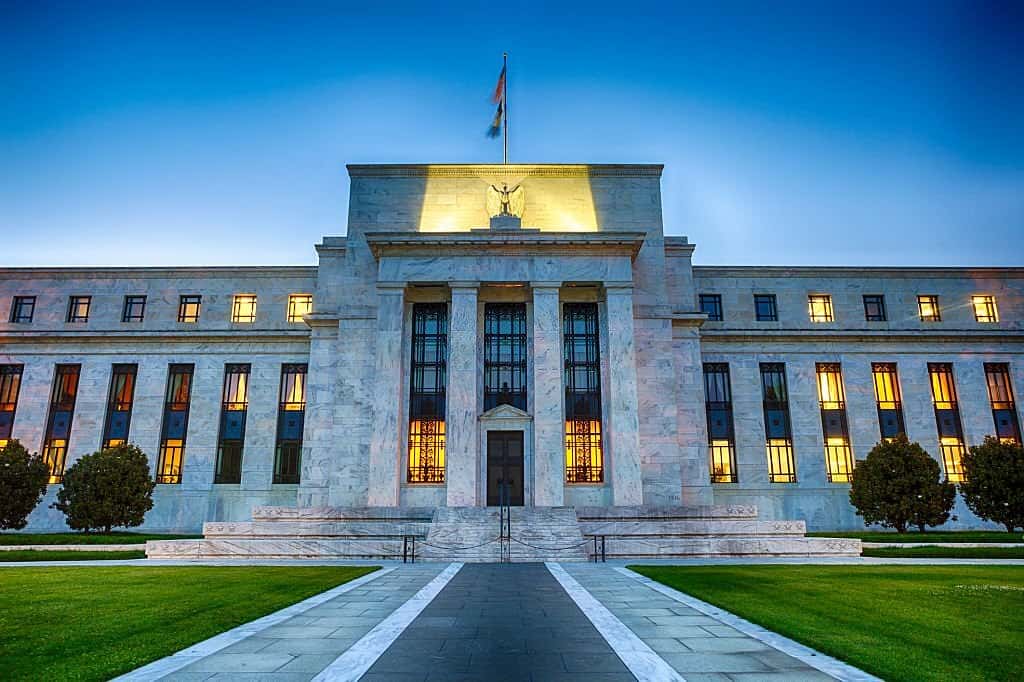
The Federal Open Market Committee meets September 15 and 16, and the outcome will shape borrowing costs for Florida households at a moment when the state's housing market has posted eleven consecutive months of rising sales. Mortgage rates have hovered above 6 percent through 2026 after briefly dipping to roughly 6.09 percent in February, and market expectations have shifted enough that some economists are discussing the possibility of a rate increase this fall rather than a cut.
That reversal in expectations matters more in Florida than in most states. Florida's housing affordability equation already carries an insurance burden that few other markets face, and mortgage rate movements interact with that burden to determine whether a household qualifies for a loan at all.
The Federal Reserve does not set mortgage rates directly. Understanding the mechanism is the difference between reading Fed news usefully and misreading it.
How Fed decisions reach Florida mortgages
The Federal Reserve sets the federal funds rate, which governs overnight lending between banks. Mortgage rates, by contrast, track the yield on ten year Treasury securities far more closely, because thirty year mortgages are typically held or securitized on assumptions about a ten year effective duration.
That relationship is why mortgage rates sometimes move in the opposite direction from the Fed's action. When the Fed cut rates three times in 2025, totaling 75 basis points across September, October, and December, mortgage rates had already declined in anticipation and then rose after the cuts occurred.
What moves mortgage rates is expectation, not action. By the time the Fed announces a decision, bond markets have generally priced it. The market reaction depends on how the decision and the accompanying guidance compare to what was already expected.
The practical implication for buyers is that waiting for a Fed cut in hopes of a lower mortgage rate is not a reliable strategy. The rate available on any given day reflects what the market already believes about future policy.
Where rates have been in 2026
Thirty year fixed mortgage rates dipped below 6 percent in February for the first time in years, reaching roughly 6.09 percent, before rising back above 6.25 percent in March. By April the average sat near 6.23 percent.
Rates finished 2025 around 6.25 percent following the Fed's three cuts. The range through 2026 has been comparatively narrow, which has given buyers more predictability than the volatility of prior years but has not delivered the relief many expected.
The shift in commentary toward the possibility of a hike reflects concerns about inflation persistence rather than about growth. A rate increase would be a departure from the easing path markets had assumed, and mortgage rates would likely rise on the expectation before any action occurred.
Buyers currently in the market face a decision about rate locks, which fix a rate for a defined period during underwriting, typically 30 to 60 days, sometimes with an extension fee.
The Florida affordability equation
Florida's statewide median single family price reached $425,000 in July, up 3.7 percent year over year, with closed sales up 5.1 percent. Condo and townhouse prices held flat at a $295,000 median while sales rose 11 percent.
Insurance is the variable that distinguishes Florida from other markets. Lenders escrow homeowners insurance and include it in debt to income calculations, which means a high premium reduces the loan amount a borrower can qualify for at any given income.
The direction has recently been favorable. Citizens Property Insurance reduced multiperil homeowners rates by an average of 8.8 percent under rates effective July 1, and a number of private carriers filed decreases for 2026. Those reductions come after years of increases, so the level remains elevated even as the direction has improved.
For condominium buyers, association fees and the possibility of structural special assessments add a further layer that lenders increasingly scrutinize when reviewing building financials.
What it means for Florida households
For prospective buyers, the practical guidance is to qualify based on total monthly cost including taxes, insurance, and any association fees rather than on principal and interest alone. In Florida, the non mortgage components frequently exceed what buyers from other states expect.
For existing homeowners with mortgages originated at lower rates, there is no reason to refinance at current levels, which is part of why inventory has been constrained. Owners holding rates well below current market levels face a financial disincentive to sell and rebuy.
For homeowners considering a home equity line of credit, those products are typically tied to the prime rate, which moves directly with the federal funds rate. Unlike thirty year mortgages, HELOC costs respond immediately to Fed decisions.
For renters, higher mortgage rates tend to keep would be buyers in the rental market longer, which sustains rental demand and limits downward pressure on rents in Florida's larger metros.
The broader national picture
The Fed's dual mandate covers maximum employment and stable prices, and its decisions weigh national data rather than conditions in any individual state. Florida's specific circumstances, including its insurance market and its migration driven demand, do not enter the committee's calculation.
That asymmetry produces friction. Monetary policy calibrated for national conditions can be poorly suited to a state where housing costs are being driven by risk pricing rather than by credit conditions.
Federal policy affecting Florida housing more directly runs through other channels, including the National Flood Insurance Program, which requires periodic congressional reauthorization, and periodic discussion of a federal catastrophe reinsurance backstop that would affect property insurance pricing in high risk states.
Those are legislative questions rather than Federal Reserve questions, and they sit with Congress and with Florida's delegation.
What actually determines the rate you are offered
The rates quoted in national coverage are averages for borrowers with strong profiles, and individual offers diverge from them for reasons within a borrower's control and reasons that are not.
Credit score is the largest single factor. Pricing adjustments applied by the agencies that purchase most conventional mortgages step upward as scores decline, and the difference between a score in the high 700s and one in the mid 600s can amount to a substantial rate premium.
Down payment matters through loan to value ratio. Borrowers putting down less than 20 percent on a conventional loan generally pay private mortgage insurance, which adds to the monthly cost without reducing principal, and higher loan to value ratios also carry pricing adjustments.
Loan type changes the picture. Loans insured by the Federal Housing Administration, guaranteed by the Department of Veterans Affairs, or guaranteed by the Department of Agriculture for rural properties carry different pricing and different insurance structures. Florida's veteran population makes VA loans particularly relevant here, and those loans require no down payment and no monthly mortgage insurance.
Discount points, prepaid interest that lowers the rate, allow borrowers to trade upfront cost for monthly savings. Whether points make sense depends on how long the borrower expects to hold the loan, and the break even calculation is straightforward arithmetic worth doing before closing.
Florida-specific costs buyers from elsewhere miss
Buyers relocating to Florida frequently underestimate carrying costs because the components differ from what they knew.
Property taxes are assessed by county, and the homestead exemption reduces taxable value for primary residences while the Save Our Homes cap limits annual assessment increases to 3 percent or inflation, whichever is lower. That cap applies to homesteaded property and does not transfer automatically to a new buyer, which means a purchaser's tax bill can substantially exceed the seller's on the same house.
Portability allows Florida residents moving within the state to transfer accumulated Save Our Homes savings to a new homestead, subject to limits. Buyers from out of state have no such benefit and are assessed at market value.
Homeowners association and condominium association fees are common across Florida developments and can range from modest to substantial, and they are counted by lenders in qualification.
Flood insurance is required by lenders for properties in mapped high risk zones, and prudent for many outside them. Wind coverage in coastal counties may be written separately from the base homeowners policy, and hurricane deductibles are typically percentage based rather than flat.
Adding those items together produces a monthly figure that frequently exceeds what the purchase price alone would suggest, which is the calculation buyers should run before making offers.
What the Fed is actually deciding
The committee's mandate helps explain why rate expectations shifted, and it is worth stating because commentary often frames Fed decisions as being about housing when they are not.
Congress directs the Federal Reserve to pursue maximum employment and price stability. Those objectives can conflict. Policy that supports employment by keeping rates low can allow inflation to persist; policy that suppresses inflation by keeping rates high can raise unemployment.
When inflation runs above the committee's target while the labor market remains firm, the case for cutting weakens and the case for holding or raising strengthens. That is the reading behind the shift in commentary toward the possibility of a hike this fall rather than continued easing.
The September meeting includes updated economic projections, which show where individual participants expect rates to be at the end of the current year and subsequent years. Markets frequently react more to that projection material than to the rate decision itself, because it signals the path rather than the single step.
Housing does not appear in the mandate. It is affected by policy transmitted through credit markets, but the committee is not setting policy to achieve any particular housing outcome, in Florida or elsewhere.
What's next
The FOMC announces its decision on September 16, accompanied by a statement and, at this meeting, updated economic projections including the summary of individual participants' rate expectations. The chair holds a press conference following the announcement.
Mortgage rate movement in the days after will depend on how the guidance compares to market expectations rather than on the decision itself. Buyers watching for a specific rate should monitor ten year Treasury yields as the more direct indicator.
Florida Realtors will release August housing data next month, which will show whether the eleven month streak of sales gains extended to twelve and whether inventory continued tightening.
Insurance filings for 2027 will begin appearing with the Office of Insurance Regulation in the fall, and whether the recent pattern of decreases holds is arguably a larger factor in Florida affordability than the Fed's September decision.
Spotted an issue with this article?
Have something to say about this story?
Write us a letterComments
No comments yet. Be the first to weigh in.
Related Coverage

U.S. Exports to Cuba Hit a Record $202.5 Million in August as Fuel Sold to Private Firms Makes America the Island's Top Supplier
7h ago

Seven Florida Cases Are Part of the Justice Department's Largest Push Yet to Strip Citizenship From Naturalized Americans
7h ago

Proposed 2030 Census Rule Could Cost Florida a House Seat, and Count Snowbirds as Floridians
8h ago

Alligator Alcatraz Is Closed, but Florida Is Still Chasing More Than $500 Million in Federal Reimbursement
12h ago