Florida Economists Raise State Revenue Forecast by Nearly $1 Billion Ahead of Budget Season
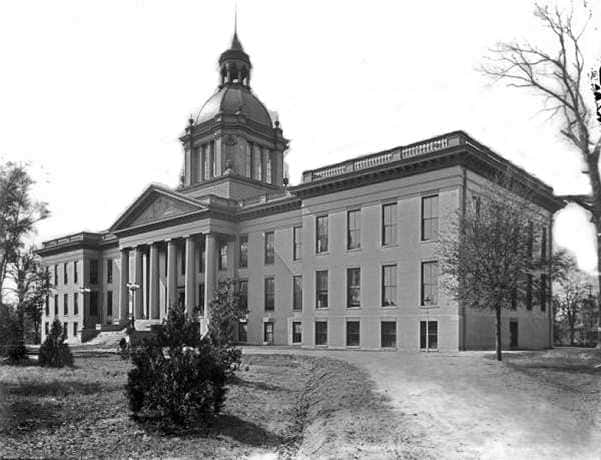
Florida's state economists have raised the general revenue projections that lawmakers will use to build the next state budget, increasing the forecast by nearly $1 billion across the current fiscal year and the one that follows. The revision came out of the Revenue Estimating Conference held Friday, August 14, and arrives even as the panel continued to flag uncertainty in the broader economic outlook.
The general revenue fund is the pot of largely unrestricted money that pays for the bulk of state operations, including public schools, universities, health care programs, prisons and the court system. It is funded principally by the state sales tax, with corporate income tax and a handful of smaller sources making up the remainder. Because Florida has no personal income tax, the sales tax carries a share of the state's revenue burden that is unusual among large states.
An upward revision of this size gives budget writers additional room, but it does not by itself resolve the structural questions facing the state's finances. Lawmakers head into the next budget cycle with a property tax constitutional amendment on the November ballot, continued pressure on health care spending, and recurring commitments that grow independently of the revenue forecast.
How the estimating conference works
Florida's consensus estimating conference process is a distinctive feature of the state's budget system. Rather than the governor's office and each legislative chamber producing competing revenue forecasts, principals representing the Executive Office of the Governor, the Florida Senate, the Florida House and the Office of Economic and Demographic Research must reach unanimous agreement on a single set of numbers.
That consensus forecast is then binding for budget purposes. Neither chamber can write a budget assuming more revenue than the conference has certified, which removes a common source of dispute in states where each side can select the forecast that best supports its preferred spending plan. The general revenue conference typically meets several times a year, with the August meeting positioned to inform the preparation of budget recommendations ahead of session.
The conference reviews collections data from recent months, examines the performance of individual revenue sources against prior forecasts, and incorporates updated national economic assumptions. When actual collections consistently outperform the forecast, as they have in recent Florida cycles, the panel adjusts the baseline upward.
The Office of Economic and Demographic Research publishes the executive summary and detailed tables from each conference, and those documents become the reference point for appropriations staff in both chambers throughout the budget process.
What the numbers show
The panel increased general revenue projections by close to $1 billion when the current fiscal year and the next fiscal year are combined. Because the adjustment is spread across two years, the effect on any single budget is smaller than the headline figure suggests, and a portion of the increase reflects money already collected in the current year rather than new capacity for future spending.
Economists paired the upward revision with continued caution about the outlook. That combination has been a recurring theme in Florida forecasts through 2026: collections have held up better than expected, while the panel has declined to assume that pattern continues indefinitely. Conservatism in the out year assumptions is standard practice for the conference and reflects the volatility of a sales tax dependent revenue base.
Sales tax collections in Florida are sensitive to tourism volumes, construction activity and consumer spending on durable goods, all of which respond quickly to changes in interest rates and household confidence. That sensitivity cuts both ways: Florida's revenue tends to recover faster than the national average coming out of downturns and to fall faster going into them.
The Florida context
The revision lands in the middle of an unusually consequential budget cycle. Voters will decide in November on a constitutional amendment addressing property taxes, a measure the Legislature placed on the ballot through a joint resolution. Property taxes are levied by local governments rather than the state, but a significant change in local revenue capacity creates pressure on Tallahassee to backfill or to restructure state aid formulas.
School funding is the largest single claim on general revenue, flowing through the Florida Education Finance Program. That formula blends state general revenue with local property tax contributions known as required local effort, which is precisely the mechanism that a property tax amendment would touch. Budget writers will be watching the November result closely for that reason.
Health care is the other major driver. Medicaid enrollment and per member costs respond to economic conditions and to federal policy decisions that are outside state control, and the program's growth has historically outpaced general revenue growth in most years.
Florida also maintains reserves, including the Budget Stabilization Fund required by the state constitution and unallocated general revenue carried forward. The size of those reserves has been a point of emphasis for state leaders and for the credit rating agencies that assess Florida's debt.
What it means for Floridians
A stronger revenue forecast does not translate automatically into new programs or into tax relief. It expands the set of choices available to the Legislature, and those choices are made during session, months after the forecast is set.
In practice, additional recurring revenue tends to be claimed first by existing commitments: enrollment growth in public schools and universities, caseload growth in health and human services programs, and salary and benefit costs for state employees and for the Florida Retirement System. Nonrecurring revenue, which is money available once rather than year after year, is more typically directed to construction, land acquisition, disaster reserves and one time appropriations.
The distinction between recurring and nonrecurring revenue matters more in Florida than the aggregate number does. Budget analysts watch it closely because committing recurring dollars to programs that will need funding every year is how structural deficits form, while nonrecurring dollars spent on nonrecurring purposes leave no obligation behind.
Local impact across the state
State general revenue reaches every county in Florida through the school funding formula, through state contributions to county health departments and Medicaid, and through appropriations for transportation, water projects and higher education facilities.
Fast growing counties in Central Florida and Southwest Florida have particular exposure to enrollment driven formulas, because student growth translates directly into funding claims that the formula must accommodate. Counties with slower growth or declining enrollment face the opposite problem, since per student formulas do not fall as quickly as fixed costs like facilities and transportation.
Coastal counties carry an additional dimension. State disaster reserves and hazard mitigation programs are funded in part from general revenue, and the adequacy of those reserves is a live question during hurricane season regardless of what the forecast shows in August.
Local governments also submit appropriations requests each year for specific projects, and the volume of those requests that can be accommodated depends directly on the nonrecurring revenue available. A stronger forecast improves the odds for local project funding, though the competition typically exceeds available dollars by a wide margin.
Where Florida's revenue comes from
Florida's general revenue fund depends overwhelmingly on the sales and use tax, which accounts for the large majority of collections. Corporate income tax, documentary stamp taxes on real estate transactions, and a set of smaller sources supply the remainder.
The absence of a personal income tax is written into the Florida Constitution, which prohibits its imposition without a constitutional amendment. That structural choice shapes everything about how the state raises money and how sensitive its revenue is to economic conditions.
Sales tax revenue rises and falls with consumption, which responds quickly to interest rates, employment and consumer confidence. Documentary stamp collections track real estate transaction volume, making them among the most volatile revenue lines in the state's portfolio and closely tied to the housing market.
Reserves and the rating agencies
Florida maintains reserves through several mechanisms. The Budget Stabilization Fund is required by the state constitution and is funded at a percentage of general revenue. Unallocated general revenue carried into the following year functions as an additional buffer, and specific trust funds hold money designated for particular purposes.
Credit rating agencies evaluate those reserves when assessing Florida's debt. A state with substantial reserves and a demonstrated practice of maintaining them borrows at lower cost, which reduces the debt service claim on future budgets.
For a state with Florida's disaster exposure, reserves serve a specific function beyond general fiscal prudence. A major hurricane generates immediate state costs for response, for the state share of federal cost sharing programs, and for revenue disruption in the affected region, and reserves are what allow the state to absorb those costs without a special session or emergency borrowing.
The property tax amendment on the November ballot
Voters will decide in November on a constitutional amendment addressing property taxes, placed on the ballot by the Legislature through a joint resolution. Florida requires 60 percent voter approval for constitutional amendments, a threshold higher than the simple majority used in most states.
Property taxes in Florida are levied by counties, cities, school districts and special districts rather than by the state. A change to that revenue base affects local government finance directly and reaches the state indirectly through the school funding formula, which blends state dollars with required local effort.
Budget writers will not know the outcome until after the estimating conference cycle is well underway, which is one reason the August forecast comes with the caution the panel attached to it. A significant change in local revenue capacity would reshape the state budget conversation.
What is next
The certified forecast now feeds into agency legislative budget requests and into the governor's recommended budget, which is transmitted to the Legislature in advance of session. Appropriations subcommittees in both chambers build their spending plans against the same certified numbers, negotiate differences in conference, and send a single general appropriations act to the governor.
The estimating conference will meet again before session to update the forecast with additional months of collections data. Those later revisions can move in either direction, and the numbers that ultimately govern the budget are the ones certified closest to session rather than the August figures.
The November ballot is the other variable. The outcome of the property tax amendment, along with the election of a new governor and a new legislative class, will shape budget priorities as much as the revenue forecast does. Lawmakers will have a clearer picture of both by the time appropriations work begins in earnest.
Spotted an issue with this article?
Have something to say about this story?
Write a letter to the editorComments
No comments yet. Be the first to weigh in.
Related Coverage

Orange County's $9 Billion Budget Takes Effect With $1.1 Billion for Public Safety and a Bigger Sheriff's Budget
9h ago

Miami-Dade Commission Sets Oct. 6 Hearing on Plan to Eliminate 12 Metrobus Routes
11h ago

Jacksonville's $2 Billion Budget Takes Effect With Record Public Safety Spending and Restored Housing Fund
13h ago
Florida's Voter Registration Deadline Is Monday as Democrats Edge GOP in September Sign-Ups
15h ago